
How Consumer Values, Inflation and ‘MAHA’ Are Reshaping the Natural & Organic Landscape
This article first appeared in the May 2026 issue of Presence Marketing’s newsletter.
By Steven Hoffman
In our recent analysis, Organic Outpaces the Market: Global Sales Hit Record Highs as U.S. Crosses $76B, we highlighted a defining economic reality of the 2025-2026 marketplace: Organic food is no longer a niche preference, but a primary economic driver. But the raw sales data tells only half the story. As a “bookend” to that financial milestone, we must dive deeper into the complex, often contradictory psychology of today’s natural and organic consumer.
Food industry thought leader Robyn O’Brien, author of The Unhealthy Truth, once famously noted,”We are not allergic to food. We are allergic to what has been done to it.” That sentiment has never been more relevant than it is today. Consumers are deeply engaged with how their food is grown, processed, and regulated. Yet, they are also navigating an unprecedented maze of economic pressures, political crossfires, confusing sustainability claims, and loud social media detractors.
To chart a successful path forward, natural products brands, retailers, and investors must intimately understand the shifting demographic attitudes toward organic food, regenerative agriculture, pricing, and the policies governing our plates.
The K-Shaped Economy: Valuing the Price of Organic Amidst Inflation
Food inflation and the resulting price elasticity of consumer goods have been the central plotlines of the grocery sector over the last few years. How are food prices affecting the natural and organic products consumer? The reality is nuanced.
According to recent analysis by CoBank, consumers are exploring a range of approaches to handle double-digit cost increases. Looking at the specialty coffee and beverage sector as a bellwether, consumer price index (CPI) data showed coffee prices jumping 18.3% year-over-year in early 2026, leading to a noticeable shift in consumer behaviors, including a retreat to do-it-yourself, at-home preparation.
When it comes to organic goods, consumers are highly sensitive to the premium, yet they continue to buy. CoBank points out that in our increasingly “K-shaped economy”—where the top 10% of wealthy Americans account for roughly half of all consumer spending—the high base price of organic products risks limiting its ultimate audience to higher-income brackets. Recent LendingTree research cited by CoBank notes that organic produce commands a 52.6% price premium over conventional counterparts.
However, despite this premium, organic sales are not stalling; they are growing at 6.8%, double the 3.4% rate of the broader marketplace. Produce remains the undisputed gateway, accounting for 30% of the nation's total organic sales ($22.7 billion).
Consumers view organic produce as an affordable, high-return entry point into health and wellness. They may balk at a $9 organic specialty beverage, but they will readily pay an extra dollar for organic berries or bananas to avoid synthetic pesticides. For the industry to maintain its momentum and avoid being boxed into an elite, high-income corner, the expansion of competitively priced organic private labels, focusing on supply chain efficiencies and economies of scale, and adopting more collaborative partnerships with co-packers and others to cut production costs will be critical.
Deciphering Purchasing Decisions: Safety, Price, and Demographic Heterogeneity
So, just how important is the organic label when a consumer is standing in the grocery aisle making a split-second purchasing decision?
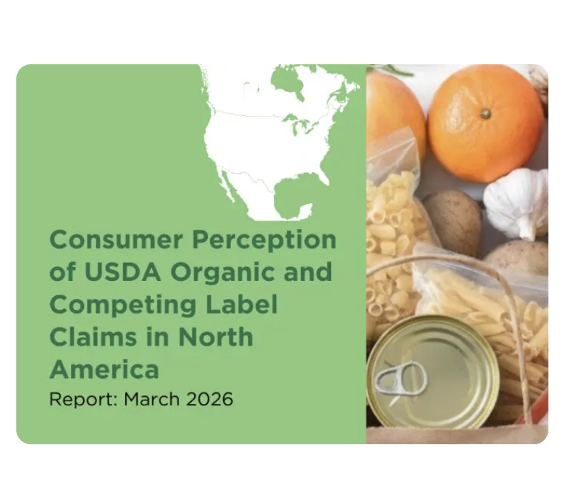
According to the brand-new Consumer Perception of USDA Organic Report released in March 2026 by the Organic Trade Association (OTA) and Euromonitor, organic continues to hold a distinct edge over competing label claims like “natural,” “non-GMO,” and “raised without antibiotics.” As the OTA’s newly launched April 2026 Organic Starts with You campaign underscores, the USDA Organic seal remains the clearest, most credible signal for consumers seeking trust in a crowded marketplace.
Also, a 2026 Best-Worst Scaling study published in Q Open examining U.S. rice consumers provides critical insights into the modern shopper's mindset. The study reveals that across the board, food safety and price remain the most influential factors in purchasing decisions. But beneath those universal priorities lies profound demographic heterogeneity, which researchers divided into four distinct consumer segments: conventional, pragmatic, sustainability-conscious, and low-engagement.
Conventional: Older demographics tend to focus predominantly on price and domestic origin, showing less willingness to pay a premium for ecological farming methods.
Pragmatic: This is arguably the most vital group for marketers to understand. Comprising younger and educated consumers, the “pragmatic” shopper is highly interested in sustainability and regenerative agriculture—but they exhibit deep skepticism toward traditional “organic” marketing claims.
Sustainability-Conscious: This segment, heavily skewing toward younger, highly educated, and higher-income consumers, strongly prefers organic and regenerative attributes. For them, the organic seal is a non-negotiable baseline for environmental stewardship and personal health.
Low Engagement: This consumer shows little to no interest in organic attributes.
The pragmatic segment highlights a growing challenge: The younger cohort is deeply invested in the idea of sustainable food, but they are scrutinizing the validity of certifications. They want the benefits of organic—clean soil, no pesticides, biodiversity—but they are increasingly vulnerable to alternative claims like "regenerative," even when those alternative labels lack strict regulatory definitions.
At the same time, conventional and low-engagement consumers may require accessible education to build awareness and trust in non-conventional farming practices. Additionally, the overlap between regenerative and organic preferences underscores the need for standardized labeling and consistent communication to help consumers meaningfully differentiate between these production systems.
Meeting Increased Demand for “Clean Label” Products
Despite the skepticism of some pragmatic shoppers, the broader consumer base intrinsically links the organic seal to the “clean label” movement. According to breaking data from SPINS’ 2026 Trend Predictions, the clean-label and Non-UPF (non-ultra-processed food) movements also are gaining massive momentum, driven by consumer skepticism, proactive brand reformulation, and younger generations rejecting rigid diets in favor of personalized, clean-ingredient nutrition.
Echoing this shift, recent coverage by SupplySide Food & Beverage Journal notes that the clean-label movement has transitioned from a niche premium differentiator into a baseline consumer expectation. Today’s consumers define natural and organic through a lens of total transparency and purity. In fact, NIQ’s (NielsenIQ) latest 2026 Consumer Outlook reveals that brand trust has become the ultimate currency, with an overwhelming 95% of consumers stating that trust is critical when choosing a brand.
Consumers are backing up this sentiment with their wallets. According to NIQ, clean label products in the U.S. are currently growing at a rate of 7.5% this year, significantly outpacing the 5.9% overall average for U.S. fast-moving consumer goods (FMCG).
Recent research by Innova Market Insights shows that globally, 58% of consumers prioritize honesty and transparency in products, with the top influential purchasing claims being “natural,” “locally sourced,” and “organic.” Furthermore, a 2025 global consumer trends survey from Market Research Future underscores that this shift is heavily driven by younger demographics. The study found that 64% of Gen Z consumers actively seek out clean-label claims such as “organic,” “no artificial ingredients,” and “minimally processed.” SupplySide notes that consumers are reading labels more closely than ever, demanding that brands invest in sustainable sourcing and formulation technologies that preserve shelf life and sensory appeal without compromising the “clean” promise.
To meet this increased demand, the natural and organic industry has expanded its footprint across standard supermarkets, convenience channels, and e-commerce platforms. But meeting mainstream demand brings significant operational hurdles. The industry continues to grapple with supply chain bottlenecks, real-time raw material shortages, and the ongoing challenge of maintaining consistent global sourcing standards. As brands scale, maintaining the transparency that consumers demand—proving that the product is as “clean” as the label implies—is becoming a defining operational challenge … and an opportunity.
Pesticides and the MAHA Influence: For Better and For Worse
The consumer desire for “less/no pesticides/chemicals” is currently colliding with an increasingly politicized food system, most notably the profound influence of the “Make America Healthy Again” (MAHA) movement. Led by political figures and advocates pushing to upend the FDA and USDA, MAHA has dramatically shifted the national conversation around food and agriculture—yielding intensely mixed results for the natural and organic industry.
The Better
The MAHA movement has successfully thrust the concept of “food as medicine” into the mainstream political arena, validating concerns that natural and organic industry advocates have championed for decades, as reported by SupplySide Food & Beverage Journal and many others. By aggressively targeting petroleum-based artificial food dyes, seed oils, and ultra-processed foods (UPFs), MAHA has elevated everyday consumer awareness about clean ingredients to unprecedented heights. This populist uproar against the conventional, highly processed food system inherently drives traffic toward the natural and organic aisles, where consumers know they can find refuge from artificial ingredients.
The Worse
However, when it comes to the bedrock of organic farming—the prohibition of synthetic toxic pesticides—the MAHA influence has been far more complicated. Environmental watchdog groups note that despite the populist rhetoric regarding health, the current political administration’s actual policy execution has heavily favored chemical agribusiness, much to the chagrin of many MAHA proponents, according to a recent report from Politico.
Rather than restricting toxic agricultural inputs, there has been a trend of pesticide protectionism that is further frustrating health proponents, NPR reported in April 2026. We are witnessing regulatory rollbacks regarding risk evaluations for hormone-disrupting chemicals and a startling lack of new federal pesticide restrictions. Furthermore, 2025 and 2026 saw federal funding freezes and delays for critical programs meant to assist farmers transitioning to organic systems. This creates a paradox: Consumers are being told by political influencers to eat cleaner, healthier food, while the very mechanisms needed to scale organic farming and protect rural communities from toxic chemicals are being undermined at the federal level.
Defending the Shield: Countering the Social Media “Gaslight” Narrative
This political turbulence is mirrored by a growing, concerning cultural backlash against organic food on social media. If the organic industry wants to protect its $76 billion market share, it must learn how to aggressively and effectively counter negative PR.
As highlighted in a poignant April 2026 newsletter by Organic Insider, a rising tide of large content creators, fitness influencers, and self-appointed “truth-tellers” on Instagram and TikTok have been relentlessly attacking the organic industry. They are going viral by calling organic food “the greatest gaslight of all time,” “worthless,” and “a scam.”
Max Goldberg of Organic Insider, correctly identifies this trend not as a good-faith critique of a flawed agricultural system, but as the “monetization of destruction.” These influencers are farming clicks and outrage by tearing down the organic seal, yet they offer no constructive alternative framework, Goldberg says.
If the organic system were to be dismantled by this wave of social media cynicism, what would we be left with? We would be left entirely with the conventional food system—a system optimized for cheap, extractive production where crops are routinely desiccated with glyphosate, a known carcinogen, and sprayed with dicamba, a highly toxic pesticide. We would be left with a system reliant on genetically engineered crops, synthetic biology, and the total externalization of environmental costs onto rural farming communities.
To counter this negative PR, organic brands and marketers must stop playing defense and start playing offense. For example:
Elevate the Farmer: The influencers calling organic a scam will never look a fourth-generation farmer in the eye—someone who has spent years earning certification, paid thousands in annual fees, and worked without synthetic shortcuts—and tell them their life’s work is a gaslight. Brands must put these farmers front and center in their marketing campaigns. Show the soil. Show the labor. Show the humanity behind the seal.
Educate on the Alternative: Brands must clearly articulate what the absence of organic means. Remind consumers that organic federal certification mandates soil health standards, annual certifier inspections, chain-of-custody requirements, and a strict prohibition on synthetic pesticides and GMOs.
Acknowledge and Improve: As Organic Insider notes, the organic system is not perfect. The industry must publicly champion stronger enforcement and the elimination of fraud. Transparency builds trust; defensiveness destroys it. By acknowledging flaws while fiercely defending the system’s foundational principles, the industry can win back the “pragmatic” consumers who are currently paralyzed by social media skepticism.
The Path Forward
The market research of 2026 paints a complex, highly dynamic picture for the natural and organic industry. Consumers are highly motivated and willing to pay a justified premium for clean, safe food, even amidst tightening economic belts. They are increasingly savvy about the links between agricultural practices, environmental resilience, and their own health.
However, the industry is no longer operating in an echo chamber of early adopters. It is operating in a noisy, politically charged, and economically stressed mainstream marketplace. As terms like “regenerative” risk being co-opted by conventional agriculture to obscure ongoing pesticide use, and as social media algorithms reward outrage over nuance, the mandate for organic brands is crystal clear: uncompromising transparency and bold advocacy.
Relying on the rigorously audited USDA Organic seal and also newer, Regenerative Organic Certified (ROC) standards—while relentlessly educating consumers on why organic remains the gold standard for pesticide-free, non-GMO food—will be the most vital strategy for retaining consumer trust, justifying the price premium, and securing the next generation of growth for the natural and organic products sector.
Steven Hoffman is Managing Director of Compass Natural Marketing, a strategic communications and brand development agency serving the natural and organic products industry. Learn more at www.compassnatural.com.
Legislative Initiatives Mount to Lower Grocery Prices and Ban Surveillance Pricing
This article first appeared in Presence Marketing’s March 2026 newsletter.
By Steven Hoffman
As the food and beverage industry moves deeper into 2026, the narrative governing the grocery aisle has shifted from simple supply chain economics to a complex battlefield of technology, privacy, and political maneuvering. While headline inflation has ostensibly cooled from its post-pandemic peaks, the lived reality for the American consumer remains one of relentless sticker shock—a reality that is now precipitating a wave of legislative interventions at both the state and federal levels.
For retailers and manufacturers, the signal from Washington and state capitals is clear: the era of unrestrained pricing strategies may be drawing to a close. A bipartisan recognition of consumer distress is fueling a two-pronged legislative assault. On one flank, lawmakers are targeting the raw costs of goods through tax repeals and affordability agendas. On the other, they are taking aim at the very mechanisms of modern retail—specifically, the emerging use of artificial intelligence and data-driven "surveillance pricing."
The Economic Context: A Slowing Pace, But Rising Pain
To understand what’s driving the current legislative landscape, one must look at the data. According to NPR, grocery prices have surged between 30% and 40% since 2019, fundamentally altering the economics of the American household.
While the pace of increases is technically slowing, the trajectory remains upward. As reported by Progressive Grocer, the January Consumer Price Index (CPI) from the U.S. Bureau of Labor Statistics (BLS) showed a 0.2% rise in food-at-home prices for the month and a 2.1% increase over the last 12 months.
The pain is not distributed equally across the store. The data shows that five of the six major grocery store food group indexes increased yet again in January:
Cereals and bakery products rose 1.2%
Dairy and related products increased 0.8%
Meats, poultry, fish, and eggs inched up 0.2%
Both the nonalcoholic beverages and fruits and vegetables category saw a slight rise of 0.1%
Independent analysis paints an even starker picture. The ConsumerAffairs Datasembly Shopping Cart Index reported a nearly 6% year-over-year climb in January. The cost for their basket of everyday items jumped from $147.71 in January 2025 to $156.43 in January 2026. This $8.72 increase was driven largely by coffee, cereal, and paper products, though staples like eggs and butter offered modest relief.
The Drivers: Tariffs, Labor, and “Sentiment”
Industry analysts are quick to point out that these price hikes are not occurring in a vacuum. A complex web of federal policy decisions is actively influencing shelf prices.
Foremost among these are tariffs. A report from the Council on Foreign Relations highlights that 65% of Americans now view tariffs as a primary driver of unaffordability. The Yale Budget Lab estimates that recent trade policies will likely increase food prices by 1.4% in the short run. This is already visible in the coffee aisle, where prices soared after the Administration imposed tariffs as high as 50% on major importing countries like Brazil—a move Consumer Federation of America likens to a "$200 billion federal sales tax."
Furthermore, labor dynamics linked to immigration enforcement are creating disparities between retail and foodservice. Prices for "food away from home" rose significantly more (4.1%) in 2025 than "food at home" (2.4%), reflecting the higher proportion of labor costs in prepared foods.
However, Jayson Lusk, head of agricultural economics at Purdue University, notes a critical psychological component for the industry to consider. "Consumer anxiety is increasingly driven by food prices and tariffs, not inflation as a general economic concept," Lusk told the Council on Foreign Relations in February. It is this anxiety that politicians are rushing to assuage.
The New Target: “Surveillance Pricing”
Perhaps the most significant development for retail technology vendors and data analysts is the emergence of "surveillance pricing" as a legislative target. Surveillance pricing refers to the practice of using consumer data—purchase history, location, and even biometric data—to set personalized prices or fluctuate prices in real-time based on demand. As retailers invest millions in Electronic Shelf Labels (ESLs) and AI-driven dynamic pricing models to optimize margins, lawmakers are characterizing these tools as predatory.
Leading the charge against this practice is the Stop Price Gouging in Grocery Stores Act of 2026. Introduced in the Senate on February 12 by Jeff Merkley (D-OR) and Ben Ray Luján (D-N.M.), the bill explicitly bans corporations from "leveraging new technologies" to raise grocery prices. "The bill aims to prohibit retail food stores from price gouging and engaging in surveillance-based price setting practices," the Senators stated in a press release.
In the House, Rep. Rashida Tlaib (D-MI) introduced companion legislation, H.R. 4966, which targets "personalized price gouging" where she claims stores use consumers’ sensitive personal information against them to raise prices. “The majority of Americans are stressed about rising grocery prices,” said Rep. Tlaib. “While our neighbors struggle, corporate grocery chains are feeding customer data into algorithms to decide who can be charged more. Companies should not be allowed to use electronic labeling or your personal information to charge you a higher price. We need to ban corporate price gouging and surveillance pricing.”
The Union Push
This legislative push is being bolstered by organized labor. The United Food and Commercial Workers International Union (UFCW), representing 1.2 million workers, has launched the "Affordable Groceries and Good Jobs Campaign."
According to Store Brands, this national effort seeks to ban surveillance pricing and target the growth of AI-driven technology in grocery stores. The union argues that these technologies not only harm consumers but potentially devalue retail labor. For the industry, this signals a potential alignment between consumer advocacy groups and labor unions that could create a powerful lobbying block against retail automation.
The “Affordability Agenda” in Congress
Beyond the calls for specific bans on tech-enabled pricing, a broader "Affordability Agenda" is taking shape in the House, championed by the New Democrat Coalition, a group of of 115 House Democrats “who work across the aisle and across the Capitol to advance innovative, inclusive, and forward-looking policies.”
Congresswoman Janelle Bynum (D-OR), in collaboration with the New Democrat Coalition, recently unveiled a roadmap focusing on lowering five key costs, including household essentials like groceries. Similarly, Reps. Nikki Budzinski (D-IL) and Chrissy Houlahan (D-PA) published an opinion piece outlining plans to address these "core costs crushing working Americans."
"The American people need a real plan to make life more affordable," Budzinski and Houlahan wrote, criticizing any dismissals of affordability concerns.
This rhetoric is intensifying along partisan lines. Congresswoman Susie Lee (D-NV) on February 17 released a report utilizing House Budget Committee data to argue that the current administration's economic agenda is directly responsible for higher costs. "Families in Nevada were promised lower prices. Instead, President Trump and Republicans in Congress have delivered higher grocery bills," Lee stated in a press release, pointing specifically to tariffs as a crushing weight on working families.
Arizona Senator Mark Kelly, too, pressed the administration for more action on food costs. In a February 5 statement, Sen. Kelly called on the current administration to work with Congress to lower food prices. “Arizona families cannot continue to bear the cost of rising food prices. I encourage you to take swift action and work with us to lower the price of food for American families. Thank you for your attention to this urgent matter,” Kelly said.
State-Level Actions: Bans and Tax Cuts
While Washington debates, state legislatures are moving with speed. The approaches vary wildly depending on the political makeup of the state, presenting a patchwork compliance risk for national chains.
New York: Democrats have introduced two aggressive bills. The Protecting Consumers and Jobs from Discriminatory Pricing Act specifically targets grocery stores and pharmacies, prohibiting personalized algorithmic pricing and electronic digital shelving labels. A broader bill, the One Fair Price Act, would ban most businesses from using personal data to make prices fluctuate. As reported on February 11 by News10, these bills would empower the New York Attorney General to sue companies and, crucially, allow private citizens to sue when they believe they are victims of price discrimination.
Maryland: Similar momentum is building in Annapolis. Maryland Matters reported on January 20 that HB0148, which would prohibit the use of personal or biometric data in price setting, has already begun committee hearings. The bill, backed by Maryland Governor Wes Moore, targets the "customized prices" enabled by AI, despite objections from retail advocates who argue dynamic pricing can also benefit consumers through personalized discounts.
Tennessee & Missouri: In conservative-leaning states, the legislative weapon of choice is tax relief. In Tennessee, State Rep. Mike Sparks (R-Smyrna) filed the Fresh Food Affordability Act (House Bill 2086), which would eliminate the state sales tax on fresh fruits and vegetables. In Missouri, Senate Bill 1239, sponsored by Sen. Mary Elizabeth Coleman (R-Arnold), aims to end both state and local sales tax on food and grocery items. "I am looking to increase affordability for Missourians as prices rise," Coleman told the Columbia Missourian.
The Looming Data Void
Amidst this flurry of activity, a quiet bureaucratic decision may hamper the industry's ability to understand the full scope of the crisis. The Center on Budget and Policy Priorities (CBPP) reported in February that the USDA is ending its 30-year-old annual survey on food security, beginning with the cancellation of data collection for 2025.
This comes at a time when food insecurity remains stubbornly high—affecting 47.9 million people in 18.3 million U.S. households in 2024—and as SNAP benefits face historic cuts. The CBPP warns that "the absence of this data will make it harder for policymakers, researchers, and the public to measure the harm inflicted" by rising food costs.
Implications for the Industry
For the food and beverage sector, the message is multifaceted. The "tech-forward" future of retail—dynamic pricing, facial recognition, and hyper-personalization—is colliding with a populist backlash. Retailers investing in these technologies must now price in the risk of strict regulatory prohibitions.
Simultaneously, the foundational costs of doing business are shifting. Tariffs are raising input costs, while state-level tax repeals may offer some demand-side relief. As legislative initiatives mount, the industry must prepare for a year where the price on the shelf is determined as much by the statehouse as it is by the supply chain.
Steven Hoffman is Managing Director of Compass Natural Marketing, a strategic communications and brand development agency serving the natural and organic products industry. Learn more at www.compassnatural.com.
Non-UPF Verified Sets a New Standard for Ultra-Processed Foods
This article first appeared in the December 2025 issue of Presence Marketing’s newsletter.
By Steven Hoffman
In mid-November, an international team of 43 scientists released a landmark series of papers in The Lancet concluding that ultra-processed foods (UPFs) now pose a “clear global threat” to public health. Drawing on more than 100 long-term studies, Reuters reported that the series links higher UPF intake to increased risk of obesity, Type 2 diabetes, cardiovascular disease, cancer, depression, and all-cause mortality.
Coverage in outlets from The Guardian and ABC News to NPR underscores the gravity of the findings. One analysis noted that UPFs are associated with harm to every major organ system in the body, and that these products are rapidly displacing fresh and minimally processed foods worldwide. University of North Carolina nutrition researcher and Lancet series coauthor Barry Popkin told NPR, “We can say now that truly ultra-processed food represents a clear global threat to our health—not only our physical health but also mental health in terms of its impacts on depression.”
At the same time, a growing body of consumer and market research points to a widening trust gap. Many shoppers want to avoid UPFs but say they can’t easily tell what qualifies. A recent New York Times Well column explored why ultra-processed products are so hard to resist and so ubiquitous in modern diets, and highlighted the way industrial formulations can override normal satiety signals and blur the line between “food” and “edible product.”
Against this backdrop, the Non-GMO Project’s new Non-UPF Verified Standard lands at a pivotal moment for CPG brands, retailers, and the entire natural and organic products ecosystem.
From GMOs to UPFs: The Non-GMO Project widens its lens
On Nov. 12, the Non-GMO Project formally announced Version 1.0 of its Non-UPF Verified Standard, described as “the nation’s first comprehensive framework” for defining and verifying foods that are not ultra-processed, and called it the “first Non-UPF Verified standard to address the ultra-processed foods crisis.”
The new certification builds on the Non-GMO Project’s 18-year record of third-party verification and its iconic butterfly seal, now found on more than 63,000 products that represent an estimated $50 billion in annual sales.
“Around the world, more people are waking up to the realization that much of what fills our grocery carts is no longer truly food,” said Megan Westgate, founder and CEO of the Non-GMO Project and Non-UPF Verified, at a recent webinar unveiling the new standard. “Doctors and researchers increasingly describe these products as ‘processed edible substances’—industrial formulations engineered for palatability and shelf life rather than nutrition.”
Westgate is careful to say this is not an attack on processing per se. As she told Food Business News: “Processing itself isn’t the enemy. It’s how and why it’s done that matters. The Non-UPF Standard defines a middle ground where convenience and nourishment can genuinely coexist.”
In practice, that “middle ground” is defined by a rigorous ingredient and processing criteria, which are detailed in the Non-UPF Verified Standard v1.0.
Why ultra-processed foods are under fire
The Lancet series and surrounding news coverage sharpen a distinction many in the natural channel have understood for decades: It’s not just what’s in food, but also how it’s made.
The Guardian’s coverage of the Lancet research noted that more than half of the average diet in the U.S. and U.K. now consists of UPFs, with some low-income and younger populations getting up to 80% of their calories from these products. Citing CDC data, ABC News reported that Americans on average consume over half of their daily calories from UPFs.
The Lancet authors point to several mechanisms by which UPFs drive harm:
Disrupted food structure and “hyper-palatability” that encourage overeating and rapid absorption of refined starches and sugars.
High levels of added sugar, sodium, and unhealthy fats.
Widespread use of cosmetic additives and ultra-refined ingredients, some of which may alter gut microbiota or expose consumers to contaminants such as phthalates.
Aggressive marketing and product design that exploit biological reward pathways, particularly in children (MAHA Commission).
In the NPR report, Lancet series coauthor Marion Nestle, professor emerita of nutrition and food studies at NYU and author of “Food Politics,” drew a direct line between the science and the need for policy and marketplace action. She noted that some countries, including Chile, have already shown that warning labels, marketing restrictions, and school food reforms can curb UPF intake. “It’s time to take on the industry,” Nestle said. “They’ve got to stop.”
The Lancet series and recent media reporting all make the point: Ultra-processed foods are not just one more dietary risk factor. They are a structural driver of global chronic disease—and the food system will not change without clear definitions, strong incentives, and credible labels.
‘Disconnected’: What consumers are telling us
In October, the Non-GMO Project released a consumer research report titled “Disconnected,” which summarized the attitudes of U.S. shoppers toward UPFs and the modern food system. Some of the topline numbers from “Disconnected” and related research are striking:
A 2024 Non-GMO Project survey found that 85% of Americans want to avoid ultra-processed foods, but most say they feel overwhelmed and unsupported in trying to do so.
Internal research from the Non-GMO Project’s Food Integrity Collective showed that 68% of shoppers actively try to avoid UPFs, and 70% say they need clearer labeling or third-party verification.
New Hope Network reported that 72% of Americans say they are trying to avoid ultra-processed foods, signaling a powerful demand across mainstream and natural retail.
“Disconnected” emphasized that consumers feel the food system is “out of their hands” — dominated by large corporations using engineered ingredients that are disconnected from natural food sources.
In other words, shoppers are ahead of policy. They are already looking for ways to opt out of UPFs, but they lack tools they can trust. That, more than anything, is the market gap the Non-UPF Verified Standard aims to fill.
The architecture of the Non-UPF Verified Standard
The Non-UPF Verified Standard approaches ultra-processing through two essential frameworks: ingredient integrity and formulation, and processing limits.
1. Ingredient integrity and formulation
The standard targets ingredients that are either emblematic of ultra-processed formulations or under scientific scrutiny for metabolic, neurological, or gut impacts. Collectively, these criteria are designed to protect what the standard calls structural integrity, nourishment, and transparency, steering innovation away from “cosmetic” ingredients and toward minimally processed building blocks:
Non-nutritive and bio-transformed sweeteners (such as aspartame, sucralose, stevia extracts, erythritol, and other sugar alcohols) are prohibited as sugar substitutes. Minimally processed stevia leaf preparations may be allowed only at flavor-level use, not as a core sweetener.
Added sugars are capped by category, typically ranging from low single-digit percentages (by dry weight) for soups, sauces, snack foods, and proteins, to stricter limits for beverages and breakfast foods, and up to roughly 20% for desserts and 40% for some confectionery categories.
Gums, thickeners, hydrocolloids, and texturizers produced via industrial degradation or fermentation—such as carrageenan, microcrystalline cellulose, polysorbates, polydextrose, xanthan gum, and maltodextrin— are largely prohibited.
Artificial colors and certain processed oils are excluded.
Natural flavors are confined to use cases where the corresponding “real” ingredient is present and may not be used to mask the absence of whole foods.
2. Processing limits and food structure
Not all processing is equal. The Non-UPF Verified Standard distinguishes among permissible, conditional, and prohibited methods and requires that:
At least 70% of a product’s weight (or dry weight, for certain categories) must be minimally or moderately processed using permissible methods that preserve the food matrix.
Up to 30% may be “conditionally processed”—for example, certain protein isolates or powders—if they meet specific criteria.
High-impact chemical, structural, thermal, or biological modifications are not allowed, including synthetic biology and 3D-printed ingredients.
The intent is to address the very features UPF critics highlight: extensive fractionation and recombination of ingredients, aggressive “engineering” of texture and flavor, and techniques that break down food structure to the point where the body no longer recognizes the substance as food.
As the standard notes, UPF is as much about the degree and purpose of processing as about individual ingredients. The Non-UPF framework is one of the first to operationalize that insight in a way that is auditable at the product level.
The full standard is publicly posted at NonUltraProcessed.org. The Project has signaled that it will update its prohibited ingredient list annually based on emerging science and pilot feedback.
Pilot brands, early adopters and the reformulation challenge
If Non-UPF Verified is to matter, it has to show up on shelves. The early signs are promising.
A pilot cohort of 16 brands—including both mission-driven emerging companies and established names—has been working with the Non-GMO Project and independent technical administrators to test the Non-UPF verification model across nearly every aisle. In addition, New Hope Network reported that 200 brands are already on the wait list, and that the Non-UPF Verified seal is expected to begin appearing on packages in 2026.
In Douglas Brown’s New Hope Network feature, “Non-UPF Verified: Must-Knows for Natural Brands,” Westgate characterized the program as “a movement, not just a mark,” and noted that reformulation will be essential in categories dependent on gums, stabilizers, and added sugars. “We have some cleaning up to do in this industry,” she said. “Reformulations are needed. We need less sugars and gums. It’s going to be a process. But it does seem like brands are really paying attention.”
For many natural and organic manufacturers, the reformulation challenge may feel familiar. Non-GMO and organic standards forced reevaluation of supply chains and ingredient decks; Non-UPF now pushes deeper into how those ingredients are combined and processed.
For mission-driven brands backed by retailers that cater to ingredient-savvy shoppers, the upside could be substantial:
Differentiation in crowded categories such as ready-to-eat meals, plant-based meats, beverages, and snacks, where formulations can drift toward UPF territory even in “natural” sets.
Alignment with policy trends, as HHS, USDA, and FDA explore definitions and potential regulatory approaches to UPFs.
Deeper consumer trust, particularly among shoppers who already use Non-GMO Project and organic seals as navigational tools in the aisle.
For contract manufacturers and ingredient suppliers, however, this is more than a marketing play—it’s a roadmap for where formulation business is likely headed.
Industry response: Caution, criticism, and opportunity
The Non-UPF standard does not exist in a vacuum. Trade groups and conventional food manufacturers are watching closely and some are pushing back.
Food Business News noted that while states such as California have begun to legislate around certain additives and ultra-processed foods, groups like the Grain Foods Foundation argue that some UPFs can fit into healthy dietary patterns, especially when fortified or reformulated.
More broadly, many industry stakeholders have urged federal agencies to avoid definitions that hinge on processing intensity, arguing that frameworks like the NOVA classification system paint with too broad a brush and risk demonizing shelf-stable, affordable foods.
Westgate and her team acknowledge these debates. In FoodNavigator-USA’s report on the standard, she described the NOVA system as foundational but “not built to solve at the product level,” and emphasized that Non-UPF Verified is designed to be auditable, enforceable, and feasible within current food system realities.
At the same time, the Lancet series and global media coverage are shifting the terms of the debate. ABC News quoted experts who warn that global UPF proliferation is a major public health threat and that voluntary, incremental steps are unlikely to be enough.
In that context, voluntary third-party standards such as Non-UPF Verified may serve a dual role as a pre-regulatory signal to policymakers that industry is capable of responding to the science, and as a competitive differentiator for brands and retailers.
What it means for natural & organic CPG leadership
For marketers in the natural and organic products community, the Non-UPF Verified Standard is not just another badge on the front of the pack. It is a concrete response to three converging forces:
Escalating science: The Lancet series, joined by years of epidemiology, clinical research, and meta-analyses, makes a compelling case that UPFs are a unique risk category and that their impact is global.
Consumer anxiety and demand for coherence: Shoppers are hungry for standards that make sense of conflicting information and give them real agency.
Regulatory and reputational risk: As HHS and USDA gather input on UPF definitions, and as advocacy groups press for action, companies that stay tethered to hyper-processed formulations may find themselves on the wrong side of both policy and public opinion.
For natural and organic brands—many of which built their identity on getting ahead of GMO, pesticide, and synthetic additive concerns—Non-UPF Verified is an invitation to lead again. That leadership could take several forms:
Portfolio mapping: Assess where current SKUs fall on the processing spectrum, and identify quick wins for reformulation versus long-term R&D projects.
Supplier engagement: Challenge ingredient partners to develop minimally processed alternatives to emulsifiers, texturizers, and refined oils that violate the Non-UPF criteria.
Retailer collaboration: Work with retailers to pilot Non-UPF assortments, shelf tags, and consumer education in key categories.
Storytelling and transparency: Use packaging, digital channels, PR, and in-store activations to explain how Non-UPF Verified complements existing organic, non-GMO, regenerative and other claims.
A call to action
The publication of the Non-UPF Verified Standard is not the final word on ultra-processed foods; however, it is the opening of a new chapter. Science will continue to evolve. Policymakers will debate definitions and regulatory levers. Industry groups will push back, negotiate, and in some cases innovate.
But the direction is clear. When The Lancet, The New York Times, The Guardian, NPR, ABC News, and the natural products trade press all make the same point—that ultra-processed foods are undermining global health and consumer trust—the question for our industry is not whether to respond, but how quickly.
For brands that built their business on “better for you,” Non-UPF Verified offers a unique opportunity to help redefine what “better” means at the level of processing itself, and to align product portfolios with a future in which real food—and the integrity of how it’s made—once again takes center stage.
For more information on the standard, please refer to the full Non-UPF Verified Standard v1.0, the Non-GMO Project’s launch announcement, and the Disconnected research report, available via the Non-UPF team’s Google Drive link.
Steven Hoffman is Managing Director of Compass Natural Marketing, a strategic communications and brand development agency serving the natural and organic products industry. Learn more at www.compassnatural.com.