
Industry Leaders Respond to USDA’s Funding Announcement for Regenerative Agriculture
This article first appeared in the January 2026 issue of Presence Marketing’s newsletter.
By Steven Hoffman
U.S. Secretary of Agriculture Brooke Rollins, alongside U.S. Health and Human Services (HHS) Secretary Robert F. Kennedy, Jr., and Centers for Medicare & Medicaid Services Administrator Mehmet Oz, M.D., on December 10 announced a $700 million Regenerative Pilot Program to help American farmers adopt practices that improve soil health, enhance water quality, and boost long-term productivity, all while building a healthier, more resilient food system, said USDA. According to the release, HHS also is investing in research on the connection between regenerative agriculture and public health, as well as developing messaging to explain this connection.
“Protecting and improving the health of our soil is critical not only for the future viability of farmland, but to the future success of American farmers. In order to continue to be the most productive and efficient growers in the world, we must protect our topsoil from unnecessary erosion and improve soil health and land stewardship. Today’s announcement encourages these priorities while supporting farmers who choose to transition to regenerative agriculture. The Regenerative Pilot Program also puts farmers first and reduces barriers to entry for conservation programs,” said Secretary Rollins.
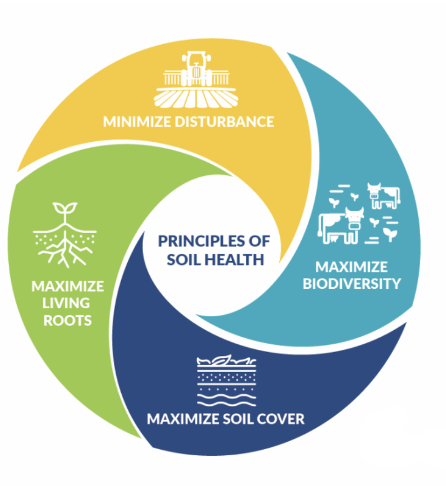
Administered by USDA’s Natural Resources Conservation Service (NRCS), the new Regenerative Pilot Program is designed to deliver a streamlined, outcome-based conservation model—empowering producers to plan and implement whole-farm regenerative practices through a single application. In FY2026, the Regenerative Pilot Program will focus on whole-farm planning that addresses every major resource concern—soil, water, and natural vitality—under a single conservation framework. USDA said it is dedicating $400 million through the Environmental Quality Incentives Program (EQIP) and $300 million through the Conservation Stewardship Program (CSP) to fund this first year of regenerative agriculture projects. The program is said to be designed for both beginning and advanced producers, ensuring availability for all farmers ready to take the next step in regenerative agriculture.
To support the program, NRCS is establishing a Chief’s Regenerative Agriculture Advisory Council “to keep the Regenerative Pilot Program grounded in practical, producer-led solutions,” USDA said. The Council will meet quarterly, with rotating participants, to advise the Chief of NRCS, review implementation progress, and help guide data and reporting improvements. Its recommendations will shape future USDA conservation delivery and strengthen coordination between the public and private sectors.
USDA also said it is permitting public-private partnerships as part of the Regenerative Agriculture Initiative (RAI), claiming that such partnerships will allow USDA to match private funding, thus stretching taxpayer dollars further, and bringing new capacity to producers interested in adopting regenerative practices.
We asked leaders in regenerative agriculture to weigh in on USDA’s announcement. Here’s what they had to say:
Hannah Tremblay, Policy and Advocacy Manager, Farm Aid
As a strong supporter of regenerative agriculture, Farm Aid welcomes USDA’s funding announcement for regenerative agriculture, but the lack of details about the program's specifics means we're unable to give a full response or analysis. From the few details that have been provided to date, this looks like a streamlining of processes and possible restructuring of existing funding, but does not appear to represent new funding for these programs.
The chronic underfunding and oversubscription of the EQIP and CSP programs – two crucial conservation programs – are ongoing problems that this administration and Congress have not addressed. The recent budget bill passed by Congress makes it easier for large operations to disproportionately use EQIP and CSP dollars by removing payment limits and Adjusted Gross Income (AGI) requirements. Policies like these make these programs less accessible to small and diversified farming operations and do a disservice to family farmers who are trying to enact conservation practices.
This sudden embrace of regenerative agriculture flies in the face of the other policies we've seen from this administration, including canceling the Climate Smart Commodities Program, EPA's fast tracking of pesticides and cuts to USDA's NRCS staff, who are crucial to helping farmers implement soil health practices.
Matthew Dillon, Co-CEO, Organic Trade Association
There are still many details to come in the implementation of the NRCS regenerative program, but the Organic Trade Association (OTA) is always supportive of programs that help farmers transition to improved management of their natural resources. It would appear that it will give farmers an à la carte menu of practices that they can select and create a less burdensome bundled approach with NRCS. If we can make it easier for farmers to better care for natural resources, that’s a good outcome.
The optimal outcome would be for farmers to have integrated and holistic conservation plans, like those that organic farmers do in their annual Organic System Plan. And ideally, that would include pesticide mitigation plans for those farmers who are conventional. Hopefully for some of these farmers it will be an on-ramp to exploring opportunities in organic markets.
At the end of the day, policy incentives will only go so far in rewarding farmers for ecosystem services – markets and consumers are essential. Organic is the only third party, verified, backed-by-law marketplace that does that. We will work to make sure organic farmers have adequate access and get recognition in these programs.
Ken Cook, Executive Director, Environmental Working Group
Basically, I’m pretty skeptical of the Regenerative Pilot Program. If you look at all of Robert F. Kennedy, Jr.’s big talk during the Trump campaign and then during the transition regarding subsidies, $700 million rebranded from existing programs (with multi-billion-dollar budget baselines that a lot of us built and defended) is hardly the bold action he promised. The emphasis on efficiency and red tape is interesting—whole farm plans that originated in the 1930s and 1940s in the old Soil Conservation Service (SCS) are all about paperwork and red tape, and going back, a lot of us in the conservation world (and reformist elements within NRCS) pushed the agency to focus on practices aimed at priority lands/problems. Reformers in NRCS in the 1980s and after always felt whole-farm plans were make-work that resulted in career advancements (and documents on farmers’ shelves) but not necessarily conservation on the ground.
There was no emphasis at the press conference announcing the program on reducing pesticides. Nor was there any emphasis on aiming some of the money at organic, the only system out there that does fulfill the MAHA rhetoric from farm to grocery shelf.
And of course, during the Biden administration there was so much emphasis in regenerative circles on climate progress via carbon farming, carbon sequestration, farmers selling carbon credits, and so on, but those words and objectives have been forbidden by USDA. (We always thought the carbon stuff was way oversold—and not needed to justify lots of benefits from mixed crop-livestock farms, longer more diverse rotations, cover crops and other sensible practices that…have also been around and under-deployed by farmers since the 1930s despite BILLIONS spent by taxpayers on free technical assistance and cost-sharing).
Then of course there are the ‘antithesis-of-MAHA’ cuts to vital programs earlier this year to get local food to schools and food banks, the reductions in NRCS staff to do those whole-farm plans, and the massive, multi-billion-dollar subsidies that have been paid in tariff reparations to big commodity operations—whose payment limits have been generously increased to make sure the biggest operations get the most money.
Christopher Gergen, CEO, Regenerative Organic Alliance
The Regenerative Organic Alliance (ROA) welcomes the USDA’s announcement of a new Regenerative Pilot Program as an important signal of federal commitment to advancing healthier soils, more resilient farms, and stronger rural economies. We applaud this growing recognition that agriculture must go beyond extraction toward restoration, a core belief that has guided our work since the creation of the Regenerative Organic Certified® (ROC™) standard.
As USDA begins shaping the program’s criteria and implementation, ROA encourages alignment with the rigorous, holistic principles that define regenerative organic agriculture: improving soil health, ensuring dignified and fair conditions for farm workers, and supporting the humane treatment of animals. These three pillars are foundational to the ROC framework and have proven essential to achieving long-term ecological, economic and community benefits.
We are encouraged that the USDA acknowledges the role of organic systems in regenerative agriculture. ROC builds on USDA Organic as a necessary baseline for eliminating toxic synthetic pesticides, fertilizers, and GMOs — inputs that undermine soil biology, water quality, pollinator health, and farmworker safety. ROC then goes further by requiring additional soil health practices, pasture-based animal welfare, and fair labor conditions.
As decades of peer-reviewed research and field evidence show, regenerative practices alone cannot fully deliver intended environmental outcomes if they allow routine use of synthetic chemicals. The scientific record also shows that organic systems, including those that strategically use tillage for weed control in lieu of herbicides — consistently build soil carbon, increase water retention, reduce erosion, and improve microbial diversity. We encourage USDA to ensure that any regenerative agriculture program reflects this evidence by prioritizing systems that avoid toxic inputs and protect both ecological and human health.
The rapid expansion of regenerative claims creates both opportunity and risk. Without clear definitions, rigorous standards, and third-party verification, the regenerative category is vulnerable to greenwashing and consumer confusion. Independent analysis has shown that some non-organic regenerative labels allow herbicides, GMOs, synthetic fertilizers, and minimal verification, which could undermine public trust and the credibility of the entire regenerative movement.
With the right structure, USDA’s initiative can accelerate the transition to a food and fiber system that heals the land, strengthens rural communities, and ensures a healthier future for all; a vision that drives our mission every day. ROA looks forward to engaging with USDA as this pilot advances and to contributing our expertise, data, and proven frameworks to help shape a regenerative future rooted in integrity, transparency, and meaningful impact.
Jeff Tkach, Executive Director, Rodale Institute
Rodale Institute welcomes the USDA’s announcement of the new Regenerative Pilot Program and views it as an important signal that soil health, farm resilience, and long-term productivity are increasingly central priorities within American agriculture. This moment reflects a growing federal recognition that healthy soil is foundational to a secure food system, climate resilience, and human health.
For more than 78 years, Rodale Institute has led the science and practice of regenerative organic agriculture, long before “regenerative” entered the policy lexicon. Through the longest-running side-by-side comparison of organic and conventional farming systems in North America, Rodale Institute has demonstrated that regenerative organic agricultural practices can improve soil health, enhance water quality, increase resilience to extreme weather, and support farm profitability.
With a national network of research hubs, education initiatives and farmer training programs, Rodale Institute has helped producers across regions and production systems transition to regenerative organic practices rooted in measurable outcomes and continuous improvement. This experience, coupled with our leadership as a founding member of the Regenerative Organic Alliance, positions Rodale Institute as a critical partner in ensuring that regenerative initiatives are clearly defined, science-based, and deliver real, lasting benefits for farmers, communities, and the environment.
As the USDA advances this pilot program, Rodale Institute stands ready to contribute its decades of research, farmer-centered expertise, and leadership to help guide its success. By keeping soil health at the center of agricultural policy and practice, we can continue building a food system that supports productive farms, nourishing food, and healthy people, now and for future generations.
Paige Mitchum, Executive Director, Regen Circle
This Regenerative Agriculture Pilot Program is not new. It is a carve-out from the existing Farm Bill’s conservation funds using the same forms, rankings and field offices. The key difference is that they were processing proposals differently. Under the Climate Smart Commodities Program the process went USDA ↔ big project ↔ farmer. This pilot now routes money through individual NCRS contracts so the process flows as NRCS ↔ farmer. This sounds cleaner unless the agency in the middle just lost 20% of its staff, as is the case with the NRCS.
By doing away with the big projects intermediaries you lose the support provided by states, tribes and NGOs whose role was to recruit farmers, do measurement verification and reporting, provide technical assistance and handle smaller payments. Without this the NRCS will need significantly more bandwidth to handle a direct to farmer approach. But they aren’t staffing up; the FY2026 plan indicated further personnel reductions, leaving me to draw only one conclusion: The regenerative pilot program will be woefully under resourced, forcing them to accept applications from large well-resourced operations leaving small and vitally important producers on their own.
In a nine‑day window in December, the administration: backed pesticide maker Bayer in court, poured billions into the most glyphosate‑dependent crop systems, and then unveiled a sub‑billion-dollar regenerative agriculture pilot program as its health‑and‑soil solution. Once again this administration has brilliantly cut social infrastructure and meaningful programs that were supporting small farmers in regenerative transition, shielded a flagship herbicide company from liability, bailed out large monocultures, and in exchange handed us a small carve-out of existing programs with zero new infrastructure or any credible way of executing said program. As such, this reads more as a marketing scheme than it does meaningful policy work, and I hope that the private sector can step up and support the small holder farmers at the heart of the regenerative movement.
They took away the mountain we were slowly, imperfectly but intentionally building, they took a shovel and put a small mound of dirt aside and said, take this and enjoy the view.
Read Page’s full article here.
André Leu, D.Sc., BA Com., Grad Dip Ed., International Director, Regeneration International
In theory, this is a great initiative. Improving soil health through regenerative practices has been long overdue. Most farmers, including many organic farmers, need to adopt these methods. In reality, it will depend on who is selected to sit on the Chief’s Regenerative Agriculture Advisory Council. If it is composed of regenerative and organic farmers, it will be credible. If they repeat the NOSB (National Organic Standards Board) model, it will be hijacked by academics, NGOs and agribusiness. It will be an exercise in greenwashing, promoting no-till Roundup-ready GMOs and other degenerative practices. I don't have confidence that, given the USDA's history with the organic sector, they will choose the credible option.
Alexis Baden-Mayer, Political Director, Organic Consumers Association
I've been looking into where the money's coming from for the Regenerative Agriculture Pilot Program and how much has been allocated versus taken away. This is money Congress appropriated for two regenerative agriculture programs (the Environmental Quality Incentives Program and the Conservation Stewardship Program) with a total annual budget of $4.515 billion. So, if $700 million is going to regenerative, that means $3.815 billion (84%) of EQIP and CSP funds will be going to factory farms and pesticide-drenched genetically modified field crops. Admittedly, Trump's USDA isn't the first to misappropriate these funds this way, but it is the first to celebrate it.
Earlier this year, the USDA refused to disburse $6.062 billion appropriated by Congress for family famers adopting regenerative agriculture practices and serving local markets. Now we're now supposed to be happy because the USDA is earmarking $700 million for regenerative agriculture? I feel like they're trying to convince us two pennies is more than a dollar bill because two is more than one.
Max Goldberg, Founder, Editor and Publisher of Organic Insider
The USDA's announcement of about $700 million dedicated to regenerative agriculture puts the spotlight on the importance of soil health at a critical time and is extremely welcome. Yet, whether this program can actually deliver tangible results to America's farmland remains a serious uncertainty, and there are two questions that must be answered.
First, does the USDA have adequate on-the-ground technical staff to assist farmers in executing regenerative practices while also measuring soil health improvements? Second, will this program actually lead to a reduction in pesticide use? Only time will tell, but the level of skepticism is very high that the funds will be spent in an efficient manner and this will result in meaningful progress.
Dan Kane, Lead Scientist, MAD Agriculture
The Regenerative Agriculture Initiative (RAI), also called the Regenerative Pilot Program (RPP), is a program announced by Secretary Rollins on Dec. 10, 2025. The press release from USDA describes it as a $700 million pilot program for FY2026 focused on helping farmers transition to regenerative practices.
The RAI is not a new program but instead a repackaging of existing USDA Natural Resources Conservation Service (NRCS) conservation programs, including the Environmental Quality Incentives Program (EQIP) and the Conservation Stewardship Program (CSP). Nor does the RAI designate new funding towards either of these programs and the practices they target. It will likely function as a priority national funding pool producers can apply to with some minor modifications to requirements and the application process. Efforts by the prior administration to increase funding to key regenerative practices and the regenerative agriculture community more broadly through the Inflation Reduction Act (IRA) would have provided greater funding overall in FY2026 and beyond.
The IRA added approximately $19.5 billion into USDA conservation programs above and beyond 2018 Farm Bill funding levels over a period of four fiscal years (FY2023-FY2028). EQIP would’ve been expanded by $8.45 billion over that period, with about $3.45 billion of that coming in FY 2026 for a combined total of $5.5 billion in FY2026. CSP would’ve received $3.25 billion over that period with $1.5 billion coming in FY2026 for a combined total of $2.5 billion in FY2026.
Given all the shifts in funding, and the reallocation of IRA funds to CSP and EQIP baseline spending enacted through the One Big Beautiful Bill Act (OBBB), RAI is effectively funded through the reallocation of IRA funds. But, considering the reduction in total funding, it’s still not net new spending compared to what would’ve happened had IRA stayed in place. Although the OBBB increased baseline EQIP and CSP funding over a longer time period, the Congressional Budget Office still estimates that the rescission and reallocation of IRA funds will result in a net decrease of approximately $2 billion in actual conservation spending through FY2034.
While some of the changes included in this program (bundling applications, whole farm planning, soil testing) are good ideas, they’re ideas that NRCS has already applied through other programs. Major reductions in NRCS staff and proposed changes to how the NRCS is structured are likely to limit total capacity and reduce agency efficiency and function. Last, the elimination of income eligibility caps and the potential integration of public/private partnerships into the program raise concerns that this program and USDA conservation programs writ large will end up primarily serving very large farmers and agribusiness interests.
Any USDA programming focused on regenerative agriculture is a welcome addition to the financial stack for producers. No doubt we at Mad Agriculture will keep this program in mind as a potential option for the producers with whom we work. But this is a small win in comparison to the huge loss that came through the rescission/reallocation of IRA funds.
Read MAD Agriculture’s full analysis of USDA’s Regenerative Agriculture Initiative here.
Charles "Chuck" Benbrook, Ph.D., Founder, Benbrook Consulting Services
Chuck Benbrook is the former Chief Science Officer of The Organic Center; former Research Professor, Center for Sustaining Agriculture and Natural Resources, Washington State University; and former Director, National Academy of Sciences Board on Agriculture
As someone who has been deeply involved in soil conservation policy, I was excited to see this announcement from the USDA Natural Resources Conservation Service (NRCS). With $700 million committed in the next fiscal year, it's a pretty substantial investment in regenerative agriculture. The hope is that it will go on with continued, and hopefully increased, funding.
As I read the announcement for the Regenerative Pilot Program, it seems to be a clear recognition by the USDA that soil health and what is needed to enhance the biological integrity and health of the soil has to be a very high priority. In fact, on par with controlling physical erosion. And I think that's the right direction. That's how we're going to lower the cost of production. That's how we're going to clean up water and start dealing with all these rural areas with ridiculously high levels of nitrate in everybody's drinking water. It's how we're going to deal with resistant weeds. Dealing with soil biology at this point is the most important and lowest hanging fruit for healing what ails us.
I think there are two aspects to the significance of USDA's announcement. One, it recognizes farmers anywhere along the continuum, from conventional, chemical-dependent farmers to regenerative organic producers. Wherever you are along the continuum, if you want to move toward a more diversified, resilient, less chemical-dependent system, you have to make multiple changes simultaneously and timed correctly to succeed.
I also think the NRCS approach of entering into customized contracts with growers that start from where they're at and finance the next round of changes in their farming systems, which could include changes in rotations, tillage, cover crop management and water management, is a good one.
It's also a positive that it's a streamlined administrative process where the farmer basically comes in with a proposal and works with the local NRCS and farm services agency staff to come up with how much the cashier payment will be next year and presumably for subsequent years for the practices that are adopted. Of course, one of the big concerns that people have is how progress is going to be monitored and quantified in a convincing way. Also, like everyone, I'm curious to see the details of how NRCS is going to structure the contracts.
My wish with this program is that smaller producers will have as much access as larger operators, however the fact is, those big commodity farmers tend to get favored when it comes to grants. Yet, I didn't see anything in the announcement to suggest that the NRCS is going to take into account the size of the farm in allocating the available funds. But let's face it, the larger, more sophisticated, often multi-owner, farms are going to be in the door first with well thought out proposals.
Regarding the appointment of an Advisory Council to help oversee the Regenerative Pilot Program, I think (USDA) Secretary Rollins has had a constructive series of conversations with people that come out of the organic and regenerative community. I also think she'll insist that a few folks from that world are on this advisory committee. But, you know, if past is prologue, the soybean growers will have a rep, the cotton council will have a rep and the pesticide industry will have a couple of reps. And it might not be somebody that's working actively for a pesticide manufacturer today, but it could be someone who has deep roots in that community. They may be an academic now. They may work for a consulting firm, but you know, the politics inside these federal agencies is really brutal.
The NRCS regenerative program has great potential to be the fulcrum to start the transition towards more diversified, sustainable regenerative systems, but for it to work in a meaningful way at scale, it has to be combined with a similar negotiated change in how commodity program subsidies and crop insurance subsidies are currently supporting agriculture. And that's the core idea behind what we're working on now called the Farm Economic Viability and Renewal Act, or FEVER Act, to help spark discussion among agriculture community leaders and policymakers of the systemic reforms in policy needed to avoid ever-larger bailouts in the not-too-distant future.
The large sums of taxpayer money at play — over $40 billion in farm support in 2025, and likely even more in 2026 — heighten the urgency of reaching agreement on substantive policy changes. The pressing challenge is to not invest taxpayer dollars during 2026 and beyond in bigger and better band aids, but instead in support of the deeper, systemic changes in farming systems that most farmers, advocates for healthier rural communities, scientists, and policy wonks know are needed.
Companies interested in partnering with USDA NRCS in the Regenerative Pilot Program can email regenerative@usda.gov for more information. Farmers and ranchers interested in regenerative agriculture are encouraged to apply through their local NRCS Service Center by their state’s ranking dates for consideration in FY2026 funding. Applications for both EQIP and CSP can now be submitted under the new single regenerative application process.
Steven Hoffman is Managing Director of Compass Natural Marketing, a strategic communications and brand development agency serving the natural and organic products industry. Learn more at www.compassnatural.com.
’Tis the Season: December’s Guide to Nonprofit Giving
This article first appeared in the December 2024 issue of Presence Marketing’s newsletter.
By Steven Hoffman
December is a time when the conscious CPG industry traditionally leans in to support nonprofit organizations dedicated to healthy living, the environment, community development, social justice, nutrition and hunger, animal welfare, education and more. Ask anyone in the natural channel what mission they support and more often than not, you’ll get a passionate earful. Surely, you and/or your company have particular causes you support. Yet, in this season of giving, we’d like to present 12 nonprofits worthy of consideration for their invaluable contributions to people and the planet.
Adopt a Native Elder
For more than 30 years, Adopt-A-Native-Elder (ANE) has used an integrated approach to go beyond charity to assist traditional elders on the Navajo Reservation in Utah and Arizona. ANE serves to help reduce extreme poverty, food insecurity and hardship facing traditional elders living on the Navajo Reservation. ANE is a humanitarian organization focused on delivering food, medical supplies, firewood and other forms of elder support while honoring the tradition and dignity of Navajo elders. ANE also offers one-of-a-kind, handmade woven rugs and jewelry available for sale, in which 100% of the proceeds benefit the elder artist.
Alaffia Foundation
Growing up and working to support his family in Togo, West Africa, Alaffia founder Olowo-n’djo Tchala witnessed firsthand the injustices and inequalities many of the women in his village faced. After attending university in the U.S., he felt driven to do something about it. In 1996, Tchala met his partner Prairie Rose Hyde, who served in his village as a Peace Corps volunteer. Inspired by a shared mission, the two launched Alaffia’s first shea butter collective in 2003. In 2004 they established the Alaffia brand in the U.S. Alaffia partners with Global Alliance for Community Empowerment (GACE), a 501(c)3 organization, to empower women and their communities in West Africa by investing in fair trade, maternal care, child education, clean water and climate change.

Comparsa
Comparsa is a documentary film dedicated to shining a light on a group of young women in Guatemala who use performance art to empower their community against gender-based violence. Directed by veteran filmmakers Vickie Curtis and Doug Anderson, Comparsa follows sisters Lesli and Lupe, who are spurred to action after the murder of their friend Siona in a fire. Driven to overcome a culture of silence, the sisters stage a grand public performance called a "comparsa" to raise awareness and combat violence against women, and to inspire a new generation of young leaders in Latin America. The nonprofit Girl Rising team is collaborating with the filmmakers of Comparsa to share Lesli and Lupe’s inspiring story.
Conscious Alliance
From exchanging copies of a poster donated by the String Cheese Incident to concertgoers at Denver’s Fillmore Auditorium for cans of food for a food drive in 2002, today Conscious Alliance operates out of an 11,000-square-foot distribution center, serving local communities and Native Americans, in particular the Pine Ridge Reservation in South Dakota. Working with top bands and musicians, including Dave Matthews, Widespread Panic and others, along with renowned poster artists, Conscious Alliance’s Art that Feeds program has delivered millions of pounds of food and helps feed students at all 15 schools on the Pine Ridge Reservation. The group also serves communities hit by natural disasters. Conscious Alliance works directly with natural food companies for product donations. Buy a concert poster and make a donation at ConsciousAlliance.org.
The HerbiCulture Project
Established by Catherine Hunziker, founder of herbal products leader WishGarden Herbs, The HerbiCulture Project (HCP) is a nonprofit organization dedicated to advancing medicinal plants while promoting regenerative production methods to ensure the highest quality botanicals, and to rebuild soil health and sequester carbon. HCP brings together a network of herbalists, regenerative farmers, permaculturists, researchers, soil health and climate specialists, nutritional supplement providers, agri-voltaic leaders and more. HCP has a mission of reintroducing medicinal herb crops at scale domestically as a solution to three critical issues: 1) Generate more lucrative crop revenues and healthier soil for farmers, 2) Support a growing demand and need for sustainable wellness ingredients sourced in the U.S., and 3) Introduce strategies that can improve soil health, which is at the root of our climate crisis. Visit The HerbiCulture Project’s Go Fund Me Page to donate.
Kiss the Ground
With award-winning documentary films and storytelling, educational materials and partnering with companies, Kiss the Ground (KTG) is at the forefront of advancing regenerative agriculture. Founded in 2013, KTG holds the vision that every person has a unique way to participate in the reverence, stewardship and regeneration of the planet. In 2020, in partnership with Big Picture Ranch, Kiss The Ground released a groundbreaking documentary on Netflix narrated by Woody Harrelson. The film and its sequel, Common Ground, which have been viewed by millions of people, explore regenerative agriculture, an innovative approach to farming that combines indigenous knowledge, holistic management and modern science and has the potential to heal the planet, create food security and mitigate climate change. Learn more about partnering with KTG here.
Living Lands & Waters
After years of being told "no" by the government, in 1997, East Moline, Illinois, resident Chad Pregracke decided to start cleaning up the Mississippi River by himself, founding Living Lands & Waters. Inspired by NASCAR races, the nonprofit organization received its first sponsorship, and Chad was able to remove 45,000 pounds of refuse from the river in his first year. Today, with the help of more than 126,500 volunteers and supporters, Living Lands & Waters hosts river cleanups, watershed conservation initiatives, educational workshops, tree plantings and other environmental efforts. Since the organization was founded, it has grown to be the only “industrial strength” river cleanup organization like it in the world, and has removed over 13 million pounds of garbage from U.S. waterways. Learn more about Living Lands & Waters in this video, and contribute here.
Rodale Institute
Celebrating more than 75 years of organic leadership, The Rodale Institute remains at the vanguard of science and best practices in advancing organic and regenerative agriculture. Rodale's nearly four-decades-long flagship study, the Farming Systems Trial, has scientifically proven that organic agriculture performs as well as, if not better than, conventional agriculture. Rodale focuses on demonstrating the power of nutrient-dense organic food in preventing and reversing diseases and works to create economic vitality in rural communities by training tomorrow’s organic farmers. Rodale also partners with schools, hospitals and other community organizations to help people make informed choices about the food they eat and how that impacts their health. Visit https://rodaleinstitute.org.
Salt & Light Coalition
Based in Chicago, the Salt & Light Coalition is a grassroots organization dedicated to breaking the cycle of human trafficking through mind-body restoration and workforce development. Salt & Light believes that yoga, fitness, proper nutrition and spirituality can change the world. The organization provides a one-year program for survivors of trafficking that focuses on healing, job training and building self-sufficiency. Most victims are immigrants and people of color, says Salt & Light founder Isabel Olson, Ph.D. It's also an epidemic in our own back yard -- “Even though we’re not aware of it, 25,000 women are trafficked in the Chicago area every year. That’s two women every hour of every day,” Olson says. Learn more and contribute at https://saltandlightcoalition.com.
The Organic Center
The Organic Center (TOC) is the organic products industry’s leading independent research and education organization advocating for the nutritional, health, environmental and climate mitigating benefits of organic food and farming. Founded in 2002 as a nonprofit 501(c)3 organization under the administration of the Organic Trade Association, TOC collaborates with leading academic and governmental institutions to advance research on organic food and farming, and to communicate those findings to the public. TOC is hosting its second annual Organic Night Out fundraiser on March 5 at Expo West 2025, and is currently accepting nominations from brands and businesses for the Organic Champions Awards, to be presented at the event. Visit https://www.organic-center.org.
Vitamin Angels
Founded in 1994 by natural products industry veteran Howard Schiffer, Vitamin Angels is a public health nonprofit organization working to improve nutrition and health outcomes in low-resource settings worldwide. The organization helps to strengthen, extend and amplify the impact of partner organizations working to reach the most nutritionally vulnerable groups, including pregnant women, infants and children, with evidence-based nutrition interventions and health services. Vitamin Angels works with more than 2,000 local organizations, including governments, to reach more than 60 million women and children in 65 countries annually. Vitamin Angels will host its 2025 Celebration on March 4 at Expo West. Visit https://www.vitaminangels.org.
WomenServe
In 2006, Nioma Marissa Sadler traveled to Rajasthan, India, as the Goodwill Ambassador for leading tea company Traditional Medicinals. While visiting the farms, she would sit with local women and listen to their stories of the oppression that still exists in rural India. Inspired by the stories they shared, WomenServe was born. Since then, the organization has invested over $5 million, with a mission to cultivate self-reliance in women and their communities by providing platforms and skills that foster community engagement, advocacy and collective participation. "Through amplifying women's voices and leveraging their strengths, we enhance local power and resilience. Rajasthan is just the start of our mission to establish gender equity and transform the lives of women and girls," says Nioma. Traditional Medicinals partners with WomenServe, particularly in farming communities in India. Visit https://www.womenserve.org.
Steven Hoffman is Managing Director of Compass Natural, providing public relations, brand marketing, social media and strategic business development services to natural, organic, sustainable and hemp/CBD products businesses. Contact steve@compassnaturalmarketing.com.
Giant Supermarkets Partner with Rodale Institute to Support Organic Farming

Photo: Pexels
This article originally appeared in Presence Marketing’s April 2021 Industry Newsletter
By Steven Hoffman
Supermarket leader The Giant Company announced it has partnered with the Rodale Institute to step up its support of organic farming as part of the company’s efforts to promote more sustainable agriculture, and to reduce food insecurity, Supermarket News reported. Carlisle, PA-based Giant Foods, a division of Ahold Delhaize, operates 190 supermarkets in Pennsylvania, Maryland, Virginia and West Virginia. Widely recognized as a founder of the modern organic food movement, Rodale Institute is a global leader in regenerative organic agriculture, Giant said in a statement. “Through education, research and training, Rodale Institute is quite clearly leading the charge to transform farming for the better,” said Nicholas Bertram, President of The Giant Company. “Their important work complements our other environmental initiatives including offsetting our carbon footprint, creating pollinator habitats, and reducing food waste,” he said. As part of a new “Healing the Planet” initiative, Giant said it will work to support three of Rodale's initiatives, including helping farmers transition to growing organic crops; an internship that trains farmers for a career in regenerative organic agriculture; and a research project aimed at increasing organic land. “Despite the organic food market reaching $55 billion last year, only 1% of U.S. cropland is currently organic," said Jeff Moyer, CEO of the Rodale Institute. "Now more than ever, it's critical that food retailers, farmers, and consumers join together to advocate for the food system they want to see — one that heals both people and the planet." Russell Redding, Pennsylvania's Secretary of Agriculture, applauded the partnership and pointed out that the state is a national leader in organic sales. "These targeted investments grow opportunities for consumers to buy what they want and farmers and grocers to earn more, and investing in regenerative farming improves our soil and water so we can keep growing in the future," he said.
Study Warns Climate Change Could Cost U.S. 10.5% of GDP by 2100

Photo: Pexels
Originally Appeared in Presence Marketing News, September 2019
By Steven Hoffman
While there may have been some hope that certain countries could escape the brunt of global warming, a new study conducted by the National Bureau of Economic Research suggests that “virtually all” nations will be negatively impacted by climate change by 2100. “Using a panel data set of 174 countries over the years 1960 to 2014, we find that per-capital real output growth is adversely affected by persistent changes in the temperature above or below its historical norm,” the study states. The study also suggests that, on average, richer colder countries would lose as much income to climate change as poorer, hotter nations. “Our counterfactual analysis suggests that a persistent increase in average global temperature by 0.04°C per year, in the absence of mitigation policies, reduces world real GDP per capita by 7.22% by 2100,” said the study’s authors. The impact on the U.S. — which accounted for much of the research’s focus to compare economic activity in hot or wet areas — would be even greater, a loss of 10.5% of its GDP by 2100, according to the study. In related news, the United Nations (UN) in August issued an intergovernmental panel report on climate change claiming that 23% of global greenhouse gas emissions are attributed to agricultural activities. In the report, the UN concluded that humans cannot mitigate the effects of climate change without making drastic changes to the ways we grow food and use land. Organizations such as the Rodale Institute are promoting regenerative agriculture as a solution to sequester carbon and reduce the effects of climate change through agriculture.
Organic Agriculture A Cool Solution to Global Warming
Simply stated, organic farming has the potential to help reduce agriculture’s impact on global warming.

Source: Pexels
“Organic farming approaches…not only use an average of 30% less fossil energy but also conserve more water in the soil, induce less erosion, maintain soil quality and conserve more biological resources than conventional farming does.” - David Pimentel, Ph.D., Professor of Ecology and Agriculture, Cornell University, and author of Food, Energy and Society.
Growing food requires a lot of fossil fuel energy, which generates greenhouse gases (GHGs). With nearly 7 billion people on the planet, agriculture and livestock production also are responsible for widespread clearing of forests, grasslands and prairies. These are major contributors to global warming. However, researchers point to organic farming as a way to reduce energy inputs, help minimize agriculture’s impact on global warming, and also help farmers adapt to rising global temperatures.
Conventional Agriculture Adds Heat
The global food system is estimated to account for one-third of the world’s total greenhouse gas emissions, says Anna Lappe, author of Diet for a Hot Planet. Much of the fossil fuel used in commercial agriculture comes not only from running tractors and machinery, but also because petroleum is a primary ingredient in synthetic pesticides, herbicides and fertilizers, which are widely used in conventional agriculture. Synthetic nitrogen fertilizer is known to release large amounts of nitrous oxide into the atmosphere, a potent GHG and a primary threat to earth’s ozone layer. Synthetic nitrogen fertilizer also is responsible for the Dead Zone in the Gulf of Mexico, an oxygen-depleted area the size of New Jersey in which no fish can survive.
Organic Farming A Cool Solution
Simply stated, organic farming has the potential to help reduce agriculture’s impact on global warming. According to Dr. David Pimentel of Cornell University, author of Food, Energy and Society, organic agriculture has been shown to reduce energy inputs by 30%. Organic farming also conserves more water in the soil and reduces erosion. Also, healthy organic soils tie up carbon in the soil, helping to reduce CO2 levels in the atmosphere.
Changes in temperature caused by global warming could have dramatic effects on agriculture. Extreme weather, rising temperatures, drought and flood caused by global warming all could have an adverse impact on yield, disease and insect pests. Organic farmers may be better able to adapt to climate change in that healthy organic soils retain moisture better during drought, making it more available to plant roots. Also, organic soils percolate water better during floods, helping to decrease runoff and soil erosion. The National Sustainable Agriculture Coalition recently reported, “Sustainable and organic agricultural systems offer the most resilience for agricultural production in the face of the extreme precipitation, prolonged droughts and increasingly uncertain regional climate regimes expected with rapid global warming.”
Sources
Environmental, Energetic and Economic Comparisons of Organic and Conventional Farming Systems, Pimentel, D., et. al., Bioscience (Vol. 55:7), July 2005.
Diet for a Hot Planet: The Climate Crisis at the End of your Fork and What You Can Do About It, Anna Lappé, Bloomsbury USA, April 2010.
Getting Real About the High Price of Cheap Food, Bryan Walsh, Time Magazine, Aug. 31, 2009.
Climate Change in Africa: The Threat to Agriculture, United Nations Food and Agriculture Organization, Oct. 15, 2006.
Livestock’s Long Shadow: Environmental Issues and Options, United Nations Food and Agriculture Organization, 2006.
A Harvest of Heat: Agribusiness and Climate Change, Agribusiness Action Initiatives North America’s Working Group on Climate Change, 2010; www.agribusinessaction.org.
Impacts of Genetically Engineered Crops on Pesticide Use in the United States: The First Thirteen Years, Benbrook, C., et. al., The Organic Center, November 2009.
Reducing Energy Inputs in the U. S. Food System, Pimentel, D., Human Ecology, 2008.
Nitrous Oxide (N2O): The Dominant Ozone-Depleting Substance Emitted in the 21st Century, A. R. Ravishankara, et. al., National Oceanic and Atmospheric Administration, Science, August 28, 2009.
Rodale Institute, 30-year Ongoing Field Trials, Emmaus, PA, www.rodaleinstitute.org.
Organic Agriculture and Climate Change in Developing Countries - Research conducted by Costa Rican Corporation for Training and Development, Garibay, S., et. al., presented at BioFach Congress, Nuremberg, Germany, 2008.
Organic Agriculture and the Global Food Supply, Ivette Perfecto, et. al., University of Michigan, Renewable Agriculture and Food Systems, July 2007.
Organic Agriculture and Food Security in Africa, United Nations Conference on Trade and Development and United Nations Environment Programme, Capacity Building Task Force on Trade, Environment and Development, October 2008.
Agriculture & Climate Change: Impacts and Opportunities at the Farm Level, National Sustainable Agriculture Coalition Policy Position Paper, July 16, 2009.