Industry Leaders Respond to USDA’s Funding Announcement for Regenerative Agriculture
This article first appeared in the January 2026 issue of Presence Marketing’s newsletter.
By Steven Hoffman
U.S. Secretary of Agriculture Brooke Rollins, alongside U.S. Health and Human Services (HHS) Secretary Robert F. Kennedy, Jr., and Centers for Medicare & Medicaid Services Administrator Mehmet Oz, M.D., on December 10 announced a $700 million Regenerative Pilot Program to help American farmers adopt practices that improve soil health, enhance water quality, and boost long-term productivity, all while building a healthier, more resilient food system, said USDA. According to the release, HHS also is investing in research on the connection between regenerative agriculture and public health, as well as developing messaging to explain this connection.
“Protecting and improving the health of our soil is critical not only for the future viability of farmland, but to the future success of American farmers. In order to continue to be the most productive and efficient growers in the world, we must protect our topsoil from unnecessary erosion and improve soil health and land stewardship. Today’s announcement encourages these priorities while supporting farmers who choose to transition to regenerative agriculture. The Regenerative Pilot Program also puts farmers first and reduces barriers to entry for conservation programs,” said Secretary Rollins.
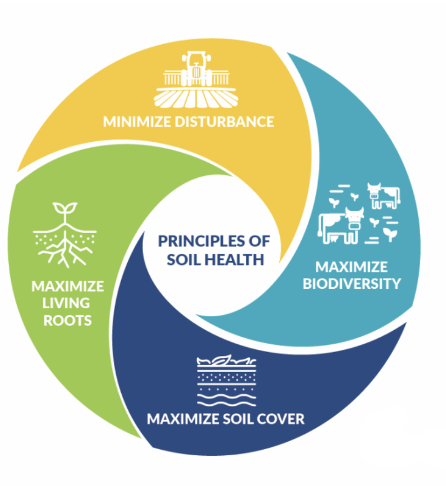
Administered by USDA’s Natural Resources Conservation Service (NRCS), the new Regenerative Pilot Program is designed to deliver a streamlined, outcome-based conservation model—empowering producers to plan and implement whole-farm regenerative practices through a single application. In FY2026, the Regenerative Pilot Program will focus on whole-farm planning that addresses every major resource concern—soil, water, and natural vitality—under a single conservation framework. USDA said it is dedicating $400 million through the Environmental Quality Incentives Program (EQIP) and $300 million through the Conservation Stewardship Program (CSP) to fund this first year of regenerative agriculture projects. The program is said to be designed for both beginning and advanced producers, ensuring availability for all farmers ready to take the next step in regenerative agriculture.
To support the program, NRCS is establishing a Chief’s Regenerative Agriculture Advisory Council “to keep the Regenerative Pilot Program grounded in practical, producer-led solutions,” USDA said. The Council will meet quarterly, with rotating participants, to advise the Chief of NRCS, review implementation progress, and help guide data and reporting improvements. Its recommendations will shape future USDA conservation delivery and strengthen coordination between the public and private sectors.
USDA also said it is permitting public-private partnerships as part of the Regenerative Agriculture Initiative (RAI), claiming that such partnerships will allow USDA to match private funding, thus stretching taxpayer dollars further, and bringing new capacity to producers interested in adopting regenerative practices.
We asked leaders in regenerative agriculture to weigh in on USDA’s announcement. Here’s what they had to say:
Hannah Tremblay, Policy and Advocacy Manager, Farm Aid
As a strong supporter of regenerative agriculture, Farm Aid welcomes USDA’s funding announcement for regenerative agriculture, but the lack of details about the program's specifics means we're unable to give a full response or analysis. From the few details that have been provided to date, this looks like a streamlining of processes and possible restructuring of existing funding, but does not appear to represent new funding for these programs.
The chronic underfunding and oversubscription of the EQIP and CSP programs – two crucial conservation programs – are ongoing problems that this administration and Congress have not addressed. The recent budget bill passed by Congress makes it easier for large operations to disproportionately use EQIP and CSP dollars by removing payment limits and Adjusted Gross Income (AGI) requirements. Policies like these make these programs less accessible to small and diversified farming operations and do a disservice to family farmers who are trying to enact conservation practices.
This sudden embrace of regenerative agriculture flies in the face of the other policies we've seen from this administration, including canceling the Climate Smart Commodities Program, EPA's fast tracking of pesticides and cuts to USDA's NRCS staff, who are crucial to helping farmers implement soil health practices.
Matthew Dillon, Co-CEO, Organic Trade Association
There are still many details to come in the implementation of the NRCS regenerative program, but the Organic Trade Association (OTA) is always supportive of programs that help farmers transition to improved management of their natural resources. It would appear that it will give farmers an à la carte menu of practices that they can select and create a less burdensome bundled approach with NRCS. If we can make it easier for farmers to better care for natural resources, that’s a good outcome.
The optimal outcome would be for farmers to have integrated and holistic conservation plans, like those that organic farmers do in their annual Organic System Plan. And ideally, that would include pesticide mitigation plans for those farmers who are conventional. Hopefully for some of these farmers it will be an on-ramp to exploring opportunities in organic markets.
At the end of the day, policy incentives will only go so far in rewarding farmers for ecosystem services – markets and consumers are essential. Organic is the only third party, verified, backed-by-law marketplace that does that. We will work to make sure organic farmers have adequate access and get recognition in these programs.
Ken Cook, Executive Director, Environmental Working Group
Basically, I’m pretty skeptical of the Regenerative Pilot Program. If you look at all of Robert F. Kennedy, Jr.’s big talk during the Trump campaign and then during the transition regarding subsidies, $700 million rebranded from existing programs (with multi-billion-dollar budget baselines that a lot of us built and defended) is hardly the bold action he promised. The emphasis on efficiency and red tape is interesting—whole farm plans that originated in the 1930s and 1940s in the old Soil Conservation Service (SCS) are all about paperwork and red tape, and going back, a lot of us in the conservation world (and reformist elements within NRCS) pushed the agency to focus on practices aimed at priority lands/problems. Reformers in NRCS in the 1980s and after always felt whole-farm plans were make-work that resulted in career advancements (and documents on farmers’ shelves) but not necessarily conservation on the ground.
There was no emphasis at the press conference announcing the program on reducing pesticides. Nor was there any emphasis on aiming some of the money at organic, the only system out there that does fulfill the MAHA rhetoric from farm to grocery shelf.
And of course, during the Biden administration there was so much emphasis in regenerative circles on climate progress via carbon farming, carbon sequestration, farmers selling carbon credits, and so on, but those words and objectives have been forbidden by USDA. (We always thought the carbon stuff was way oversold—and not needed to justify lots of benefits from mixed crop-livestock farms, longer more diverse rotations, cover crops and other sensible practices that…have also been around and under-deployed by farmers since the 1930s despite BILLIONS spent by taxpayers on free technical assistance and cost-sharing).
Then of course there are the ‘antithesis-of-MAHA’ cuts to vital programs earlier this year to get local food to schools and food banks, the reductions in NRCS staff to do those whole-farm plans, and the massive, multi-billion-dollar subsidies that have been paid in tariff reparations to big commodity operations—whose payment limits have been generously increased to make sure the biggest operations get the most money.
Christopher Gergen, CEO, Regenerative Organic Alliance
The Regenerative Organic Alliance (ROA) welcomes the USDA’s announcement of a new Regenerative Pilot Program as an important signal of federal commitment to advancing healthier soils, more resilient farms, and stronger rural economies. We applaud this growing recognition that agriculture must go beyond extraction toward restoration, a core belief that has guided our work since the creation of the Regenerative Organic Certified® (ROC™) standard.
As USDA begins shaping the program’s criteria and implementation, ROA encourages alignment with the rigorous, holistic principles that define regenerative organic agriculture: improving soil health, ensuring dignified and fair conditions for farm workers, and supporting the humane treatment of animals. These three pillars are foundational to the ROC framework and have proven essential to achieving long-term ecological, economic and community benefits.
We are encouraged that the USDA acknowledges the role of organic systems in regenerative agriculture. ROC builds on USDA Organic as a necessary baseline for eliminating toxic synthetic pesticides, fertilizers, and GMOs — inputs that undermine soil biology, water quality, pollinator health, and farmworker safety. ROC then goes further by requiring additional soil health practices, pasture-based animal welfare, and fair labor conditions.
As decades of peer-reviewed research and field evidence show, regenerative practices alone cannot fully deliver intended environmental outcomes if they allow routine use of synthetic chemicals. The scientific record also shows that organic systems, including those that strategically use tillage for weed control in lieu of herbicides — consistently build soil carbon, increase water retention, reduce erosion, and improve microbial diversity. We encourage USDA to ensure that any regenerative agriculture program reflects this evidence by prioritizing systems that avoid toxic inputs and protect both ecological and human health.
The rapid expansion of regenerative claims creates both opportunity and risk. Without clear definitions, rigorous standards, and third-party verification, the regenerative category is vulnerable to greenwashing and consumer confusion. Independent analysis has shown that some non-organic regenerative labels allow herbicides, GMOs, synthetic fertilizers, and minimal verification, which could undermine public trust and the credibility of the entire regenerative movement.
With the right structure, USDA’s initiative can accelerate the transition to a food and fiber system that heals the land, strengthens rural communities, and ensures a healthier future for all; a vision that drives our mission every day. ROA looks forward to engaging with USDA as this pilot advances and to contributing our expertise, data, and proven frameworks to help shape a regenerative future rooted in integrity, transparency, and meaningful impact.
Jeff Tkach, Executive Director, Rodale Institute
Rodale Institute welcomes the USDA’s announcement of the new Regenerative Pilot Program and views it as an important signal that soil health, farm resilience, and long-term productivity are increasingly central priorities within American agriculture. This moment reflects a growing federal recognition that healthy soil is foundational to a secure food system, climate resilience, and human health.
For more than 78 years, Rodale Institute has led the science and practice of regenerative organic agriculture, long before “regenerative” entered the policy lexicon. Through the longest-running side-by-side comparison of organic and conventional farming systems in North America, Rodale Institute has demonstrated that regenerative organic agricultural practices can improve soil health, enhance water quality, increase resilience to extreme weather, and support farm profitability.
With a national network of research hubs, education initiatives and farmer training programs, Rodale Institute has helped producers across regions and production systems transition to regenerative organic practices rooted in measurable outcomes and continuous improvement. This experience, coupled with our leadership as a founding member of the Regenerative Organic Alliance, positions Rodale Institute as a critical partner in ensuring that regenerative initiatives are clearly defined, science-based, and deliver real, lasting benefits for farmers, communities, and the environment.
As the USDA advances this pilot program, Rodale Institute stands ready to contribute its decades of research, farmer-centered expertise, and leadership to help guide its success. By keeping soil health at the center of agricultural policy and practice, we can continue building a food system that supports productive farms, nourishing food, and healthy people, now and for future generations.
Paige Mitchum, Executive Director, Regen Circle
This Regenerative Agriculture Pilot Program is not new. It is a carve-out from the existing Farm Bill’s conservation funds using the same forms, rankings and field offices. The key difference is that they were processing proposals differently. Under the Climate Smart Commodities Program the process went USDA ↔ big project ↔ farmer. This pilot now routes money through individual NCRS contracts so the process flows as NRCS ↔ farmer. This sounds cleaner unless the agency in the middle just lost 20% of its staff, as is the case with the NRCS.
By doing away with the big projects intermediaries you lose the support provided by states, tribes and NGOs whose role was to recruit farmers, do measurement verification and reporting, provide technical assistance and handle smaller payments. Without this the NRCS will need significantly more bandwidth to handle a direct to farmer approach. But they aren’t staffing up; the FY2026 plan indicated further personnel reductions, leaving me to draw only one conclusion: The regenerative pilot program will be woefully under resourced, forcing them to accept applications from large well-resourced operations leaving small and vitally important producers on their own.
In a nine‑day window in December, the administration: backed pesticide maker Bayer in court, poured billions into the most glyphosate‑dependent crop systems, and then unveiled a sub‑billion-dollar regenerative agriculture pilot program as its health‑and‑soil solution. Once again this administration has brilliantly cut social infrastructure and meaningful programs that were supporting small farmers in regenerative transition, shielded a flagship herbicide company from liability, bailed out large monocultures, and in exchange handed us a small carve-out of existing programs with zero new infrastructure or any credible way of executing said program. As such, this reads more as a marketing scheme than it does meaningful policy work, and I hope that the private sector can step up and support the small holder farmers at the heart of the regenerative movement.
They took away the mountain we were slowly, imperfectly but intentionally building, they took a shovel and put a small mound of dirt aside and said, take this and enjoy the view.
Read Page’s full article here.
André Leu, D.Sc., BA Com., Grad Dip Ed., International Director, Regeneration International
In theory, this is a great initiative. Improving soil health through regenerative practices has been long overdue. Most farmers, including many organic farmers, need to adopt these methods. In reality, it will depend on who is selected to sit on the Chief’s Regenerative Agriculture Advisory Council. If it is composed of regenerative and organic farmers, it will be credible. If they repeat the NOSB (National Organic Standards Board) model, it will be hijacked by academics, NGOs and agribusiness. It will be an exercise in greenwashing, promoting no-till Roundup-ready GMOs and other degenerative practices. I don't have confidence that, given the USDA's history with the organic sector, they will choose the credible option.
Alexis Baden-Mayer, Political Director, Organic Consumers Association
I've been looking into where the money's coming from for the Regenerative Agriculture Pilot Program and how much has been allocated versus taken away. This is money Congress appropriated for two regenerative agriculture programs (the Environmental Quality Incentives Program and the Conservation Stewardship Program) with a total annual budget of $4.515 billion. So, if $700 million is going to regenerative, that means $3.815 billion (84%) of EQIP and CSP funds will be going to factory farms and pesticide-drenched genetically modified field crops. Admittedly, Trump's USDA isn't the first to misappropriate these funds this way, but it is the first to celebrate it.
Earlier this year, the USDA refused to disburse $6.062 billion appropriated by Congress for family famers adopting regenerative agriculture practices and serving local markets. Now we're now supposed to be happy because the USDA is earmarking $700 million for regenerative agriculture? I feel like they're trying to convince us two pennies is more than a dollar bill because two is more than one.
Max Goldberg, Founder, Editor and Publisher of Organic Insider
The USDA's announcement of about $700 million dedicated to regenerative agriculture puts the spotlight on the importance of soil health at a critical time and is extremely welcome. Yet, whether this program can actually deliver tangible results to America's farmland remains a serious uncertainty, and there are two questions that must be answered.
First, does the USDA have adequate on-the-ground technical staff to assist farmers in executing regenerative practices while also measuring soil health improvements? Second, will this program actually lead to a reduction in pesticide use? Only time will tell, but the level of skepticism is very high that the funds will be spent in an efficient manner and this will result in meaningful progress.
Dan Kane, Lead Scientist, MAD Agriculture
The Regenerative Agriculture Initiative (RAI), also called the Regenerative Pilot Program (RPP), is a program announced by Secretary Rollins on Dec. 10, 2025. The press release from USDA describes it as a $700 million pilot program for FY2026 focused on helping farmers transition to regenerative practices.
The RAI is not a new program but instead a repackaging of existing USDA Natural Resources Conservation Service (NRCS) conservation programs, including the Environmental Quality Incentives Program (EQIP) and the Conservation Stewardship Program (CSP). Nor does the RAI designate new funding towards either of these programs and the practices they target. It will likely function as a priority national funding pool producers can apply to with some minor modifications to requirements and the application process. Efforts by the prior administration to increase funding to key regenerative practices and the regenerative agriculture community more broadly through the Inflation Reduction Act (IRA) would have provided greater funding overall in FY2026 and beyond.
The IRA added approximately $19.5 billion into USDA conservation programs above and beyond 2018 Farm Bill funding levels over a period of four fiscal years (FY2023-FY2028). EQIP would’ve been expanded by $8.45 billion over that period, with about $3.45 billion of that coming in FY 2026 for a combined total of $5.5 billion in FY2026. CSP would’ve received $3.25 billion over that period with $1.5 billion coming in FY2026 for a combined total of $2.5 billion in FY2026.
Given all the shifts in funding, and the reallocation of IRA funds to CSP and EQIP baseline spending enacted through the One Big Beautiful Bill Act (OBBB), RAI is effectively funded through the reallocation of IRA funds. But, considering the reduction in total funding, it’s still not net new spending compared to what would’ve happened had IRA stayed in place. Although the OBBB increased baseline EQIP and CSP funding over a longer time period, the Congressional Budget Office still estimates that the rescission and reallocation of IRA funds will result in a net decrease of approximately $2 billion in actual conservation spending through FY2034.
While some of the changes included in this program (bundling applications, whole farm planning, soil testing) are good ideas, they’re ideas that NRCS has already applied through other programs. Major reductions in NRCS staff and proposed changes to how the NRCS is structured are likely to limit total capacity and reduce agency efficiency and function. Last, the elimination of income eligibility caps and the potential integration of public/private partnerships into the program raise concerns that this program and USDA conservation programs writ large will end up primarily serving very large farmers and agribusiness interests.
Any USDA programming focused on regenerative agriculture is a welcome addition to the financial stack for producers. No doubt we at Mad Agriculture will keep this program in mind as a potential option for the producers with whom we work. But this is a small win in comparison to the huge loss that came through the rescission/reallocation of IRA funds.
Read MAD Agriculture’s full analysis of USDA’s Regenerative Agriculture Initiative here.
Charles "Chuck" Benbrook, Ph.D., Founder, Benbrook Consulting Services
Chuck Benbrook is the former Chief Science Officer of The Organic Center; former Research Professor, Center for Sustaining Agriculture and Natural Resources, Washington State University; and former Director, National Academy of Sciences Board on Agriculture
As someone who has been deeply involved in soil conservation policy, I was excited to see this announcement from the USDA Natural Resources Conservation Service (NRCS). With $700 million committed in the next fiscal year, it's a pretty substantial investment in regenerative agriculture. The hope is that it will go on with continued, and hopefully increased, funding.
As I read the announcement for the Regenerative Pilot Program, it seems to be a clear recognition by the USDA that soil health and what is needed to enhance the biological integrity and health of the soil has to be a very high priority. In fact, on par with controlling physical erosion. And I think that's the right direction. That's how we're going to lower the cost of production. That's how we're going to clean up water and start dealing with all these rural areas with ridiculously high levels of nitrate in everybody's drinking water. It's how we're going to deal with resistant weeds. Dealing with soil biology at this point is the most important and lowest hanging fruit for healing what ails us.
I think there are two aspects to the significance of USDA's announcement. One, it recognizes farmers anywhere along the continuum, from conventional, chemical-dependent farmers to regenerative organic producers. Wherever you are along the continuum, if you want to move toward a more diversified, resilient, less chemical-dependent system, you have to make multiple changes simultaneously and timed correctly to succeed.
I also think the NRCS approach of entering into customized contracts with growers that start from where they're at and finance the next round of changes in their farming systems, which could include changes in rotations, tillage, cover crop management and water management, is a good one.
It's also a positive that it's a streamlined administrative process where the farmer basically comes in with a proposal and works with the local NRCS and farm services agency staff to come up with how much the cashier payment will be next year and presumably for subsequent years for the practices that are adopted. Of course, one of the big concerns that people have is how progress is going to be monitored and quantified in a convincing way. Also, like everyone, I'm curious to see the details of how NRCS is going to structure the contracts.
My wish with this program is that smaller producers will have as much access as larger operators, however the fact is, those big commodity farmers tend to get favored when it comes to grants. Yet, I didn't see anything in the announcement to suggest that the NRCS is going to take into account the size of the farm in allocating the available funds. But let's face it, the larger, more sophisticated, often multi-owner, farms are going to be in the door first with well thought out proposals.
Regarding the appointment of an Advisory Council to help oversee the Regenerative Pilot Program, I think (USDA) Secretary Rollins has had a constructive series of conversations with people that come out of the organic and regenerative community. I also think she'll insist that a few folks from that world are on this advisory committee. But, you know, if past is prologue, the soybean growers will have a rep, the cotton council will have a rep and the pesticide industry will have a couple of reps. And it might not be somebody that's working actively for a pesticide manufacturer today, but it could be someone who has deep roots in that community. They may be an academic now. They may work for a consulting firm, but you know, the politics inside these federal agencies is really brutal.
The NRCS regenerative program has great potential to be the fulcrum to start the transition towards more diversified, sustainable regenerative systems, but for it to work in a meaningful way at scale, it has to be combined with a similar negotiated change in how commodity program subsidies and crop insurance subsidies are currently supporting agriculture. And that's the core idea behind what we're working on now called the Farm Economic Viability and Renewal Act, or FEVER Act, to help spark discussion among agriculture community leaders and policymakers of the systemic reforms in policy needed to avoid ever-larger bailouts in the not-too-distant future.
The large sums of taxpayer money at play — over $40 billion in farm support in 2025, and likely even more in 2026 — heighten the urgency of reaching agreement on substantive policy changes. The pressing challenge is to not invest taxpayer dollars during 2026 and beyond in bigger and better band aids, but instead in support of the deeper, systemic changes in farming systems that most farmers, advocates for healthier rural communities, scientists, and policy wonks know are needed.
Companies interested in partnering with USDA NRCS in the Regenerative Pilot Program can email regenerative@usda.gov for more information. Farmers and ranchers interested in regenerative agriculture are encouraged to apply through their local NRCS Service Center by their state’s ranking dates for consideration in FY2026 funding. Applications for both EQIP and CSP can now be submitted under the new single regenerative application process.
Steven Hoffman is Managing Director of Compass Natural Marketing, a strategic communications and brand development agency serving the natural and organic products industry. Learn more at www.compassnatural.com.
Two Films, One Message: The Solution to Human and Environmental Health Is Right Under Our Feet
This article first appeared in Presence Marketing’s October 2023 newsletter.
By Steven Hoffman
Two new feature-length documentary films, Organic Rising and Common Ground, released in October, demonstrate clearly that the time is now for industry, government and the public to fully embrace the potential of organic and regenerative agriculture.
Through interviews with thought leaders, farmers, scientists, celebrities and industry experts, plus animation to help convey complex concepts, both films convey a powerful message that the way we produce our food and treat our nation’s soil directly impacts climate change and our health.

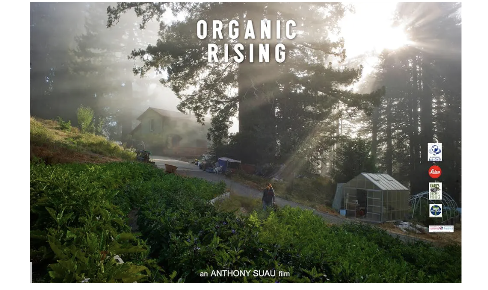
Organic Rising, sponsored in part by Presence Marketing, documents the history of organic food and farming and the growth of the organic products market, from the early influences of J.I. Rodale, Sir Albert Howard and Rachel Carson to the back-to-the-land movement of the 1960s to today’s $60-billion organic food marketplace.
Ten years in the making and directed by Pulitzer Prize and Emmy Award-winning National Geographic photojournalist Anthony Suau, Organic Rising also contrasts the history or organic against a backdrop of the widespread usage of toxic pesticides over the past 80 years. Narrated by organic industry advocate Elizabeth Kucinich and actor Simon Harrison, the film also documents how glyphosate has become the most widely used pesticide in history, along with its adverse impacts on human, animal and environmental health.
According to former executive director of the Rodale Institute Mark Smallwood, interviewed in Organic Rising, organic crops can produce higher margins than conventional, so price outweighs any difference in yield, he asserts. In fact, organic can be more profitable than conventional, especially in seasons of drought and flood, where organic farming can actually outperform conventional agriculture. “Conventional uses chemistry; organic farmers build soil,” Smallwood said.
In addition to interviews showcasing pioneering organic farmers, entrepreneurs, chefs including Dan Barber, and indigenous leaders including Winona LaDuke, Organic Rising also features interviews with internationally renowned agro-ecology expert and author Vandana Shiva, and the late Ronnie Cummins, co-founder of the Organic Consumers Association, Regeneration International and Vía Organica.
The film Common Ground is the sequel to Kiss the Ground, which, when released in 2020, was the one of the first full-length documentaries to explore how regenerative organic agriculture can sequester enough carbon from the atmosphere to reverse climate change. Featuring an all-star cast of narrators including Woody Harrelson, Rosario Dawson, Donald Glover, Jason Momoa, Ian Somerhalder and Laura Dern, Common Ground was directed by husband and wife team Rebecca and Josh Tickell, who also directed the first Kiss the Ground film.
Common Ground chronicles the struggles and triumphs of a politically and culturally diverse group of farmers, ranchers, scientists, and advocates who all share one thing in common: they believe in a way of ecological farming that builds soil. By using a combination of traditional knowledge and wisdom and modern technology, the farmers and ranchers in the regenerative movement make more money and grow more nutrient-dense food than their “conventional” farming counterparts, assert the film’s directors. The “regenerative pioneers” featured in the film claim that to save humanity from future environmental catastrophes, we must first save our soil. “Common Ground shows that soil is quite possibly the most valuable substance on our planet, because if our soil dies, we also die,” they cautioned.
“Coming from a legacy farming family myself, I’ve witnessed and experienced in my family the very real health impacts of our current food system. In fact, the old farmer you see in the film buying grain and taking out a loan is my dad. Josh and I have a long history of making and distributing advocacy docs, but all of them have led us to Common Ground. We need to turn this movie into a movement,” said Rebecca Tickell.
Speaking to the potential of regenerative agriculture to heal the planet, former conventional and now regenerative farmer Gabe Brown shared the following: “I often get asked, ‘what makes you think this can occur in the world,’ and I answer, ‘because it’s nature.’ Nature is always self organizing, self healing, self regulating. If we can cover the earth in a biodiverse array of plants and animals and insects we wouldn’t hear about climate change anymore. We wouldn’t have this human health crisis. We would have food that is truly nutrient dense,” he said.
Woody Harrelson ends the film with a final thought, “So remember this, next time you look up at that night sky, think about where you are. You’re on the only planet we know of that’s filled with life. The one thing that’s keeping us all alive, is that soil you’re standing on.”
Watch the films here or see them in select theaters now:
Organic Rising — https://www.organicrisingfilm.com
Common Ground — https://commongroundfilm.org
Steven Hoffman is Managing Director of Compass Natural, providing public relations, brand marketing, social media and strategic business development services to natural, organic and sustainable products businesses. Contact steve@compassnaturalmarketing.com.
Giving Season: 23 Nonprofits to Support in 2023
Giving Season: 23 Nonprofits to Support in 2023
December 9, 2022
This article originally appeared in Presence Marketing’s December 2022 industry newsletter.
By Steven Hoffman
With a common mission of providing healthful, eco-friendly and socially responsible products to consumers, natural and organic products companies often have philanthropy engrained as part of their brand’s DNA. Given that, the industry is well positioned to play a lead role in helping society address many of the problems facing the world today.
The month of December, with its focus on family, community and giving, presents an opportunity to highlight some of the nonprofit organizations that work with leaders in the natural products sector to help solve some of the pressing issues of our time. There are many organizations doing great work — below find a list of 23 organizations this writer has interacted with in some capacity over the years and identified as potentially worthy of your awareness, consideration and support in the coming year.
This list is divided into four categories: Climate & Environment; Diversity, Equity & Inclusion; Food & Agriculture; and Nutrition & Health. Perhaps one or more of these organizations will resonate with you this season of giving and throughout the year.
We know there are many nonprofit and related organizations doing important work that rely on contributions from individuals, businesses and foundations — please forgive us if we didn’t include your favorite nonprofit this time around. However, if you let us know, there’s a chance we can include it next year. We’d love to hear from you.
Happy holidays and all the best for the New Year.
Steven Hoffman is Managing Director of Compass Natural, providing public relations, brand marketing, social media and strategic business development services to natural, organic, sustainable and hemp/CBD products businesses. Compass Natural serves in PR and programming for NoCo Hemp Expo and Southern Hemp Expo, and Hoffman serves as Editor of the weekly Let’s Talk Hemp Newsletter, published by We are for Better Alternatives. Contact steve@compassnaturalmarketing.com.
CLIMATE & ENVIRONMENT
1% for the Planet
1% for the Planet is a global network of individuals and businesses that, to date, has donated more than $350 million to support environmental nonprofits around the globe. A number of natural products companies have aligned with 1% for the Planet, and many express their support by placing the organization’s logo on their product packaging. This past year, the organization launched the 1% for the Planet Impact Fund at National Philanthropic Trust to drive climate impact. https://onepercentfortheplanet.org
Carbon Underground
Founded in 2013 by CPG and natural products veterans Tom Newmark and Larry Kopald, the Carbon Underground’s goals are to coalesce the emerging science on the soil’s relationship to climate change, and to tell the world about a possibility to not simply slow down the threat of climate change, but to reverse it. The organization advances ways to draw down legacy carbon from the atmosphere and promotes regenerative agriculture as a tool to mitigate climate change. https://thecarbonunderground.org
Climate Collaborative
A project of One Step Closer, the Climate Collaborative’s mission is dedicated to “leveraging the power of the natural products industry to reverse climate change.” The organization recently released a four-part webinar series, Climate Action Guidance for Business. Also, the Climate Collaborative’s annual Tracking Progress Update assesses how companies are progressing on their climate action commitments. https://www.climatecollaborative.com
Environmental Working Group
Working to protect consumers, the Environmental Working Group takes the lead in shining a “spotlight on outdated legislation, harmful agricultural practices and industry loopholes that pose a risk to our health and the health of our environment,” encouraging industries to adopt safer practices and educating consumers with actionable information. EWG recently released a report on forever chemicals in pet food bags and in baby textiles, plus a report on how “multitasking” preservatives might help make cosmetics safer, plus the organization works to keep cancer-causing chemicals out of everyday consumer products. https://www.ewg.org
Natural Capitalism Solutions
Founded by renowned environmentalist and author Hunter Lovins, Natural Capitalism Solutions is dedicated to building an economy in service to life through education, innovative solutions, and youth empowerment. The organization works with companies, communities and countries to help offset and reduce carbon emissions and to implement more regenerative practices profitably. https://natcapsolutions.org
DIVERSITY, EQUITY & INCLUSION
Anishinaabe Agriculture Institute
With Akiing — an Indigenous organization dedicated to restoring sacred landscapes, community wealth and resilience — serving as its fiscal sponsor, the nonprofit Anishinaabe Agriculture Institute was founded by Native American leader, water protector, and former candidate for Vice President of the United States Winona LaDuke. The organization’s work includes educating youth about Indigenous, sustainable, and regenerative agriculture practices, restoring agro-biodiversity and food sovereignty, advancing traditional methodologies, and supporting research into hemp fiber production to benefit local economies. http://anishinaabeagriculture.org
Her Many Voices Foundation
Through environmental, cultural and community projects, Her Many Voices brings a diverse group of artists, humanitarian leaders and businesses together to help solve problems for the betterment of women, children and “our Mother Earth.” Her Many Voices was founded by Native American leader Alicia Fall, a former TEDx presenter and recipient of the New York State Assembly Citation Award. Through Alicia and her team’s work in education, inclusivity and collaboration, the organization is also dedicated to supporting farmers and is currently planning events for Earth Day 2023. https://www.hermanyvoices.org
J.E.D.I. Collaborative
Launched in April 2020, the mission of the J.E.D.I. Collaborative is to help create a natural products industry “that centers at its core justice, equity, diversity and inclusion” with systems-level solutions. According to a Natural and Organic Industry Benchmarking Survey conducted in late 2019 by the J.E.D.I Collaborative and New Hope Network, “only 2% of leadership positions within our industry companies and on company boards are occupied by black professionals. The situation isn’t better for Latinx professionals, who hold 2% of company board positions and 6% of company leadership roles within the U.S. natural products industry.” Women also represent only 23% of board seats for companies with more than 50 employees, according to the J.E.D.I. Collaborative, a project of One Step Closer. https://jedicollaborative.com
Naturally Network
Inspired by Naturally Boulder, a public-private partnership founded in 2005 to promote entrepreneurship in natural, organic, and sustainable products in Colorado, the Naturally Network has grown to become a national organization with nine independent chapters, including Naturally Austin, Naturally Bay Area, Naturally Boulder, Naturally Chicago, Naturally Los Angeles, Naturally Minnesota, Naturally New York, Naturally North Bay and Naturally San Diego. Linking emerging businesses and brands with seasoned veterans and mentors in natural and organic products, Naturally Network offers business education, resources for entrepreneurs, mentorship and diversity programs, and ongoing regional and national networking and event opportunities. As former Chair and Board Member of Naturally Boulder, this writer can’t recommend enough to individuals in the natural channel to get involved in the Naturally Network or one of the above mentioned regional chapters. https://www.naturallynetwork.org
Project Potluck
Breaking into the natural and organic products industry isn’t easy for anyone, and it’s especially challenging for Black, Indigenous and people of color (BIPOC) to attract investors, find the right co-packers, refine recipes, and garner placement on retail shelves. Enter Project Potluck, established by Ibraheem Bashir, CPG veteran and founder and CEO of A Dozen Cousins, a leading Black-owned natural food brand, to provide the support that minority entrepreneurs in the natural products space need to succeed. In March 2022, Project Potluck won New Hope Network’s inaugural Justice Award for its efforts promoting justice, equity, diversity and inclusion in the natural and organic products industry, and the organization was recently featured in Forbes Magazine. https://www.potluckcpg.org
Wild Animal Sanctuary
Including animal welfare on this list, one of this writer’s personal favorites is the Wild Animal Sanctuary. Based an hour east of Denver in Keenesburg, CO, on nearly 700 acres, the organization rescues and provides a home to more than 350 large animals including lions, tigers, bears and wolves, many of which were rescued from abusive environments. Want to know where all those animals from the TV show Tiger King ended up? The Wild Animal Sanctuary saved more than 100 of them, providing sanctuary at its large, open-space environment where visitors can view the animals from elevated walkways and decks overlooking this fenced-in “Serengeti of the West.” The organization also recently saved the lives of 11 African lions that were located in an active war zone in Ukraine. The sanctuary welcomes visitors and your support. https://www.wildanimalsanctuary.org
FOOD & AGRICULTURE
Kiss the Ground
With a passionate, committed and growing community inspired by Kiss the Ground: the Movie, a full-length documentary narrated by Woody Harrelson that sheds light on a “new, old approach” to farming called regenerative agriculture, Kiss the Ground was founded in 2013 to educate about and advance a system of agriculture and food production that rebuilds our soils and water resources, sequesters carbon from the atmosphere and feeds the world. Kiss the Ground’s mission is to awaken people to the possibilities of regeneration and inspire participation through storytelling, education, and advocacy. https://kisstheground.com
Regenerative Organic Alliance
The Regenerative Organic Alliance (ROA) comprises a group of experts in farming, ranching, soil health, animal welfare and farmer and worker fairness. Founded by the Rodale Institute, Dr. Bronner’s and Patagonia, other members of the alliance include Compassion in World Farming, Fair World Project, and the Textile Exchange. The ROA was established to continuously review and update the Regenerative Organic Certified® framework, a recently introduced certification program for food, fiber, and personal care ingredients that represents the “highest standard” for organic agriculture in the world, with stringent requirements for soil health, animal welfare and social fairness. https://regenorganic.org
Regeneration International
With a vision to collaborate with consumers, educators, business leaders and policy makers, Regeneration International’s mission is to work with multiple stakeholders in key regions around the world to promote, facilitate and accelerate the global transition to regenerative food, farming and land management for the purpose of cooling the planet, restoring climate stability, ending world hunger and rebuilding deteriorated social, ecological and economic systems. Regeneration International, which offers a number of resources for those interested in regenerative organic agriculture and climate change, is a project of the Organic Consumers Association. https://regenerationinternational.org
Regenerative Rising
With events including Women Leading Regeneration and the Regenerative Earth Summit, plus an ongoing podcast series, Regenerative Rising is dedicated to elevating and forwarding regenerative principles that expand a living systems worldview. The organization engages leaders in agriculture, business, and finance to elevate stories of regeneration and innovation to activate urgent and necessary change in business strategy, public policy and personal decision-making that serves the long term health and betterment of people and the Earth. https://regenerativerising.org
The Rodale Institute
Celebrating 75 years of organic leadership, the “OG” of organic agriculture and research, The Rodale Institute remains on the vanguard of science and best practices in advancing organic and regenerative agriculture. The Rodale Institute’s main office is located on a 386-acre organic research and education farm in eastern Pennsylvania that investigates a number of organic crops and rotations, including hemp, and also the value of animal husbandry in regenerative agriculture. In September 2022, General Mills announced it would donate the Cascadian Farm home farm in Skagit County, WA, to the institute, bringing the total number of Rodale Institute research campuses to 12. The organization also recently partnered with Colorado-based nonprofit Mad Agriculture to help farmers transition to organic and regenerative organic farming methods. The Rodale Institute was originally founded in 1947 as the Soil and Health Foundation by Rodale Press founder J.I. Rodale. https://rodaleinstitute.org
NUTRITION & HEALTH
American Botanical Council
Founded in 1986 and based in Austin, TX, the mission of the American Botanical Council (ABC) is to help people live healthier lives through the responsible use of herbal medicine. ABC is an independent, nonprofit research and education organization dedicated to providing science-based, accurate and reliable information for consumers, healthcare practitioners, researchers, educators, industry, and the media about the safe and effective use of herbs and medicinal plants. Through monographs, a comprehensive library, its newsletter, HerbalGram, and more, the American Botanical Council is a vital resource for advocates and makers of herbal-based products, from tinctures and topicals to functional foods and personal care products. https://www.herbalgram.org
Chef Ann Foundation
The Chef Ann Foundation is dedicated to promoting whole ingredient, scratch cooking in schools. Scratch cooking enables schools to serve the healthiest, tastiest meals so that kids are well nourished and ready to learn. As a 501(c)(3) nonprofit, the foundation works with both public and private schools in all 50 states. Founded in 2009 by “the Renegade Lunch Lady,” Chef Ann Cooper — an internationally recognized author, chef, educator, public speaker, and advocate of healthy food for all children — the foundation reports it has helped more than 13,500 schools and 3.3 million kids eat healthier, fresher school meals. https://www.chefannfoundation.org
Conscious Alliance
With the slogan “Art that Feeds,” Conscious Alliance partners with food makers, musicians, artists, and music lovers to empower youth and end hunger in underserved communities. Working with top recording artists and bands, concert-goers, food donors and supporters, many of which are natural food brands, the alliance organizes major food drives at concerts and music festivals nationwide to deliver food directly to economically isolated communities in need, including Native American reservations and rural areas, such as the Pine Ridge Reservation in South Dakota. https://consciousalliance.org
Feeding America
As a leading national network of food banks, Feeding America is seeing a spike in demand among its member network of food banks and food pantries amid rising food prices. According to Feeding America CEO Claire Babineaux-Fontenot, an estimated 53 million or more people in the U.S. are currently food insecure. The organization also is seeing a decrease in donated food and a decrease in federal commodities, meaning member food banks are having to buy more food at a time when food costs are high. “…if I could break down whom it is that comes to us in need of help, as a rule, we’re talking about children. A huge portion of those who are counting on us and the work that we do would be kids, the elderly, people with disabilities,” said Babineaux-Fontenot in an interview with NPR. https://www.feedingamerica.org
The Organic Center
The Organic Center, based in Washington, D.C., is an independent non-profit educational and research organization operating under the administrative auspices of the Organic Trade Association. Founded in 2002 with a mission to conduct, convene and disseminate credible, evidence-based science on the environmental and health effects of organic food and farming, and to communicate those findings to the public, The Organic Center collaborates with academic and governmental institutions to advance research. The Organic Center is the organic products industry’s leading research and education organization advocating for the nutritional, health, environmental and climate mitigating benefits of organic food production. https://www.organic-center.org
Vitamin Angels
Founded in 1994 by natural products industry veteran Howard Schiffer, Vitamin Angels is a public health nonprofit organization working to improve nutrition and health outcomes in low-resource settings worldwide. The organization helps to strengthen, extend, and amplify the impact of partner organizations working to reach the most nutritionally vulnerable groups, including pregnant women, infants, and children who are underserved by existing systems with evidence-based nutrition interventions and health services. Vitamin Angels works with more than 1,200 local organizations, including governments, to reach more than 70 million women and children in 65 countries annually. https://www.vitaminangels.org
Whole Planet Foundation
Founded in 2005, Whole Planet Foundation is a Whole Foods Market foundation that funds poverty alleviation worldwide where the company sources products. The nonprofit’s mission is to empower the world’s poorest people with micro-credit and the chance to create or expand a home-based or small business to help lift themselves and their families out of poverty. As of June 2022, Whole Planet Foundation is helping to alleviate poverty through micro-finance partners in the U.S. and 79 other countries in Africa, Asia, Latin America, and the Middle East. To date, the nonprofit reports it has disbursed $101 million through micro-lending partners worldwide, funding 6 million micro-loans and 30 million opportunities for a better life for micro-entrepreneurs and their family members. https://wholeplanetfoundation.org
Bonus! To support racially and ethnically underrepresented business entrepreneurs, check out the products created by Naturally Network's M/O Fellows.

Family for Change: Tom Newmark and Sara Newmark Talk Regenerative Ag, Purpose, Climate, Business, and More on the Next Compass Coffee Talk


Tom Newmark (Left) and Sara Newmark (Right)
Compass Coffee Talk will get 2022 off to a bold start with a powerhouse duo sharing business wisdom and mission-focused inspiration on January 12, 2022, at 11:30 am Eastern time. Natural industry legend Tom Newmark brings a long record as a pioneer and leader in natural, organic, and regenerative business, as well as a deep and active commitment to climate-focused education and advocacy. Sara Newmark, chief operating officer at True Grace, a nutrient-dense supplements company, carries on the family tradition of advocacy, responsible business leadership, and service, while raising two kids on an organic and regenerative farm with her husband.
About Sara Newmark
A strong community and social impact professional, Sara Newmark is the COO at True Grace, a new brand of nutrient-dense supplements formulated to improve the health of body and planet for generations to come. An experienced executive with a demonstrated history of working in the health and wellness industry, Sara is an advocate for the power of business to make lasting, systemic change. She brings diverse experience and leadership in sustainability to the True Grace team where she works to improve the health of communities, farmers, people, and planet by committing to doing business regeneratively.
Sara is board co-chair for Green America and sits on the boards for the Coalition for Supplement Sustainability and The Retreat Farm. She lives in Vermont on a 10-acre organic and regenerative farm with her husband and children. The Newmark family also owns Finca Luna Nueva, an eco-lodge and teaching center for regenerative agriculture in Costa Rica.
About Tom Newmark
Tom Newmark is a member of the Leadership Council of the Center for Regenerative Agriculture and Resilient Systems at California State University, Chico and co-owner of Finca Luna Nueva, an eco-lodge and regenerative farming operation in Costa Rica. Tom is co-founder and chair of The Carbon Underground, co-founder of Regeneration International, past chairman of the Greenpeace Fund USA and the American Botanical Council, and founder of Sacred Seeds, a plant conservation project administered by United Plant Savers. As CEO of New Chapter, Inc. he helped to align that company with the goals of the NonGMO and organic movements.

About Compass Coffee Talk™
Take a 30-minute virtual coffee break with Compass Coffee Talk™. Hosted by natural industry veterans Bill Capsalis and Steve Hoffman, Coffee Talk features lively interactive conversations with industry leaders and experts designed to help guide entrepreneurs and businesses of any size succeed in the market for natural, organic, regenerative, hemp-derived and other eco-friendly products.
Compass Coffee Talk™ is produced by Compass Natural Marketing, a leading PR, branding and business development agency serving the natural and organic products industry. Learn more.