
Federal Actions Focus on Greater Transparency for GMOs & Ultra-Processed Foods
This article first appeared in the September 2026 issue of Presence Marketing’s newsletter.
By Steven Hoffman
For years, leaders in the natural and organic products industry have advocated for a simple, fundamental consumer right: the right to know exactly what is in the food we eat. Despite the steady growth of the natural channel and the soaring consumer demand for clean labels, federal regulations have historically provided conventional food manufacturers with ample regulatory shelter. Through confusing digital disclosures, vague ingredient definitions, and self-certified safety standards, the conventional food sector has often avoided the level of transparency that natural and organic brands readily provide to their customers.
However, a confluence of landmark judicial and federal regulatory actions in August 2026 has signaled a significant paradigm shift. Within a single month, a federal court struck down the regulatory loophole allowing genetically modified organisms (GMOs) to be hidden behind QR codes, while the U.S. Department of Health and Human Services (HHS) and the U.S. Department of Agriculture (USDA) advanced efforts to formally define ultra-processed foods (UPFs) and tighten the oversight of self-certified food additives.
For business owners, executives, and professionals in the natural, organic, and regenerative agriculture markets, these actions validate decades of persistent advocacy. More importantly, they stand to reshape the competitive grocery landscape, potentially forcing conventional brands to reformulate their products or face a new era of mandatory, unavoidable on-package transparency.
The Demise of the QR Code Loophole
The movement toward transparent GMO labeling achieved a decisive victory when a federal district court issued a final remedy decision regarding the USDA's bioengineered food labeling rules. According to the Center for Food Safety, the court ruled that the USDA must rewrite its National Bioengineered Food Disclosure Standard by Jan. 1, 2028, effectively voiding the provisions that previously allowed companies to obfuscate GMO disclosures.
The litigation, which was championed by a coalition of natural food retailers and consumer advocacy groups—including Natural Grocers and PCC Natural Markets—targeted two specific, controversial loopholes in the original 2018 regulation. First, the USDA had allowed food manufacturers to use a digital QR code, text message, or web address as the sole method of disclosing bioengineered ingredients. Critics argued this was fundamentally discriminatory, as it placed an undue burden on consumers who either lacked smartphones, experienced poor internet connectivity in grocery aisles, or simply did not know that a digital scan was required to view ingredient information.
Second, the original rule exempted "highly refined" ingredients from being labeled as bioengineered if the modified genetic material was no longer detectable through standard DNA testing. This exemption allowed a vast swath of ultra-processed ingredients—such as highly refined corn syrup, canola oil and soy oil—to avoid GMO labeling entirely, even though they were derived from genetically modified crops.
As reported by Food Dive, the federal court has now mandated that the USDA close these loopholes. The court’s official vacatur order requires the agency to implement clear, on-package text or symbols and to comprehensively address the disclosure of highly refined, ultra-processed GMO ingredients.
The reaction from the natural products community has been swift and celebratory. Max Goldberg, editor and publisher of Organic Insider, noted in a recent LinkedIn post: “The headline that Big Food has been dreading. Why? Because the QR code loophole is dead. A federal court just ordered the USDA to rewrite its GMO labeling rules by January 1, 2028 — and this time, there's nowhere to hide. For years, up to 80% of GMO products dodged real disclosure. Sodas, cooking oils, ultra-processed staples — all slipped through. And when brands did 'disclose'? A QR code you needed a smartphone to scan. Not anymore. Clear on-package labels. Actual transparency. The right to know what's in your cart. Big shift coming for food brands. Bigger win for consumers.”
As noted by DTN Progressive Farmer, the ruling places the timeline squarely in the hands of the USDA, rejecting the agency's initial request to delay the implementation of new rules until 2029. According to Feedstuffs, the mandated January 2028 deadline means food manufacturers must begin auditing their supply chains immediately to prepare for the transition to mandatory on-package disclosures.
George Kimbrell, legal director for the Center for Food Safety, underscored the historical importance of the ruling. Speaking to Food Navigator, Kimbrell stated: “Yesterday's decision was the final nail in the coffin of the 2021 unlawful GMO labeling regulations. We are gratified that the district court, like the court of appeals before it, has agreed with our legal arguments and struck them down.”
Closing the GRAS Loophole and Modernizing Food Oversight
While the courts tackled GMO transparency, the executive branch moved to address the proliferation of chemical additives in the American food supply.
As announced on Aug. 10, 2026, HHS Secretary Robert F. Kennedy Jr. introduced two landmark food policy reforms designed to modernize federal oversight of ingredients. The most immediate regulatory shift involves a proposed rule to tighten the "Generally Recognized as Safe" (GRAS) designation.
For decades, the GRAS framework has served as a primary regulatory pathway for food manufacturers to introduce new ingredients into the market. Originally intended by Congress for common, historically well-understood ingredients like vinegar or baking soda, the GRAS provision has increasingly been utilized by companies to self-certify novel synthetic chemicals, preservatives, and artificial additives as safe. In many cases, companies could convene their own industry-funded expert panels to determine safety, effectively bypassing the U.S. Food and Drug Administration (FDA) review process altogether.
According to Food Business News, the proposed HHS rule will fundamentally alter this dynamic by requiring food and animal feed manufacturers to formally notify the FDA whenever they conclude that a new substance added to food meets the GRAS criteria. By ending the era of secret, self-certified additives, the administration aims to ensure that the FDA can properly review the safety data of novel ingredients before they ever enter the food supply.
This move has drawn widespread support from medical professionals and health experts who have long criticized the FDA's lack of authority over food additives. Former FDA Commissioner Scott Gottlieb voiced his support, stating that the reform is important because the FDA has generally lacked sufficient authority to meaningfully regulate these substances. This shift aligns closely with the long-standing demands of natural health advocates, who have consistently warned about the cumulative health impacts of unchecked synthetic chemicals.
The Drive to Define Ultra-Processed Foods
Alongside the GRAS rule proposal, the federal government took an unprecedented step toward formally defining a category of food that has dominated recent nutritional research and public health discussions: ultra-processed foods (UPFs).
As reported by Food Safety Magazine, the FDA and the USDA jointly submitted a white paper to the Office of Management and Budget (OMB) for final review, proposing the first-ever federal definition of ultra-processed foods. While there are international frameworks—such as the NOVA classification system developed by researchers in Brazil—the United States has historically lacked a uniform, statutory definition for UPFs.
Establishing a formal definition is far more than a semantic exercise. As highlighted by Food Industry Executive, the submission of the definition as a white paper signals a foundational step toward widespread regulatory changes. Once a federal definition is established and finalized, it can be utilized across multiple government agencies to shape public policy. This could eventually impact everything from the composition of the Dietary Guidelines for Americans and the National School Lunch Program to the eligibility of certain products within the Supplemental Nutrition Assistance Program (SNAP).
HHS Secretary Robert F. Kennedy Jr. emphasized the urgency of the initiative. “Nearly 60% of the American diet is made up of ultra-processed foods, and childhood obesity now affects more than one in five American children,” Kennedy noted in a statement. “We cannot reverse America’s chronic disease epidemic without transforming our food system.”
Writing for The Atlantic, journalist Nicholas Florko noted that Kennedy’s push to define ultra-processed foods is a central pillar of the administration's "Make America Healthy Again" (MAHA) agenda. By creating a standardized metric for what constitutes an ultra-processed food, the administration is laying the groundwork for a broader public health campaign aimed at reducing the consumption of heavily refined, additive-laden products that have been linked to rising rates of diet-related chronic diseases. As health advocates have pointed out, reining in UPFs is fundamental to tackling chronic disease in America, and establishing a federal definition is the required first step.
Industry Pushback and the Economic Argument
Unsurprisingly, these swift regulatory changes have encountered vocal resistance from conventional food industry groups and free-market advocates. The prospect of reformulating products, updating packaging to remove QR codes in favor of explicit text, and submitting GRAS ingredients for rigorous federal review represents a significant operational cost for legacy food manufacturers.
According to a statement from Americans for Tax Reform (ATR), the new food proposals advanced by HHS threaten to disrupt supply chains and increase consumer costs. ATR argued that by growing the regulatory state and enforcing stricter definitions on processed foods, the administration will invariably drive up the cost of manufacturing. “HHS’s new food proposals would raise grocery prices and grow the regulatory state,” the group warned, suggesting that the financial burden of compliance will ultimately be passed down to consumers at the checkout counter.
Conventional industry trade associations have echoed similar concerns regarding the GMO labeling mandate. They argue that replacing digital QR codes with on-package text could clutter labels and confuse consumers who are already overwhelmed by existing nutritional information. They further contend that highly refined oils and sugars derived from bioengineered crops are chemically identical to their non-GMO counterparts, arguing that forcing a bioengineered label on these ultra-processed ingredients is scientifically unnecessary and economically punitive.
A Competitive Advantage for the Natural Channel
Despite the pushback from the conventional food sector, the recent federal actions represent a profound validation for the natural, organic, and regenerative agriculture industries. For decades, independent retailers and natural product brands have voluntarily adhered to higher standards of transparency, often bearing the financial cost of non-GMO verification, organic certification, and clean-label formulation without any federal mandate requiring their competitors to do the same.
The death of the QR code loophole effectively levels the playing field. When conventional brands are forced to explicitly disclose the presence of bioengineered ingredients on their packaging by January 2028, consumers will be able to make direct, side-by-side comparisons in the grocery aisle. This increased visibility is expected to drive even greater consumer migration toward certified organic and Non-GMO Project Verified products, categories that already serve as the bedrock of the natural products industry.
Furthermore, the federal drive to define ultra-processed foods aligns perfectly with the core philosophy of the natural channel. Independent natural and organic food stores have long prioritized whole foods, minimally processed ingredients, and regenerative agricultural practices over synthetic formulations. If federal nutrition programs eventually integrate the new UPF definition to disincentivize the purchase of highly processed items, the market demand for nutrient-dense, clean-label alternatives will likely accelerate.
The closure of the GRAS loophole further reinforces consumer trust in the natural sector. As the FDA gains greater visibility into the synthetic additives utilized by conventional manufacturers, consumers will become increasingly aware of the chemical complexities inherent in highly processed diets. Brands that are committed to simple, recognizable, and transparent ingredient panels will find themselves perfectly positioned to capture the market share of health-conscious shoppers seeking refuge from synthetic additives.
Looking Ahead: The Path to 2028
While the regulatory wheels have been set in motion, the transition will not occur overnight. The USDA now faces a mandated deadline of Jan. 1, 2028, to finalize and implement the new bioengineered food disclosure rules. Concurrently, the proposed UPF definition and the GRAS notification rule must navigate the federal review process, including periods for public comment and potential revisions by the Office of Management and Budget.
For business owners and leaders in the natural products sector, the immediate path forward requires sustained vigilance and proactive consumer education. Retailers and manufacturers should begin preparing marketing and merchandising strategies that highlight their existing commitments to transparency, non-GMO sourcing, and minimal processing.
As the federal government finally moves to mandate the transparency that the natural channel has championed for decades, the industry is entering a new era. The days of hiding ingredients behind digital links and self-certified safety designations are drawing to a close. For the natural, organic, and regenerative food market, this is not just a regulatory victory; it is an affirmation of a business model built on integrity, health, and the consumer's fundamental right to know.
Steven Hoffman is Managing Director of Compass Natural Marketing, a strategic communications and brand development agency serving the natural and organic products industry. Learn more at www.compassnatural.com.
How a Surprise Vote on Pesticides Reshaped the 2026 Farm Bill
This article first appeared in the June 2026 issue of Presence Marketing’s newsletter.
By Steven Hoffman
The U.S. food and agriculture sector is navigating a pivotal transition as new legislative actions and regulatory shifts take shape. Recent developments in Washington are establishing a new policy landscape that business owners, brand executives, retailers, and farmers in the natural, organic, and regenerative space will need to monitor closely.
On April 30, the U.S. House of Representatives passed the Farm, Food, and National Security Act of 2026 by a vote of 224–200, marking the first major movement on a Farm Bill since 2018. However, for a natural and organic industry that has now grown into a $325.2 billion market, according to the Natural Foods Merchandiser 2025 Market Overview, the current legislation has drawn mixed reactions regarding its alignment with modern agricultural practices and evolving consumer demand.

As the bill moves to the Senate, where its passage remains uncertain, it introduces a mix of regulatory adjustments, funding reallocations, and structural reorganizations. These legislative changes, combined with a concurrent restructuring at the U.S. Department of Agriculture (USDA), present both operational challenges and new market dynamics for the natural products industry.
The following is an overview of these policies, the political context, and the business implications for the regenerative and organic food supply chain.
The MAHA Movement and a Shift in Pesticide Regulation
One of the most notable developments to emerge from the House Farm Bill debates was a bipartisan vote regarding pesticide oversight—a legislative shift influenced in part by the Make America Healthy Again (MAHA) movement.
For months, the drafted Farm Bill contained language designed to federally preempt states from requiring health and cancer warning labels on pesticides, a provision intended to protect agrochemical manufacturers from state-level lawsuits. However, the House voted, 280-142, to strip this pro-pesticide language from the bill.
According to Politico, this vote represents a major win for MAHA-aligned Republicans and Democrats. The amendment to remove the shield was championed by Rep. Anna Paulina Luna (R-Fla.), who had signaled she would oppose the entire Farm Bill if the protections remained. Despite pressure from House Agriculture Chair G.T. Thompson (R-Pa.), who argued the shield was necessary to prevent “frivolous lawsuits” and to protect crop yields, 73 Republicans joined the majority of Democrats to remove the provision.
This legislative fight highlights the increasing complexity of food politics. As reported by the Montana Free Press, Bob Quinn, a renowned organic kamut farmer from Big Sandy, Montana, noted his surprise at the outcome, acknowledging the historical influence of the pesticide lobby. Interestingly, six Democrats representing regions with heavy pesticide use voted with the chemical industry to bar state labels, showcasing the fact that regional agricultural interests often intersect with party lines.
The removal of the liability shield is being hailed as a significant public health and environmental victory. According to Friends of the Earth, stripping the shield affirms that corporations selling chemicals linked to human health concerns should not be insulated from state-level oversight. Similarly, Kathleen Merrigan, executive director of the Swette Center for Sustainable Food Systems, told FoodTank that the MAHA movement has pushed the pesticide issue to a "tipping point" in food policy.
Even conservative outlets are analyzing this shift. An op-ed in Fox News questioned the broader coherence of a Farm Bill that maintains high levels of agrochemical support while elements of the party simultaneously back MAHA principles.
The Business Takeaway: For natural and organic CPG brands, this development provides a distinct market signal. Consumers are increasingly attentive to the use of synthetic inputs. With states retaining the right to mandate health warnings on conventional, chemically treated products, the value proposition of the USDA Organic label and third-party certifications like Regenerative Organic Certified (ROC) will likely strengthen. Brands should continue to emphasize transparency and clean-label marketing, as the regulatory contrast between conventional and organic agriculture becomes more visible.
Organic Legislation: Modest Progress Amid Broader Funding Cuts
While the pesticide provision's removal was a focal point, the broader Farm Bill presents a challenging framework for the organic and sustainable agriculture sectors.
The Organic Trade Association (OTA) noted that the House-passed bill includes some important wins for organic agriculture, but it stressed that federal policy must evolve to support the sector proactively rather than treat it as an "afterthought." Despite the industry's significant retail footprint, the National Organic Coalition warned that the legislation "largely assumes a stagnant organic marketplace rather than making the targeted investments needed to support continued growth."
Critiques of the bill suggest it continues to heavily favor industrial agribusiness. According to Friends of the Earth, the legislation reduces critical conservation funding—including a $1 billion cut to the Environmental Quality Incentives Program (EQIP)—while shifting resources toward subsidies for larger agribusiness operations. Furthermore, the bill attempts to override voter-approved laws such as California’s Proposition 12, which mandates humane animal welfare standards, potentially invalidating numerous state and local measures on food safety and environmental protection.
Conservation programs remain a cornerstone of the regenerative movement. As The Nature Conservancy highlights, the Farm Bill typically provides roughly $6 billion annually for conservation work on private working lands. Reducing these incentive-based programs may stifle farmers' ability to transition to climate-smart, soil-building practices.
The National Sustainable Agriculture Coalition (NSAC) states that the bill "falls unmistakably short" in addressing the current needs of farmers. NSAC points out that producers are currently facing abrupt trade policy shifts and federal workforce reductions. Earlier this year, the USDA began freezing and terminating held contracts, disrupting planning for the 2025 and 2026 planting seasons for many small and mid-sized producers.
SNAP Policy Changes and Food Access
Another critical component of the House Farm Bill is its approach to nutrition assistance. The legislation outlines $187 billion in cuts to the Supplemental Nutrition Assistance Program (SNAP), alongside expanded work requirements for certain demographics and stricter eligibility rules, according to Food & Wine.
The Center on Budget and Policy Priorities estimates that one in eight participants could lose access to some form of food relief as a result of these measures. Kathleen Merrigan noted via FoodTank that food pantries are already seeing increased demand, a trend that could accelerate later in the year as the cuts take full effect.
The Business Takeaway: SNAP funding is integral to the broader grocery economy, injecting tens of billions of dollars into retail annually. Reductions in food purchasing power can cause a ripple effect across the entire grocery ecosystem. Natural and organic retailers, who have increasingly integrated SNAP benefits to democratize access to healthier foods, may see shifts in consumer purchasing behavior. Brands and retailers will need to evaluate pricing strategies and explore ways to maintain accessibility without compromising on product integrity.
Organizational Restructuring at the USDA
Alongside the legislative process in Congress, recent administrative and structural changes within the USDA under Secretary Brooke Rollins are impacting the organic community's oversight and funding mechanisms.
Recent reports indicate a rollback of infrastructure designed to support alternative agriculture. In a recent op-ed published by Civil Eats, it was noted that the USDA abruptly canceled $300 million in contracts for the Increasing Land, Capital, and Market Access Program (ILCM). This program was established to help underserved and first-generation farmers overcome barriers to entry; its termination halts 50 community-based agricultural projects nationwide.
Staffing challenges within the USDA are also drawing attention. According to the Federal News Network, a significant majority of USDA researchers tapped for an agency relocation have declined to move, raising concerns about a potential reduction in agricultural research capacity.
This staffing shift directly affects the organic sector. According to industry watchdog OrganicEye, the National Organic Program (NOP)—which oversees certification within the $76 billion organic products market—has reportedly seen staff reductions of up to 30%. In addition, Secretary Rollins delayed appointing five members to the 15-member National Organic Standards Board (NOSB) prior to their spring meeting.
Consequently, the NOSB convened in Omaha last month with only 10 members. OrganicEye reported that this lack of representation for key constituencies—such as farmers, consumers, and scientists—strays from the original intent of the Organic Foods Production Act of 1990, leading to concerns that business conducted during the meeting could face legal challenges.
Personnel reductions extend to the Natural Resources Conservation Service (NRCS), a key agency assisting farmers with soil health improvements. As reported by Organic Insider, the NRCS has reportedly lost approximately 22% of its staff, leaving offices in several vital agricultural states operating with limited personnel. This comes shortly after the launch of a $700 million pilot program aimed at boosting soil health, raising questions about the agency's capacity to administer the new funds effectively.
The cumulative impact of these changes is placing significant pressure on producers. Food industry analyst Robyn O'Brien highlighted this convergence of factors on her Substack, noting that farmers are currently facing "a convergence of policy decisions, tariffs, immigration crackdowns, energy freezes, [and] budget cuts" that threaten operational stability.
The Senate's Role and the Path Forward
With the House-passed Farm Bill viewed by many as highly partisan and unlikely to pass the Senate in its current form, industry stakeholders are focusing their attention on the upper chamber. Senate markups are expected in June, and differing legislative priorities are already emerging.
Sen. Adam Schiff (D-Calif.), a new voice on the Senate Agriculture Committee, has outlined a contrasting legislative vision. According to AgInfo, Schiff’s priorities include enhanced support for specialty crops, regional food systems, organic agriculture, and expanded fruit and vegetable purchasing within federal food programs. Additionally, Schiff has stated his intention to oppose any Farm Bill language that overrides state-level animal welfare standards like California’s Proposition 12, while advocating for the protection of SNAP benefits.
Industry Implications and Next Steps
For business leaders in the natural, organic, and regenerative agriculture sectors, navigating this transition requires strategic adaptation. The legislative and regulatory events of the past month underscore a shift in federal support structures for sustainable food systems.
With government grants for new farmers being canceled, adjustments to the organic oversight board, and proposed reductions in conservation funding, the private sector may need to assume a larger role. As noted by Organic Insider, brands, investors, and retailers have an opportunity to privately fund transition programs, invest in supply chain resilience, and cultivate direct, supportive partnerships with farmers managing these macroeconomic pressures.
At the same time, the industry can look to align with the shifting priorities of consumers. The bipartisan rejection of the pesticide liability shield demonstrates that shoppers across the political spectrum are prioritizing clean food, transparency, and corporate accountability. Industry advocacy will remain crucial as the Senate drafts its version of the Farm Bill—urging investments in organic research, the protection of nutrition assistance, and policies that recognize regenerative agriculture as a key component of the nation's food economy.
As agricultural policy continues to be debated in Washington, it is essential for the natural products industry to remain engaged, ensuring that future legislation supports the health of the soil, the economic viability of the farmer, and the well-being of the consumer.
Steven Hoffman is Managing Director of Compass Natural Marketing, a strategic communications and brand development agency serving the natural and organic products industry. Learn more at www.compassnatural.com.
How Consumer Values, Inflation and ‘MAHA’ Are Reshaping the Natural & Organic Landscape
This article first appeared in the May 2026 issue of Presence Marketing’s newsletter.
By Steven Hoffman
In our recent analysis, Organic Outpaces the Market: Global Sales Hit Record Highs as U.S. Crosses $76B, we highlighted a defining economic reality of the 2025-2026 marketplace: Organic food is no longer a niche preference, but a primary economic driver. But the raw sales data tells only half the story. As a “bookend” to that financial milestone, we must dive deeper into the complex, often contradictory psychology of today’s natural and organic consumer.
Food industry thought leader Robyn O’Brien, author of The Unhealthy Truth, once famously noted,”We are not allergic to food. We are allergic to what has been done to it.” That sentiment has never been more relevant than it is today. Consumers are deeply engaged with how their food is grown, processed, and regulated. Yet, they are also navigating an unprecedented maze of economic pressures, political crossfires, confusing sustainability claims, and loud social media detractors.
To chart a successful path forward, natural products brands, retailers, and investors must intimately understand the shifting demographic attitudes toward organic food, regenerative agriculture, pricing, and the policies governing our plates.
The K-Shaped Economy: Valuing the Price of Organic Amidst Inflation
Food inflation and the resulting price elasticity of consumer goods have been the central plotlines of the grocery sector over the last few years. How are food prices affecting the natural and organic products consumer? The reality is nuanced.
According to recent analysis by CoBank, consumers are exploring a range of approaches to handle double-digit cost increases. Looking at the specialty coffee and beverage sector as a bellwether, consumer price index (CPI) data showed coffee prices jumping 18.3% year-over-year in early 2026, leading to a noticeable shift in consumer behaviors, including a retreat to do-it-yourself, at-home preparation.
When it comes to organic goods, consumers are highly sensitive to the premium, yet they continue to buy. CoBank points out that in our increasingly “K-shaped economy”—where the top 10% of wealthy Americans account for roughly half of all consumer spending—the high base price of organic products risks limiting its ultimate audience to higher-income brackets. Recent LendingTree research cited by CoBank notes that organic produce commands a 52.6% price premium over conventional counterparts.
However, despite this premium, organic sales are not stalling; they are growing at 6.8%, double the 3.4% rate of the broader marketplace. Produce remains the undisputed gateway, accounting for 30% of the nation's total organic sales ($22.7 billion).
Consumers view organic produce as an affordable, high-return entry point into health and wellness. They may balk at a $9 organic specialty beverage, but they will readily pay an extra dollar for organic berries or bananas to avoid synthetic pesticides. For the industry to maintain its momentum and avoid being boxed into an elite, high-income corner, the expansion of competitively priced organic private labels, focusing on supply chain efficiencies and economies of scale, and adopting more collaborative partnerships with co-packers and others to cut production costs will be critical.
Deciphering Purchasing Decisions: Safety, Price, and Demographic Heterogeneity
So, just how important is the organic label when a consumer is standing in the grocery aisle making a split-second purchasing decision?
According to the brand-new Consumer Perception of USDA Organic Report released in March 2026 by the Organic Trade Association (OTA) and Euromonitor, organic continues to hold a distinct edge over competing label claims like “natural,” “non-GMO,” and “raised without antibiotics.” As the OTA’s newly launched April 2026 Organic Starts with You campaign underscores, the USDA Organic seal remains the clearest, most credible signal for consumers seeking trust in a crowded marketplace.
Also, a 2026 Best-Worst Scaling study published in Q Open examining U.S. rice consumers provides critical insights into the modern shopper's mindset. The study reveals that across the board, food safety and price remain the most influential factors in purchasing decisions. But beneath those universal priorities lies profound demographic heterogeneity, which researchers divided into four distinct consumer segments: conventional, pragmatic, sustainability-conscious, and low-engagement.
Conventional: Older demographics tend to focus predominantly on price and domestic origin, showing less willingness to pay a premium for ecological farming methods.
Pragmatic: This is arguably the most vital group for marketers to understand. Comprising younger and educated consumers, the “pragmatic” shopper is highly interested in sustainability and regenerative agriculture—but they exhibit deep skepticism toward traditional “organic” marketing claims.
Sustainability-Conscious: This segment, heavily skewing toward younger, highly educated, and higher-income consumers, strongly prefers organic and regenerative attributes. For them, the organic seal is a non-negotiable baseline for environmental stewardship and personal health.
Low Engagement: This consumer shows little to no interest in organic attributes.
The pragmatic segment highlights a growing challenge: The younger cohort is deeply invested in the idea of sustainable food, but they are scrutinizing the validity of certifications. They want the benefits of organic—clean soil, no pesticides, biodiversity—but they are increasingly vulnerable to alternative claims like "regenerative," even when those alternative labels lack strict regulatory definitions.
At the same time, conventional and low-engagement consumers may require accessible education to build awareness and trust in non-conventional farming practices. Additionally, the overlap between regenerative and organic preferences underscores the need for standardized labeling and consistent communication to help consumers meaningfully differentiate between these production systems.
Meeting Increased Demand for “Clean Label” Products
Despite the skepticism of some pragmatic shoppers, the broader consumer base intrinsically links the organic seal to the “clean label” movement. According to breaking data from SPINS’ 2026 Trend Predictions, the clean-label and Non-UPF (non-ultra-processed food) movements also are gaining massive momentum, driven by consumer skepticism, proactive brand reformulation, and younger generations rejecting rigid diets in favor of personalized, clean-ingredient nutrition.
Echoing this shift, recent coverage by SupplySide Food & Beverage Journal notes that the clean-label movement has transitioned from a niche premium differentiator into a baseline consumer expectation. Today’s consumers define natural and organic through a lens of total transparency and purity. In fact, NIQ’s (NielsenIQ) latest 2026 Consumer Outlook reveals that brand trust has become the ultimate currency, with an overwhelming 95% of consumers stating that trust is critical when choosing a brand.
Consumers are backing up this sentiment with their wallets. According to NIQ, clean label products in the U.S. are currently growing at a rate of 7.5% this year, significantly outpacing the 5.9% overall average for U.S. fast-moving consumer goods (FMCG).
Recent research by Innova Market Insights shows that globally, 58% of consumers prioritize honesty and transparency in products, with the top influential purchasing claims being “natural,” “locally sourced,” and “organic.” Furthermore, a 2025 global consumer trends survey from Market Research Future underscores that this shift is heavily driven by younger demographics. The study found that 64% of Gen Z consumers actively seek out clean-label claims such as “organic,” “no artificial ingredients,” and “minimally processed.” SupplySide notes that consumers are reading labels more closely than ever, demanding that brands invest in sustainable sourcing and formulation technologies that preserve shelf life and sensory appeal without compromising the “clean” promise.
To meet this increased demand, the natural and organic industry has expanded its footprint across standard supermarkets, convenience channels, and e-commerce platforms. But meeting mainstream demand brings significant operational hurdles. The industry continues to grapple with supply chain bottlenecks, real-time raw material shortages, and the ongoing challenge of maintaining consistent global sourcing standards. As brands scale, maintaining the transparency that consumers demand—proving that the product is as “clean” as the label implies—is becoming a defining operational challenge … and an opportunity.
Pesticides and the MAHA Influence: For Better and For Worse
The consumer desire for “less/no pesticides/chemicals” is currently colliding with an increasingly politicized food system, most notably the profound influence of the “Make America Healthy Again” (MAHA) movement. Led by political figures and advocates pushing to upend the FDA and USDA, MAHA has dramatically shifted the national conversation around food and agriculture—yielding intensely mixed results for the natural and organic industry.
The Better
The MAHA movement has successfully thrust the concept of “food as medicine” into the mainstream political arena, validating concerns that natural and organic industry advocates have championed for decades, as reported by SupplySide Food & Beverage Journal and many others. By aggressively targeting petroleum-based artificial food dyes, seed oils, and ultra-processed foods (UPFs), MAHA has elevated everyday consumer awareness about clean ingredients to unprecedented heights. This populist uproar against the conventional, highly processed food system inherently drives traffic toward the natural and organic aisles, where consumers know they can find refuge from artificial ingredients.
The Worse
However, when it comes to the bedrock of organic farming—the prohibition of synthetic toxic pesticides—the MAHA influence has been far more complicated. Environmental watchdog groups note that despite the populist rhetoric regarding health, the current political administration’s actual policy execution has heavily favored chemical agribusiness, much to the chagrin of many MAHA proponents, according to a recent report from Politico.
Rather than restricting toxic agricultural inputs, there has been a trend of pesticide protectionism that is further frustrating health proponents, NPR reported in April 2026. We are witnessing regulatory rollbacks regarding risk evaluations for hormone-disrupting chemicals and a startling lack of new federal pesticide restrictions. Furthermore, 2025 and 2026 saw federal funding freezes and delays for critical programs meant to assist farmers transitioning to organic systems. This creates a paradox: Consumers are being told by political influencers to eat cleaner, healthier food, while the very mechanisms needed to scale organic farming and protect rural communities from toxic chemicals are being undermined at the federal level.
Defending the Shield: Countering the Social Media “Gaslight” Narrative
This political turbulence is mirrored by a growing, concerning cultural backlash against organic food on social media. If the organic industry wants to protect its $76 billion market share, it must learn how to aggressively and effectively counter negative PR.
As highlighted in a poignant April 2026 newsletter by Organic Insider, a rising tide of large content creators, fitness influencers, and self-appointed “truth-tellers” on Instagram and TikTok have been relentlessly attacking the organic industry. They are going viral by calling organic food “the greatest gaslight of all time,” “worthless,” and “a scam.”
Max Goldberg of Organic Insider, correctly identifies this trend not as a good-faith critique of a flawed agricultural system, but as the “monetization of destruction.” These influencers are farming clicks and outrage by tearing down the organic seal, yet they offer no constructive alternative framework, Goldberg says.
If the organic system were to be dismantled by this wave of social media cynicism, what would we be left with? We would be left entirely with the conventional food system—a system optimized for cheap, extractive production where crops are routinely desiccated with glyphosate, a known carcinogen, and sprayed with dicamba, a highly toxic pesticide. We would be left with a system reliant on genetically engineered crops, synthetic biology, and the total externalization of environmental costs onto rural farming communities.
To counter this negative PR, organic brands and marketers must stop playing defense and start playing offense. For example:
Elevate the Farmer: The influencers calling organic a scam will never look a fourth-generation farmer in the eye—someone who has spent years earning certification, paid thousands in annual fees, and worked without synthetic shortcuts—and tell them their life’s work is a gaslight. Brands must put these farmers front and center in their marketing campaigns. Show the soil. Show the labor. Show the humanity behind the seal.
Educate on the Alternative: Brands must clearly articulate what the absence of organic means. Remind consumers that organic federal certification mandates soil health standards, annual certifier inspections, chain-of-custody requirements, and a strict prohibition on synthetic pesticides and GMOs.
Acknowledge and Improve: As Organic Insider notes, the organic system is not perfect. The industry must publicly champion stronger enforcement and the elimination of fraud. Transparency builds trust; defensiveness destroys it. By acknowledging flaws while fiercely defending the system’s foundational principles, the industry can win back the “pragmatic” consumers who are currently paralyzed by social media skepticism.
The Path Forward
The market research of 2026 paints a complex, highly dynamic picture for the natural and organic industry. Consumers are highly motivated and willing to pay a justified premium for clean, safe food, even amidst tightening economic belts. They are increasingly savvy about the links between agricultural practices, environmental resilience, and their own health.
However, the industry is no longer operating in an echo chamber of early adopters. It is operating in a noisy, politically charged, and economically stressed mainstream marketplace. As terms like “regenerative” risk being co-opted by conventional agriculture to obscure ongoing pesticide use, and as social media algorithms reward outrage over nuance, the mandate for organic brands is crystal clear: uncompromising transparency and bold advocacy.
Relying on the rigorously audited USDA Organic seal and also newer, Regenerative Organic Certified (ROC) standards—while relentlessly educating consumers on why organic remains the gold standard for pesticide-free, non-GMO food—will be the most vital strategy for retaining consumer trust, justifying the price premium, and securing the next generation of growth for the natural and organic products sector.
Steven Hoffman is Managing Director of Compass Natural Marketing, a strategic communications and brand development agency serving the natural and organic products industry. Learn more at www.compassnatural.com.
Industry Leaders Respond to USDA’s Funding Announcement for Regenerative Agriculture
This article first appeared in the January 2026 issue of Presence Marketing’s newsletter.
By Steven Hoffman
U.S. Secretary of Agriculture Brooke Rollins, alongside U.S. Health and Human Services (HHS) Secretary Robert F. Kennedy, Jr., and Centers for Medicare & Medicaid Services Administrator Mehmet Oz, M.D., on December 10 announced a $700 million Regenerative Pilot Program to help American farmers adopt practices that improve soil health, enhance water quality, and boost long-term productivity, all while building a healthier, more resilient food system, said USDA. According to the release, HHS also is investing in research on the connection between regenerative agriculture and public health, as well as developing messaging to explain this connection.
“Protecting and improving the health of our soil is critical not only for the future viability of farmland, but to the future success of American farmers. In order to continue to be the most productive and efficient growers in the world, we must protect our topsoil from unnecessary erosion and improve soil health and land stewardship. Today’s announcement encourages these priorities while supporting farmers who choose to transition to regenerative agriculture. The Regenerative Pilot Program also puts farmers first and reduces barriers to entry for conservation programs,” said Secretary Rollins.
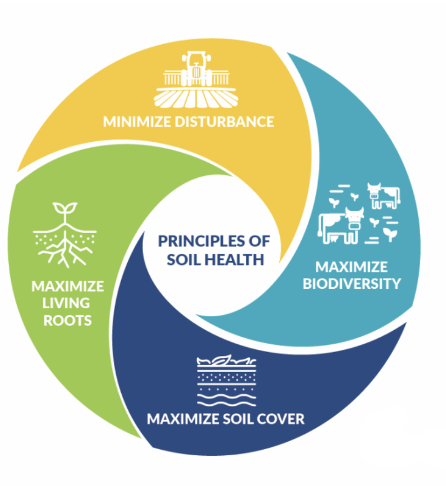
Administered by USDA’s Natural Resources Conservation Service (NRCS), the new Regenerative Pilot Program is designed to deliver a streamlined, outcome-based conservation model—empowering producers to plan and implement whole-farm regenerative practices through a single application. In FY2026, the Regenerative Pilot Program will focus on whole-farm planning that addresses every major resource concern—soil, water, and natural vitality—under a single conservation framework. USDA said it is dedicating $400 million through the Environmental Quality Incentives Program (EQIP) and $300 million through the Conservation Stewardship Program (CSP) to fund this first year of regenerative agriculture projects. The program is said to be designed for both beginning and advanced producers, ensuring availability for all farmers ready to take the next step in regenerative agriculture.
To support the program, NRCS is establishing a Chief’s Regenerative Agriculture Advisory Council “to keep the Regenerative Pilot Program grounded in practical, producer-led solutions,” USDA said. The Council will meet quarterly, with rotating participants, to advise the Chief of NRCS, review implementation progress, and help guide data and reporting improvements. Its recommendations will shape future USDA conservation delivery and strengthen coordination between the public and private sectors.
USDA also said it is permitting public-private partnerships as part of the Regenerative Agriculture Initiative (RAI), claiming that such partnerships will allow USDA to match private funding, thus stretching taxpayer dollars further, and bringing new capacity to producers interested in adopting regenerative practices.
We asked leaders in regenerative agriculture to weigh in on USDA’s announcement. Here’s what they had to say:
Hannah Tremblay, Policy and Advocacy Manager, Farm Aid
As a strong supporter of regenerative agriculture, Farm Aid welcomes USDA’s funding announcement for regenerative agriculture, but the lack of details about the program's specifics means we're unable to give a full response or analysis. From the few details that have been provided to date, this looks like a streamlining of processes and possible restructuring of existing funding, but does not appear to represent new funding for these programs.
The chronic underfunding and oversubscription of the EQIP and CSP programs – two crucial conservation programs – are ongoing problems that this administration and Congress have not addressed. The recent budget bill passed by Congress makes it easier for large operations to disproportionately use EQIP and CSP dollars by removing payment limits and Adjusted Gross Income (AGI) requirements. Policies like these make these programs less accessible to small and diversified farming operations and do a disservice to family farmers who are trying to enact conservation practices.
This sudden embrace of regenerative agriculture flies in the face of the other policies we've seen from this administration, including canceling the Climate Smart Commodities Program, EPA's fast tracking of pesticides and cuts to USDA's NRCS staff, who are crucial to helping farmers implement soil health practices.
Matthew Dillon, Co-CEO, Organic Trade Association
There are still many details to come in the implementation of the NRCS regenerative program, but the Organic Trade Association (OTA) is always supportive of programs that help farmers transition to improved management of their natural resources. It would appear that it will give farmers an à la carte menu of practices that they can select and create a less burdensome bundled approach with NRCS. If we can make it easier for farmers to better care for natural resources, that’s a good outcome.
The optimal outcome would be for farmers to have integrated and holistic conservation plans, like those that organic farmers do in their annual Organic System Plan. And ideally, that would include pesticide mitigation plans for those farmers who are conventional. Hopefully for some of these farmers it will be an on-ramp to exploring opportunities in organic markets.
At the end of the day, policy incentives will only go so far in rewarding farmers for ecosystem services – markets and consumers are essential. Organic is the only third party, verified, backed-by-law marketplace that does that. We will work to make sure organic farmers have adequate access and get recognition in these programs.
Ken Cook, Executive Director, Environmental Working Group
Basically, I’m pretty skeptical of the Regenerative Pilot Program. If you look at all of Robert F. Kennedy, Jr.’s big talk during the Trump campaign and then during the transition regarding subsidies, $700 million rebranded from existing programs (with multi-billion-dollar budget baselines that a lot of us built and defended) is hardly the bold action he promised. The emphasis on efficiency and red tape is interesting—whole farm plans that originated in the 1930s and 1940s in the old Soil Conservation Service (SCS) are all about paperwork and red tape, and going back, a lot of us in the conservation world (and reformist elements within NRCS) pushed the agency to focus on practices aimed at priority lands/problems. Reformers in NRCS in the 1980s and after always felt whole-farm plans were make-work that resulted in career advancements (and documents on farmers’ shelves) but not necessarily conservation on the ground.
There was no emphasis at the press conference announcing the program on reducing pesticides. Nor was there any emphasis on aiming some of the money at organic, the only system out there that does fulfill the MAHA rhetoric from farm to grocery shelf.
And of course, during the Biden administration there was so much emphasis in regenerative circles on climate progress via carbon farming, carbon sequestration, farmers selling carbon credits, and so on, but those words and objectives have been forbidden by USDA. (We always thought the carbon stuff was way oversold—and not needed to justify lots of benefits from mixed crop-livestock farms, longer more diverse rotations, cover crops and other sensible practices that…have also been around and under-deployed by farmers since the 1930s despite BILLIONS spent by taxpayers on free technical assistance and cost-sharing).
Then of course there are the ‘antithesis-of-MAHA’ cuts to vital programs earlier this year to get local food to schools and food banks, the reductions in NRCS staff to do those whole-farm plans, and the massive, multi-billion-dollar subsidies that have been paid in tariff reparations to big commodity operations—whose payment limits have been generously increased to make sure the biggest operations get the most money.
Christopher Gergen, CEO, Regenerative Organic Alliance
The Regenerative Organic Alliance (ROA) welcomes the USDA’s announcement of a new Regenerative Pilot Program as an important signal of federal commitment to advancing healthier soils, more resilient farms, and stronger rural economies. We applaud this growing recognition that agriculture must go beyond extraction toward restoration, a core belief that has guided our work since the creation of the Regenerative Organic Certified® (ROC™) standard.
As USDA begins shaping the program’s criteria and implementation, ROA encourages alignment with the rigorous, holistic principles that define regenerative organic agriculture: improving soil health, ensuring dignified and fair conditions for farm workers, and supporting the humane treatment of animals. These three pillars are foundational to the ROC framework and have proven essential to achieving long-term ecological, economic and community benefits.
We are encouraged that the USDA acknowledges the role of organic systems in regenerative agriculture. ROC builds on USDA Organic as a necessary baseline for eliminating toxic synthetic pesticides, fertilizers, and GMOs — inputs that undermine soil biology, water quality, pollinator health, and farmworker safety. ROC then goes further by requiring additional soil health practices, pasture-based animal welfare, and fair labor conditions.
As decades of peer-reviewed research and field evidence show, regenerative practices alone cannot fully deliver intended environmental outcomes if they allow routine use of synthetic chemicals. The scientific record also shows that organic systems, including those that strategically use tillage for weed control in lieu of herbicides — consistently build soil carbon, increase water retention, reduce erosion, and improve microbial diversity. We encourage USDA to ensure that any regenerative agriculture program reflects this evidence by prioritizing systems that avoid toxic inputs and protect both ecological and human health.
The rapid expansion of regenerative claims creates both opportunity and risk. Without clear definitions, rigorous standards, and third-party verification, the regenerative category is vulnerable to greenwashing and consumer confusion. Independent analysis has shown that some non-organic regenerative labels allow herbicides, GMOs, synthetic fertilizers, and minimal verification, which could undermine public trust and the credibility of the entire regenerative movement.
With the right structure, USDA’s initiative can accelerate the transition to a food and fiber system that heals the land, strengthens rural communities, and ensures a healthier future for all; a vision that drives our mission every day. ROA looks forward to engaging with USDA as this pilot advances and to contributing our expertise, data, and proven frameworks to help shape a regenerative future rooted in integrity, transparency, and meaningful impact.
Jeff Tkach, Executive Director, Rodale Institute
Rodale Institute welcomes the USDA’s announcement of the new Regenerative Pilot Program and views it as an important signal that soil health, farm resilience, and long-term productivity are increasingly central priorities within American agriculture. This moment reflects a growing federal recognition that healthy soil is foundational to a secure food system, climate resilience, and human health.
For more than 78 years, Rodale Institute has led the science and practice of regenerative organic agriculture, long before “regenerative” entered the policy lexicon. Through the longest-running side-by-side comparison of organic and conventional farming systems in North America, Rodale Institute has demonstrated that regenerative organic agricultural practices can improve soil health, enhance water quality, increase resilience to extreme weather, and support farm profitability.
With a national network of research hubs, education initiatives and farmer training programs, Rodale Institute has helped producers across regions and production systems transition to regenerative organic practices rooted in measurable outcomes and continuous improvement. This experience, coupled with our leadership as a founding member of the Regenerative Organic Alliance, positions Rodale Institute as a critical partner in ensuring that regenerative initiatives are clearly defined, science-based, and deliver real, lasting benefits for farmers, communities, and the environment.
As the USDA advances this pilot program, Rodale Institute stands ready to contribute its decades of research, farmer-centered expertise, and leadership to help guide its success. By keeping soil health at the center of agricultural policy and practice, we can continue building a food system that supports productive farms, nourishing food, and healthy people, now and for future generations.
Paige Mitchum, Executive Director, Regen Circle
This Regenerative Agriculture Pilot Program is not new. It is a carve-out from the existing Farm Bill’s conservation funds using the same forms, rankings and field offices. The key difference is that they were processing proposals differently. Under the Climate Smart Commodities Program the process went USDA ↔ big project ↔ farmer. This pilot now routes money through individual NCRS contracts so the process flows as NRCS ↔ farmer. This sounds cleaner unless the agency in the middle just lost 20% of its staff, as is the case with the NRCS.
By doing away with the big projects intermediaries you lose the support provided by states, tribes and NGOs whose role was to recruit farmers, do measurement verification and reporting, provide technical assistance and handle smaller payments. Without this the NRCS will need significantly more bandwidth to handle a direct to farmer approach. But they aren’t staffing up; the FY2026 plan indicated further personnel reductions, leaving me to draw only one conclusion: The regenerative pilot program will be woefully under resourced, forcing them to accept applications from large well-resourced operations leaving small and vitally important producers on their own.
In a nine‑day window in December, the administration: backed pesticide maker Bayer in court, poured billions into the most glyphosate‑dependent crop systems, and then unveiled a sub‑billion-dollar regenerative agriculture pilot program as its health‑and‑soil solution. Once again this administration has brilliantly cut social infrastructure and meaningful programs that were supporting small farmers in regenerative transition, shielded a flagship herbicide company from liability, bailed out large monocultures, and in exchange handed us a small carve-out of existing programs with zero new infrastructure or any credible way of executing said program. As such, this reads more as a marketing scheme than it does meaningful policy work, and I hope that the private sector can step up and support the small holder farmers at the heart of the regenerative movement.
They took away the mountain we were slowly, imperfectly but intentionally building, they took a shovel and put a small mound of dirt aside and said, take this and enjoy the view.
Read Page’s full article here.
André Leu, D.Sc., BA Com., Grad Dip Ed., International Director, Regeneration International
In theory, this is a great initiative. Improving soil health through regenerative practices has been long overdue. Most farmers, including many organic farmers, need to adopt these methods. In reality, it will depend on who is selected to sit on the Chief’s Regenerative Agriculture Advisory Council. If it is composed of regenerative and organic farmers, it will be credible. If they repeat the NOSB (National Organic Standards Board) model, it will be hijacked by academics, NGOs and agribusiness. It will be an exercise in greenwashing, promoting no-till Roundup-ready GMOs and other degenerative practices. I don't have confidence that, given the USDA's history with the organic sector, they will choose the credible option.
Alexis Baden-Mayer, Political Director, Organic Consumers Association
I've been looking into where the money's coming from for the Regenerative Agriculture Pilot Program and how much has been allocated versus taken away. This is money Congress appropriated for two regenerative agriculture programs (the Environmental Quality Incentives Program and the Conservation Stewardship Program) with a total annual budget of $4.515 billion. So, if $700 million is going to regenerative, that means $3.815 billion (84%) of EQIP and CSP funds will be going to factory farms and pesticide-drenched genetically modified field crops. Admittedly, Trump's USDA isn't the first to misappropriate these funds this way, but it is the first to celebrate it.
Earlier this year, the USDA refused to disburse $6.062 billion appropriated by Congress for family famers adopting regenerative agriculture practices and serving local markets. Now we're now supposed to be happy because the USDA is earmarking $700 million for regenerative agriculture? I feel like they're trying to convince us two pennies is more than a dollar bill because two is more than one.
Max Goldberg, Founder, Editor and Publisher of Organic Insider
The USDA's announcement of about $700 million dedicated to regenerative agriculture puts the spotlight on the importance of soil health at a critical time and is extremely welcome. Yet, whether this program can actually deliver tangible results to America's farmland remains a serious uncertainty, and there are two questions that must be answered.
First, does the USDA have adequate on-the-ground technical staff to assist farmers in executing regenerative practices while also measuring soil health improvements? Second, will this program actually lead to a reduction in pesticide use? Only time will tell, but the level of skepticism is very high that the funds will be spent in an efficient manner and this will result in meaningful progress.
Dan Kane, Lead Scientist, MAD Agriculture
The Regenerative Agriculture Initiative (RAI), also called the Regenerative Pilot Program (RPP), is a program announced by Secretary Rollins on Dec. 10, 2025. The press release from USDA describes it as a $700 million pilot program for FY2026 focused on helping farmers transition to regenerative practices.
The RAI is not a new program but instead a repackaging of existing USDA Natural Resources Conservation Service (NRCS) conservation programs, including the Environmental Quality Incentives Program (EQIP) and the Conservation Stewardship Program (CSP). Nor does the RAI designate new funding towards either of these programs and the practices they target. It will likely function as a priority national funding pool producers can apply to with some minor modifications to requirements and the application process. Efforts by the prior administration to increase funding to key regenerative practices and the regenerative agriculture community more broadly through the Inflation Reduction Act (IRA) would have provided greater funding overall in FY2026 and beyond.
The IRA added approximately $19.5 billion into USDA conservation programs above and beyond 2018 Farm Bill funding levels over a period of four fiscal years (FY2023-FY2028). EQIP would’ve been expanded by $8.45 billion over that period, with about $3.45 billion of that coming in FY 2026 for a combined total of $5.5 billion in FY2026. CSP would’ve received $3.25 billion over that period with $1.5 billion coming in FY2026 for a combined total of $2.5 billion in FY2026.
Given all the shifts in funding, and the reallocation of IRA funds to CSP and EQIP baseline spending enacted through the One Big Beautiful Bill Act (OBBB), RAI is effectively funded through the reallocation of IRA funds. But, considering the reduction in total funding, it’s still not net new spending compared to what would’ve happened had IRA stayed in place. Although the OBBB increased baseline EQIP and CSP funding over a longer time period, the Congressional Budget Office still estimates that the rescission and reallocation of IRA funds will result in a net decrease of approximately $2 billion in actual conservation spending through FY2034.
While some of the changes included in this program (bundling applications, whole farm planning, soil testing) are good ideas, they’re ideas that NRCS has already applied through other programs. Major reductions in NRCS staff and proposed changes to how the NRCS is structured are likely to limit total capacity and reduce agency efficiency and function. Last, the elimination of income eligibility caps and the potential integration of public/private partnerships into the program raise concerns that this program and USDA conservation programs writ large will end up primarily serving very large farmers and agribusiness interests.
Any USDA programming focused on regenerative agriculture is a welcome addition to the financial stack for producers. No doubt we at Mad Agriculture will keep this program in mind as a potential option for the producers with whom we work. But this is a small win in comparison to the huge loss that came through the rescission/reallocation of IRA funds.
Read MAD Agriculture’s full analysis of USDA’s Regenerative Agriculture Initiative here.
Charles "Chuck" Benbrook, Ph.D., Founder, Benbrook Consulting Services
Chuck Benbrook is the former Chief Science Officer of The Organic Center; former Research Professor, Center for Sustaining Agriculture and Natural Resources, Washington State University; and former Director, National Academy of Sciences Board on Agriculture
As someone who has been deeply involved in soil conservation policy, I was excited to see this announcement from the USDA Natural Resources Conservation Service (NRCS). With $700 million committed in the next fiscal year, it's a pretty substantial investment in regenerative agriculture. The hope is that it will go on with continued, and hopefully increased, funding.
As I read the announcement for the Regenerative Pilot Program, it seems to be a clear recognition by the USDA that soil health and what is needed to enhance the biological integrity and health of the soil has to be a very high priority. In fact, on par with controlling physical erosion. And I think that's the right direction. That's how we're going to lower the cost of production. That's how we're going to clean up water and start dealing with all these rural areas with ridiculously high levels of nitrate in everybody's drinking water. It's how we're going to deal with resistant weeds. Dealing with soil biology at this point is the most important and lowest hanging fruit for healing what ails us.
I think there are two aspects to the significance of USDA's announcement. One, it recognizes farmers anywhere along the continuum, from conventional, chemical-dependent farmers to regenerative organic producers. Wherever you are along the continuum, if you want to move toward a more diversified, resilient, less chemical-dependent system, you have to make multiple changes simultaneously and timed correctly to succeed.
I also think the NRCS approach of entering into customized contracts with growers that start from where they're at and finance the next round of changes in their farming systems, which could include changes in rotations, tillage, cover crop management and water management, is a good one.
It's also a positive that it's a streamlined administrative process where the farmer basically comes in with a proposal and works with the local NRCS and farm services agency staff to come up with how much the cashier payment will be next year and presumably for subsequent years for the practices that are adopted. Of course, one of the big concerns that people have is how progress is going to be monitored and quantified in a convincing way. Also, like everyone, I'm curious to see the details of how NRCS is going to structure the contracts.
My wish with this program is that smaller producers will have as much access as larger operators, however the fact is, those big commodity farmers tend to get favored when it comes to grants. Yet, I didn't see anything in the announcement to suggest that the NRCS is going to take into account the size of the farm in allocating the available funds. But let's face it, the larger, more sophisticated, often multi-owner, farms are going to be in the door first with well thought out proposals.
Regarding the appointment of an Advisory Council to help oversee the Regenerative Pilot Program, I think (USDA) Secretary Rollins has had a constructive series of conversations with people that come out of the organic and regenerative community. I also think she'll insist that a few folks from that world are on this advisory committee. But, you know, if past is prologue, the soybean growers will have a rep, the cotton council will have a rep and the pesticide industry will have a couple of reps. And it might not be somebody that's working actively for a pesticide manufacturer today, but it could be someone who has deep roots in that community. They may be an academic now. They may work for a consulting firm, but you know, the politics inside these federal agencies is really brutal.
The NRCS regenerative program has great potential to be the fulcrum to start the transition towards more diversified, sustainable regenerative systems, but for it to work in a meaningful way at scale, it has to be combined with a similar negotiated change in how commodity program subsidies and crop insurance subsidies are currently supporting agriculture. And that's the core idea behind what we're working on now called the Farm Economic Viability and Renewal Act, or FEVER Act, to help spark discussion among agriculture community leaders and policymakers of the systemic reforms in policy needed to avoid ever-larger bailouts in the not-too-distant future.
The large sums of taxpayer money at play — over $40 billion in farm support in 2025, and likely even more in 2026 — heighten the urgency of reaching agreement on substantive policy changes. The pressing challenge is to not invest taxpayer dollars during 2026 and beyond in bigger and better band aids, but instead in support of the deeper, systemic changes in farming systems that most farmers, advocates for healthier rural communities, scientists, and policy wonks know are needed.
Companies interested in partnering with USDA NRCS in the Regenerative Pilot Program can email regenerative@usda.gov for more information. Farmers and ranchers interested in regenerative agriculture are encouraged to apply through their local NRCS Service Center by their state’s ranking dates for consideration in FY2026 funding. Applications for both EQIP and CSP can now be submitted under the new single regenerative application process.
Steven Hoffman is Managing Director of Compass Natural Marketing, a strategic communications and brand development agency serving the natural and organic products industry. Learn more at www.compassnatural.com.
Food Contact Chemicals Used in Production and Packaging Are Finding Their Way Into Humans
This article first appeared in the October 2024 issue of Presence Marketing’s newsletter.
By Steven Hoffman
Researchers working with the Food Packaging Forum discovered that of the roughly 14,000 known chemicals that are used in food manufacturing and packaging, approximately 25% or 3,601 of these food contact chemicals (FCCs) have been found in the human body. The chemicals include bisphenol, PFAS, phthalates, metals, volatile organic compounds, and many others that have been linked to endocrine system disruption, diabetes, obesity, neurodevelopment disorders, cancer and other diseases.
The study, Evidence for Widespread Human Exposure to Food Contact Chemicals, published in September 2024 in the Journal of Exposure Science and Environmental Epidemiology, comprehensively searched biological data collections for detections of FCCs in humans, such as from samples of blood, urine, skin, and breast milk. The data is now assembled and available in a public listing with an interactive search tool.
“Our research helps to establish the link between food contact chemicals and human exposure, highlights chemicals that are overlooked in biomonitoring studies and supports research into safer food contact materials,” lead author Birgit Geueke, Ph.D., and Senior Scientific Officer at the Food Packaging Forum, said in a news release.
When the research team reviewed scientific literature to learn what is known about FCCs detected in humans, they concluded there is a broad lack of knowledge of the effect of these chemicals on human health, and the potential hazards of many of these chemicals have not yet been sufficiently investigated. For other chemicals that migrate from packaging into the food, such as synthetic antioxidants and oligomers (a type of non-intentionally added substance that may be present in plastic food contact materials), the authors pointed out that little is known about their presence in and impact on humans.
“Many of these FCCs have hazard properties of concern, and still others have never been tested for toxicity,” the researchers wrote. “Humans are known to be exposed to FCCs via foods, but the full extent of human exposure to all FCCs is unknown.” It also is likely that the actual number of FCCs in humans is even higher because only a subset of FCCs was investigated in detail, noted the study’s authors.
Dr. Jane Muncke, co-author of the study, expressed concern over such widespread chemical exposure, stating, "This work highlights the fact that food contact materials are not fully safe, even though they may comply with regulations, because they transfer known hazardous chemicals into people. We would like this new evidence base to be used for improving the safety of food contact materials—both in terms of regulations but also in the development of safer alternatives."
The Great Chemical Migration
From shrink wrap and takeout containers to plastic bottles and coated paperboard packaging, scientists have known for years that chemicals can migrate out of food packaging into the food itself. We all know not to microwave food in plastic packaging, as high temperatures can cause the plastic to leach into the food. Foods high in fat or acidity also tend to absorb more chemicals from packaging, reported the Washington Post. Foods packed into smaller containers have increased risk of chemical crossover, too — Muncke shared with the Washington Post that on a recent flight she was given a tiny container of salad dressing. “They served the salad with a 15ml little plastic bottle with olive oil and vinegar that you could pour over. I thought, ‘Well, I’m not doing that,’” she said.
Muncke also shared with the Washington Post that while most of the chemicals leaching from food packaging come from plastics, “Probably the worst one is recycled paper and cardboard. And I know that’s a hard one to stomach.” Recycling paper, cardboard or plastic for food packaging leads to non-food grade inks mixed in next to food, she said, adding to the chemical exposure risks. However, in a positive regulatory move, FDA announced in February 2024 that paper and paperboard food packaging coated with grease-proofing PFAS chemicals would no longer be sold in the U.S.
In January 2024, Consumer Reports published an investigation into plasticizers used in food packaging to make plastic containers softer, more flexible and durable. Phthalate compounds — the ones most commonly used as a plasticizer — are so ubiquitous that it has been reported that 95% of all humans have detectable levels of phthalates in their urine. What Consumer Reports found in tests of nearly 100 foods was that bisphenol and phthalates are widespread in food products. “We found them in almost every food we tested, often at high levels. The levels did not depend on packaging type, and no one particular type of food — say, dairy products or prepared meals — was more likely than another to have them,” Consumer Reports said. From canned sliced fruit to pasta to yogurt containers, the investigation found high levels of phthalates in the packaging. Some organic products the consumer advocacy group tested also were not immune to high levels phthalates detected in product packaging.
In addition to packaging, foods are often subject to chemical exposure in the production, manufacturing and potentially in the transport process. According to Consumer Reports, while early efforts to limit food exposure to such chemicals focused on packaging, “…it’s now clear that phthalates in particular can also get in from the plastic in the tubing, conveyor belts and gloves used during food processing, and can even enter directly into meat and produce via contaminated water and soil.”
Leah Segedie, founder of consumer advocacy group Mamavation, has conducted PFAS investigations into a number of different consumer products, and also to provide consumers with guidance in searching for products free of such chemicals. In 2022, she released a report about PFAS contamination of pasta sauces, both organic and conventional. Out of the 55 different pasta sauces she tested in 2021, 17 were organic and four of those, or approximately 25%, had detectable levels of PFAS.
“I believe that PFAS contamination of organic products is also taking place during the manufacturing process and when products get transported,” Segedie told Max Goldberg, Editor of Organic Insider. “What is touching the food? Was a contaminated lubrication used on a machine? Was food stored in a vat that was fluorinated, as it was crossing the Pacific Ocean in an incredibly hot shipping container? Does the food contain contaminated spices? All of these and many other variables are the reason why the end-product should be tested, not just the ingredient,” she said.
Finding PFAS Free Alternatives
Responding to growing concern over “forever chemicals” in food and consumer packaged goods, a number of natural, organic and conscious CPG companies are offering alternatives for products that contain PFAS. The Environmental Working Group compiled a list, updated in January 2024, of companies that have declared their products have no added PFAS, in including food, fashion, beauty care and other consumer products categories. Online retailer Thrive Market this year announced in a blog on its website that, “Though more research is needed, PFAS are being studied as potential carcinogens. This month, Thrive Market added PFAS to its list of non-compliant chemicals and substances, meaning that you won’t find it in any products on our site.”
Businesses such as HeyBamboo, a toilet paper brand made from 100% bamboo, is committed to using absolutely no plastic in its packaging. “The wrap is made from bamboo, and so is the core of our toilet paper and paper towel products,” said company founder and CEO Joslyn Faust. “We like to say that we’re sustainable to the core,” she said. Another emerging brand, Generation for Change, is committed to making plastic-free health and personal care products, stating that it’s “a company made for the plastic-free generation.” In 2022, FoodTank reported on 19 food and beverage companies looking to move beyond plastic packaging
For natural and organic food brands, Charles Haverfield, CEO of U.S. Packaging and Wrapping, offered this counsel in 2023 in Sustainable Packaging News: “Selecting suitable materials for organic packaging demands a discerning approach. Choose options that minimize the presence of unwanted chemicals while upholding organic and sustainable principles. Materials like compostable plastics, plant-based fibers and paper offer a natural breakdown without leaving behind harmful residues. Glass and metal containers, which are highly recyclable and chemically inert, limit interactions with the packaged goods. Steer clear of some conventional plastics, as they can harbor hazardous additives like phthalates and bisphenol-A. Instead, explore alternatives like bio-based plastics or cellulose-based materials. It's important to note that while aluminum is recyclable, certain aluminum-coated packaging materials may contain additional coatings that clash with organic principles.”
A number of packaging suppliers are offering PFAS free options, such as Good Start Packaging, Delfort, CarePac and others, which offer compostable fiber and paper food packaging with no added PFAS. In January 2024, Organic Produce Network reported that a new third-party packaging standard, GreenScreen Certified — a collaboration between the Center for Environmental Health and Clean Production Action — will certify packaging products that are free from PFAS, as well as “thousands of other chemicals of high concern to human health and the environment.”
Learn More
Video Abstract: Evidence for Widespread Human Exposure to Food Contact Chemicals
Full Study: Evidence for Widespread Human Exposure to Food Contact Chemicals
Summary of Study: Evidence for Widespread Human Exposure to Food Contact Chemicals
Database on Food Contact Chemicals Monitored in Humans (FCChumon)
Food Engineering Magazine: Get the PFAS Out of Food Packaging Materials ASAP
Guide to PFAS Free Food Packaging
Mamavation Guide to Avoiding Products with Forever Chemicals
Environmental Working Group Guide to Companies Marketing Alternatives for Products that Contain PFAS
Steven Hoffman is Managing Director of Compass Natural, providing public relations, brand marketing, social media and strategic business development services to natural, organic, sustainable and hemp/CBD products businesses. Contact steve@compassnaturalmarketing.com.
A Toxic Combination: Forever Chemicals Are Adding to the Health Risks of Pesticides
This article first appeared in the August 2024 issue of Presence Marketing’s newsletter.
By Steven Hoffman
Two recent studies, one conducted by Consumer Reports and published in May 2024, and another published in Environmental Health Perspectives in July 2024, suggest that exposure to toxic synthetic pesticides continues to be a serious issue and a growing threat to human, animal and environmental health.
Now, add forever chemicals into the mix, as environmental advocacy groups found that 66 active ingredients currently approved for use in pesticides qualify as PFAS, also known as “forever chemicals.”
In addition, according to the study, “Forever Pesticides: A Growing Source of PFAS Contamination in the Environment,” eight approved “inert” ingredients – added to pesticides to help chemicals disperse and stick to the plants, for example – also qualify as PFAS. The research was conducted by the Center for Biological Diversity, Public Employees for Environmental Responsibility and the Environmental Working Group, and was published in the journal Environmental Health Perspectives.
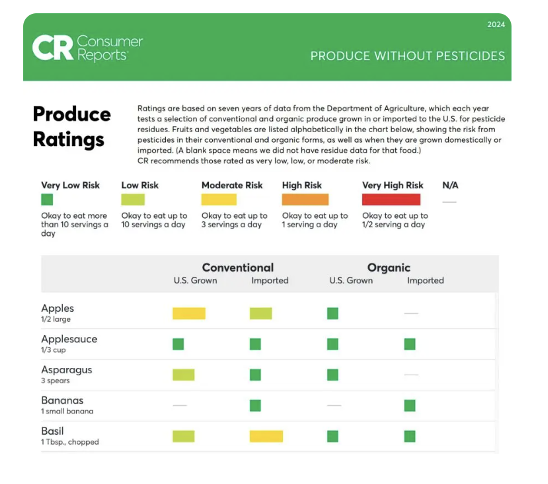
Most Comprehensive Pesticide Review Ever
According to the Consumer Reports study published in May, the advocacy group conducted “our most comprehensive review ever of pesticides in food,” looking at 59 common fruits and vegetables (fresh versions, and in some cases, also canned, dried and frozen fruits and vegetables) and analyzing seven years of data from the U.S. Department of Agriculture. USDA annually tests a selection of conventional and organic produce grown in or imported to the U.S. for pesticide residues.
“Our new results continue to raise red flags,” said Catherine Roberts on behalf of Consumer Reports. “Pesticides posed significant risks in 20% of the foods we examined, including popular choices such as bell peppers, blueberries, green beans, potatoes, and strawberries. One food, green beans, had residues of a pesticide that hasn’t been allowed to be used on the vegetable in the U.S. for over a decade. And imported produce, especially some from Mexico, was particularly likely to carry risky levels of pesticide residues.”
Added Roberts, “When it comes to healthy eating, fruits and vegetables reign supreme. But along with all their vitamins, minerals and other nutrients can come something else: an unhealthy dose of dangerous pesticides.” Science has strongly linked pesticide exposure to increased risks of cancer, diabetes, neurological and childhood development issues, and many other health problems.
PFAS: Compounding the Concern
Compounding the concern of pesticide pollution is the discovery that PFAS chemicals are being used in many of the toxic, synthetic pesticide formulations approved for use on farms across the U.S., raising questions about the long-term consequences of such pernicious substances enduring for decades in our soil and water. According to the Environmental Protection Agency, these chemicals “break down very slowly and can build up in people, animals, and the environment over time.”
PFAS have been linked to cancer, reproductive issues and developmental delays in children, among other adverse health effects. To make matters worse, the researchers who published the Environmental Health Perspectives report found that a process called fluorination, which can create PFAS chemicals, is being used increasingly in the manufacture of pesticides to make them stick around for longer, Civil Eats reported.
“This is truly frightening news, because pesticides are some of the most widely dispersed pollutants in the world,” said Nathan Donley, Environmental Health Science Director for the Center for Biological Diversity and one of the study’s authors. “Lacing pesticides with forever chemicals is likely burdening the next generation with more chronic diseases and impossible cleanup responsibilities. The Environmental Protection Agency needs to get a grasp on this fast-emerging threat right away.”
“Toxic PFAS have no place in our food, water or homes, posing a serious threat to our health and environment,” said David Andrews, Ph.D., Deputy Director of Investigations and a Senior Scientist with the Environmental Working Group, a co-author of the study. “The increasing use of PFAS pesticides will lead to increasing levels of PFAS in the environment. PFAS not only endanger agricultural workers and communities but also jeopardize downstream water sources, where pesticide runoff can contaminate drinking supplies. From home gardens to pet care, the use of these pesticide products further illustrates why we must end all non-essential uses of these persistent forever chemicals,” Andrews added.
Choose Organic
Based on Consumer Reports’ research, the largest risks of dietary exposure to pesticide residues are caused by just a few pesticides concentrated in a handful of fruits and vegetables. Their findings also indicated that nearly all of the organically produced fruits and vegetables tested presented little to no risk.
To help educate consumers, Consumer Reports produced a printable guide showing the risk in produce from pesticides in both their conventional and organically produced counterparts, as well as whether they are grown domestically or imported.
Consumer Reports advised, “A proven way to reduce pesticide exposure is to eat organic fruits and vegetables, especially for the highest-risk foods. We had information about organically grown versions for 45 of the 59 foods in our analysis. Nearly all had low or very low pesticide risk, and only two domestically grown varieties—fresh spinach and potatoes—posed even a moderate risk. Organic foods’ low-risk ratings indicate that the USDA’s organic certification program, for the most part, is working,” Consumer Reports said.
“Less pesticide on food means less in our bodies: Multiple studies have shown that switching to an organic diet quickly reduces dietary exposure. Organic farming protects health in other ways, too, especially for farmworkers and rural residents, because pesticides are less likely to drift into the areas where they live or to contaminate drinking water,” Consumer Reports added.
However, of concern to advocates of organic agriculture, the report also showed that imported organic green beans had a very high pesticide risk – “the exact same rating as imported conventional green beans,” said Max Goldberg, Publisher of Organic Insider, in commenting on the study. Additionally, Consumer Reports findings indicated that U.S. grown organic spinach presented a “moderate” pesticide risk – “the exact same rating as both U.S.-grown and imported conventional Spinach,” Goldberg noted. U.S.-grown organic potatoes also presented a moderate risk, as did imported organic kale, according to USDA data analyzed by Consumer Reports.
While organic agriculture does allow for certain pesticides to be used, they are low-risk and derived from natural mineral or biological sources that have been approved by the USDA’s National Organic Program, said Goldberg, a renowned advocate for organic food and agriculture. Additionally, he noted, chemicals linked to human health and environmental issues, such as glyphosate or neonicotinoids, are prohibited in organic.
“The organic system is not fool-proof, and organic farmers may have persistent pesticides in their soil that have not degraded after the three-year transition period. Or, they may be the victim of pesticide drift from neighboring conventional farms. That being said, any fruit or vegetable that has a moderate, high or very high pesticide risk is a very serious red flag and should call for an immediate investigation. The fact that Consumer Reports looked at nearly 30,000 fruit and vegetable samples would invalidate an ‘isolated incident’ excuse,” Goldberg asserted.
“One of the primary reasons that we are paying extra to buy organic is specifically to avoid these chemicals. And yet, not only do imported organic green beans pose a very high pesticide risk, but they, along with U.S.-grown organic spinach, pose the exact same pesticide risk as their conventional counterparts,” he said.
“In the interim, retailers and brands must demand that their suppliers conduct third-party pesticide testing for all organic fruits and vegetables, or at a bare minimum, for all imported organic green beans and organic kale, and U.S.-grown organic spinach and organic potatoes. This will help identify who the bad actors are, so they can be removed from the system. We have no choice but to be unrelenting when it comes to pesticide contamination of organic fruits and vegetables,” said Goldberg.
Learn More
Download a printable version of Consumer Reports’ guide to pesticides in produce here.
Learn more about “Forever Pesticides: A Growing Source of PFAS Contamination in the Environment” here.
Follow and subscribe to Organic Insider here.
U.S. Organic Product Sales Near $70B; All-Organic Trade Show Set for 2025
By Steven Hoffman
Is it true that the growth rate in sales of certified organic bananas is now outpacing that of conventional bananas? According to the Organic Trade Association (OTA), the answer is yes.
In fact, among an ever-expanding sea of certification seals in the retail sector, and despite inflation, the “Certified Organic” label continues to stand out for consumers who prioritize health, sustainability and clean-label products. So much so that U.S. sales of certified organic products grew 3.4% in 2023 to $69.7 billion, marking a new record for sales in the organic products industry.
According to the OTA, which conducted the 2024 Organic Industry Survey in collaboration with Nutrition Business Journal, organic food sales in 2023 totaled $63.8 billion, and sales of organic non-food products reached $5.9 billion, with organic personal care products reporting the strongest increase in that category, with growth of 7% in 2023.
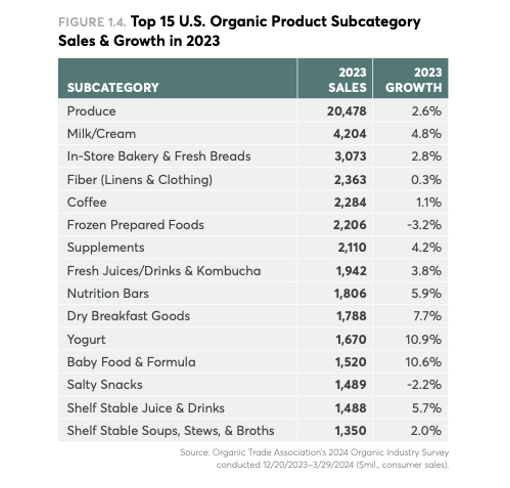
On the food side, fresh organic produce continues to dominate as the primary entry point for consumers, who are increasingly knowledgeable about the “Dirty Dozen” — those fruits and vegetables the Environmental Working Group has determined to contain the most synthetic pesticide residues. In 2023, sales of organic produce grew 2.6% to $20.5 billion. Top sellers included avocados, berries, apples, carrots and packaged salads. OTA also noted that, indeed, in 2023, organic bananas recorded greater sales growth than non-organic bananas.
Organic Baby Food Drives Growth in Grocery
The second biggest selling category in the organic sector in 2023 was grocery, comprising breads and grains, condiments, and packaged and prepared foods. Among a diverse group of sub-categories in grocery, three stood out as top performers: in-store bakery and fresh breads, with sales of $3.1 billion and growth of 3%; dry breakfast products, which were up 8% to $1.8 billion in sales; and organic baby food and formula, up an impressive 11% to record $1.5 billion in sales in 2023.
According to the OTA survey, 2023 also saw a surge in functional and non-alcoholic beverages, which helped drive beverages as the third largest category in organics, posting growth of 3.9% and sales of $9.4 billion. In addition to the emergence of organic “mocktails,” organic wine sales were up 2.5% to $377 million, and organic liquor and cocktails showed strength as an emerging category with growth of 13% and sales of $59 million in 2023.
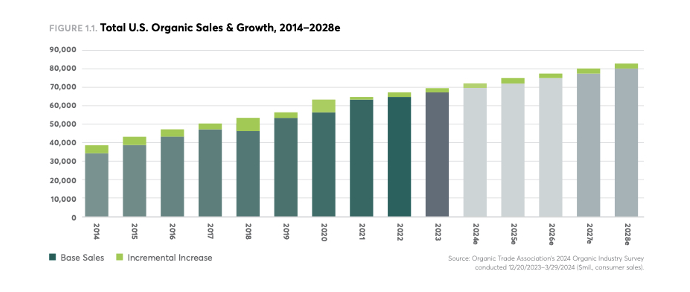
Organic dairy and eggs, the fourth-largest category in the organic food market, based on OTA’s survey, is another entry point for consumers who want clean, ethical sources of protein with lower environmental impacts. In 2023, organic dairy and egg sales were up 5.5%, totaling $8.2 billion. According to OTA, organic dairy and eggs now account for more than 8% of all dairy and egg sales. Milk and cream sales were up nearly 5% to $4.2 billion. Also, the organic dairy alternative category grew almost 14% in 2023 to approximately $700 million.
Leading among organic non-food items were organic supplements, tracking 4% growth and sales of $2.1 billion in 2023. Organic fiber remains the largest segment of U.S. organic non-food product sales, representing 40%, or $2.4 billion, of non-food category sales. According to OTA, growth in organic fiber sales was essentially flat year over year, due to restricted supply chain issues more than lack of buyer interest.
Price Gap Is Narrowing Between Conventional and Organic
According to OTA Co-CEOs Matthew Dillon and Tom Chapman, the increase in overall dollar sales in the organic market in 2023 was driven more by price increases than unit sales as the organic industry recalibrated its supply chain and dealt with retail price increases as necessary. However, they pointed out, consumers increased their purchases of many organic products, and unit sales were up for nearly 40% of the products tracked in this year’s survey.
In addition, the survey indicated that prices for many non-organic products climbed at a faster rate than organic products, meaning that the price gap is narrowing between conventional and organic, which, says OTA, should fuel growth for organic products in the coming year.
“It is encouraging to see that organic is growing at basically the same rate as the total market. In the face of inflation and considering organic is already seen as a premium category, the current growth shows that consumers continue to choose organic amidst economic challenges and price increases. Although organic is now a maturing sector in the marketplace, we still have plenty of room to grow,” said Tom Chapman.
Matthew Dillon added that to achieve this growth, “It is essential to educate consumers that choosing organic is a straightforward way to tackle some of the greatest challenges we face. Whether it's accessing healthy foods, improving transparency in supply chains, mitigating climate change, supporting rural economic resilience, protecting natural resources, or realizing the multitude of other benefits, effectively communicating and delivering on these promises is the key to expanding organic’s share of our dinner plate.”
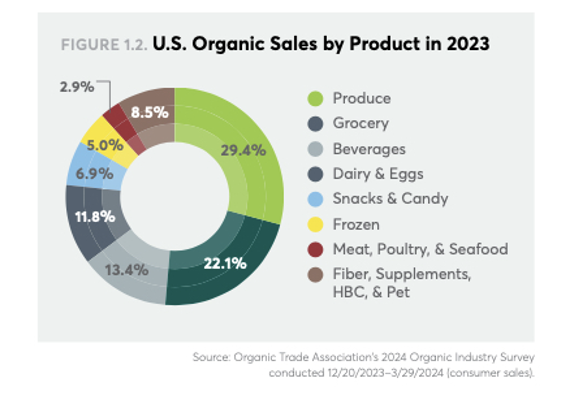
The future for organic is not without its challenges. However, Chapman and Dillon assert that more consumers are aware of the potential health benefits associated with organic foods. Many consumers, too, especially the Millennial and Gen Z generations, they point out, are increasingly conscious of the ethical implications of their food choices. They are looking for products that align with their values, such as animal welfare, fair trade, and support for organic farmers. That means seeking out products with the USDA certified organic seal on the label.
OTA Members can download the full report here. A summary is available here.
Dedicated All-Organic U.S. Trade Show Announced
Since 1991, people from all over the world have attended, BioFach, the world’s only dedicated, all-organic trade show, held each year in Nuremberg, Germany. Now, targeting the world’s largest market for organic products, the producer of BioFach has announced it will host its first standalone, all-organic trade show in the U.S.
Dubbed BioFach America, the event will take place on June 2-4, 2025, in Atlanta.
“With BioFach America, we will host a purely organic trade show in the US. The whole organic value chain will be covered: from organic farming to retail,” said NürnbergMesse, producer of the event. According to the producer, every product presented at BioFach America must be USDA certified organic or carry an organic certification from an IFOAM Organics International accredited organization. For cosmetics, certifications such as COSMOS or Ecocert, are accepted.
In an interview with Organic Insider, Bill Ingwersen, CEO of NürnbergMesse North America, said, “BioFach America always had a presence, or section, at Natural Products Expo East, and last year in Philadelphia, we brought in 47 companies from around the world. With that show being canceled, it forced us to really ask the question: are people getting what they need at other shows or is there a true need for an organic one? We concluded that there was, in fact, a real need for a dedicated, all-organic platform in the U.S.”
When asked why Atlanta was chosen as the location for the inaugural event, Ingwersen told Organic Insider, “Since this is a U.S. show and not a regional one, people will have to travel, regardless of which city we chose. After many conversations with industry executives, it became clear that we had to make it an affordable show for everyone, including farmers. Atlanta has the world’s largest airport, has an ample supply of low-cost hotel rooms and is a very energetic, accessible city that has great infrastructure. In addition, it can support our growth as we move forward. Also, being able to serve an organic lunch to our attendees was a real hot button topic. All the catering coming out of the Atlanta Convention Center will be organic for the show, and if a city could not guarantee this, that was an immediate disqualification.”
Learn more about BioFach America here.
Is 2024 the Year Regenerative Agriculture Takes Root?
This article first appeared in Presence Marketing’s January 2024 newsletter.
By Steven Hoffman
In 1942, J.I. Rodale first popularized the term organic in the U.S. with the launch of Organic Farming and Gardening Magazine. Some 45 years later, in the 1970s, J.I.’s son Robert Rodale introduced the phrase “regenerative organic.” Robert’s goal was to describe an approach to farming that combined organic practices with a more holistic approach to land management and a focus on rebuilding soil health. Yet it’s only been in the past few years that the term has gained more widespread traction.
With the release in 2023 of two full-length feature documentary films, Common Ground and Organic Rising, along with increased adoption among farmers and producers, awareness of regenerative agriculture is set to gain ground in the coming year among large-scale food manufacturers, policymakers, researchers, the general public and more. Today, advocates of regenerative agriculture say it is the best way to produce healthier food and promote local and rural economies. And, by sequestering carbon back into soils, it can also play a significant role in mitigating climate change.
“2024 indeed will be marked as the year of regenerative agriculture. Why? We are closing in on a tipping point of awareness and collective action is being realized on a huge scale. Not only is soil and regenerative agriculture finally making its way as a leading climate, water and health solution, but we are also showing up as one of the biggest economic solutions for rural economies and businesses across the world,” said Finian Makepeace, Co-founder and Chief Strategy Officer of the nonprofit organization Kiss the Ground and Producer of the films Kiss the Ground and its sequel Common Ground.
“With the recent film Common Ground, and many other feature films and shows in this space sharing the story along with the incredible build of awareness brought on by Save Soil and others, we are seeing a dramatic increase in people comprehending the soil solution. With brands and businesses, there are huge commitments around regenerative agriculture for 2030. I believe 2024 will be a year of turning on those actions and increasing the integrity of their proposed programs. Regarding regenerative agriculture, I feel that 2024 will be the year that the world’s regen leaders find common ground and agree upon a definition that will allow for many more to work and support this space functionally,” Makepeace added.
“I do think that 2024 could be the best year yet for regenerative agriculture. While there is still disagreement over the definition, there is significant consensus that it includes a keen focus on building soil health, enhancing biodiversity, humanely integrating livestock and including worker fairness. New certification and verification programs like Regenerative Organic Certified, Certified Regenified, and Soil & Climate Health provide a lot of support and tools for farmers who want to incorporate more regenerative practices,” said Elizabeth Candelario, Director of Strategic Partnerships for MAD Agriculture, an organization that works with farmers and industry to advance regenerative practices.
In addition, Candelario said, “While their motivations may vary — from mission alignment to strengthening supply chains to mandatory ESG reporting — food companies are (finally) paying attention to the agriculture that is producing their ingredients. And food was finally on the table at the recent COP28 climate summit. The conference opened with a declaration on sustainable agriculture, signed by more than 130 countries, and ended with a final agreement that acknowledges for the first time that sustainable agriculture needs to be included in climate change solutions.”
Regenerative Products Sales Take Off
Now, the marketplace is responding. According to the Regenerative Organic Alliance Impact Report 2022 – 2023, sales of Regenerative Organic Certified (ROC®) products grew an average of 22% from EOY 2022 to EOY 2023, with sales totaling nearly $40 million in 2023. Companies including Dr. Bronner’s, Patagonia, Lundberg Family Farms, Manitoba Harvest, Bonterra and others are leading the certification efforts and serving as role models for other brands.
According to the Impact Report and based on SPINS data, revenue from sales of ROC® products in natural and multi-outlet grocers increased by one-third compared to the same period in the previous year. In addition, the number of ROC® SKUs in the market increased nearly forty-fold in 2023, “indicative of continued growth potential,” the report said. “By offering Regenerative Organic Certified products, brands are responding to the consumer desire to have their purchase make a positive impact at every level: environmentally, ethically, and socially,” the report concluded.
Globally, the market size for regenerative agriculture reached US$975.2 million in 2022, and is projected to be worth US$4.3 billion by 2032, poised to grow at a CAGR of 15.97% from 2023 to 2032, according to a June 2023 report from Precedence Research. North America generated more than 37% of the revenue share in 2022, Precedence Research reported.
While regenerative agriculture practices aren’t yet familiar to most Americans (just one in five consumers surveyed by Food Insight in 2022 said they’d heard of regenerative agriculture), 73% of consumers agreed they would be more likely to trust retailers and brands that implement regenerative agriculture programs, and 72% agreed that they would be more like to purchase from them, Supermarket Perimeter reported in October 2023.
Major retailers are taking notice. In December 2023, Whole Foods Market announced that it had implemented new standards to protect pollinator health. As such, the retailer will now require all fresh produce and floral suppliers to implement supply chain practices that help protect honeybees and other native pollinators.
Speaking to executives at Progressive Grocer’s Grocery Impact conference in November 2023, Whole Foods CEO Jason Buechle said, “Whole Foods Market invites you to help us start a ripple effect of change that will fix our broken food system. The decisions we make as a business — even the smallest ones — in how food is raised and grown today can have a profound and lasting impact on nourishing people and the planet for future generations to come. One of the biggest challenges our food system is facing now and will continue [to face] in the future is the climate crisis. If we continue farming in the large-scale, mechanized way that much of the industry currently does, our topsoil is not going to have the nutrient density it needs to grow the foods we know and love today,” Buechle said.
To address this challenge, Buechle reported that the retailer is working with farmers, ranchers, suppliers, scientists and other experts, as well as leading organizations, to leverage regenerative agriculture to evolve the practices used to grow, raise and produce the products that it sells. A focus on regenerative agriculture and responsible sourcing is an essential part of the retailer’s value proposition, which remains strong despite the mainstreaming of natural foods and the effects of inflation on consumer spending, according to Buechle.
Regenerative Food and Agriculture in 2024
In October 2023, Forbes reported that water stewardship will one of the biggest food trends in 2024. “As the tides of environmental consciousness continue to shape consumer choices, it is no wonder that water stewardship is set to become one of the top food trends for 2024,” wrote Senior Contributor Daphne Ewing-Chow.
“The global agri-food industry— valued at $6 trillion— is one of the most highly exposed to water risks, with water stress impacting many of the world’s largest food-exporting countries. Paradoxically, despite mounting perils to both food and water security stemming from water depletion, pollution, and climate-induced droughts, the food and agri-business sector is a chief contributor to the problem, accounting for a substantial 70% of all freshwater withdrawals,” she continued.
According to Ewing-Chow, “Regenerative agriculture plays a pivotal role in enhancing soil health, facilitating nutrient retention, bolstering natural resilience to environmental challenges, and mitigating erosion. This contributes to the conservation of water resources and the enhancement of ecosystem water quality, reducing the volume of water required for farming activities and decreasing harmful water and nutrient runoff from agricultural lands.”
Forbes also reported that in September 2023, SAI Platform, a network comprising 170 major food companies dedicated to sustainability, unveiled a global framework outlining the transition to regenerative agriculture for food businesses. A number of mainstream food brands such as Unilever, Nestlé, McDonald’s, Danone, and General Mills have already committed their support for regenerative agriculture, Forbes reported.
Greater technical innovation and research into regenerative agriculture will continue over the coming year, the Global Ag Tech Initiative predicted in its December 2023 report, 5 AgTech Trends to Watch in 2024. “Essentially mimicking natural process and biodiversity on agricultural land, the ultimate aim of regenerative agriculture is to improve soil health in order to boost yield. To address the challenges of climate change and feed a global population of over 8 billion, regenerative agriculture is vital. Digital tools use accurate, up-to-date data to create tailored regenerative agriculture solutions. These consider soil conditions, weather conditions, microclimates, and current crop growth or land use, as well as individual budgets and local regulations. Platforms offering site specific data will likely reign supreme in 2024. A view of sustainability that extends beyond simple carbon metrics and one-size-fits-all solutions is necessary and will enable the establishment of realistic, actionable objectives for growers, promoting sustainability and formulating strategies tailored to local environments,” the report said.
Beyond Food – Regenerative Fashion Threads the Needle
On the textile and fiber front, companies including fashion leader Mango will begin incorporating regeneratively grown cotton into its 2024 fashion collections, the Fashion Network reported in December 2023. The company has partnered with Materra, a British-Indian company specializing in regenerative cotton cultivation, and said it will be able to ensure complete traceability across the value chain of its cotton, from seed to final garment.
“As a global fashion company, our intent is clear: to contribute to creating a fairer society and reduce the fashion industry’s impact on the environment. This is why we ally ourselves with key partners like Materra, which will help us accelerate our path to ensuring that 100% of the fibers we use are sustainable by 2030,” said Andrés Fernández, Mango’s director of sustainability and sourcing.
Other fashion brands driving regenerative agriculture initiatives include J.Crew, Prana, Terra Thread and other textile and fiber companies that are members of the Regenerative Organic Alliance. “Big fashion brands and independent labels are embracing regenerative agriculture as a win-win solution that could allow them to source climate-positive materials. The challenge is that the concept doesn’t have a singular definition, and without clear standards it risks becoming a tool for greenwashing,” Business of Fashion reported in August 2023.
California Could Define Regenerative
Speaking of a definition, beginning in January 2024, the California Department of Food and Agriculture (CDFA), in collaboration with the State Board of Food and Agriculture, will host a series of public listening sessions to receive comments to help define “regenerative agriculture.”
“As interest in ‘regenerative agriculture’ continues to grow, we are seeing the introduction and evolution of the term in California policies and programs,” CDFA said. “Incorporating a definition of regenerative agriculture for state policies and programs provides a science-based criterion for the designation or recognition of the term ‘regenerative’ in agriculture-related policies of the state. By defining ‘regenerative agriculture’ and its associated practices, we are working to formalize holistic methods of farming that are designed to protect, sustain and enhance natural resources on our farms and farming communities throughout California,” the agency said.
Max Goldberg, Editor and Publisher of Organic Insider, commented, “If California codifies or legally defines ‘regenerative agriculture’ … it will certainly raise the profile of this term among consumers and farmers may end up paying more attention to the way they manage their soil, which is a real positive. However, both the opportunity for greenwashing and the consequences for organic could be severe,” he cautioned.
“At its core, the regenerative agriculture controversy stems from the question of whether a farming practice can be truly ‘regenerative’ if super-toxic chemicals, such as glyphosate or dicamba, are applied to the crops. There is no question that the regenerative movement has brought incredible attention to soil health … and that it has led to very important steps forward in farming practices around the world. But with all of the positive developments, ‘regenerative’ is ripe for abuse and greenwashing, and the multinational chemical companies, who have no intention of minimizing the importance of GMO seeds and synthetic pesticides, are eagerly embracing the term,” Goldberg added.
Elizabeth Whitlow, Executive Director of the Regenerative Organic Alliance, which manages the Regenerative Organic Certified program, told Organic Insider that she believes that California needs to act with real caution. “There are many groups and farmers advocating for ‘regenerative agriculture’ that are doing some excellent and extremely vital work. My concern, however, is that if the state defines ‘regenerative agriculture’ and it excludes organic, it could have the unintended effect of actually doing a lot more harm than good. Bad actors greenwashing the term is a real threat, and all stakeholders in California’s organic industry need to be fully engaged and on board with how the state is going to define ‘regenerative agriculture.’ The stakes are very high, for both California and our entire country, and this process cannot be rushed,” she said.
Woody Harrelson’s Regenerative Reason for Hope
Three-time Oscar nominated actor and environmental activist Woody Harrelson, in a December 2023 Op-Ed in The Wrap, expressed that, after serving as a co-narrator on the film Common Ground, he is “no longer hopeless for the future.”
Harrelson writes:
We stand at a crossroads, facing two paths. One leads to climate chaos, food shortages, deserts expanding and a biodiversity crash. The other involves rethinking our relationship with nature by choosing regenerative agriculture. The regenerative path can give us abundant, nutritious food, thriving ecosystems and a future for generations to come.
I had a surreal moment when I met King Charles and he said he loved “Kiss the Ground” so much he personally sent it to 1,000 people. I hope the same is true of “Common Ground” – I hope thousands of people send the new documentary to thousands of their friends.
I’ve never been a big believer in the political process in this country, but I believe in people. Congress is currently debating something called the Farm Bill. There are a lot of good people in America, who deserve to eat clean food, and it would be refreshing to see Washington prioritize communities over commodities.
I’m no longer hopeless. I’m actually inspired. In fact, I’m committed to using my voice and activism to make the regenerative agriculture movement spread far and wide.
We don’t just need to support soil in the Farm Bill — we need to make the effort in every way we can, from turning our lawns into food gardens and our food waste into compost, to buying food from local regenerative farmers and ranchers. We all eat and we can all support the people who are doing the hard work to feed the world with healthy regenerative food. We can vote with our dollars.
One thing is for certain, it’s time for a change. Soil is our common ground.
Let’s make regenerative agriculture our priority.
Learn More
Growing Life: Regenerating Farming and Ranching, by André Leu, December 2021
Food Climate and Nature FAQs, The Nature Conservancy, Sept. 1, 2023
Regeneration International, a global nonprofit organization and educational resource
44th Annual EcoFarm Conference, Pacific Grove, California, Jan. 17-20, 2024
Regenerative Business Live, United Nations, New York, NY, May 7, 2024
Steven Hoffman is Managing Director of Compass Natural, providing public relations, brand marketing, social media, and strategic business development services to natural, organic, sustainable and hemp/CBD products businesses. Compass Natural serves in PR and programming for NoCo Hemp Expo and Southern Hemp Expo, and Hoffman serves as Editor of the weekly Let’s Talk Hemp Newsletter, published by We are for Better Alternatives. Contact steve@compassnaturalmarketing.com.
Is Cell Cultured Meat Safe for Humans and the Environment?
This article first appeared in Presence Marketing’s September 2023 newsletter.
By Steven Hoffman
Now that two California-based companies, Upside Foods and Good Meat, have received approval by the FDA and USDA to sell their lab-grown chicken products in restaurants before going full retail, the U.S. joins two other countries, Singapore and Israel, as the first to allow commercialization of cell cultured meat products.
What do natural channel industry members need to know about this new and controversial technology?
One thing seems certain: cell cultured meat, derived from and produced with biological materials sourced from animals, is not vegan. Few think it’s natural and many question whether it’s humane or safe for consumers to eat, at least in its present iteration. Despite being touted by such chefs as José Andrés, some experts question whether lab-grown chicken is even chicken. The ability to scale, along with potentially significant environmental impacts and production costs, are also top concerns for industry and consumers alike.
“We know that one company is using genetic engineering to create and immortalize chicken fibroblast and/or myoblast cell lines. They select for cells that they can bulk up in a suspension culture. However, growth factors used in the suspension culture may come from sera sourced from bovine, pig or other animal sources,” Michael Hansen, Ph.D., Senior Scientist with Consumer Reports, told Presence News.
“If you’re buying chicken, you need to know if it was made with bovine or pork materials. How will consumers and those that follow special diets know if it’s not labeled?” Hansen asked. “Restaurants do not have to label.”
Countering cruelty free claims made by marketers of cell cultured meat, Hansen added, “The notion that this is cruelty free? They’re using fetal bovine serum derived from slaughtered cattle. They are, in fact, using a lot of material from animals. Let me be straight up clear: they are not cruelty free.”
In addition, Hansen raised concerns about the nutritional quality of the meat produced using cell culture technology. “Nutritionally, normal cholesterol levels in ground chicken average 45.4 mg/dL. However, cholesterol levels were reported five to 10 times higher in lab-grown, cell cultured chicken products,” he pointed out.
Safety, too, is a major point of concern for Hansen, who has been sharing his scientific expertise with Consumer Reports for more than 20 years. “People haven’t eaten these kinds of things before. We don’t know the downside and there have been no adequate health or safety studies conducted, to date.”
Josh Tetrick, CEO of Eat Just and Cofounder of Good Meat, feels differently about the safety of his cell cultured chicken product.
“So how do we do it?” Tetrick explained in an April 2022 interview with The Venture podcast. “We start with a cell. And we can get that cell from an egg, from a fresh piece of meat, or from a biopsy of an animal, so we don’t need billions of farmed animals anymore. Then we identify nutrients to feed the cell, since we need our own version of feed. And it’s not that different. It’s amino acids, vitamins, and minerals—stuff that enables our cell to grow. And then we scale up and manufacture it in a stainless-steel vessel called a bioreactor that looks like something you’d see in a microbrewery.
“And that’s how we make meat. That’s the process we used to make meat that’s served in Singapore today. That’s the process that we’ll be using as we build out larger facilities in North America, Singapore, and elsewhere. It’s cleaner, so there is little to no risk of salmonella, E. coli, fecal contamination, or other zoonotic diseases. Ultimately, we think it will be more efficient. The goal is to get below the cost of conventionally produced chicken,” Tetrick told The Venture.
“Because as proud as I am about launching with a handful of restaurants, that’s not the point. The point is to get to a world where the vast majority of meat consumed doesn’t require the need to slaughter an animal, cut down a tree, use antibiotics, or accelerate zoonotic disease. We’ve got to get to that world. And we’re only going to get to that world when we figure out a way to manufacture at scale. And we’re only going to get to scale when we figure out how to engineer this unprecedented bioreactor. And that’s why we’re putting so much energy into figuring it out,” Tetrick added.
“Yes, but what’s in the feed stock for the nutrient medium in which such products are grown?” natural products industry veteran and retail specialist Errol Schweizer asked.
“Billions of dollars of speculative investment have flowed into this space. The volumes of cell cultured meat needed to turn a profit for investors will necessitate millions of pounds or gallons of nutrient mix annually,” Schweizer said. “Will the feed stock be derived from cheap, plentiful but chemical-laden by-products of GMO agriculture, particularly soy and corn?
“And what are the environmental and health impacts of these feedstock raw materials? The industry will need to figure out how to dispose of the biological waste as a result of this process, as well. And because a lot of companies don’t want regulatory scrutiny beyond what already exists in the food industry, it’s going to take a lot of public pressure to get stronger labeling and federal oversight measures in place,” Schweizer told Presence News.
Max Goldberg, Founder of Organic Insider, questions the environmental benefits of cell cultured meat. “This is a very risky, unproven and highly processed food technology, and research published in May from the University of California at Davis shows that cultivated meat could emit up to 25 times more carbon dioxide equivalents than conventional beef. Yet, is anyone the least bit surprised? This is the classic playbook from the GMO industry – sell the public and investors on a great story but fail to deliver on the promises. Furthermore, no one has any idea of the possible unintended side effects of consuming this novel food product,” he told Presence News.
At the end of the day, will consumers accept such products? According to an international research group led by Ashkan Pakseresht from Novia University of Applied Sciences in Finland, consumer studies indicated at least seven factors affecting consumer acceptance of culture meat products: public awareness, risk-benefit perception, ethical and environmental concerns, emotions, personal factors, product properties, and availability of meat alternatives.
“Like any new food, the ultimate success of cultured meat depends on consumer acceptance,” the researchers said. “Environmental and ethical concerns stimulate a desire to preserve the environment and encourage consumers to accept more sustainable food production systems. However, it was surprising to learn that ethical and environmental concerns prompted consumers to be willing to pay a premium price for purchasing meat substitute (e.g., plant-based substitutes), but not necessarily cultured meat. The results indicated that the environmental advantages alone do not seem to be a strong motivation to compensate for perceived risks (or disgust impulse) of this novel technology,” Pakseresht told Food Navigator.
How will these products be presented to the public? According to Food Republic, a major hurdle has been determining how to label lab-grown meat in a way that would be transparent for consumers. “After a long process that has included debate and public feedback, the USDA has ruled that the lab-grown chicken will be labeled “cell-cultivated,” the magazine reported in June 2023.
“The USDA’s approval of our label marks a major step forward towards our goal of creating a more humane and sustainable food system,” said Dr. Uma Valeti, CEO and Founder of Upside Foods, in a press release about the decision.
At the end of the day, will grocers, distributors and others dedicated to the healthy lifestyles market and the natural retail channel be willing to sell cell cultured meat? As Bill Weiland, Co-founder of Presence Marketing, puts it, “We prefer to sell plant-based meat, not meat made in a plant.”
Steven Hoffman is Managing Director of Compass Natural, providing public relations, brand marketing, social media, and strategic business development services to natural, organic, sustainable and hemp/CBD products businesses. Compass Natural serves in PR and programming for NoCo Hemp Expo and Southern Hemp Expo, and Hoffman serves as Editor of the weekly Let’s Talk Hemp Newsletter, published by We Are for Better Alternatives. Contact steve@compassnaturalmarketing.com.
Cracking Down on Fraud: USDA Organic Enforcement Rules Take Full Effect in March 2024

This article first appeared in Presence Marketing’s September 2023 newsletter.
By Steven Hoffman
Organic food is big business in the U.S. – sales of organic products topped $61 billion in 2022 – and the certified organic label fetches a premium price for producers. So much so that fraud from both domestic and imported sources had become a major concern among organic industry business owners, investors and advocates.
That’s why such leading organizations as the Organic Trade Association (OTA) and others applauded the U.S. Department of Agriculture (USDA) when, earlier this year, the agency announced the Strengthening Organic Enforcement (SOE) final rule, which is set to be fully implemented and enforced in March 2024.
Representing the biggest change to organic regulations since the passage of the Organic Food Production Act in 1990, the SOE Rule was created to crack down on organic fraud. The new rule provides “a significant increase in oversight and enforcement authority to reinforce the trust of consumers, farmers, and those transitioning to organic production. This success is another demonstration that USDA fully stands behind the organic brand,” Jenny Lester Moffitt, USDA Under Secretary for Marketing and Regulatory Programs, said in a statement.
“The rule closes gaps in current organic regulations and builds consistent certification practices to prevent fraud and improve the transparency and traceability of organic products. Fraud in the organic system – wherever it occurs – harms the entire organic sector and shakes the trust of consumers in organic. This regulation will have significant and far-reaching impacts on the organic sector and will do much to deter and detect organic fraud and protect organic integrity throughout the supply chain,” OTA said in support of the new rule.
Liz Figueredo, quality and regulatory director at organic certifier Quality Assurance International (QAI), based in San Diego, California, told Nutritional Outlook in July 2023 that the new SOE Rule closes supply chain loopholes that existed in previous regulations. The new rule requires organic certification for all parts of the supply chain, including handlers and suppliers who were previously exempt, she said.
“This means that certifiers can no longer depend on documentation from uncertified handlers, which was often lacking, to verify the organic status of products. The rule also includes fraud-reduction techniques, such as requiring an Import Certificate for any organic ingredients or products imported into the U.S., which provides the total volume or weight of the imported products,” Figueredo said.
Who Is Affected by the New SOE Rule?
According to USDA, the SOE Rule may affect USDA-accredited certifying agencies; organic inspectors; certified organic operations; handlers of organic products; operations considering organic certification; businesses that import or trade organic products; retailers that sell organic products; and organic supply chain participants who are not currently certified organic.
Exemptions are limited to a few low-risk activities such as very small operations; certain retail establishments that do not process; storage and warehouse facilities that only handle products in sealed, tamper-proof containers or packages; distributors that only handle final retail-packaged products; and customs and logistics brokers that do not take ownership or physical possession of organic products.
However, exempt operations must still follow all other applicable portions of organic regulations, including co-mingling and contamination prevention, labeling requirements and record keeping. Transporters that only move organic products between certified operations, or transload between modes of transportation, do not need to be individually certified, but are the responsibility of the certified operation that loads or receives the product.
To see if your business is affected and for more information, visit the full text of USDA’s SOE Rule in the Federal Register. OTA, too, has a resource page with extensive information regarding preparing for full compliance with the SOE Rule, along with exclusive training materials for association members. OTA also offers a questionnaire for businesses that may not be sure if they need certification.
What Does the SOE Rule Do?
According to USDA, “SOE protects organic integrity and bolsters farmer and consumer confidence in the USDA organic seal by supporting strong organic control systems, improving farm to market traceability, increasing import oversight authority, and providing robust enforcement of the organic regulations.”
Key updates include:
Requiring certification of more of the businesses, like brokers and traders, at critical links in organic supply chains.
Requiring NOP Import Certificates for all organic imports.
Requiring organic identification on non-retail containers.
Increasing authority for more rigorous on-site inspections of certified operations.
Requiring uniform qualification and training standards for organic inspectors and certifying agent personnel.
Requires standardized certificates of organic operation.
Requires additional and more frequent reporting of data on certified operations.
Creates authority for more robust recordkeeping, traceability practices, and fraud prevention procedures.
Specify certification requirements for producer groups.
“SOE complements and supports the many actions that USDA takes to protect the organic label, including the registration of the USDA organic seal trademark with the USPTO. The registered trademark provides authority to deter uncertified entities from falsely using the seal, which together with this new rule provides additional layers of protection to the USDA organic seal,” USDA said.
For producers wanting to learn more about navigating and adhering to these new requirements, the Western Growers Association in partnership with the Organic Produce Network will host a session at its upcoming Organic Grower Summit, Nov. 29-30, 2023, in Monterey, California, entitled “The SOE Deadline Looms–Are You Ready?” The seminar is designed to help growers better understand the upcoming rule changes, which will affect producers, distributors, handlers and importers.
In addition, organic industry and policy veterans Gwendolyn Wyard and Kim Dietz recently founded Strengthening Organic Systems, an advisory firm focused on helping businesses with organic fraud prevention, supply chain investigations and compliance with USDA’s organic anti-fraud regulations.
Read More
How Will USDA’s Organic Regulation Changes Affect the Food and Nutraceutical Industries? – Nutritional Outlook
USDA Launches Organic Integrity Database Module – Organic Insider
Tighter Rules Now in Effect for USDA Organic Seal of Approval – Cosmetics and Toiletries News
Strengthening Organic Enforcement USDA Rule – California Certified Organic Farmers
USDA Bolsters Consumer Confidence in Certified Organic Products with New Enforcement Rule – New Hope Network
Steven Hoffman is Managing Director of Compass Natural, providing public relations, brand marketing, social media, and strategic business development services to natural, organic, sustainable and hemp/CBD products businesses. Compass Natural serves in PR and programming for NoCo Hemp Expo and Southern Hemp Expo, and Hoffman serves as Editor of the weekly Let’s Talk Hemp Newsletter, published by We are for Better Alternatives. Contact steve@compassnaturalmarketing.com.