
From Startups to Multinationals, Regenerative Agriculture Reshapes the Food Business
By Steven Hoffman
As climate change accelerates, the food industry faces a paradox: It is both a driver of ecological degradation and a potential solution. Agriculture accounts for about a quarter of global greenhouse gas emissions, yet it also has the capacity to sequester carbon and rebuild ecosystems. At the center of this opportunity sits regenerative agriculture – a set of practices that go beyond “sustainable” to actively rebuild soil, restore biodiversity, and promote community health and the health of local economies.
In business terms, regenerative agriculture is moving from philosophy to label. Much as “organic” transformed consumer expectations in the 1990s and early 2000s, “regenerative” is quickly becoming one of the fastest-growing claims appearing on food and beverage products. Retailers, too, are beginning to carve out shelf space for regenerative brands, echoing the early days of organic.
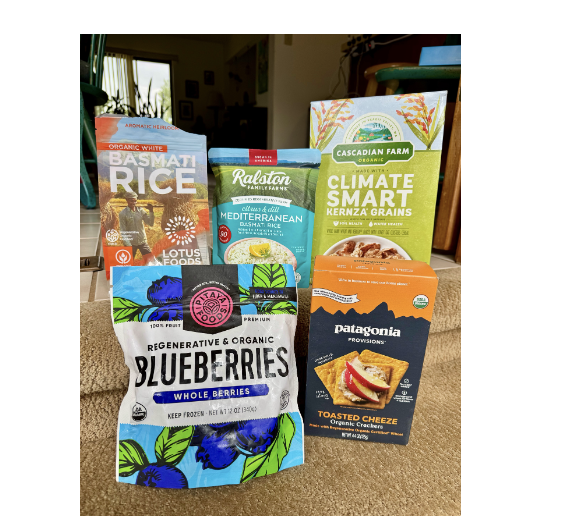
The rise of regenerative can be attributed in great part to the fact that, according to GLOW/NielsenIQ surveys, 70% of consumers consider environmental responsibility more important than they did just two years ago, and 90% see eco-friendliness as a key decision criteria. Over 78% of consumers aged 18-24 believe the current food system is not sustainable and is a major cause of the climate crisis, reported Errol Schweizer on Sept. 22, 2025, in Forbes.
For companies across the value chain – from Roaring Fork Mill, a family-run mill working to restore heirloom grain farming in the Rocky Mountain West, to Lundberg Family Farms, which recently converted all of its organic rice production to Regenerative Organic Certified, and to multinationals including McDonald’s, PepsiCo, General Mills, Nestlé, and others – adopting regenerative practices represents not just climate responsibility, but it also gives them a competitive edge in a changing marketplace.
What Regenerative Agriculture Means
The concept of regeneration is not new. Farmers and Indigenous communities have practiced soil-restoring methods — such as cover cropping, crop rotation, and integrated livestock management — for centuries. What distinguishes modern regenerative agriculture, as coined by Robert Rodale in the late 1970s, is its intentional framing as a climate strategy, ecosystem rebuilder, and market driver.
At its core, regenerative agriculture refers to farming and grazing practices that restore soil health, increase biodiversity, improve water cycles, and strengthen the resilience of agricultural regions. These practices, which vary according to crop, climate, and ecosystem, are helping to rebuild soils, sequester carbon, and revitalize farming communities. While not all regenerative standards are based on organic principles, many proponents argue that organic remains a baseline for regenerative practices.
The Regenerative Organic Certified (ROC) standard, launched by the Regenerative Organic Alliance (ROA) in 2017, represents the most rigorous framework for these practices worldwide. Unlike other regenerative programs, ROC prohibits the use of synthetic pesticides and fertilizers, which the organization asserts contribute to the climate crisis. ROC certification includes requirements for practices that respect animal welfare and promote social fairness.
The results are becoming measurable. According to industry data released by ROA in September 2025, ROC practices now span nearly 20 million acres across 46 countries, involving more than 67,000 smallholder farms and 320 participating brands.
From Niche to Mainstream: Market Momentum
Consumer demand is pushing regenerative agriculture into the mainstream. Products carrying the ROC label have grown 45% year-to-date, with retail sales up $20 million, representing a 24% jump over the previous year, according to ROA. Such growth is remarkable given that regenerative certification is relatively new, and it demonstrates that consumer appetite for climate-friendly products extends beyond niche markets, according to the organization.
Several pioneering brands working with the Regenerative Organic Alliance illustrate how regenerative claims are translating into market share:
- Dr. Bronner’s, the natural soap leader, has worked with more than 18,000 smallholder farmers to convert 52,000 acres to ROC standards.
- Lundberg Family Farms, known for its California-grown rice, has transitioned all of the organic rice it grows to ROC. The company reports that 65% of its consumers actively seek ROC products, creating clear market differentiation.
- Applegate, a leader in organic meats, converted 100% of the beef in its organic hot dogs to ROC in 2025, touching nearly 10 million acres, the company claims. Label research found that adding the regenerative claim increased purchase consideration significantly among hot dog buyers, a signal to CPG marketers that the regenerative label stands out in crowded categories.
- Gallant International, a private-label textiles company, has grown its farmer network from 700 to 1,250 in just three years to meet demand for ROC cotton.
- Patagonia continues to invest in regenerative supply chains through its clothing and also via its food division, Patagonia Provisions, and also through its membership in coalitions such as One Planet Business for Biodiversity.
“Regenerative organic farming practices can draw down carbon instead of releasing it, enhance ecosystem biodiversity instead of degrading it, and increase nutrient density instead of depleting it,” said Lundberg Family Farms CEO Craig Stevenson. “People say it can’t be done at scale, but we’re bringing ROC rice to every category of our portfolio, showing that when farmers commit to regeneration, the result is healthier food, stronger ecosystems, and real progress in the fight against climate change.”
The Multinational Pivot
While smaller players often lead the way, the sheer scale of agriculture requires buy-in from multinational corporations. In recent years, some of the world’s largest food companies have made highly publicized commitments to regenerative agriculture:
- General Mills pledged to advance regenerative practices across one million acres by 2030. Five years in, progress reports show that farmers are seeing improved soil health and reduced input costs, though scaling challenges remain.
- PepsiCo launched regenerative potato farming initiatives in Latin America, tying regenerative practices to the sustainability of its Lay’s and Sabritas brands. The company is also part of the Step Up for Agriculture Initiative, a collaboration with major retailers and other food and beverage companies to scale regenerative agriculture through locally tailored support systems.
- McDonald’s announced a $200 million investment in regenerative practices in 2025, targeting beef, potato, and dairy supply chains.
- Nestlé has embedded regenerative agriculture into its cocoa sourcing strategy, linking it to deforestation reduction goals.
- Archer Daniels Midland (ADM) in September 2025 released its third annual report, which announced that in 2024 the company engaged more than 5 million acres in advancing regenerative agriculture practices.
- Mondelez International announced in May 2025 a “new wave of impact-first investments,” including an investment in eAgronom, an ag-tech company supporting the transition to regenerative agriculture to improve soil health, reduce carbon emissions, and “enhance financial resilience through sustainable practices.”
Collectively, these companies signal that regenerative agriculture is no longer a fringe concept but an integral part of corporate climate strategy. By joining efforts such as the Step Up for Agriculture Initiative and One Planet Business for Biodiversity, they also acknowledge that collaborative approaches are needed to scale regenerative systems globally.
Certifications and Standards: Who Defines “Regenerative?”
As regenerative agriculture has gained traction, the number of new product entries with regenerative claims on the label has surged across categories. Yet, as the USDA has not regulated any standard for regenerative agriculture, questions of definition, standards, and credibility remain, leading to the emergence of a number of regenerative certification seals, creating both momentum and some confusion.
Amazon-owned Whole Foods Market allows four regenerative agriculture certifications to appear on front-of-package claims in its stores: Regenerative Organic Certified (ROC), Certified Regenified, Certified Regenerative by A Greener World, and Ecological Outcome Verified by Land to Market (see below). The retailer does not recognize organic as the only baseline standard for regenerative practices, which is one reason it accepts more certifications than just ROC, the Observer reported.
For business leaders, however, the takeaway is clear: certification matters. Manufacturers may complain about the need for a parade of seals across the front panel of a food package, yet it comes down to the fact that consumers (and investors) increasingly demand third-party verification to avoid “greenwashing” and to ensure label claims such as “fair trade” or “gluten free” are true. The same applies to regenerative agriculture claims made on a product label.
According to Ken Roseboro, reporting in February 2025 in The Organic & Non-GMO Report, demand for regenerative certification has been overwhelming. Today, several certification programs provide frameworks for brands and farmers:
- Regenerative Organic Certified (ROC): Overseen by the Regenerative Organic Alliance, the ROC seal is widely considered the gold standard because it integrates soil health, organic farming practices, animal welfare, and social fairness. According to a SPINS report published in August 2025, ROC products saw a 22% year-over-year increase in buyers, making it one of the fastest growing certifications in the country.
- Regenified certifies producers, brands, and supply partners committed to the adoption of regenerative agriculture, offering a seal to place on the label of certified products to signal to consumers that the product comes from a farm that is putting regenerative principles into action.
- Land to Market, created by the Savory Institute, works to connect brands with raw materials that come from verified regenerative land bases. The program verifies regenerative outcomes using ecological monitoring rather than prescriptive practices. Founded by Allan Savory, the program focuses primarily on livestock.
- A Greener World has established a set of standards for its Certified Regenerative program, which the organization says offers supply chain assurance for brands, processors, distributors, and others who want to assure customers of transparency.
- Soil & Climate Initiative, developed by Green America, offers a whole-systems, farm-to-shelf regenerative agriculture program with options for third-party verification.
- Rainforest Alliance in September 2025 announced the launch of a new regenerative agriculture standard, certification program, and seal for coffee, expected to appear on consumer coffee bags in 2026.
Investor Interest in Regenerative Food Systems
Behind the consumer-facing story lies another trend: a surge of capital into regenerative food and agriculture. Impact investors, venture capitalists, and blended-finance funds are betting on regeneration as both a climate solution and a growth opportunity. For investors, regenerative agriculture represents an unusual convergence, offering measurable environmental impact alongside competitive financial returns, especially as consumer demand continues to climb.
As an investment category, regenerative food and agriculture systems raised $1.17 billion in funding in the first quarter of 2025, according to data released in April 2025 by the Regenerative Food Systems Investment (RFSI) group. RFSI, which hosts the annual Regenerative Food Systems Investment Forum, reports that almost half (46%) of all deals in Q1 2025 came from venture capital investment.
Recent investment highlights in regenerative food and agriculture include:
- Mad Capital, the investment arm created by leading consultancy Mad Agriculture dedicated to scaling regenerative agriculture systems, announced in September 2025 that it had closed a $78 million oversubscribed Perennial Fund II to finance regenerative organic food and agriculture.
- DiversiFund, launched in 2025 by an affiliate of Transformational Investing in Food Systems, introduced a new pooled-financing model for regenerative food systems, aiming for $100 million in capital commitments in 2026.
- TransCap Initiative, with financial support from the Walton Family Foundation and the Rockefeller Foundation, along with 20 leading investors, funders and farming organizations, announced in June 2025 that they were joining forces to design innovative financial infrastructure to align capital flows to accelerate regenerative agricultural production in the U.S. Midwest.
- Mirova, a French impact investment firm that manages more than $34 billion in assets, is financing a portfolio of 12 regenerative agriculture projects across Latin America, Africa, and Asia, focusing on crops such as cacao, citrus, coffee, nuts, and botanical ingredients. One project currently underway in Morocco is converting conventional citrus orchards to regenerative organic practices. The World Economic Forum in September 2025 called on the global food industry to “embrace regenerative agriculture now.”
- Zintinus, a German investment firm managing $175 million, projects that regenerative agriculture will be a key part of a $4.5 trillion business opportunity in 2030 associated with 10 “critical transitions,” including organic foods, diversifying protein, reducing food waste, restoring ecosystems and promoting resilient rural economies.
What’s Next?
Despite momentum, regenerative agriculture still faces critical challenges, such as scaling. Can regenerative methods be deployed across millions of acres quickly enough to make a dent in climate change? Can carbon sequestration from such farming practices be quantified? With multiple certification programs, how will the industry ensure consistent, credible standards and metrics? For farmers, transitioning to regenerative practices often requires upfront costs and new knowledge. Without financial support and assistance, many farmers will struggle to make the leap.
For consumers, while “organic” is now widely understood, “regenerative” is still emerging in the lexicon. Brands must invest in storytelling and education to connect the regenerative label to tangible benefits.
To address this, ROA announced in September 2025 that it has partnered with food tech company Edacious on a four-year study to test the nutritional makeup of Regenerative Organic Certified foods and to drive further awareness of the health benefits of ROC products. ROA and Edacious will analyze more than 200 food products bearing the ROC seal. “With Edacious and the Regenerative Organic Alliance, this data becomes more than numbers: it becomes a story about how regenerative organic systems deliver measurable nutritional benefits,” Eric Smith, CEO of Edacious, told AgFunderNews.
For producers, practices such as no-till farming, cover cropping and rotational grazing are presented as effective solutions to restore soil organic carbon and improve soil health, ultimately increasing farm profitability and resilience against climate change. But how do you measure that? Researchers from the Soil Health Institute, University of Vermont Agricultural Research Service, the Regenerative Viticulture Foundation, Agoro and elsewhere are currently addressing that question by developing tools and methods to measure and quantify carbon sequestration in regenerative soils – key data for farmers, agriculturalists, climate change experts, policymakers and others.
The rise of the regenerative label reflects more than a marketing trend — it signals a strategic pivot for an industry under pressure from climate change, shifting consumer values, and investor scrutiny. For small brands, regeneration offers differentiation and authenticity. For multinationals, it represents risk management and brand relevance. For investors, it provides a rare dual return: financial performance and measurable climate impact. Much as the organic label reshaped food markets over the last 30 years, regenerative is poised to redefine them in the decades ahead. The question is no longer whether regenerative agriculture can scale, but how quickly — and who will lead the transition.
Momentum is building. As Christopher Gergen, CEO of the Regenerative Organic Alliance, noted, “Nearly 20 million acres are already under regenerative organic management, and with accelerating adoption rates and growing consumer demand creating clear market incentives, the movement is shifting from an emerging practice to a mainstream business and climate strategy.”
Steven Hoffman is Managing Director of Compass Natural Marketing, a strategic communications and brand development agency serving the natural and organic products industry. Learn more at www.compassnatural.com.
‘Where’s the Money?’ – Focus on the Farmer Educational Series to Cover Financial Assistance for Farmers Transitioning to Organic
BOULDER, Colo. (Sept. 15, 2023) – As part of USDA’s Transition to Organic Partnership Program (TOPP), Compass Natural’s Focus on the Farmer educational series will offer a free webinar on Sept. 28 to support farmers transitioning to organic.
The webinar, the second in a series of four events hosted by Compass Natural in 2023, will gather top experts in organic agriculture, investment and finance to discuss investment, loan and funding opportunities for transitional and organic farmers, including government and grant programs to help cover the costs of transition and obtaining organic certification.

Webinar: WHERE’S THE MONEY?
Date: Thursday, Sept. 28, 2023, 10:30 am-12 pm MDT
Register: Register for free here. All registrants will receive a copy of the speaker presentations and a link to the Zoom video recording.
Panelists include:
Jayce Hafner, Co-Founder and CEO, FarmRaise
Co-founder and CEO of FarmRaise, Jayce Hafner grew up on a small livestock farm. She created FarmRaise to provide “farmer-friendly financial tools” and to help find funding and grants to support the transition to organic agriculture and more. Tracking tax and carbon credits, USDA grants and other programs, FarmRaise keeps farmers apprised of funding opportunities and helps them manage their business and finances.
Brandon Welch, Co-Founder and CEO, Mad Capital
Brandon Welch is co-founder and CEO of Mad Capital, providing customized loans and financing created for transitioning, organic and regenerative farmers. Replacing traditional loans and farm debt with capital that enables the transition to organic, Brandon is working to regenerate land at scale by providing long-term and tailor-fit credit to help farmers navigate the challenges of transitioning. He has experience in underwriting, credit, raising private funds, portfolio management and business building.
Emma Fuller, Co-Founder, Fractal Ag
Dr. Emma Fuller helped co-found Fractal Ag, which invests alongside farmers by taking passive, minority stakes in land that farmers already own. Farmers receive needed capital to invest in their operations, while investors access high-quality farmland that remains in the hands of the farmer. Farmers decide how to use the capital to best grow their business. Fractal discounts the cost of capital for farmers who have introduced regenerative practices, regardless of when they adopted them. Emma received her Ph.D. in Ecology and Evolutionary Biology from Princeton.
Claire Mesesan, Chief of Staff, Iroquois Valley Farmland REIT
Claire Mesesan is chief of staff at Iroquois Valley Farmland REIT, a public benefit corporation. Iroquois Valley provides land security to organic farmers through long-term leases, mortgages and operating lines of credit. Iroquois Valley supports the organic transition through its products, offering a discounted lease rate during the organic transition and interest-only mortgages for the first five years, and supports soil health and conservation projects through its in-house grant program.
Mark Retzloff, former president of the Organic Trade Association and co-founder of Horizon Organic Dairy, Greenmont Capital Partners and Alfalfa’s Market, and Steven Hoffman, founder of Compass Natural and a former Peace Corps volunteer and USDA agriculture extension agent, will serve as co-moderators.
“Our ultimate goal is to support and educate farmers during their journey to organic certification,” says Steven Hoffman, founder of Compass Natural. ”Financing is inevitably a top concern and we are thrilled to have such seasoned leaders sharing information with farmers and producers to help them navigate the process.”
About Compass Natural
Based in Boulder, Colo., Compass Natural is a communications agency serving the market for organic food and agriculture, as well as businesses and brands providing natural, socially responsible, eco-friendly and other healthy lifestyles products and services. Founded in 2001 and driven by a commitment to create a better world through business, Compass Natural is a leader in the Lifestyles of Health and Sustainability (LOHAS) market.
The “Focus on the Farmer” educational series is produced by Compass Natural in partnership with USDA’s Transition to Organic Partnership Program (TOPP) in the Plains States region. TOPP is designed to foster organic agriculture and make much-needed technical assistance available to transitioning and existing organic farmers.
About TOPP
The Transition to Organic Partnership Program (TOPP) is a program of the USDA Organic Transition Initiative and is administered by the USDA Agricultural Marketing Service (AMS) National Organic Program (NOP).
Media Contact
Steven Hoffman, Compass Natural, steve@compassnatural.com, 303.807.1042