
Navigating Rising Food Prices: Market Dynamics, Retailer Strategies & the Resilient Demand for Better-for-You Food
This article first appeared in the October issue of Presence Marketing’s newsletter.
By Steven Hoffman
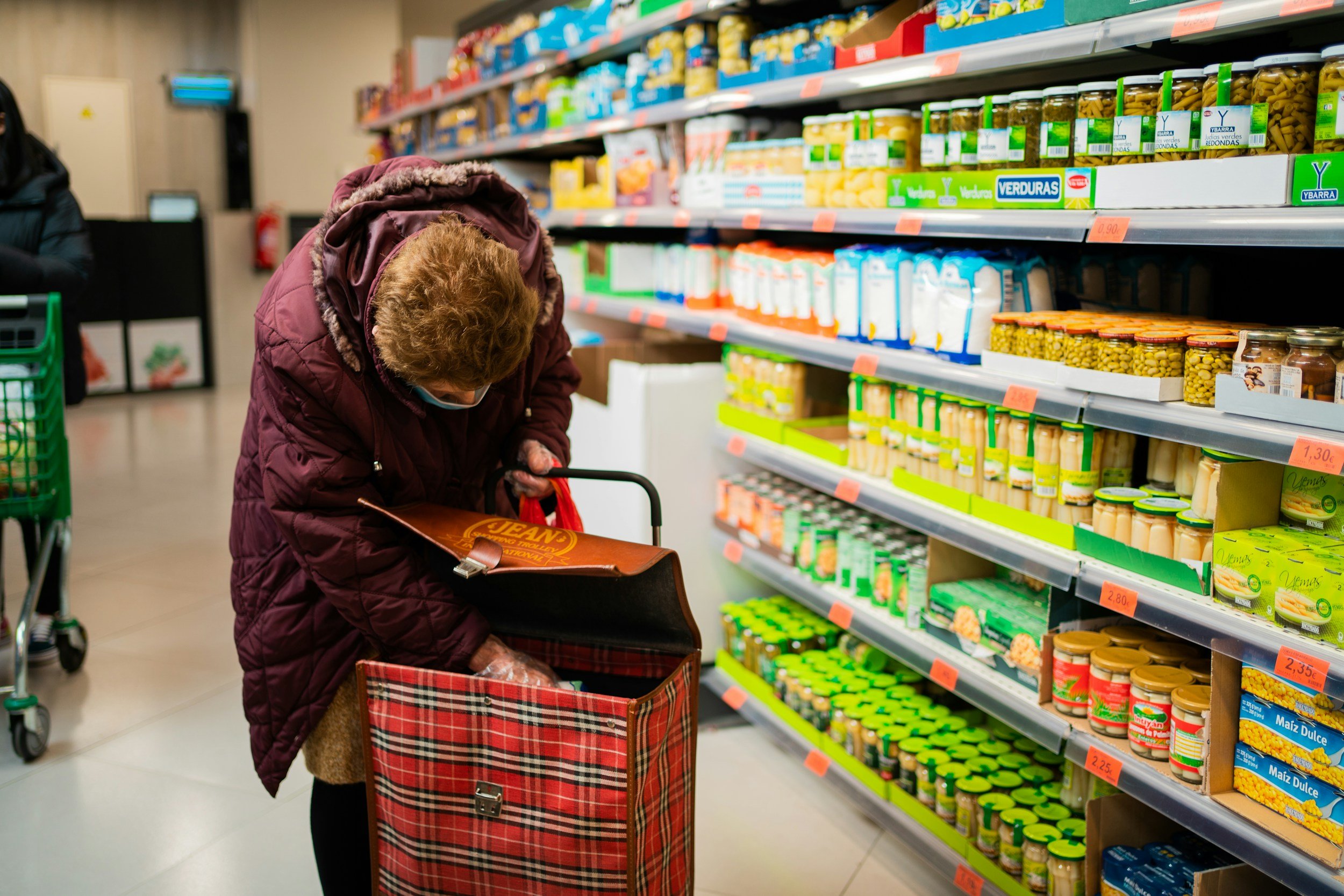
Grocery prices in U.S. cities have surged by approximately 33% since 2019, according to federal government data analyzed and reported by AP News. This dramatic jump represents the largest seven-year escalation in food-at-home costs in nearly 50 years. By comparison, grocery costs rose by just 6.4% in the seven and a half years leading up to 2019.
This historic rise in household food expenditures has placed immense pressure on consumer budgets nationwide. While the initial price shocks were triggered by the COVID-19 pandemic, the upward trajectory has been sustained and exacerbated by compounding macroeconomic pressures across the supply chain. Extreme weather events linked to climate change, lingering labor shortages, escalating fuel costs as a result of the war with Iran—particularly for diesel transport, as detailed by Axios—and shifting tariff policies have all contributed to rising input and distribution costs. Furthermore, heightened food safety concerns and supply chain disruptions, also reported by Axios, have added layers of compliance, testing, and shrinkage expenses that ultimately ripple down to the retail shelf.
Unsplash. Photo by Victoriano Izquierdo
The natural, organic, and specialty food channels have by no means been immune to these inflationary pressures. Core staples—from organic produce and dairy to packaged specialty goods—have seen notable retail price increases. Yet, as conventional grocers struggle with declining unit volumes and resort to aggressive pricing countermeasures, the natural products sector is demonstrating remarkable structural resilience. While shoppers are adjusting their habits by leaning into store brands, hunting for promotional sales, and eliminating household food waste, they are not abandoning their core health and environmental values.
To understand how both the conventional and natural channels are navigating this high-cost landscape, Presence News examined current market research, evaluated industry data, and spoke with leading executives, analysts, distributors, and independent grocers across the country.
Channel Performance: Total Food vs. Better-for-You Resilience
While broader consumer sentiment remains anxious regarding cost-of-living pressures—with grocery prices remaining a top concern for Americans, according to coverage by ABC News—spending patterns reveal a sharp divergence between conventional packaged goods and health-focused categories.
According to retail measurement data from market research firm NIQ, total food and beverage sales grew 2.8% in dollar volume over the 52 weeks ending Aug. 8, 2026. However, total unit volume contracted by 0.4%, demonstrating that conventional market growth was driven almost entirely by price inflation rather than by increased consumer demand.
In contrast, the "Better-for-You" sector delivered robust outperformance. Dollar sales for Better-for-You products jumped 8.9%, accompanied by a 5% increase in unit volume. This unit growth occurred despite Better-for-You items carrying a significantly higher average unit price ($5.14) compared to the broader market average ($3.92), as well as a slightly faster price appreciation (3.7% vs. 3.2%).
"The combination of higher prices and growing unit demand suggests consumers view the benefits offered by Better-for-You products as worth the investment," Chris Costagli, Vice President of Thought Leadership, Food & Non-Alcoholic Beverage Insights at NIQ, told Presence News. “Rather than simply chasing the lowest price, consumers are becoming more selective in how they spend, reserving budget for products that deliver clear value through health benefits, ingredient quality, functionality, or trust.”
==================================================================
MARKET PERFORMANCE COMPARISON (L52 WEEKS ENDING AUG 2026)
==================================================================
Category Dollar Growth Unit Growth Avg. Unit Price
---------------------------------------------------------------------------------------
Total Food & Beverage +2.8% -0.4% $3.92
Better-for-You +8.9% +5.0% $5.14
==================================================================
Source: NIQ RMS, Powered by Label Insights
Data from industry research firm SPINS reflects a similar pattern across retail channels. Over the 52 weeks ending Aug. 9, 2026, natural products grew 6.9% in dollar sales in the Natural Expanded channel and 7.8% in Regional and Independent Grocery (RIG) stores. Specialty and wellness products posted 6.3% growth in Natural Expanded and 4.2% in RIG stores. Meanwhile, conventional products in Multi-Outlet (MULO) channels declined 2.4% in unit terms, even as average retail prices rose 6.2%.
This ongoing commitment to natural and organic food amid elevated living costs is further supported by an industry report released in July 2026 by strategic firm Socha, titled The End of Cheap Food. The report notes that while U.S. household spending on food declined from roughly 18% of income in the 1960s to 10–11% today, healthcare spending has skyrocketed from $100 billion in 1970 to nearly $5 trillion. With diet-related chronic disease accounting for an estimated 85% of healthcare expenditures, consumers increasingly view high-quality, minimally processed food not as a discretionary luxury, but as a primary health investment.
"The market no longer rewards cheap, convenient calories alone," stated Kristine Root, Chief Strategist and CEO of Socha, in the report. "Health has become a co-shopper with consumers. ... When quality is visible and trusted, price sensitivity declines."
As reported by Marketplace, many consumers view buying organic as an essential safeguard for family wellness, choosing to trim expenditures on dining out or apparel before cutting back on organic produce and clean-label staples.
The Selective Shopper: 'Trading Up and Trading Down'
While health-conscious shoppers continue to prioritize wellness, the 33% cumulative price increase has fundamentally altered daily shopping mechanics. Consumers are planning meals more carefully, utilizing digital coupons, comparing store prices, and actively cutting back on food waste.
A study highlighted by The Packer reveals that rising food prices have driven a measurable reduction in household food waste, with consumers buying more mindfully, making better use of leftovers, and freezing perishables to stretch their grocery dollars. Furthermore, as noted by NPR and CNBC, shoppers are increasingly splitting their baskets across multiple retail banners—purchasing core pantry staples at value or discount outlets while visiting independent natural stores or specialty markets for fresh organic produce, pasture-raised meats, and functional supplements.
According to consumer sentiment analysis published by McKinsey & Company, shoppers across all demographics are heavily engaged in trade-offs, prioritizing value and actively changing their purchasing habits. As Yahoo Finance reported, U.S. shoppers are reacting to elevated prices simply by buying fewer items per trip, putting immense pressure on conventional retail volume.
As Inkl reported and Money Talks News highlighted, discount grocers such as Aldi and WinCo have gained serious traction among former high-end supermarket shoppers by aggressively competing on price. Meanwhile, analyses from The Sacramento Bee and FinanceBuzz emphasize the growing price disparity that is making traditional regional grocery chains "not worth it" for many shoppers, accelerating the flight to value. However, when discount grocers fail to deliver clean ingredients, ethical sourcing, or specific dietary attributes, shoppers readily return to the natural channel.
This behavioral shift is changing how analysts evaluate brand loyalty. Rather than observing a linear "trade-down" to cheaper goods, market researchers see a nuanced approach to basket management. “The story is less about a wholesale trade-down and more about consumers becoming increasingly selective about where they choose to spend. Shoppers are often trading up and trading down within the same basket, moving fluidly between premium and value-seeking behaviors depending on the category, occasion, and perceived benefit,” Chris Costagli of NIQ told Presence News.
As Dawn Thilmany, an economics professor at Colorado State University, noted in an analysis published by Forbes, consumers are evaluating value through a broader lens that balances sticker price against nutritional density, meal versatility, and personal wellness goals.
Yet, polarization is evident across demographics. Lower-income households are facing acute financial strain, as detailed in reports by the St. Louis American regarding access to healthy food in marginalized communities, and by the CapRadio Grocery Report on low-income family budgets. At the same time, middle- and higher-income households are reallocating funds to maintain their dietary preferences while seeking smart value wherever possible.
Mainstream Grocery Pivots: Rollbacks, Rewards, and Regulatory Heat
While independent natural retailers rely on margin flexibility and local sourcing, the nation's largest conventional grocers are deploying aggressive, large-scale counterstrategies to defend their market share. Chains like Publix and Kroger are facing acute pricing scrutiny, with The Street reporting significant consumer pushback against premium regional pricing, a dynamic actively changing shopping habits in states like Florida.
To recapture these value-seeking households, retail giants are rolling out widespread price cuts and enhanced loyalty perks. In its second quarter of fiscal 2027, Walmart announced it had implemented temporary price cuts, or "rollbacks," on more than 11,000 items, as reported by Grocery Dive and Fast Company. This massive rollback strategy is designed specifically to drive high-income market share gains at the expense of regional grocers.
Other conventional players are targeting specific consumer pain points: fuel and prepared meals. Albertsons recently expanded a high-profile partnership with Chevron, as detailed by Grocery Dive, allowing shoppers to combine their grocery loyalty points with Chevron's rewards program to save up to $1.50 per gallon at the pump. Meanwhile, East Coast supermarket chain The Giant Company recently slashed the price of its in-store hot bar by 10% in a direct bid to provide more affordable prepared food alternatives to budget-conscious families.
However, the massive scale of conventional grocers has also attracted intense federal scrutiny. As reported by 29News, the Department of Justice’s antitrust division has officially added major retailers—including Walmart, Publix, Kroger, and Amazon—to an ongoing federal investigation regarding potential collusion and pricing practices in the beef sector. While independent natural food retailers like Simple Foods Market in Del Norte, Colorado, have insulated themselves from national meat volatility by sourcing directly from local ranchers, the conventional meat supply chain remains in the regulatory crosshairs.
The Evolution of Private Label: From Value Option to Premium Driver
One of the most structural impacts of the current inflationary environment is the rapid evolution and acceptance of private label, or store-brand, products. Once viewed as a bland, budget-driven substitute, private label has transformed into a primary driver of innovation, quality, and consumer loyalty across the grocery landscape.
According to SPINS panel research, the private label market reached $201 billion across MULO and Natural channels for the 52 weeks ending June 14, 2026, holding a 22% dollar share of the total store and posting a 3.1% two-year Compound Annual Growth Rate (CAGR) compared to 1.7% for national brands.
Crucially, private label adoption is no longer restricted to traditional value-seeking households. SPINS consumer survey data indicates that 43% of households earning over $150,000 annually increased their private label purchases in 2026, alongside 37% of households earning $75,000–$150,000. Younger demographics are spearheading this shift: Gen Z and Millennial shoppers contributed 81% of total year-over-year private label dollar growth, despite accounting for just 17% of total store shoppers.
==================================================================
PRIVATE LABEL ADOPTION BY DEMOGRAPHIC (SPINS 2026)
==================================================================
Demographic Group % Increasing Private Label Purchases
--------------------------------------------------------------------
Younger Millennials 46%
Gen X 39%
Older Millennials 35%
Gen Z 33%
Boomers 21%
--------------------------------------------------------------------
Income > $150,000 43%
Income $75,000 - $150,000 37%
Income < $75,000 25%
==================================================================
Source: SPINS Trilens Panel & Consumer Survey Data
"We have recent data showing that 95% of consumers are purchasing private label products," said Ben Friedland, Executive Director of Exclusive Brands at KeHE Distributors, in an interview with Presence News. "And 94% of those consumers say that even when prices eventually moderate, they intend to stay with private label. Shoppers have realized they don't have to sacrifice taste or quality when making the trade. It’s a win-win scenario that helps them meet their budgets while enjoying great-tasting, clean-label food."
For independent natural products retailers, private label strategy has become a crucial tool for store survival and basket building, says Friedland. KeHE’s CADIA brand—a private label program offered exclusively to independent retailers—serves as a primary example.
“The mission of CADIA is to provide a private label solution exclusively for independent retailers so they can be competitive in an increasingly price-sensitive market. Independent grocers don't have the volume to produce their own private label lines. By aggregating volume across our independent network, we can partner with co-manufacturers to bring a high-quality, competitively priced product to market. This empowers neighborhood stores so their customers don't have to leave to shop at a big-box chain,” Friedland said.
Friedland noted that CADIA comprises roughly 300 SKUs across 40 center-store categories—including organic beans, canned tomatoes, pasta sauces, olive oils, and frozen fruits—with approximately 95% of the portfolio holding USDA Organic certification. To further address consumer demand for premium, sustainable attributes, KeHE launched a revitalized Wild Oats brand in spring 2026, focusing on Regenerative Organic Certified (ROC) products. The line includes the category's first ROC-certified juices packaged in glass bottles, as well as ROC pasture-raised eggs sourced in partnership with New Barn Organics.
"Wild Oats speaks to consumers who care about the highest level of attribution," Friedland explained. "While CADIA provides everyday core staple value, Wild Oats brings accessible regenerative organic products to the shelf, proving that food can serve as a force for good even in challenging economic times."
Independent Retailer Strategies: Margin Discipline, EDLP, and Local Sourcing
On the front lines of grocery retail, independent store owners are employing creative strategies to cushion their customers against rising costs while maintaining operational viability. Rather than passing every wholesale price increase directly to the consumer, many independent grocers are shaving retail margins on price-sensitive staples, leveraging promotional calendars, and strengthening local farm relationships.
Case Study 1: Simple Foods Market, Del Norte, Colorado
At Simple Foods Market, a 2,000-square-foot independent natural food store in Colorado's San Luis Valley, owner Ian Walker has seen consumer shopping habits shift markedly toward value-driven choices. "Customers are becoming much less brand-oriented and far more sales- and value-oriented," he said.
Walker attributes much of his store's price competitiveness to his membership in the Independent Natural Food Retailers Association (INFRA) and its partnership with KeHE’s Everyday Low Price (EDLP) program. "Having organic beans on the shelf for $1.79 allows us to compete directly with Safeway or Walmart," Walker noted. "It changes the community perception from being an expensive specialty store to an accessible, health-focused market."
Walker also uses strategic margin absorption to protect his customer base from severe wholesale volatility. "A few weeks ago, wholesale tomato prices spiked to a level that would have required a $7 or $8 per pound retail price under our standard margin," Walker explained. "We chose to eat part of our margin to keep prices reasonable because extreme sticker shock frightens shoppers away. Simultaneously, we reached out to local growers in our valley and sourced beautiful regional tomatoes at a much lower cost. It supported local agriculture, kept our prices down, and our customers loved the quality."
Sourcing locally has also provided an inflation hedge. "The eggs on our shelves come exclusively from local San Luis Valley farms," Walker added. "While national egg prices swung wildly over the past two years, our local farm prices stayed completely stable. Local supply chains help insulate us from national freight and diesel spikes."
Case Study 2: Rising Tide Natural Market, Glen Cove, New York
On Long Island in New York, Jerry Farrell, owner of Rising Tide Natural Market, is celebrating 50 years of independent retail operation. Farrell, who was among the founding members of INFRA, calculated his store’s internal food inflation rate at approximately 3% over the past year—matching broader national baseline averages.
"INFRA membership has been vital to our cost of goods," Farrell told Presence News. "Through the CADIA program, we voluntarily cap our retail markup at 27%—well below our standard 38% store margin—on essential staples like organic pasta, beans, broths, and paper goods. Being able to offer organic pasta for $1.99 gives our shoppers everyday value they can count on."
To reward core shoppers and encourage larger basket sizes, Rising Tide implemented an automated, tiered loyalty program using ECRS Catapult point-of-sale software. Dubbed the "Grateful Card," the system tracks customer spending over two-month windows. Shoppers who spend $200 receive a 10% storewide coupon; spending $600 earns a 15% coupon; and spending $1,000 or more generates a 20% discount.
"We have about 12,000 members in the program, and when shoppers receive that 20% coupon, their average basket size triples," Farrell reported. "Customers save up their shopping trips to buy high-ticket items, supplements, pasture-raised meats, and specialty goods. They might spend $800 or $1,000 in a single visit and walk out saving $200. It creates immense goodwill, drives inventory velocity, and keeps our store top of mind."
Farrell also manages pricing competitiveness by auditing top-selling national SKUs against local conventional grocers and online outlets. "Retailers must stay sharp on highly visible benchmark items—eggs, milk, bread, butter, bananas, and avocados," Farrell emphasized. "If your prices on benchmark items are fair, consumers trust that the rest of your store is priced fairly, too. For secondary categories like cereal or snacks, we focus on unique, up-and-coming brands discovered through SPINS data that adhere strictly to non-GMO and organic standards, where direct price comparisons don't exist."
Industry Outlook: Building Resilience in a High-Cost Era
Looking ahead through late 2026 and into 2027, industry analysts predict that grocery prices will remain elevated rather than undergo deflation. According to forecasts summarized by Yahoo Finance and economic reports from the Pacific Research Institute, structural input costs—including labor, agricultural inputs, freight, and energy—will keep baseline food prices firm.
Furthermore, large wholesale distributors are actively recalibrating their operational models. In its Q4 2026 earnings report, covered by Grocery Dive, United Natural Foods Inc. (UNFI) outlined ongoing efforts to streamline distribution networks, optimize inventory efficiency, and adjust wholesale pricing structures to maintain profitability amid shifting retail demand.
At the same time, specific commodity markets continue to face supply-side volatility. A survey published by Food & Beverage Outlook highlights that rising beef prices and cattle herd contractions are reshaping protein purchasing across both conventional and natural channels, pushing consumers toward alternative animal proteins, canned seafood, and high-protein legumes.
To thrive in this higher-priced environment, manufacturers, distributors, and retailers are adopting three core strategies:
Differentiating Through Radical Transparency: As conventional manufacturers attempt to pass along price increases without improving product quality, natural brands can win by clearly communicating ingredient integrity, nutrient density, and ethical sourcing. As Socha's The End of Cheap Food report emphasizes, when a product's health and environmental benefits are tangible and verified, price elasticity decreases.
Elevating Private Label Portfolios: Store brands are no longer just defensive margin plays; they are strategic assets. Retailers and distributors are expanding organic and regenerative private label options to capture cost-conscious Gen Z and Millennial shoppers who demand clean labels at accessible price points.
Strengthening Independent Supply Chains: Independent grocers are leveraging buying groups like INFRA and partnering with regional and local distributors to bypass centralized logistics bottlenecks and reduce exposure to freight volatility.
While the 33% cumulative increase in grocery costs has undeniably strained household budgets and forced new shopping behaviors, it has also highlighted the enduring value of the natural products channel. Consumers are not surrendering their desire for clean, healthy, and sustainably produced food. Instead, they are shopping smarter, demanding real quality for their money, and aligning with brands and retailers that deliver genuine value.
As KeHE’s Ben Friedland summarized: "During challenging economic times, it is more important than ever for brands and retailers to double down on who they are and what they stand for. Our industry exists to make food a force for good. By sticking to our core mission, supporting independent grocers, and delivering authentic quality, we ensure that clean, healthy food remains accessible to our communities for the long haul."
Steven Hoffman is Founder and Managing Director of Compass Natural Marketing, a communications and brand marketing agency serving the natural, organic, and regenerative products industries. He has written extensively on food policy, agricultural sustainability, and market trends for Presence News for over a decade.
Food Inflation in the U.S.: A Strategic Reckoning for Food Sector Leaders
This article first appeared in the September 2025 issue of Presence Marketing’s newsletter.
By Steven Hoffman
In 2025, food inflation in the United States has transformed from a passing concern into a defining business challenge—and opportunity—for leaders across the food ecosystem. A 3% year-over‑year increase in overall food prices, including 2.4% for groceries and 3.8% for restaurant meals, may seem modest. Yet beneath those figures lie sharper, more disruptive trends: surging prices in staples such as coffee, ground beef, and eggs; strategic responses from consumers and retailers; and structural pressures that demand both resilience and reimagining. Business strategists in the food sector must now lead with insight, not just facts.
A Collision of Climate, Cost, and Policy
Climate volatility continues to drag on food supply and costs. Extreme drought in U.S. cattle belts, heat waves in crop regions, and pest outbreaks such as avian flu have propelled food inflation beyond headline figures. Coffee is up 13.4%, ground beef 10.3%, while eggs have spiked 27.3%, putting extraordinary strain on manufacturers and squeezing household budgets (Axios).
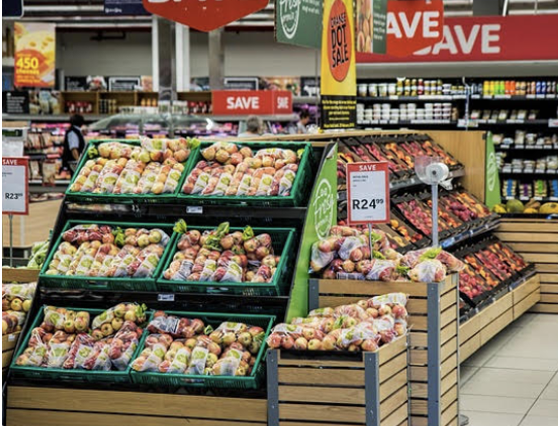
Adding to the upward pressure are sweeping tariffs introduced by the Trump administration, with tariffs on imports from Brazil and India reaching 50%. The tariffs are already working their way into the cost of everything from meat and produce to metals used in cans and packaging (The Washington Post). According to the Yale Budget Lab’s estimates as of August 7, 2025, consumers face an overall average effective tariff rate of 18.6% – the highest since 1933 – and the impact is projected to cost U.S. households an extra $2,400 per year.
Meanwhile, immigration enforcement over the past several months has destabilized farm labor. In California’s Oxnard region, intensified ICE activity has slashed agricultural labor by 20-40%, leading to $3-7 billion in crop losses and driving produce prices up 5% to 12%, according to research published in August 2025 from Cornell University. Simultaneously, cuts in SNAP and other supports have strained both consumer access and farm revenue—especially for smaller producers—plus, grocers in rural communities and elsewhere that depend on SNAP programs feel that impact much harder (Climate and Capital Media).
Beyond cost drivers, the retail margin picture is fraught. Analysis from the White House Council of Economic Advisers showed grocers’ profit margins rising 2 percentage points since before the pandemic—reaching two-decade highs—while “shrinkflation” and package downsizing quietly preserve profitability (Grocery Dive).
FMI—The Food Industry Association’s study released in July 2025, “The Food Retailing Industry Speaks 2025,” reveals an industry struggling to navigate challenging economic conditions, largely due to policies implemented during the Trump administration. According to FMI, about 80% of both retailers and suppliers anticipate that trade policies and tariffs will continue to affect pricing and disrupt supply chains. Most grocers expect operating costs to remain high (Supermarket News).
Consumers Are Stressed About Rising Prices
Recent polling reveals that nearly 90% of U.S. adults are stressed about grocery prices—with half calling it a major stressor. As a result, Americans are responding to these pressures with pragmatic and inventive shifts. Consumers across income levels are tightening the belt, leveraging buy-now-pay-later options, getting creative with savings, and turning to food banks when they must (AInvest).
Shopping behavior reflects this anxiety—and innovation. RDSolutions reports that 86% of consumers now buy private-label products, with price cited as the primary decision factor; 42% opt for cheaper alternatives; while 20% skip items altogether. Data from The Feedback Group shows 61% of supermarket shoppers use sale-driven habits—buying on promotion, eating more at home, and choosing store brands over national names (Progressive Grocer). Meanwhile, many households lean on grocery hacks such as careful list-making, midweek shopping, loyalty programs, and bulk purchases to maximize savings (Times of India).
Even amid tightening budgets, shoppers haven’t completely abandoned pleasure, however. KCI’s “stress index” reveals that consumers crave “affordable luxuries” and product discovery—seeking balance between taste and value. In fact, 68% of consumers surveyed prioritize taste over price, while one-third still prioritize lowest-priced options (Food Dive).
In a fresh produce market reeling from the effects of inflation and immigration enforcement, one consumer trend remains strong: Health continues to drive purchases of fresh fruits and vegetables. According to The Packer Fresh Trends 2025 report, published in August 2025, 72% of shoppers say their primary reason for buying produce is to support a healthy lifestyle. However, price pressures loom larger than ever, with 44% of consumers now saying that cost is the top factor in deciding what to buy, up from 39% last year. As households juggle tighter budgets, they’re opting for familiar staples over experimenting with newer or higher-priced options (Farm Journal).
For lower income individuals and families, higher food prices are resulting in less consumption of healthier food options, with the result that Americans are not eating enough fruits, vegetables, and other nutrient-dense foods. Instead, they are choosing sugary and ultra-processed foods, which tend to be cheaper and last longer.
"There's evidence that inflation continues to shape food choices, particularly for low-income Americans who prioritize price over healthfulness," Constance Brown-Riggs, a registered nurse and nutritionist specializing in diabetes care, told Northwell Health. "These results highlight the disparity in how income influences food priorities," she continued, adding that higher food prices often increase food insecurity. "These shifts increase the risk of chronic diseases such as diabetes, heart disease and obesity."
Even so, there is some opportunity on the horizon. The Packer Fresh Trends 2025 report shared some bright spots, including the fact that Millennials and Gen Z are leading the way on trying new products, exploring organic options, and prioritizing convenience, including prepped veggies and grab-and-go fruit packs. In addition, interest in organic remains strong, with 22% of consumers purchasing organic always or most of the time, particularly among younger and higher-income households.
Grocers, Brands, and Manufacturers Corral Cost Pressures
The reaction from retailers and manufacturers has been tactical and dynamic. Major chains are reevaluating supplier cost increase requests, pushing back aggressively against inflation on branded items. Meanwhile, grocers are ramping up private-label assortments (Investopedia).
Businesses like Aldi are demonstrating how cost leadership can go viral: A summer discount campaign across 2,550 stores marked down 400 items by up to 33%, estimated to save shoppers $100 million. Fast-food chains are responding with value menu bundles—their way of catering to cash-strapped consumers without sacrificing frequency (The Wall Street Journal).
In the natural channel, retailers such as Natural Grocers are emphasizing value, loyalty programs and sales to draw shoppers. For its 70th anniversary in August, Natural Grocers leveraged deep discounts across its nearly 170 stores in 21 states—up to 60% off on more than 500 products—to tap into consumer demand for affordability and quality. According to AInvest, the campaign “sets a benchmark for value-driven retail” by blending “nostalgia, discounts and loyalty incentives to boost sales and customer retention.”
As demand for better-for-you foods remains strong among health-conscious consumers, Jay Jacobowitz, president and founder of Retail Insights, told Supermarket News that many retailers in the natural and independent space experienced a strengthened second half of 2024 and first quarter of 2025, as less price-sensitive consumers make personal health and wellness a priority. Smaller retailers “are going to have increased (economic) pressure, but it’s not pressure that they’re unfamiliar with dealing with,” he said.
Manufacturers are similarly pressured. They face rising raw material, labor, and energy costs, yet retailers limit how much of that inflation they pass through. Many are resorting to smaller or reformulated packaging, trimming promotions, and optimizing sourcing strategies to protect shelf placement (Columbus CEO).
Yet even in the last few weeks, food makers are succumbing to the need to raise prices as the longer-term effects of tariffs, economic policies, and supply chain disruption kick in. On Aug. 7, 2025, Forager Project co-founders Stephen Williamson and John-Charles Hanley announced the following on Instagram:
“Like many food makers, we’ve been feeling the effects of rising ingredient costs—especially for our beloved cashews (up 52%) and coconuts (up 113%). We’ve held off as long as we could, but to keep making food the right way, a price increase was necessary. What hasn’t changed? Organic ingredients, ethical sourcing, planet-healthy practices.”
At the agricultural level, the disconnect is acute. Farmers receive only about 16 cents back from every retail food dollar spent—and that fraction must cover skyrocketing seed, fertilizer, and machinery costs (Washington Post). Some farmers still support tariffs, believing they will yield long-term trade gains; others see them as a short‑term hit to margins (Investigate Midwest).
Strategy: Adaptation, Advocacy, and Resilience
Current forecasts from the USDA suggest moderate gains: food-at-home prices rising around 2.2% for 2025 and restaurant prices about 4%. But the structural challenges—climate, policy, labor, and pricing power—carry implications far richer and more urgent than those figures alone (Food & Wine).
For food-sector professionals, the directive is clear: Strategies must be multidimensional.
1. Reinvent Pricing & Perceived Value
Offer tiered, smaller, or private-label packaging; highlight affordable luxuries and discovery moments in-store and online. Aldi’s shelf reset, Sprouts Farmers Market’s value-based positioning, and Natural Grocers’ emphasis on savings and its frequent buyer program demonstrate ways to drive loyalty and savings.
2. Strengthen Supply Chain Flexibility
Diversify sourcing, invest in climate-resilient inputs, and forecast for volatility. Manufacturers need contingency plans for both weather and trade disruptions.
3. Align Expectations & Margins
Increase analytics around cost impacts and pass-through capabilities. Supplier–retailer partnerships should define fair margin boundaries and shared value strategies for inflation periods.
4. Advocate for Systemic Support
Engage policymakers to safeguard labor stability—through H-2A visa expansions or by regularizing undocumented workers—and to secure tariff relief for food essentials and farm inputs.
5. Build Resilient Retail Formats
Simplify offerings to reduce shopper anxiety and stock-outs. Grocery models like Aldi or Sprouts’ curated “innovation centers” help drive discovery while managing complexity.
A New Epoch for Food-Business Leadership
Food inflation in 2025 is less an anecdote than a wake-up call. When climate shocks strike, tariffs bite, and labor becomes unstable overnight, businesses that only react are left behind. But those that blend adaptive execution, strategic policymaking, and bold market positioning are building enduring advantage.
Consumers may feel squeezed, but they’re still looking for experiences that feel smart, authentic, and human. Retailers, suppliers, processors, and farmers must each meet them there—delivering value, stability, and insight. Because in this new era, food-sector leadership is not just about pricing; it’s about crafting trust in uncertain times—and reshaping food systems to weather today’s storms and make the most of tomorrow’s opportunities.
Steven Hoffman is Managing Director of Compass Natural Marketing, a strategic communications and brand development agency serving the natural and organic products industry. Learn more at www.compassnatural.com.
AI Leads Tech Transformation in Natural Foods
This article first appeared in Presence Marketing’s August 2023 newsletter.
By Steven Hoffman
While 2023 may not be the year the singularity took place, with the launch of the first user-friendly artificial intelligence (AI) chat bot, ChatGPT, it could well go down in history as the Year of AI.*
From regenerative organic agriculture and nutrition research to product development, marketing, distribution and retail operations, business leaders in the natural channel are already finding multiple uses for this nascent yet transformative technology. A growing number of natural and organic products companies are taking the lead in employing AI automation, and such uses across the supply chain are growing as exponentially as the technology upon which it is based.
For the grocery industry, AI is projected to generate $113 billion in operational efficiency and new revenue by 2025. In a June 2023 study by data analytics firm Grocery Doppio, conducted in partnership with FMI – The Food Industry Association, and based on interviews with 152 grocery executives, implementation of artificial intelligence in supermarkets is expected to grow by 400% by the end of 2024. In addition AI “could eliminate 18% of store associate positions, 73% of store tasks and 53% of shopper queries,” reported Winsight Grocery Business.
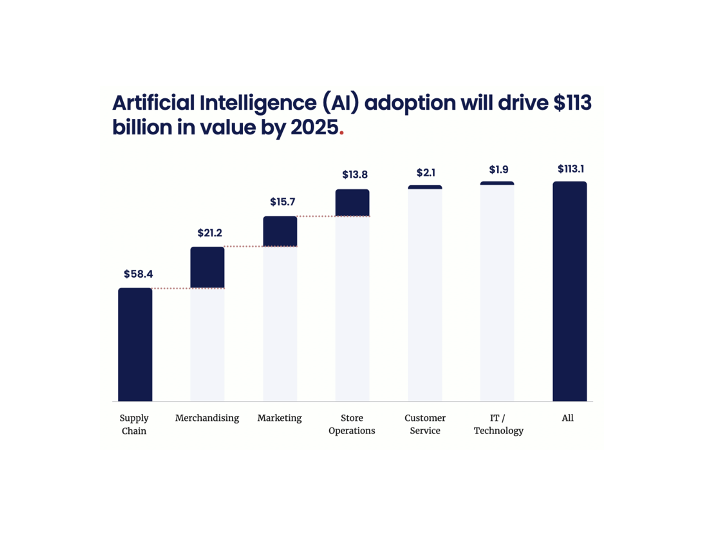
AI adoption will deliver $113 billion in operational efficiency and new revenue opportunities for the grocery industry by 2025. Source: The Times They Are A-Changing: Impact of AI in Grocery. Source: Grocery Doppio
According to Grocery Doppio’s findings, inventory management savings could account for more than half of the estimated $113 billion in value. AI also will help grocers save billions in merchandising costs through advancements in product assortment and pricing optimization. Other savings include marketing, store operation costs, and IT technology.
While AI is not necessarily a new area for the grocery industry, grocers are focusing more on the “responsible, ethical use” of artificial intelligence,” said Mark Baum of FMI in a July 13th, 2023, Grocery Dive report. One quarter of retailers and more than a third of suppliers are using artificial intelligence (AI) to track product preferences and spending to anticipate consumer wants and needs, according to FMI’s 74th annual survey, The Food Retailing Industry Speaks 2023. “Every CEO needs to at least think like a CIO, if not act like a CIO, going forward. We’d like to say these days if you’re not technology enabled, you’re competitively disadvantaged,” Baum said.
Yet, a major concern among grocery and other workers is that AI could automate or partially automate up to 300 million jobs over the next decade, according to a study by Goldman Sachs. The industries most impacted by AI-driven automation will be “office and administrative support” and “legal.” However, according to Goldman Sach’s findings, “Once AI is implemented, workers will be more productive leading to an overall increase in output. This could lead to a 7% increase in annual GDP, equivalent to an astounding $7 trillion.”
Read on to learn how some early adopters in the natural and organic products industry are making innovative use of AI technology.
Research and Product Development
Dietary supplement companies have been utilizing AI to speed up the research of nutritional compounds. Companies like Brightseed employ machine learning to develop bio-active phytonutrient compounds to support gut health. Supplement maker Nuritas, recipient of Nutrition Business Journal’s 2023 Science and Innovation Award, employs artificial intelligence to identify “novel health-benefitting ingredients” and “the best plant-sourced, cell-signaling peptides,” said Nuritas founder Nora Khaldi.
In a July 2023 podcast, The Natural List, Aadit Patel, VP of Product Engineering at NotCo, a plant-based food technology company, shared how it uses AI and “the right balance of technology and humanity” to bring novel plant-based meat and dairy alternatives to market.
In related news, researchers at Northeastern University have developed an AI algorithm, FoodProX, that can predict the level of processing in food products and if a food has been “ultra-processed.” Such information is important for researchers in examining the health impacts of processed foods, Neuroscience News reported in June 2023.
Marketing
In an in-depth interview in Strategy Magazine, Arjan Stephens, President of leading organic food manufacturer Nature’s Path, shared that AI helps the company deal with inflation and competition by creating more targeted messaging in a quicker timeframe.
“The aim is to educate consumers on our commitment to fueling healthy communities as well as the inherent value of supporting and investing in a triple bottom line business like ours. A.I. has been a huge part of driving efficiencies in getting more strategic content to market more quickly. It not only enables us to swiftly create and distribute content, but to also respond more efficiently to consumer feedback and shopping behavior changes. This will continue to be critical to competing in a market that is oversaturated in greenwashing and misinformation,” Stephens said.
Distribution
Distributors, in particular, are looking to AI – and even AI-powered robots – to optimize supply chain and transportation logistics. Leading natural foods distributor UNFI in June 2023 announced a partnership with Finnish firm RELEX Solutions. Driven by AI and machine learning, RELEX will work with UNFI to consolidate and replace multiple UNFI buying systems into “one enhanced process, combining a more robust analysis of demand with a more granular approach to procurement,” UNFI said in a statement.
UNFI’s new AI platform is expected to become operational over the next 12 to 18 months. “As part of UNFI’s multi-faceted transformation agenda, we’re continuing to implement cutting-edge technology to improve the customer and supplier experience, while increasing operating efficiency,” said Erin Horvath, Chief Operating Officer at UNFI. In March 2023, UNFI announced that it would utilize robots powered by artificial intelligence and software automation and new scanning technology at its distribution center in Centralia, Washington.
Grocery wholesale cooperative Associated Food Stores (AFS) also plans to deploy robotics and AI-powered automation technology at is distribution center in Farr West, Utah, according to a May 9th, 2023, report in Winsight Grocery Business. Working with technology company Symbotic, AFS’s end-to-end automation system will include robotic case-pick capabilities “to enhance a range of retail-facing experiences,” including supply, expanded assortment and product delivery to stores.
Seeking to disrupt the traditional natural products distribution sector, Pod Foods claims it offers the first truly “infinite” warehouse for food procurement in the industry while providing retailers with data-driven, relevant access. The engine is powered by the company’s “Pod Bytes” data platform, which synthesizes data from its B2B marketplace, economic indicators, and other grocery-adjacent and third-party sources, the company said. The built-for-grocery models provide retailers with personalized, AI-enabled insights across all areas of discovery, including product placement, procurement, inventory optimization and market opportunity. The result is access to an endless yet personalized assortment of products, targeted to each retailer based on consumer purchasing behavior, desired retail margins, local trends, and more, the company says. Pod Foods in April 2023 appointed former VP executive and CPG veteran Michael Schall as President.
Retail
At The Fresh Market, which operates 160 stores in 22 states, longtime marketing partner Firework is implementing a patent-pending artificial intelligence platform to enhance The Fresh Market’s video content for consumers. The technology will allow shoppers to ask questions and receive sophisticated, real-time answers in The Fresh Market’s in-video chat feature. Viewers will be able to ask such questions as, “What is the recipe for the salad being made in this video?” and the AI chatbot will list the ingredients.
“The new AI engine makes use of a large language model (LLM), can understand and respond in a wide range of languages, and can be customized to reflect each brand’s unique voice,” The Fresh Market said in a statement. The new technology will be available on The Fresh Market’s website and its shoppable video live commerce retail media network. “Our customers are looking to engage with our brand in real time, both online and in store. With Firework’s generative AI technology, we can be certain that customers will receive prompt, friendly and personalized support whenever they choose to engage with our video commerce content,” said Kevin Miller, CMO at The Fresh Market.
Shoppers at Sprouts Farmers Market can now use an AI-based shopping assistant called Quin. The phone-based app from New York-based developer Verneek can answer spoken or typed questions about items sold in the stores and provide information about recipes, keto-friendly options, nutritional value and more. “As technology continues to evolve, Sprouts is always exploring new and innovative ways to improve our customer experience while providing joy in healthy living,” Sprouts said in a statement. Nasrin Mostafazadeh, Cofounder of Quin, said in ArcaMarx Magazine in April 2023 that the timing was right to launch Quin in grocery stores. However, he noted, Quin is not intended to replace grocery workers but to supplement them, giving them more time to focus on their job responsibilities, such as stocking shelves, doing inventory or checking out customers.
On THRIVE Market’s blog, the online retailer helps customers evaluate the best AI recipe generators. “There are now lots of websites that use AI machine learning to populate recipes based on ingredients, dietary restrictions, and even cooking skill level,” wrote THRIVE blogger Amy Roberts. “Some create a recipe based on ingredients you have on hand, while others churn out a recipe based on a query, like ‘Make a gluten-free chicken parmesan.’” Roberts reviewed ChatGPT for a vegan cheesecake recipe, Let’s Foodie for a red cabbage slaw, and PlantJammer for lasagna. “Did it work?” Roberts asked. “Surprisingly yes! The cheesecakes were a hit!” Though, Roberts admits she continues to refer to Pinterest for her own recipe ideas.
Using an organic food store as an example, AI platform Business Name Generator cites the following case study: “Consider the case of a budding entrepreneur, John, who planned to start an organic food store. He wanted a name that conveyed freshness, health, and sustainability. After struggling with brainstorming sessions, he turned to an online business name generator. He entered keywords such as ‘organic,’ ‘fresh,’ ‘healthy’ and ‘green.’ In seconds, the tool provided him with a list of potential names like ‘Freshly Organic,’ ‘Green Harvest,’ “Healthful Bounty’ and ‘SustainaBite.’ John was able to choose a unique and meaningful name for his store.”
Agriculture
For regenerative and organic farmers, AI technologies including machine learning and data analytics are being used to develop sophisticated monitoring systems that can provide farmers with real-time information about factors that affect soil health, including nutrient deficiencies and moisture levels. Combined with the use of sensors, drones and satellite imagery, AI algorithms are being used to analyze massive amounts of data to determine the optimal amount of water needed for each crop, reducing water waste, and ensuring that plants receive necessary nutrients for healthy growth. This not only conserves water resources but also helps to prevent soil degradation caused by overwatering, reported Marcin Frackiewicz in TS2 in May 2023.
At the University of California Davis, the AI Institute for Next Generation Food Systems (AIFS), funded in part by USDA, was launched in 2020 with a mission of meeting growing demand in the food supply by increasing efficiencies using AI and “bioinformatics” spanning the entire system from seed to shelf. Bringing more than 40 researchers together, AIFS says it aims to “bring artificial intelligence technology to the entire food system from crop breeding and farming to food production and nutrition. The institute will combine the development of the latest breakthroughs in artificial intelligence with preparing the food and agriculture industries to rapidly adopt them and ready the workforce.”
In addition, leading technology companies including IBM, Microsoft, Intel and others are focusing on developing artificial intelligence for use in agriculture and food production. Microsoft’s Project FarmVibes seeks to foster sustainable agriculture by collecting and analyzing data in from drones, sensors and other equipment to help farmers make real-time decisions about their crops. Intel and the National Science Foundation in 2022 invested $220 million in a number of AI ventures, including research in AI-Driven Innovation in Agriculture and Food Systems. Focusing on regenerative agriculture, IBM in 2022 launched IBM Regenerative Agriculture, which uses AI, data analytics, cloud technology and predictive insights to interpret agricultural and weather data and help farmers make decisions about crops.
“The food chain is a complex ecosystem that touches our everyday lives, and this is where AI has an advantage – by navigating the complex web of information, from farming to food distribution,” said Bryton Shang, CEO of Aquabyte in Forbes in July 2023. “It can help ensure higher-quality decision-making every step of the way.”
* Written and researched by a real human, with 40+ years’ experience in natural and organic foods and sustainable agriculture.
Steven Hoffman is Managing Director of Compass Natural, providing public relations, brand marketing, social media, and strategic business development services to natural, organic, sustainable and hemp/CBD products businesses. Compass Natural serves in PR and programming for NoCo Hemp Expo and Southern Hemp Expo, and Hoffman serves as Editor of the weekly Let’s Talk Hemp Newsletter, published by We are for Better Alternatives. Contact steve@compassnaturalmarketing.com.