
From Startups to Multinationals, Regenerative Agriculture Reshapes the Food Business
By Steven Hoffman
As climate change accelerates, the food industry faces a paradox: It is both a driver of ecological degradation and a potential solution. Agriculture accounts for about a quarter of global greenhouse gas emissions, yet it also has the capacity to sequester carbon and rebuild ecosystems. At the center of this opportunity sits regenerative agriculture – a set of practices that go beyond “sustainable” to actively rebuild soil, restore biodiversity, and promote community health and the health of local economies.
In business terms, regenerative agriculture is moving from philosophy to label. Much as “organic” transformed consumer expectations in the 1990s and early 2000s, “regenerative” is quickly becoming one of the fastest-growing claims appearing on food and beverage products. Retailers, too, are beginning to carve out shelf space for regenerative brands, echoing the early days of organic.
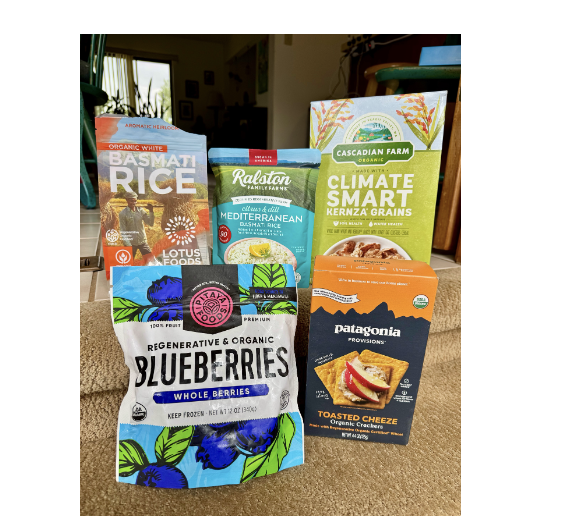
The rise of regenerative can be attributed in great part to the fact that, according to GLOW/NielsenIQ surveys, 70% of consumers consider environmental responsibility more important than they did just two years ago, and 90% see eco-friendliness as a key decision criteria. Over 78% of consumers aged 18-24 believe the current food system is not sustainable and is a major cause of the climate crisis, reported Errol Schweizer on Sept. 22, 2025, in Forbes.
For companies across the value chain – from Roaring Fork Mill, a family-run mill working to restore heirloom grain farming in the Rocky Mountain West, to Lundberg Family Farms, which recently converted all of its organic rice production to Regenerative Organic Certified, and to multinationals including McDonald’s, PepsiCo, General Mills, Nestlé, and others – adopting regenerative practices represents not just climate responsibility, but it also gives them a competitive edge in a changing marketplace.
What Regenerative Agriculture Means
The concept of regeneration is not new. Farmers and Indigenous communities have practiced soil-restoring methods — such as cover cropping, crop rotation, and integrated livestock management — for centuries. What distinguishes modern regenerative agriculture, as coined by Robert Rodale in the late 1970s, is its intentional framing as a climate strategy, ecosystem rebuilder, and market driver.
At its core, regenerative agriculture refers to farming and grazing practices that restore soil health, increase biodiversity, improve water cycles, and strengthen the resilience of agricultural regions. These practices, which vary according to crop, climate, and ecosystem, are helping to rebuild soils, sequester carbon, and revitalize farming communities. While not all regenerative standards are based on organic principles, many proponents argue that organic remains a baseline for regenerative practices.
The Regenerative Organic Certified (ROC) standard, launched by the Regenerative Organic Alliance (ROA) in 2017, represents the most rigorous framework for these practices worldwide. Unlike other regenerative programs, ROC prohibits the use of synthetic pesticides and fertilizers, which the organization asserts contribute to the climate crisis. ROC certification includes requirements for practices that respect animal welfare and promote social fairness.
The results are becoming measurable. According to industry data released by ROA in September 2025, ROC practices now span nearly 20 million acres across 46 countries, involving more than 67,000 smallholder farms and 320 participating brands.
From Niche to Mainstream: Market Momentum
Consumer demand is pushing regenerative agriculture into the mainstream. Products carrying the ROC label have grown 45% year-to-date, with retail sales up $20 million, representing a 24% jump over the previous year, according to ROA. Such growth is remarkable given that regenerative certification is relatively new, and it demonstrates that consumer appetite for climate-friendly products extends beyond niche markets, according to the organization.
Several pioneering brands working with the Regenerative Organic Alliance illustrate how regenerative claims are translating into market share:
- Dr. Bronner’s, the natural soap leader, has worked with more than 18,000 smallholder farmers to convert 52,000 acres to ROC standards.
- Lundberg Family Farms, known for its California-grown rice, has transitioned all of the organic rice it grows to ROC. The company reports that 65% of its consumers actively seek ROC products, creating clear market differentiation.
- Applegate, a leader in organic meats, converted 100% of the beef in its organic hot dogs to ROC in 2025, touching nearly 10 million acres, the company claims. Label research found that adding the regenerative claim increased purchase consideration significantly among hot dog buyers, a signal to CPG marketers that the regenerative label stands out in crowded categories.
- Gallant International, a private-label textiles company, has grown its farmer network from 700 to 1,250 in just three years to meet demand for ROC cotton.
- Patagonia continues to invest in regenerative supply chains through its clothing and also via its food division, Patagonia Provisions, and also through its membership in coalitions such as One Planet Business for Biodiversity.
“Regenerative organic farming practices can draw down carbon instead of releasing it, enhance ecosystem biodiversity instead of degrading it, and increase nutrient density instead of depleting it,” said Lundberg Family Farms CEO Craig Stevenson. “People say it can’t be done at scale, but we’re bringing ROC rice to every category of our portfolio, showing that when farmers commit to regeneration, the result is healthier food, stronger ecosystems, and real progress in the fight against climate change.”
The Multinational Pivot
While smaller players often lead the way, the sheer scale of agriculture requires buy-in from multinational corporations. In recent years, some of the world’s largest food companies have made highly publicized commitments to regenerative agriculture:
- General Mills pledged to advance regenerative practices across one million acres by 2030. Five years in, progress reports show that farmers are seeing improved soil health and reduced input costs, though scaling challenges remain.
- PepsiCo launched regenerative potato farming initiatives in Latin America, tying regenerative practices to the sustainability of its Lay’s and Sabritas brands. The company is also part of the Step Up for Agriculture Initiative, a collaboration with major retailers and other food and beverage companies to scale regenerative agriculture through locally tailored support systems.
- McDonald’s announced a $200 million investment in regenerative practices in 2025, targeting beef, potato, and dairy supply chains.
- Nestlé has embedded regenerative agriculture into its cocoa sourcing strategy, linking it to deforestation reduction goals.
- Archer Daniels Midland (ADM) in September 2025 released its third annual report, which announced that in 2024 the company engaged more than 5 million acres in advancing regenerative agriculture practices.
- Mondelez International announced in May 2025 a “new wave of impact-first investments,” including an investment in eAgronom, an ag-tech company supporting the transition to regenerative agriculture to improve soil health, reduce carbon emissions, and “enhance financial resilience through sustainable practices.”
Collectively, these companies signal that regenerative agriculture is no longer a fringe concept but an integral part of corporate climate strategy. By joining efforts such as the Step Up for Agriculture Initiative and One Planet Business for Biodiversity, they also acknowledge that collaborative approaches are needed to scale regenerative systems globally.
Certifications and Standards: Who Defines “Regenerative?”
As regenerative agriculture has gained traction, the number of new product entries with regenerative claims on the label has surged across categories. Yet, as the USDA has not regulated any standard for regenerative agriculture, questions of definition, standards, and credibility remain, leading to the emergence of a number of regenerative certification seals, creating both momentum and some confusion.
Amazon-owned Whole Foods Market allows four regenerative agriculture certifications to appear on front-of-package claims in its stores: Regenerative Organic Certified (ROC), Certified Regenified, Certified Regenerative by A Greener World, and Ecological Outcome Verified by Land to Market (see below). The retailer does not recognize organic as the only baseline standard for regenerative practices, which is one reason it accepts more certifications than just ROC, the Observer reported.
For business leaders, however, the takeaway is clear: certification matters. Manufacturers may complain about the need for a parade of seals across the front panel of a food package, yet it comes down to the fact that consumers (and investors) increasingly demand third-party verification to avoid “greenwashing” and to ensure label claims such as “fair trade” or “gluten free” are true. The same applies to regenerative agriculture claims made on a product label.
According to Ken Roseboro, reporting in February 2025 in The Organic & Non-GMO Report, demand for regenerative certification has been overwhelming. Today, several certification programs provide frameworks for brands and farmers:
- Regenerative Organic Certified (ROC): Overseen by the Regenerative Organic Alliance, the ROC seal is widely considered the gold standard because it integrates soil health, organic farming practices, animal welfare, and social fairness. According to a SPINS report published in August 2025, ROC products saw a 22% year-over-year increase in buyers, making it one of the fastest growing certifications in the country.
- Regenified certifies producers, brands, and supply partners committed to the adoption of regenerative agriculture, offering a seal to place on the label of certified products to signal to consumers that the product comes from a farm that is putting regenerative principles into action.
- Land to Market, created by the Savory Institute, works to connect brands with raw materials that come from verified regenerative land bases. The program verifies regenerative outcomes using ecological monitoring rather than prescriptive practices. Founded by Allan Savory, the program focuses primarily on livestock.
- A Greener World has established a set of standards for its Certified Regenerative program, which the organization says offers supply chain assurance for brands, processors, distributors, and others who want to assure customers of transparency.
- Soil & Climate Initiative, developed by Green America, offers a whole-systems, farm-to-shelf regenerative agriculture program with options for third-party verification.
- Rainforest Alliance in September 2025 announced the launch of a new regenerative agriculture standard, certification program, and seal for coffee, expected to appear on consumer coffee bags in 2026.
Investor Interest in Regenerative Food Systems
Behind the consumer-facing story lies another trend: a surge of capital into regenerative food and agriculture. Impact investors, venture capitalists, and blended-finance funds are betting on regeneration as both a climate solution and a growth opportunity. For investors, regenerative agriculture represents an unusual convergence, offering measurable environmental impact alongside competitive financial returns, especially as consumer demand continues to climb.
As an investment category, regenerative food and agriculture systems raised $1.17 billion in funding in the first quarter of 2025, according to data released in April 2025 by the Regenerative Food Systems Investment (RFSI) group. RFSI, which hosts the annual Regenerative Food Systems Investment Forum, reports that almost half (46%) of all deals in Q1 2025 came from venture capital investment.
Recent investment highlights in regenerative food and agriculture include:
- Mad Capital, the investment arm created by leading consultancy Mad Agriculture dedicated to scaling regenerative agriculture systems, announced in September 2025 that it had closed a $78 million oversubscribed Perennial Fund II to finance regenerative organic food and agriculture.
- DiversiFund, launched in 2025 by an affiliate of Transformational Investing in Food Systems, introduced a new pooled-financing model for regenerative food systems, aiming for $100 million in capital commitments in 2026.
- TransCap Initiative, with financial support from the Walton Family Foundation and the Rockefeller Foundation, along with 20 leading investors, funders and farming organizations, announced in June 2025 that they were joining forces to design innovative financial infrastructure to align capital flows to accelerate regenerative agricultural production in the U.S. Midwest.
- Mirova, a French impact investment firm that manages more than $34 billion in assets, is financing a portfolio of 12 regenerative agriculture projects across Latin America, Africa, and Asia, focusing on crops such as cacao, citrus, coffee, nuts, and botanical ingredients. One project currently underway in Morocco is converting conventional citrus orchards to regenerative organic practices. The World Economic Forum in September 2025 called on the global food industry to “embrace regenerative agriculture now.”
- Zintinus, a German investment firm managing $175 million, projects that regenerative agriculture will be a key part of a $4.5 trillion business opportunity in 2030 associated with 10 “critical transitions,” including organic foods, diversifying protein, reducing food waste, restoring ecosystems and promoting resilient rural economies.
What’s Next?
Despite momentum, regenerative agriculture still faces critical challenges, such as scaling. Can regenerative methods be deployed across millions of acres quickly enough to make a dent in climate change? Can carbon sequestration from such farming practices be quantified? With multiple certification programs, how will the industry ensure consistent, credible standards and metrics? For farmers, transitioning to regenerative practices often requires upfront costs and new knowledge. Without financial support and assistance, many farmers will struggle to make the leap.
For consumers, while “organic” is now widely understood, “regenerative” is still emerging in the lexicon. Brands must invest in storytelling and education to connect the regenerative label to tangible benefits.
To address this, ROA announced in September 2025 that it has partnered with food tech company Edacious on a four-year study to test the nutritional makeup of Regenerative Organic Certified foods and to drive further awareness of the health benefits of ROC products. ROA and Edacious will analyze more than 200 food products bearing the ROC seal. “With Edacious and the Regenerative Organic Alliance, this data becomes more than numbers: it becomes a story about how regenerative organic systems deliver measurable nutritional benefits,” Eric Smith, CEO of Edacious, told AgFunderNews.
For producers, practices such as no-till farming, cover cropping and rotational grazing are presented as effective solutions to restore soil organic carbon and improve soil health, ultimately increasing farm profitability and resilience against climate change. But how do you measure that? Researchers from the Soil Health Institute, University of Vermont Agricultural Research Service, the Regenerative Viticulture Foundation, Agoro and elsewhere are currently addressing that question by developing tools and methods to measure and quantify carbon sequestration in regenerative soils – key data for farmers, agriculturalists, climate change experts, policymakers and others.
The rise of the regenerative label reflects more than a marketing trend — it signals a strategic pivot for an industry under pressure from climate change, shifting consumer values, and investor scrutiny. For small brands, regeneration offers differentiation and authenticity. For multinationals, it represents risk management and brand relevance. For investors, it provides a rare dual return: financial performance and measurable climate impact. Much as the organic label reshaped food markets over the last 30 years, regenerative is poised to redefine them in the decades ahead. The question is no longer whether regenerative agriculture can scale, but how quickly — and who will lead the transition.
Momentum is building. As Christopher Gergen, CEO of the Regenerative Organic Alliance, noted, “Nearly 20 million acres are already under regenerative organic management, and with accelerating adoption rates and growing consumer demand creating clear market incentives, the movement is shifting from an emerging practice to a mainstream business and climate strategy.”
Steven Hoffman is Managing Director of Compass Natural Marketing, a strategic communications and brand development agency serving the natural and organic products industry. Learn more at www.compassnatural.com.
Is 2024 the Year Regenerative Agriculture Takes Root?
This article first appeared in Presence Marketing’s January 2024 newsletter.
By Steven Hoffman
In 1942, J.I. Rodale first popularized the term organic in the U.S. with the launch of Organic Farming and Gardening Magazine. Some 45 years later, in the 1970s, J.I.’s son Robert Rodale introduced the phrase “regenerative organic.” Robert’s goal was to describe an approach to farming that combined organic practices with a more holistic approach to land management and a focus on rebuilding soil health. Yet it’s only been in the past few years that the term has gained more widespread traction.
With the release in 2023 of two full-length feature documentary films, Common Ground and Organic Rising, along with increased adoption among farmers and producers, awareness of regenerative agriculture is set to gain ground in the coming year among large-scale food manufacturers, policymakers, researchers, the general public and more. Today, advocates of regenerative agriculture say it is the best way to produce healthier food and promote local and rural economies. And, by sequestering carbon back into soils, it can also play a significant role in mitigating climate change.
“2024 indeed will be marked as the year of regenerative agriculture. Why? We are closing in on a tipping point of awareness and collective action is being realized on a huge scale. Not only is soil and regenerative agriculture finally making its way as a leading climate, water and health solution, but we are also showing up as one of the biggest economic solutions for rural economies and businesses across the world,” said Finian Makepeace, Co-founder and Chief Strategy Officer of the nonprofit organization Kiss the Ground and Producer of the films Kiss the Ground and its sequel Common Ground.
“With the recent film Common Ground, and many other feature films and shows in this space sharing the story along with the incredible build of awareness brought on by Save Soil and others, we are seeing a dramatic increase in people comprehending the soil solution. With brands and businesses, there are huge commitments around regenerative agriculture for 2030. I believe 2024 will be a year of turning on those actions and increasing the integrity of their proposed programs. Regarding regenerative agriculture, I feel that 2024 will be the year that the world’s regen leaders find common ground and agree upon a definition that will allow for many more to work and support this space functionally,” Makepeace added.
“I do think that 2024 could be the best year yet for regenerative agriculture. While there is still disagreement over the definition, there is significant consensus that it includes a keen focus on building soil health, enhancing biodiversity, humanely integrating livestock and including worker fairness. New certification and verification programs like Regenerative Organic Certified, Certified Regenified, and Soil & Climate Health provide a lot of support and tools for farmers who want to incorporate more regenerative practices,” said Elizabeth Candelario, Director of Strategic Partnerships for MAD Agriculture, an organization that works with farmers and industry to advance regenerative practices.
In addition, Candelario said, “While their motivations may vary — from mission alignment to strengthening supply chains to mandatory ESG reporting — food companies are (finally) paying attention to the agriculture that is producing their ingredients. And food was finally on the table at the recent COP28 climate summit. The conference opened with a declaration on sustainable agriculture, signed by more than 130 countries, and ended with a final agreement that acknowledges for the first time that sustainable agriculture needs to be included in climate change solutions.”
Regenerative Products Sales Take Off
Now, the marketplace is responding. According to the Regenerative Organic Alliance Impact Report 2022 – 2023, sales of Regenerative Organic Certified (ROC®) products grew an average of 22% from EOY 2022 to EOY 2023, with sales totaling nearly $40 million in 2023. Companies including Dr. Bronner’s, Patagonia, Lundberg Family Farms, Manitoba Harvest, Bonterra and others are leading the certification efforts and serving as role models for other brands.
According to the Impact Report and based on SPINS data, revenue from sales of ROC® products in natural and multi-outlet grocers increased by one-third compared to the same period in the previous year. In addition, the number of ROC® SKUs in the market increased nearly forty-fold in 2023, “indicative of continued growth potential,” the report said. “By offering Regenerative Organic Certified products, brands are responding to the consumer desire to have their purchase make a positive impact at every level: environmentally, ethically, and socially,” the report concluded.
Globally, the market size for regenerative agriculture reached US$975.2 million in 2022, and is projected to be worth US$4.3 billion by 2032, poised to grow at a CAGR of 15.97% from 2023 to 2032, according to a June 2023 report from Precedence Research. North America generated more than 37% of the revenue share in 2022, Precedence Research reported.
While regenerative agriculture practices aren’t yet familiar to most Americans (just one in five consumers surveyed by Food Insight in 2022 said they’d heard of regenerative agriculture), 73% of consumers agreed they would be more likely to trust retailers and brands that implement regenerative agriculture programs, and 72% agreed that they would be more like to purchase from them, Supermarket Perimeter reported in October 2023.
Major retailers are taking notice. In December 2023, Whole Foods Market announced that it had implemented new standards to protect pollinator health. As such, the retailer will now require all fresh produce and floral suppliers to implement supply chain practices that help protect honeybees and other native pollinators.
Speaking to executives at Progressive Grocer’s Grocery Impact conference in November 2023, Whole Foods CEO Jason Buechle said, “Whole Foods Market invites you to help us start a ripple effect of change that will fix our broken food system. The decisions we make as a business — even the smallest ones — in how food is raised and grown today can have a profound and lasting impact on nourishing people and the planet for future generations to come. One of the biggest challenges our food system is facing now and will continue [to face] in the future is the climate crisis. If we continue farming in the large-scale, mechanized way that much of the industry currently does, our topsoil is not going to have the nutrient density it needs to grow the foods we know and love today,” Buechle said.
To address this challenge, Buechle reported that the retailer is working with farmers, ranchers, suppliers, scientists and other experts, as well as leading organizations, to leverage regenerative agriculture to evolve the practices used to grow, raise and produce the products that it sells. A focus on regenerative agriculture and responsible sourcing is an essential part of the retailer’s value proposition, which remains strong despite the mainstreaming of natural foods and the effects of inflation on consumer spending, according to Buechle.
Regenerative Food and Agriculture in 2024
In October 2023, Forbes reported that water stewardship will one of the biggest food trends in 2024. “As the tides of environmental consciousness continue to shape consumer choices, it is no wonder that water stewardship is set to become one of the top food trends for 2024,” wrote Senior Contributor Daphne Ewing-Chow.
“The global agri-food industry— valued at $6 trillion— is one of the most highly exposed to water risks, with water stress impacting many of the world’s largest food-exporting countries. Paradoxically, despite mounting perils to both food and water security stemming from water depletion, pollution, and climate-induced droughts, the food and agri-business sector is a chief contributor to the problem, accounting for a substantial 70% of all freshwater withdrawals,” she continued.
According to Ewing-Chow, “Regenerative agriculture plays a pivotal role in enhancing soil health, facilitating nutrient retention, bolstering natural resilience to environmental challenges, and mitigating erosion. This contributes to the conservation of water resources and the enhancement of ecosystem water quality, reducing the volume of water required for farming activities and decreasing harmful water and nutrient runoff from agricultural lands.”
Forbes also reported that in September 2023, SAI Platform, a network comprising 170 major food companies dedicated to sustainability, unveiled a global framework outlining the transition to regenerative agriculture for food businesses. A number of mainstream food brands such as Unilever, Nestlé, McDonald’s, Danone, and General Mills have already committed their support for regenerative agriculture, Forbes reported.
Greater technical innovation and research into regenerative agriculture will continue over the coming year, the Global Ag Tech Initiative predicted in its December 2023 report, 5 AgTech Trends to Watch in 2024. “Essentially mimicking natural process and biodiversity on agricultural land, the ultimate aim of regenerative agriculture is to improve soil health in order to boost yield. To address the challenges of climate change and feed a global population of over 8 billion, regenerative agriculture is vital. Digital tools use accurate, up-to-date data to create tailored regenerative agriculture solutions. These consider soil conditions, weather conditions, microclimates, and current crop growth or land use, as well as individual budgets and local regulations. Platforms offering site specific data will likely reign supreme in 2024. A view of sustainability that extends beyond simple carbon metrics and one-size-fits-all solutions is necessary and will enable the establishment of realistic, actionable objectives for growers, promoting sustainability and formulating strategies tailored to local environments,” the report said.
Beyond Food – Regenerative Fashion Threads the Needle
On the textile and fiber front, companies including fashion leader Mango will begin incorporating regeneratively grown cotton into its 2024 fashion collections, the Fashion Network reported in December 2023. The company has partnered with Materra, a British-Indian company specializing in regenerative cotton cultivation, and said it will be able to ensure complete traceability across the value chain of its cotton, from seed to final garment.
“As a global fashion company, our intent is clear: to contribute to creating a fairer society and reduce the fashion industry’s impact on the environment. This is why we ally ourselves with key partners like Materra, which will help us accelerate our path to ensuring that 100% of the fibers we use are sustainable by 2030,” said Andrés Fernández, Mango’s director of sustainability and sourcing.
Other fashion brands driving regenerative agriculture initiatives include J.Crew, Prana, Terra Thread and other textile and fiber companies that are members of the Regenerative Organic Alliance. “Big fashion brands and independent labels are embracing regenerative agriculture as a win-win solution that could allow them to source climate-positive materials. The challenge is that the concept doesn’t have a singular definition, and without clear standards it risks becoming a tool for greenwashing,” Business of Fashion reported in August 2023.
California Could Define Regenerative
Speaking of a definition, beginning in January 2024, the California Department of Food and Agriculture (CDFA), in collaboration with the State Board of Food and Agriculture, will host a series of public listening sessions to receive comments to help define “regenerative agriculture.”
“As interest in ‘regenerative agriculture’ continues to grow, we are seeing the introduction and evolution of the term in California policies and programs,” CDFA said. “Incorporating a definition of regenerative agriculture for state policies and programs provides a science-based criterion for the designation or recognition of the term ‘regenerative’ in agriculture-related policies of the state. By defining ‘regenerative agriculture’ and its associated practices, we are working to formalize holistic methods of farming that are designed to protect, sustain and enhance natural resources on our farms and farming communities throughout California,” the agency said.
Max Goldberg, Editor and Publisher of Organic Insider, commented, “If California codifies or legally defines ‘regenerative agriculture’ … it will certainly raise the profile of this term among consumers and farmers may end up paying more attention to the way they manage their soil, which is a real positive. However, both the opportunity for greenwashing and the consequences for organic could be severe,” he cautioned.
“At its core, the regenerative agriculture controversy stems from the question of whether a farming practice can be truly ‘regenerative’ if super-toxic chemicals, such as glyphosate or dicamba, are applied to the crops. There is no question that the regenerative movement has brought incredible attention to soil health … and that it has led to very important steps forward in farming practices around the world. But with all of the positive developments, ‘regenerative’ is ripe for abuse and greenwashing, and the multinational chemical companies, who have no intention of minimizing the importance of GMO seeds and synthetic pesticides, are eagerly embracing the term,” Goldberg added.
Elizabeth Whitlow, Executive Director of the Regenerative Organic Alliance, which manages the Regenerative Organic Certified program, told Organic Insider that she believes that California needs to act with real caution. “There are many groups and farmers advocating for ‘regenerative agriculture’ that are doing some excellent and extremely vital work. My concern, however, is that if the state defines ‘regenerative agriculture’ and it excludes organic, it could have the unintended effect of actually doing a lot more harm than good. Bad actors greenwashing the term is a real threat, and all stakeholders in California’s organic industry need to be fully engaged and on board with how the state is going to define ‘regenerative agriculture.’ The stakes are very high, for both California and our entire country, and this process cannot be rushed,” she said.
Woody Harrelson’s Regenerative Reason for Hope
Three-time Oscar nominated actor and environmental activist Woody Harrelson, in a December 2023 Op-Ed in The Wrap, expressed that, after serving as a co-narrator on the film Common Ground, he is “no longer hopeless for the future.”
Harrelson writes:
We stand at a crossroads, facing two paths. One leads to climate chaos, food shortages, deserts expanding and a biodiversity crash. The other involves rethinking our relationship with nature by choosing regenerative agriculture. The regenerative path can give us abundant, nutritious food, thriving ecosystems and a future for generations to come.
I had a surreal moment when I met King Charles and he said he loved “Kiss the Ground” so much he personally sent it to 1,000 people. I hope the same is true of “Common Ground” – I hope thousands of people send the new documentary to thousands of their friends.
I’ve never been a big believer in the political process in this country, but I believe in people. Congress is currently debating something called the Farm Bill. There are a lot of good people in America, who deserve to eat clean food, and it would be refreshing to see Washington prioritize communities over commodities.
I’m no longer hopeless. I’m actually inspired. In fact, I’m committed to using my voice and activism to make the regenerative agriculture movement spread far and wide.
We don’t just need to support soil in the Farm Bill — we need to make the effort in every way we can, from turning our lawns into food gardens and our food waste into compost, to buying food from local regenerative farmers and ranchers. We all eat and we can all support the people who are doing the hard work to feed the world with healthy regenerative food. We can vote with our dollars.
One thing is for certain, it’s time for a change. Soil is our common ground.
Let’s make regenerative agriculture our priority.
Learn More
Growing Life: Regenerating Farming and Ranching, by André Leu, December 2021
Food Climate and Nature FAQs, The Nature Conservancy, Sept. 1, 2023
Regeneration International, a global nonprofit organization and educational resource
44th Annual EcoFarm Conference, Pacific Grove, California, Jan. 17-20, 2024
Regenerative Business Live, United Nations, New York, NY, May 7, 2024
Steven Hoffman is Managing Director of Compass Natural, providing public relations, brand marketing, social media, and strategic business development services to natural, organic, sustainable and hemp/CBD products businesses. Compass Natural serves in PR and programming for NoCo Hemp Expo and Southern Hemp Expo, and Hoffman serves as Editor of the weekly Let’s Talk Hemp Newsletter, published by We are for Better Alternatives. Contact steve@compassnaturalmarketing.com.
Chain, Chain, Chain: Natural Products Companies Take Necessary Steps to Assure Supply Chain Consistency Amid Covid-19 Crisis

Photo: Pexels
By Steven Hoffman, Compass Natural Marketing, Managing Director
This article originally appeared in Presence Marketing’s June 2020 newsletter edition and on New Hope Network’s IdeaXchange.
As the coronavirus crisis entered its third month in May, the U.S. saw concerns about its food system’s supply chain come to the fore. The media’s dramatic coverage of workers falling ill in the nation’s conventional meatpacking plants, crops wasting in the fields, and dairy farmers dumping milk continues to alarm Americans, and justifiably so, even as the country begins to open up in fits and starts.
Despite – or perhaps as a result of – President Trump’s invocation of the Defense Production Act to keep the nation’s meat packing plants open, the nonprofit Food & Environment Reporting Network (FERN) reported on May 22 that in the U.S., “at least 220 meatpacking and food processing plants and 20 farms and production facilities have confirmed cases of Covid-19, and at least four food processing plants are currently closed.” In addition, FERN estimated that “at least 19,160 workers (17,360 meatpacking workers, 1,134 food processing workers, and 666 farm workers) have tested positive for Covid-19 and at least 72 workers (66 meatpacking workers and 6 food processing workers) have died.”
The outbreaks may be even more extensive, but large-scale meat processors and state and local officials are hesitant to provide data due to a “stigma associated with the virus,” the New York Times reported on May 25.
The problem is so severe for farmers that have been producing for the institutional food service market that in mid-May, USDA Secretary Sonny Perdue appeared on National Public Radio (NPR) to promote a $3 billion plan to establish a national “CSA” style Farmers to Family Food Box Program in an attempt to distribute food direct from farmers to low income families.
"When you have the shutdown very suddenly of institutional food settings such as restaurants, schools, colleges and others, then that causes a misalignment in supply," Perdue told NPR’s Morning Edition. "And we've had to scramble in order to try to readjust that, and this food box program is one of those things which we've tried to do."
Helping Both Sides of the Equation
When asked by NPR why not give people more money through the SNAP program to help people pay for food, Perdue responded, “That may help one side of the equation…it does not help those farmers and producers who have grown this food. They cannot make it to market because the supply chain they’ve been used to dealing with – the institutional food market – is no longer there.”
In seeking to reassure Americans that their food supply is safe, Perdue told NPR, “One of the challenges we had in protein – meat, poultry, beef, pork – had been the closure of some of our processing plants there. And we've had infections in those plants that caused some temporary closures. Essentially all those plants are back open. We've turned the corner, and while some retailers are suggesting they may not have the degree of variety that they once had, we expect that to be cured very quickly. I do expect us to be back up to 85-90% production in probably a very few days or weeks,” he said.
While USDA attempts to fast-track a direct distribution program, traditional CSA (Community Supported Agriculture) programs, where consumer members buy a “share” of the farm’s “often organic” harvest, are surging everywhere across the country, including record membership signups and waiting lists, reported NPR on May 10.
Food Prices on the Rise
Of greater concern, as nearly 40 million Americans have lost their jobs since the pandemic took hold in the U.S. in mid-March, the U.S. Bureau of Labor Statistics Consumer Price Index (CPI) announced that food prices in April recorded their highest monthly increase in nearly 50 years, reported USA Today on May 21. “Though overall, the April CPI declined 0.8%, consumers on average paid 2.6% more for groceries. It's the largest one-month increase since February 1974. During the past 12 months, grocery prices rose 4.1%. Price increases in the meat, poultry, fish and egg category were the steepest,” USA Today reported.
In addition, the Department of Justice and the USDA are reported to be investigating the four largest U.S. meat packers – Tyson Foods, JBS, National Beef and Cargill, who collectively control about 85% of the U.S. beef market – for price fixing. According to Politico, supermarket consumers are paying more for beef than they have in decades, but at the same time, the processing companies are paying farmers and ranchers “staggeringly low prices for cattle.”
Is the Supply Chain Broken or Stressed?
After Tyson Foods’ Chairman John Tyson warned in late April that “the food supply chain is breaking,” Abe Eshkenazi, CEO of the Association for Supply Chain Management, in mid-May told Supermarket News, “From our perspective we don’t think the food supply chain is broken as much as it is stressed. We’re entering a different frontier, relative to food right now, and that’s food scarcity. We started to see it in the beginning of the pandemic with consumer packaged goods, specifically toilet paper and paper towels. We saw a significant run on those particular products, but what we've also seen is that the supply chain has responded, so those gaps in the supply for those particular items are being filled,” he said.
“It's taken a while for the supply chains to respond to the spike in demand, but it's also critical that we recognize that this is a spike, Eshkenazi told Supermarket News. “This is not a new demand signal at that level. When we take a look at utilization, we're not looking at an increase in terms of food or consumer packaged goods…It's just that we're seeing a shift in terms of where the demand is being sensed right now, and that is in a home-based environment.”
When asked about shortages where retailers placed limits on consumer purchases, Eshkenazi shared with Supermarket News, “As the system catches up, I think we'll see an easing of that but it also does present a problem because the quotas are not relative to family size. They're relative to the buyer. So, a family of five or six has the same quota as a family of two. We have to be aware of the current circumstances that these individuals are facing. It's not a one size fits all.”
Natural Products Manufacturers: Necessity is the Mother of Invention
Meanwhile, in the natural and organic products industry, producers and manufacturers are being driven by the rule, “necessity is the mother of invention.” By being nimble, companies are working hard to ensure a consistent supply chain for their retail and distribution customers. We talked with a few leading manufacturers and industry experts on how they are handling supply chain challenges during the coronavirus crisis. Here’s what they shared with us:
Carla Bartolucci, CEO, Bionaturae and Jovial
U.S.-born Carla Bartolucci and her husband Rodolfo are the founders of the certified organic brands Jovial and Bionaturae. The company is based in Connecticut but the main ingredients – wheat, the ancient grain Einkorn, tomatoes and other raw materials – are sourced in Italy, where the finished products are manufactured. As a provider of pastas, tomato sauces, juices, fruit spreads, cookies and other products, the brands have been in high demand during the pantry loading and subsequent shelter in place phases the U.S. has experienced during the pandemic.
“We were coming off of big months in January and February, and suddenly, here comes March. We were definitely caught off guard with the increase in sales we saw in flour, pasta and shelf-stable products. I can tell you for the first time in 25 years there was a day when our warehouse in Connecticut was completely empty,” said Carla Bartolucci.
The company could have sold more, but was limited by availability of a special compostable window used in the product packaging, and by having to queue up with contract manufacturers in Europe who were experiencing increased demand from all their customers. “Also, we blew through the contracts with our farmers already in June (contracts normally last until October), so we will be sourcing from outside of our network come July and August,” Bartolucci said.
During the peak, the company was shipping out so many container loads each week that there was no time to fill them completely. “The volume of demand made us ship out containers that weren’t completely full, so there were some losses with that, but we had to get the product out. We are still producing and loading twice as much product as we normally would have, but not three times as much, so we can fill the containers more efficiently again,” she said.
Seeing a longer term impact to consumers’ purchasing patterns, Bartolucci observed, “Suddenly, the new facility we built four years ago in Connecticut now may not be big enough. I can see the future right here in front of me – people will be home more and cooking more. We are responding and preparing for the future much more quickly than we normally would have.”
Scott Jensen, CEO, Rhythm Superfoods
Rhythm Superfoods, an innovator in plant-based fruit and vegetable snacks, did a lot of groundwork to secure its supply chain well before the Covid-19 crisis hit, and it’s paying off, says founder and CEO Scott Jensen. The company, which requires the freshest product delivered consistently for its dried kale, beet, carrot, dried fruit and other certified organic snacks, made a strategic decision to shift its sourcing from the U.S., where weather and crops proved to be uncertain for the company, to working with four farming families in the north central region of Mexico. It is there, a good day’s drive from the Texas border, where the Austin-based company grows and manufactures all its products.
“We own two facilities in Guadalajara. Our farmers are all within a two- to three-hour drive to our production plant, and they are situated at different elevations, so we are able to produce all we need,” Jensen said. “Overall, the U.S. gets so much of its produce from South of the Border; it could be 30-50% of all produce sold in the U.S., depending on the season, and there are no tariffs on food. For Rhythm Superfoods, we need fresh, consistent, organic deliveries, and in that particular region of Mexico, they grow year round and our farmers are really good at growing a mix of crops,” he said.
“Our vertical integration also gives us the ability to sell beyond the U.S. market and to deal directly in pesos, which is a strong currency. We can ship to Asia and the EU and be competitive price-wise,” Jensen said. He also noted that the company has seen no slowdown in shipping at the border. “The crisis has prevented us from traveling to our farms for a few months, but we are getting everything we need from our producers.”
For its workers, the company has expanded cleaning protocols, implemented temperature checks, provided face masks, emphasized multiple hand-washing and continues to pay workers if they have to be sent home, among other heightened safety measures.
Jensen shared that his farmers have been impacted by the pandemic, as they grow for the food service market, too. “If we lost 50% of consumption of vegetables in food service, that hasn’t all shifted to retail; consumers don’t cook as many fresh vegetables at home as the chefs and restaurants who use a lot of fresh produce. As a result, all our farmers are recalibrating their plans for the growing season. I don’t think anyone can oracle out what’s happening in the next weeks and months, however, we are attentive to things going on daily and a slew of data, and we are communicating constantly with our leadership team,” he said.
Pete Speranza, Cofounder, 301INC / General Mills
A former professional hockey player, Pete Speranza brings a competitive, team spirit as Cofounder of 301INC, the “brand elevator” arm of General Mills. As Director of New Business Development, Pete helped create a national scouting network for emerging natural and organic products brands, where he works closely with the entrepreneurs behind them.
“What we’ve been telling our brands is that while external forces have changed, food values aren’t changing,” Speranza said. “Coming out of this, people will still eat more at home, and they may be looking for more nutrient-dense foods to support healthy immune systems. From a supply chain perspective, from the meat to the grain industry, we are moving beyond a commodity approach, where the farmer got paid the same price per bushel no matter the quality. Today, businesses are having to create supply chains that are nimbler to handle smaller producers. This will accelerate. People want transparency, higher quality and nutritious foods,” he added.
Speranza noted that a challenge smaller brands face today is that consumers are spending less time in grocery stores. “People are not browsing right now. They’re creating a list, getting their essentials, and there’s less impulse buying and discovery, which is what these new brands need.” Speranza is advising the brands he works with to be open to all sales channels and social media to reach and educate consumers about their products.
“Before Covid, everyone had their own zone and the supply chain was much more transactional,” he observed. “Yet, every part of that supply chain became nimble overnight. As a result, our brands will come out with stronger relationships with ingredient suppliers, co-packers and customers. This will bring some advantages in the future, as people may see they were more rigid than they needed to be, and that it may be more resilient to be nimble. It has reminded me how important a secure, transparent food supply chain system we will need in the future for people at any income level.”
Speranza also noted that “while forecasting tools were never dead on, in the old model, you weren’t off by more than 10%. In the next 10 months, efficiencies may be less because forecasts won’t be as accurate. We will need to build new data sets,” he said.
Cole Daily, EVP, Operations, Frontier Co-op
For more than 40 years, Frontier Co-op has been a leader in natural and organic herbs and spices, sourcing over 800 raw materials from more than 50 countries. “Needless to say, it made for a fluid, dynamic situation when Covid-19 hit; it was almost like watching dominoes fall when it hit China, then Southeast Asia, then Europe and then the U.S.,” said Cole Daily, Frontier’s EVP of Operations.
“Because the spice industry is uniquely vulnerable to outside forces, we have built a resilient supply chain by having alternative sources,” Daily said. “We’ve built some redundancy into our supply chain because, as they say, when Russia Sneezes, Poland gets a cold, which is very poignant right now. When you are sourcing from over 50 countries, something is bound to go wrong. As such, we are always planning for contingencies, but this is at a scale that is absolutely unprecedented.”
Daily noted that it hasn’t been so much a raw materials issue as it has been skyrocketing demand – company sales were up 100% for the latest four weeks in April, based on SPINS data, “and we are still tracking strongly, up over 36%, based on anecdotal IRI tracking data,” he said.
“The squeeze has been on the packaging side of things. After everyone emptied the shelves during the pantry loading period, refilling them has been a bit of a challenge. There’ve been short delays but we are beginning to normalize now. We’ve added new manufacturing lines and we are pretty much working nonstop to meet the overwhelming demand,” Daily said.
Frontier Co-op deals directly with farmers because, said Daily, who has been with the company 28 years, “We don’t want the inventory sitting overseas. We want it in our warehouse. In general, we go a little heavier on our inventories, which has helped in the current situation. Our suppliers are increasing their capacity right along with us and making sure they do it in a safe manner, but the $64,000 question is how do we forecast right now? We’re doing our best to plan now for all types of products and to make sure we are out ahead of the demand. The resiliency we’ve built into our supply chain helps us, as we can go to these sources to increase buying, if needed.
For Daily, he has learned a few things during the coronavirus crisis. “The resiliency of people throughout the world, not just outside your front door, but the farmers throughout the world, the processors, and here in Iowa, the work ethic is incredible. Everyone is trying to do their best; we’re continuing to work through it, sometimes alone, but everyone together.”
Nikki Nolbertowicz, Midwest Regional VP, Presence Marketing
“Before the Covid crisis, products including soup and cereal were slow. Now, there’s a joke that there’s no ramen available in the distribution centers,” said Nikki Nolbertowicz. As Midwest Regional VP for Presence Marketing, she manages distributor relations nationwide for the leading independent sales brokerage firm, which celebrates its 30th anniversary in business this year.
When distributors have to solve out of stock situations, it can create opportunities for other brands, Nolbertowicz noted. “For example, a distributor might try to bring other rice brands in, or find alternative products to fulfill current demand,” she said. “Consumers, too, are either trying other brands or new products, or looking online.” Over the past few months, distributors Nikki works with in ecommerce sales have seen an uptick three times their standard volume, and could have sold more if it were not for being out of stock on certain items, she said.
For brick and mortar stores, shopping habits have changed – consumers want to make less stops, so the average basket amount has gone up, Nikki observed. “There’ll be limited travel this summer and the kids will be home more with many activities being cancelled or delayed, so there will be more meals at home. For people whose jobs have not been impacted, they are beginning to splurge in grocery stores again, with an emphasis on self-care. For consumers that have been negatively impacted financially from the pandemic, they are looking at value products. Later in the year, many people will look to do more with less for the upcoming holidays with their families. Distributors are starting to think about that now,” she said.
Acknowledging that the concern is real for manufacturers in making sure they can meet the needs of retailers and distributors, Nolbertowicz noted that the industry overall has done an impressive job in responding to the pandemic. “I give everyone we work with – distributors, retailers, manufacturers – a lot of credit. Under the circumstances, they’ve done an amazing job and have been flexible, nimble and have upped their communications game. Getting the message out is more important than ever; with none, there is chaos.”
For Nikki, she believes that this has been an optimistic time for the natural products industry. “It has given new life to manufacturers and independent retailers, and has changed some consumer behaviors where people will be focused on cooking meals in the home and more time with family. Life will go back to some sort of normalcy, but the experience of family meals and quality time – people will want that to continue, which just helps our industry. This experience has given us all a chance to pause, refocus, and reprioritize in our work and personal lives what is most important. That will resonate for more than just the short term,” she said.
Bill Evans, CEO, Kalona SuperNatural
As a small scale, certified organic, grass fed dairy producer, Kalona SuperNatural has built resiliency into its supply chain by working not only with its own community of Amish and Mennonite dairy farmers in Eastern Iowa, but also by becoming expert in sourcing and brokering organic milk from throughout the nation, said Bill Evans, CEO and founder of the company.
Also, the brand, which is growing, found itself at an advantage when the Covid-19 crisis struck because its sales are primarily in natural products grocery stores. “The conventional guys are having issues because they’ve got a large portion of their manufacturing set up for food service; there’s no place for that to go right now,” Evans said.
Since the pandemic began, Kalona has been filling distributors’ large orders. “We’ve been able to accommodate a 25-30% increase in sales volume, whereas larger producers are shorting people. Kalona SuperNatural has been more successful than others in balancing our organic milk supply,” he said.
In addition, to its own production facilities, where workers have ample space for social distancing, Kalona owns its own trucking company, which has been a big advantage in getting deliveries out during the crisis. “We have the capacity to secure additional trucking when we need it. We provide dated, perishable product, and it needs to turn quickly; that means distributors will get us unloaded, even when their docks are crowded,” Evans noted.
“We have workers that have to be here to bottle milk and load and drive trucks. We’ve been taking all precautions and those folks have felt safe coming to work. What I’m most proud about is that our team has stuck together and gotten the job done,” he said.
Brad Barnhorn, Board Member and Business Advisor
After successfully building Fantasia, a leading natural juice brand that merged with Naked Juice and was subsequently acquired by PepsiCo, Brad Barnhorn has been advising CEOs and serving on numerous boards in the natural products industry, giving him a unique perspective on what’s happening with emerging and established brands during the pandemic.
“During this period, though there may be different dimensions, the questions are the same – how do you treat your customers, employees, supply chain and other partners?” Barnhorn asked. And how do you respond to the pressure to focus on performing items, Barnhorn also asked, referring to the compulsion for companies to do “SKU rationalization” as manufacturers, as well as retailers, focus their resources on the products most in demand.
“If you’re a company with sales north of $50 million or $100 million that has great brand equity, that allows for flexibility to temporarily stop some SKUs. The tough space is when you are a mid-sized company, say in the $15 million to $20 million range, odds are if you take some SKUs out, you might not get them back in the stores. That might not be the right decision, strategically. If you’re a small brand, you might not have the market power to bring the SKUs back,” Barnhorn said.
Instead, he offers, “I might make the decision as a small company to change my production schedules. Maybe I produce the item less frequently but with higher inventory levels, try to find ways to reduce complexity, have more efficient runs, and take a risk on higher inventory. Many distributors have been more flexible with brands on their standard requirements for the amount of shelf life that needs to be remaining on the product when they receive it into their warehouses. For example, UNFI typically requires 75% of shelf life remaining, but it has been making exceptions to that. It is essential to be in close contact with your distributors on an ongoing basis to understand this dynamic, as well as other elements of working with them that may have been altered in this unique period to provide companies a measure of operating flexibility ... but also, are more than likely to change back to the previous rules of engagement in the future,” he said.
Barnhorn advises, “If you have not audited your supply chain in the past two to three years because things have been going on as normal, it’s time to analyze, talk to other manufacturers and co-packers, get up to date on the flexibility and options you have in your supply chain. Take this moment of urgency to have these conversations.”
Daniel Fabricant, CEO, Natural Products Association
As CEO of the largest trade association representing the natural products industry, Daniel Fabricant, Ph.D., is concerned about fraudulent products as consumer flock to dietary supplements to strengthen immunity and health. “Elderberry is very popular right now. There is such consumer demand and the margins are so big that we are starting to see adulterated product come out. We may see many more fakes in the market because that’s where the demand is,” Fabricant warned. “If it sounds too good to be true, it probably is. It may be best to stick with the brands you’ve always seen in your natural products retail store – they’re well established and trusted,” he advised.
On the plus side, Fabricant noted that 70% of Americans use supplements, though many of those have been casual users. “But now many of those consumers will take extra supplements, such as zinc and Vitamins C and D. These products will stay part of people’s regimen,” he said. However, Fabricant noted that the sports nutrition category has taken a big hit as gyms have closed down.
“The biggest thing for us as an organization was when the Department of Homeland Security issued their first guidance, there was no mention of supplement manufacturers. However, in the second guidance, we were successful in getting the language in to protect the supplements supply chain. We wanted to keep as many channels of distribution open as possible, said Fabricant.
“The supply chain in the next five to 10 years is going to be a very fast moving target. We can do manufacturing smarter and cleaner now, and there is strong interest in vertically integrating in the U.S. Also, while people say that everything is going to the Internet, there is still strong interest in going to stores; people want to go to independent retailers. Most importantly, “Fabricant advised, “as an industry, we always have to stay engaged. We are an essential business, and that messaging should never stop.”
General Mills Working with Farmers to Reduce Pesticide Use

Photo: Pexels
Originally Appeared in Presence Marketing News, September 2019
By Steven Hoffman
Over the past several years, leading food producer General Mills has committed to sourcing major ingredients, including oats, wheat and sugar, from farmers who follow sustainable practices. Now, the maker of Cheerios and hundreds of other products is taking it one step further and encouraging its farmers to reduce their use of pesticides. “Recognizing that synthetic pesticides may harm beneficial insects including pollinators, or drift beyond a farmer’s field, affecting nearby fields and ecosystems, we are actively working across our value chain to limit these unintended and potentially harmful impacts,” General Mills says on its website. “We have strategies in place to reduce synthetic pesticide use, and we work with trusted agronomists and other experts to implement continuous improvement practices throughout our supply chain.” General Mills reports that it is employing four strategies to reduce pesticide use, including: 1) encouraging regenerative agriculture; 2) promoting Integrated Pest Management (IPM); 3) expanding organic acreage; and 4) promoting pollinator health. Earlier this year General Mills announced a goal of increasing regenerative agriculture practices to one million acres by 2030. The practice, which includes the use of cover crops, diverse crop rotations and other strategies, could be a key part of the company’s pesticide reduction plan, reported The Western Producer. “Among its many benefits, regenerative agriculture suppresses pests by promoting natural competition to significantly reduce the need for synthetic pesticides,” General Mills says. According to General Mills, the company is working with 45 farmers, mostly in Manitoba and Saskatchewan, coaching the producers on regenerative practices. The company is measuring a number of outcomes from regenerative agriculture, including pesticide use. According to The Western Producer, General Mills is the second largest producer of organic and natural food in the U.S. In 2018, the company reached 200,000 acres of organic production, with a goal of 250,000 in 2019.