
Federal Actions Focus on Greater Transparency for GMOs & Ultra-Processed Foods
This article first appeared in the September 2026 issue of Presence Marketing’s newsletter.
By Steven Hoffman
For years, leaders in the natural and organic products industry have advocated for a simple, fundamental consumer right: the right to know exactly what is in the food we eat. Despite the steady growth of the natural channel and the soaring consumer demand for clean labels, federal regulations have historically provided conventional food manufacturers with ample regulatory shelter. Through confusing digital disclosures, vague ingredient definitions, and self-certified safety standards, the conventional food sector has often avoided the level of transparency that natural and organic brands readily provide to their customers.
However, a confluence of landmark judicial and federal regulatory actions in August 2026 has signaled a significant paradigm shift. Within a single month, a federal court struck down the regulatory loophole allowing genetically modified organisms (GMOs) to be hidden behind QR codes, while the U.S. Department of Health and Human Services (HHS) and the U.S. Department of Agriculture (USDA) advanced efforts to formally define ultra-processed foods (UPFs) and tighten the oversight of self-certified food additives.
For business owners, executives, and professionals in the natural, organic, and regenerative agriculture markets, these actions validate decades of persistent advocacy. More importantly, they stand to reshape the competitive grocery landscape, potentially forcing conventional brands to reformulate their products or face a new era of mandatory, unavoidable on-package transparency.
The Demise of the QR Code Loophole
The movement toward transparent GMO labeling achieved a decisive victory when a federal district court issued a final remedy decision regarding the USDA's bioengineered food labeling rules. According to the Center for Food Safety, the court ruled that the USDA must rewrite its National Bioengineered Food Disclosure Standard by Jan. 1, 2028, effectively voiding the provisions that previously allowed companies to obfuscate GMO disclosures.
The litigation, which was championed by a coalition of natural food retailers and consumer advocacy groups—including Natural Grocers and PCC Natural Markets—targeted two specific, controversial loopholes in the original 2018 regulation. First, the USDA had allowed food manufacturers to use a digital QR code, text message, or web address as the sole method of disclosing bioengineered ingredients. Critics argued this was fundamentally discriminatory, as it placed an undue burden on consumers who either lacked smartphones, experienced poor internet connectivity in grocery aisles, or simply did not know that a digital scan was required to view ingredient information.
Second, the original rule exempted "highly refined" ingredients from being labeled as bioengineered if the modified genetic material was no longer detectable through standard DNA testing. This exemption allowed a vast swath of ultra-processed ingredients—such as highly refined corn syrup, canola oil and soy oil—to avoid GMO labeling entirely, even though they were derived from genetically modified crops.
As reported by Food Dive, the federal court has now mandated that the USDA close these loopholes. The court’s official vacatur order requires the agency to implement clear, on-package text or symbols and to comprehensively address the disclosure of highly refined, ultra-processed GMO ingredients.
The reaction from the natural products community has been swift and celebratory. Max Goldberg, editor and publisher of Organic Insider, noted in a recent LinkedIn post: “The headline that Big Food has been dreading. Why? Because the QR code loophole is dead. A federal court just ordered the USDA to rewrite its GMO labeling rules by January 1, 2028 — and this time, there's nowhere to hide. For years, up to 80% of GMO products dodged real disclosure. Sodas, cooking oils, ultra-processed staples — all slipped through. And when brands did 'disclose'? A QR code you needed a smartphone to scan. Not anymore. Clear on-package labels. Actual transparency. The right to know what's in your cart. Big shift coming for food brands. Bigger win for consumers.”
As noted by DTN Progressive Farmer, the ruling places the timeline squarely in the hands of the USDA, rejecting the agency's initial request to delay the implementation of new rules until 2029. According to Feedstuffs, the mandated January 2028 deadline means food manufacturers must begin auditing their supply chains immediately to prepare for the transition to mandatory on-package disclosures.
George Kimbrell, legal director for the Center for Food Safety, underscored the historical importance of the ruling. Speaking to Food Navigator, Kimbrell stated: “Yesterday's decision was the final nail in the coffin of the 2021 unlawful GMO labeling regulations. We are gratified that the district court, like the court of appeals before it, has agreed with our legal arguments and struck them down.”
Closing the GRAS Loophole and Modernizing Food Oversight
While the courts tackled GMO transparency, the executive branch moved to address the proliferation of chemical additives in the American food supply.
As announced on Aug. 10, 2026, HHS Secretary Robert F. Kennedy Jr. introduced two landmark food policy reforms designed to modernize federal oversight of ingredients. The most immediate regulatory shift involves a proposed rule to tighten the "Generally Recognized as Safe" (GRAS) designation.
For decades, the GRAS framework has served as a primary regulatory pathway for food manufacturers to introduce new ingredients into the market. Originally intended by Congress for common, historically well-understood ingredients like vinegar or baking soda, the GRAS provision has increasingly been utilized by companies to self-certify novel synthetic chemicals, preservatives, and artificial additives as safe. In many cases, companies could convene their own industry-funded expert panels to determine safety, effectively bypassing the U.S. Food and Drug Administration (FDA) review process altogether.
According to Food Business News, the proposed HHS rule will fundamentally alter this dynamic by requiring food and animal feed manufacturers to formally notify the FDA whenever they conclude that a new substance added to food meets the GRAS criteria. By ending the era of secret, self-certified additives, the administration aims to ensure that the FDA can properly review the safety data of novel ingredients before they ever enter the food supply.
This move has drawn widespread support from medical professionals and health experts who have long criticized the FDA's lack of authority over food additives. Former FDA Commissioner Scott Gottlieb voiced his support, stating that the reform is important because the FDA has generally lacked sufficient authority to meaningfully regulate these substances. This shift aligns closely with the long-standing demands of natural health advocates, who have consistently warned about the cumulative health impacts of unchecked synthetic chemicals.
The Drive to Define Ultra-Processed Foods
Alongside the GRAS rule proposal, the federal government took an unprecedented step toward formally defining a category of food that has dominated recent nutritional research and public health discussions: ultra-processed foods (UPFs).
As reported by Food Safety Magazine, the FDA and the USDA jointly submitted a white paper to the Office of Management and Budget (OMB) for final review, proposing the first-ever federal definition of ultra-processed foods. While there are international frameworks—such as the NOVA classification system developed by researchers in Brazil—the United States has historically lacked a uniform, statutory definition for UPFs.
Establishing a formal definition is far more than a semantic exercise. As highlighted by Food Industry Executive, the submission of the definition as a white paper signals a foundational step toward widespread regulatory changes. Once a federal definition is established and finalized, it can be utilized across multiple government agencies to shape public policy. This could eventually impact everything from the composition of the Dietary Guidelines for Americans and the National School Lunch Program to the eligibility of certain products within the Supplemental Nutrition Assistance Program (SNAP).
HHS Secretary Robert F. Kennedy Jr. emphasized the urgency of the initiative. “Nearly 60% of the American diet is made up of ultra-processed foods, and childhood obesity now affects more than one in five American children,” Kennedy noted in a statement. “We cannot reverse America’s chronic disease epidemic without transforming our food system.”
Writing for The Atlantic, journalist Nicholas Florko noted that Kennedy’s push to define ultra-processed foods is a central pillar of the administration's "Make America Healthy Again" (MAHA) agenda. By creating a standardized metric for what constitutes an ultra-processed food, the administration is laying the groundwork for a broader public health campaign aimed at reducing the consumption of heavily refined, additive-laden products that have been linked to rising rates of diet-related chronic diseases. As health advocates have pointed out, reining in UPFs is fundamental to tackling chronic disease in America, and establishing a federal definition is the required first step.
Industry Pushback and the Economic Argument
Unsurprisingly, these swift regulatory changes have encountered vocal resistance from conventional food industry groups and free-market advocates. The prospect of reformulating products, updating packaging to remove QR codes in favor of explicit text, and submitting GRAS ingredients for rigorous federal review represents a significant operational cost for legacy food manufacturers.
According to a statement from Americans for Tax Reform (ATR), the new food proposals advanced by HHS threaten to disrupt supply chains and increase consumer costs. ATR argued that by growing the regulatory state and enforcing stricter definitions on processed foods, the administration will invariably drive up the cost of manufacturing. “HHS’s new food proposals would raise grocery prices and grow the regulatory state,” the group warned, suggesting that the financial burden of compliance will ultimately be passed down to consumers at the checkout counter.
Conventional industry trade associations have echoed similar concerns regarding the GMO labeling mandate. They argue that replacing digital QR codes with on-package text could clutter labels and confuse consumers who are already overwhelmed by existing nutritional information. They further contend that highly refined oils and sugars derived from bioengineered crops are chemically identical to their non-GMO counterparts, arguing that forcing a bioengineered label on these ultra-processed ingredients is scientifically unnecessary and economically punitive.
A Competitive Advantage for the Natural Channel
Despite the pushback from the conventional food sector, the recent federal actions represent a profound validation for the natural, organic, and regenerative agriculture industries. For decades, independent retailers and natural product brands have voluntarily adhered to higher standards of transparency, often bearing the financial cost of non-GMO verification, organic certification, and clean-label formulation without any federal mandate requiring their competitors to do the same.
The death of the QR code loophole effectively levels the playing field. When conventional brands are forced to explicitly disclose the presence of bioengineered ingredients on their packaging by January 2028, consumers will be able to make direct, side-by-side comparisons in the grocery aisle. This increased visibility is expected to drive even greater consumer migration toward certified organic and Non-GMO Project Verified products, categories that already serve as the bedrock of the natural products industry.
Furthermore, the federal drive to define ultra-processed foods aligns perfectly with the core philosophy of the natural channel. Independent natural and organic food stores have long prioritized whole foods, minimally processed ingredients, and regenerative agricultural practices over synthetic formulations. If federal nutrition programs eventually integrate the new UPF definition to disincentivize the purchase of highly processed items, the market demand for nutrient-dense, clean-label alternatives will likely accelerate.
The closure of the GRAS loophole further reinforces consumer trust in the natural sector. As the FDA gains greater visibility into the synthetic additives utilized by conventional manufacturers, consumers will become increasingly aware of the chemical complexities inherent in highly processed diets. Brands that are committed to simple, recognizable, and transparent ingredient panels will find themselves perfectly positioned to capture the market share of health-conscious shoppers seeking refuge from synthetic additives.
Looking Ahead: The Path to 2028
While the regulatory wheels have been set in motion, the transition will not occur overnight. The USDA now faces a mandated deadline of Jan. 1, 2028, to finalize and implement the new bioengineered food disclosure rules. Concurrently, the proposed UPF definition and the GRAS notification rule must navigate the federal review process, including periods for public comment and potential revisions by the Office of Management and Budget.
For business owners and leaders in the natural products sector, the immediate path forward requires sustained vigilance and proactive consumer education. Retailers and manufacturers should begin preparing marketing and merchandising strategies that highlight their existing commitments to transparency, non-GMO sourcing, and minimal processing.
As the federal government finally moves to mandate the transparency that the natural channel has championed for decades, the industry is entering a new era. The days of hiding ingredients behind digital links and self-certified safety designations are drawing to a close. For the natural, organic, and regenerative food market, this is not just a regulatory victory; it is an affirmation of a business model built on integrity, health, and the consumer's fundamental right to know.
Steven Hoffman is Managing Director of Compass Natural Marketing, a strategic communications and brand development agency serving the natural and organic products industry. Learn more at www.compassnatural.com.
Non-UPF Verified Sets a New Standard for Ultra-Processed Foods
This article first appeared in the December 2025 issue of Presence Marketing’s newsletter.
By Steven Hoffman
In mid-November, an international team of 43 scientists released a landmark series of papers in The Lancet concluding that ultra-processed foods (UPFs) now pose a “clear global threat” to public health. Drawing on more than 100 long-term studies, Reuters reported that the series links higher UPF intake to increased risk of obesity, Type 2 diabetes, cardiovascular disease, cancer, depression, and all-cause mortality.
Coverage in outlets from The Guardian and ABC News to NPR underscores the gravity of the findings. One analysis noted that UPFs are associated with harm to every major organ system in the body, and that these products are rapidly displacing fresh and minimally processed foods worldwide. University of North Carolina nutrition researcher and Lancet series coauthor Barry Popkin told NPR, “We can say now that truly ultra-processed food represents a clear global threat to our health—not only our physical health but also mental health in terms of its impacts on depression.”
At the same time, a growing body of consumer and market research points to a widening trust gap. Many shoppers want to avoid UPFs but say they can’t easily tell what qualifies. A recent New York Times Well column explored why ultra-processed products are so hard to resist and so ubiquitous in modern diets, and highlighted the way industrial formulations can override normal satiety signals and blur the line between “food” and “edible product.”
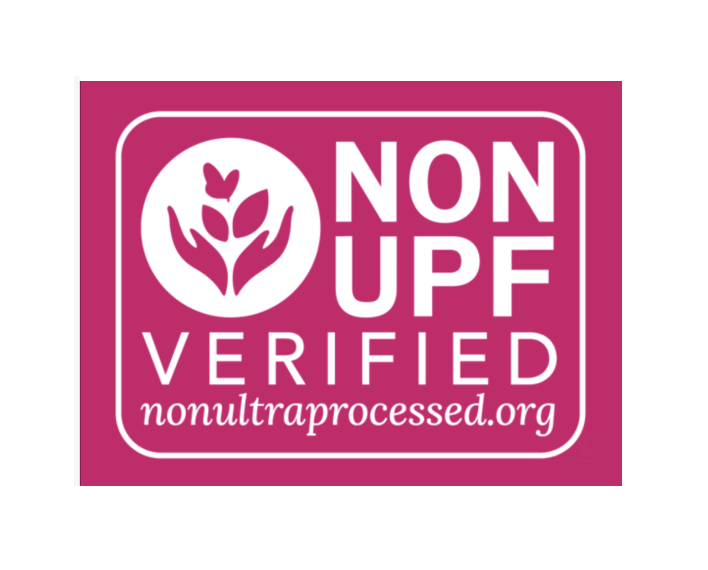
Against this backdrop, the Non-GMO Project’s new Non-UPF Verified Standard lands at a pivotal moment for CPG brands, retailers, and the entire natural and organic products ecosystem.
From GMOs to UPFs: The Non-GMO Project widens its lens
On Nov. 12, the Non-GMO Project formally announced Version 1.0 of its Non-UPF Verified Standard, described as “the nation’s first comprehensive framework” for defining and verifying foods that are not ultra-processed, and called it the “first Non-UPF Verified standard to address the ultra-processed foods crisis.”
The new certification builds on the Non-GMO Project’s 18-year record of third-party verification and its iconic butterfly seal, now found on more than 63,000 products that represent an estimated $50 billion in annual sales.
“Around the world, more people are waking up to the realization that much of what fills our grocery carts is no longer truly food,” said Megan Westgate, founder and CEO of the Non-GMO Project and Non-UPF Verified, at a recent webinar unveiling the new standard. “Doctors and researchers increasingly describe these products as ‘processed edible substances’—industrial formulations engineered for palatability and shelf life rather than nutrition.”
Westgate is careful to say this is not an attack on processing per se. As she told Food Business News: “Processing itself isn’t the enemy. It’s how and why it’s done that matters. The Non-UPF Standard defines a middle ground where convenience and nourishment can genuinely coexist.”
In practice, that “middle ground” is defined by a rigorous ingredient and processing criteria, which are detailed in the Non-UPF Verified Standard v1.0.
Why ultra-processed foods are under fire
The Lancet series and surrounding news coverage sharpen a distinction many in the natural channel have understood for decades: It’s not just what’s in food, but also how it’s made.
The Guardian’s coverage of the Lancet research noted that more than half of the average diet in the U.S. and U.K. now consists of UPFs, with some low-income and younger populations getting up to 80% of their calories from these products. Citing CDC data, ABC News reported that Americans on average consume over half of their daily calories from UPFs.
The Lancet authors point to several mechanisms by which UPFs drive harm:
Disrupted food structure and “hyper-palatability” that encourage overeating and rapid absorption of refined starches and sugars.
High levels of added sugar, sodium, and unhealthy fats.
Widespread use of cosmetic additives and ultra-refined ingredients, some of which may alter gut microbiota or expose consumers to contaminants such as phthalates.
Aggressive marketing and product design that exploit biological reward pathways, particularly in children (MAHA Commission).
In the NPR report, Lancet series coauthor Marion Nestle, professor emerita of nutrition and food studies at NYU and author of “Food Politics,” drew a direct line between the science and the need for policy and marketplace action. She noted that some countries, including Chile, have already shown that warning labels, marketing restrictions, and school food reforms can curb UPF intake. “It’s time to take on the industry,” Nestle said. “They’ve got to stop.”
The Lancet series and recent media reporting all make the point: Ultra-processed foods are not just one more dietary risk factor. They are a structural driver of global chronic disease—and the food system will not change without clear definitions, strong incentives, and credible labels.
‘Disconnected’: What consumers are telling us
In October, the Non-GMO Project released a consumer research report titled “Disconnected,” which summarized the attitudes of U.S. shoppers toward UPFs and the modern food system. Some of the topline numbers from “Disconnected” and related research are striking:
A 2024 Non-GMO Project survey found that 85% of Americans want to avoid ultra-processed foods, but most say they feel overwhelmed and unsupported in trying to do so.
Internal research from the Non-GMO Project’s Food Integrity Collective showed that 68% of shoppers actively try to avoid UPFs, and 70% say they need clearer labeling or third-party verification.
New Hope Network reported that 72% of Americans say they are trying to avoid ultra-processed foods, signaling a powerful demand across mainstream and natural retail.
“Disconnected” emphasized that consumers feel the food system is “out of their hands” — dominated by large corporations using engineered ingredients that are disconnected from natural food sources.
In other words, shoppers are ahead of policy. They are already looking for ways to opt out of UPFs, but they lack tools they can trust. That, more than anything, is the market gap the Non-UPF Verified Standard aims to fill.
The architecture of the Non-UPF Verified Standard
The Non-UPF Verified Standard approaches ultra-processing through two essential frameworks: ingredient integrity and formulation, and processing limits.
1. Ingredient integrity and formulation
The standard targets ingredients that are either emblematic of ultra-processed formulations or under scientific scrutiny for metabolic, neurological, or gut impacts. Collectively, these criteria are designed to protect what the standard calls structural integrity, nourishment, and transparency, steering innovation away from “cosmetic” ingredients and toward minimally processed building blocks:
Non-nutritive and bio-transformed sweeteners (such as aspartame, sucralose, stevia extracts, erythritol, and other sugar alcohols) are prohibited as sugar substitutes. Minimally processed stevia leaf preparations may be allowed only at flavor-level use, not as a core sweetener.
Added sugars are capped by category, typically ranging from low single-digit percentages (by dry weight) for soups, sauces, snack foods, and proteins, to stricter limits for beverages and breakfast foods, and up to roughly 20% for desserts and 40% for some confectionery categories.
Gums, thickeners, hydrocolloids, and texturizers produced via industrial degradation or fermentation—such as carrageenan, microcrystalline cellulose, polysorbates, polydextrose, xanthan gum, and maltodextrin— are largely prohibited.
Artificial colors and certain processed oils are excluded.
Natural flavors are confined to use cases where the corresponding “real” ingredient is present and may not be used to mask the absence of whole foods.
2. Processing limits and food structure
Not all processing is equal. The Non-UPF Verified Standard distinguishes among permissible, conditional, and prohibited methods and requires that:
At least 70% of a product’s weight (or dry weight, for certain categories) must be minimally or moderately processed using permissible methods that preserve the food matrix.
Up to 30% may be “conditionally processed”—for example, certain protein isolates or powders—if they meet specific criteria.
High-impact chemical, structural, thermal, or biological modifications are not allowed, including synthetic biology and 3D-printed ingredients.
The intent is to address the very features UPF critics highlight: extensive fractionation and recombination of ingredients, aggressive “engineering” of texture and flavor, and techniques that break down food structure to the point where the body no longer recognizes the substance as food.
As the standard notes, UPF is as much about the degree and purpose of processing as about individual ingredients. The Non-UPF framework is one of the first to operationalize that insight in a way that is auditable at the product level.
The full standard is publicly posted at NonUltraProcessed.org. The Project has signaled that it will update its prohibited ingredient list annually based on emerging science and pilot feedback.
Pilot brands, early adopters and the reformulation challenge
If Non-UPF Verified is to matter, it has to show up on shelves. The early signs are promising.
A pilot cohort of 16 brands—including both mission-driven emerging companies and established names—has been working with the Non-GMO Project and independent technical administrators to test the Non-UPF verification model across nearly every aisle. In addition, New Hope Network reported that 200 brands are already on the wait list, and that the Non-UPF Verified seal is expected to begin appearing on packages in 2026.
In Douglas Brown’s New Hope Network feature, “Non-UPF Verified: Must-Knows for Natural Brands,” Westgate characterized the program as “a movement, not just a mark,” and noted that reformulation will be essential in categories dependent on gums, stabilizers, and added sugars. “We have some cleaning up to do in this industry,” she said. “Reformulations are needed. We need less sugars and gums. It’s going to be a process. But it does seem like brands are really paying attention.”
For many natural and organic manufacturers, the reformulation challenge may feel familiar. Non-GMO and organic standards forced reevaluation of supply chains and ingredient decks; Non-UPF now pushes deeper into how those ingredients are combined and processed.
For mission-driven brands backed by retailers that cater to ingredient-savvy shoppers, the upside could be substantial:
Differentiation in crowded categories such as ready-to-eat meals, plant-based meats, beverages, and snacks, where formulations can drift toward UPF territory even in “natural” sets.
Alignment with policy trends, as HHS, USDA, and FDA explore definitions and potential regulatory approaches to UPFs.
Deeper consumer trust, particularly among shoppers who already use Non-GMO Project and organic seals as navigational tools in the aisle.
For contract manufacturers and ingredient suppliers, however, this is more than a marketing play—it’s a roadmap for where formulation business is likely headed.
Industry response: Caution, criticism, and opportunity
The Non-UPF standard does not exist in a vacuum. Trade groups and conventional food manufacturers are watching closely and some are pushing back.
Food Business News noted that while states such as California have begun to legislate around certain additives and ultra-processed foods, groups like the Grain Foods Foundation argue that some UPFs can fit into healthy dietary patterns, especially when fortified or reformulated.
More broadly, many industry stakeholders have urged federal agencies to avoid definitions that hinge on processing intensity, arguing that frameworks like the NOVA classification system paint with too broad a brush and risk demonizing shelf-stable, affordable foods.
Westgate and her team acknowledge these debates. In FoodNavigator-USA’s report on the standard, she described the NOVA system as foundational but “not built to solve at the product level,” and emphasized that Non-UPF Verified is designed to be auditable, enforceable, and feasible within current food system realities.
At the same time, the Lancet series and global media coverage are shifting the terms of the debate. ABC News quoted experts who warn that global UPF proliferation is a major public health threat and that voluntary, incremental steps are unlikely to be enough.
In that context, voluntary third-party standards such as Non-UPF Verified may serve a dual role as a pre-regulatory signal to policymakers that industry is capable of responding to the science, and as a competitive differentiator for brands and retailers.
What it means for natural & organic CPG leadership
For marketers in the natural and organic products community, the Non-UPF Verified Standard is not just another badge on the front of the pack. It is a concrete response to three converging forces:
Escalating science: The Lancet series, joined by years of epidemiology, clinical research, and meta-analyses, makes a compelling case that UPFs are a unique risk category and that their impact is global.
Consumer anxiety and demand for coherence: Shoppers are hungry for standards that make sense of conflicting information and give them real agency.
Regulatory and reputational risk: As HHS and USDA gather input on UPF definitions, and as advocacy groups press for action, companies that stay tethered to hyper-processed formulations may find themselves on the wrong side of both policy and public opinion.
For natural and organic brands—many of which built their identity on getting ahead of GMO, pesticide, and synthetic additive concerns—Non-UPF Verified is an invitation to lead again. That leadership could take several forms:
Portfolio mapping: Assess where current SKUs fall on the processing spectrum, and identify quick wins for reformulation versus long-term R&D projects.
Supplier engagement: Challenge ingredient partners to develop minimally processed alternatives to emulsifiers, texturizers, and refined oils that violate the Non-UPF criteria.
Retailer collaboration: Work with retailers to pilot Non-UPF assortments, shelf tags, and consumer education in key categories.
Storytelling and transparency: Use packaging, digital channels, PR, and in-store activations to explain how Non-UPF Verified complements existing organic, non-GMO, regenerative and other claims.
A call to action
The publication of the Non-UPF Verified Standard is not the final word on ultra-processed foods; however, it is the opening of a new chapter. Science will continue to evolve. Policymakers will debate definitions and regulatory levers. Industry groups will push back, negotiate, and in some cases innovate.
But the direction is clear. When The Lancet, The New York Times, The Guardian, NPR, ABC News, and the natural products trade press all make the same point—that ultra-processed foods are undermining global health and consumer trust—the question for our industry is not whether to respond, but how quickly.
For brands that built their business on “better for you,” Non-UPF Verified offers a unique opportunity to help redefine what “better” means at the level of processing itself, and to align product portfolios with a future in which real food—and the integrity of how it’s made—once again takes center stage.
For more information on the standard, please refer to the full Non-UPF Verified Standard v1.0, the Non-GMO Project’s launch announcement, and the Disconnected research report, available via the Non-UPF team’s Google Drive link.
Steven Hoffman is Managing Director of Compass Natural Marketing, a strategic communications and brand development agency serving the natural and organic products industry. Learn more at www.compassnatural.com.
Nestlé, World’s Largest Food Company, to Invest $1.3 Billion in Regenerative Agriculture

Photo: Pexels
This article originally appeared in Presence Marketing’s October 2021 Industry Newsletter
By Steve Hoffman
With agriculture accounting for nearly two-thirds of Nestlé’s total greenhouse gas emissions – with dairy and livestock accounting for half of that – the world’s largest food company announced on Sept. 16, 2021, that it is investing $1.3 billion over the next five years to help its farmers and suppliers transition to regenerative agriculture practices.
“With our long-standing partnerships with farming communities globally, we want to increase our support for farming practices that are good for the environment and good for people,” said Mark Schneider, CEO of the Swiss-based food company in a statement. “In the spirit of enabling a just transition it is vital that we support farmers around the world that take on the risks and costs associated with the move towards regenerative agriculture.”
Nestlé’s Chairman, Paul Bulcke, added, "We know that regenerative agriculture plays a critical role in improving soil health, restoring water cycles and increasing biodiversity for the long term. These outcomes form the foundation of sustainable food production and, crucially, also contribute to achieving our ambitious climate targets."
According to Food Business News, Nestlé said it will focus primarily on three initiatives. First, Nestlé said it will use its network of R&D personnel and agronomists to develop more environmentally friendly crops and production practices. Second, the company said it will offer training and help producers exchange information and best practices that may be adapted locally, and that it will support farmers by co-investing with them, facilitating lending or helping obtain loans for equipment. Third, Nestlé said it is committed to paying premium prices for products produced using regenerative agriculture practices.
“This means rewarding farmers not only for the quantity and quality of ingredients, but also for the benefits they provide to the environment through soil protection, water management and carbon sequestration,” the company said.
Nestlé’s announcement was made in the lead up to the UN Food Systems Summit in New York, as part of Nestle's contribution to help achieve the Sustainable Development Goals (SDGs) by 2030, the company said. It also follows the recent report from the United Nations' Intergovernmental Panel on Climate Change that shows the climate crisis is intensifying, it added.