
How a Surprise Vote on Pesticides Reshaped the 2026 Farm Bill
This article first appeared in the June 2026 issue of Presence Marketing’s newsletter.
By Steven Hoffman
The U.S. food and agriculture sector is navigating a pivotal transition as new legislative actions and regulatory shifts take shape. Recent developments in Washington are establishing a new policy landscape that business owners, brand executives, retailers, and farmers in the natural, organic, and regenerative space will need to monitor closely.
On April 30, the U.S. House of Representatives passed the Farm, Food, and National Security Act of 2026 by a vote of 224–200, marking the first major movement on a Farm Bill since 2018. However, for a natural and organic industry that has now grown into a $325.2 billion market, according to the Natural Foods Merchandiser 2025 Market Overview, the current legislation has drawn mixed reactions regarding its alignment with modern agricultural practices and evolving consumer demand.

As the bill moves to the Senate, where its passage remains uncertain, it introduces a mix of regulatory adjustments, funding reallocations, and structural reorganizations. These legislative changes, combined with a concurrent restructuring at the U.S. Department of Agriculture (USDA), present both operational challenges and new market dynamics for the natural products industry.
The following is an overview of these policies, the political context, and the business implications for the regenerative and organic food supply chain.
The MAHA Movement and a Shift in Pesticide Regulation
One of the most notable developments to emerge from the House Farm Bill debates was a bipartisan vote regarding pesticide oversight—a legislative shift influenced in part by the Make America Healthy Again (MAHA) movement.
For months, the drafted Farm Bill contained language designed to federally preempt states from requiring health and cancer warning labels on pesticides, a provision intended to protect agrochemical manufacturers from state-level lawsuits. However, the House voted, 280-142, to strip this pro-pesticide language from the bill.
According to Politico, this vote represents a major win for MAHA-aligned Republicans and Democrats. The amendment to remove the shield was championed by Rep. Anna Paulina Luna (R-Fla.), who had signaled she would oppose the entire Farm Bill if the protections remained. Despite pressure from House Agriculture Chair G.T. Thompson (R-Pa.), who argued the shield was necessary to prevent “frivolous lawsuits” and to protect crop yields, 73 Republicans joined the majority of Democrats to remove the provision.
This legislative fight highlights the increasing complexity of food politics. As reported by the Montana Free Press, Bob Quinn, a renowned organic kamut farmer from Big Sandy, Montana, noted his surprise at the outcome, acknowledging the historical influence of the pesticide lobby. Interestingly, six Democrats representing regions with heavy pesticide use voted with the chemical industry to bar state labels, showcasing the fact that regional agricultural interests often intersect with party lines.
The removal of the liability shield is being hailed as a significant public health and environmental victory. According to Friends of the Earth, stripping the shield affirms that corporations selling chemicals linked to human health concerns should not be insulated from state-level oversight. Similarly, Kathleen Merrigan, executive director of the Swette Center for Sustainable Food Systems, told FoodTank that the MAHA movement has pushed the pesticide issue to a "tipping point" in food policy.
Even conservative outlets are analyzing this shift. An op-ed in Fox News questioned the broader coherence of a Farm Bill that maintains high levels of agrochemical support while elements of the party simultaneously back MAHA principles.
The Business Takeaway: For natural and organic CPG brands, this development provides a distinct market signal. Consumers are increasingly attentive to the use of synthetic inputs. With states retaining the right to mandate health warnings on conventional, chemically treated products, the value proposition of the USDA Organic label and third-party certifications like Regenerative Organic Certified (ROC) will likely strengthen. Brands should continue to emphasize transparency and clean-label marketing, as the regulatory contrast between conventional and organic agriculture becomes more visible.
Organic Legislation: Modest Progress Amid Broader Funding Cuts
While the pesticide provision's removal was a focal point, the broader Farm Bill presents a challenging framework for the organic and sustainable agriculture sectors.
The Organic Trade Association (OTA) noted that the House-passed bill includes some important wins for organic agriculture, but it stressed that federal policy must evolve to support the sector proactively rather than treat it as an "afterthought." Despite the industry's significant retail footprint, the National Organic Coalition warned that the legislation "largely assumes a stagnant organic marketplace rather than making the targeted investments needed to support continued growth."
Critiques of the bill suggest it continues to heavily favor industrial agribusiness. According to Friends of the Earth, the legislation reduces critical conservation funding—including a $1 billion cut to the Environmental Quality Incentives Program (EQIP)—while shifting resources toward subsidies for larger agribusiness operations. Furthermore, the bill attempts to override voter-approved laws such as California’s Proposition 12, which mandates humane animal welfare standards, potentially invalidating numerous state and local measures on food safety and environmental protection.
Conservation programs remain a cornerstone of the regenerative movement. As The Nature Conservancy highlights, the Farm Bill typically provides roughly $6 billion annually for conservation work on private working lands. Reducing these incentive-based programs may stifle farmers' ability to transition to climate-smart, soil-building practices.
The National Sustainable Agriculture Coalition (NSAC) states that the bill "falls unmistakably short" in addressing the current needs of farmers. NSAC points out that producers are currently facing abrupt trade policy shifts and federal workforce reductions. Earlier this year, the USDA began freezing and terminating held contracts, disrupting planning for the 2025 and 2026 planting seasons for many small and mid-sized producers.
SNAP Policy Changes and Food Access
Another critical component of the House Farm Bill is its approach to nutrition assistance. The legislation outlines $187 billion in cuts to the Supplemental Nutrition Assistance Program (SNAP), alongside expanded work requirements for certain demographics and stricter eligibility rules, according to Food & Wine.
The Center on Budget and Policy Priorities estimates that one in eight participants could lose access to some form of food relief as a result of these measures. Kathleen Merrigan noted via FoodTank that food pantries are already seeing increased demand, a trend that could accelerate later in the year as the cuts take full effect.
The Business Takeaway: SNAP funding is integral to the broader grocery economy, injecting tens of billions of dollars into retail annually. Reductions in food purchasing power can cause a ripple effect across the entire grocery ecosystem. Natural and organic retailers, who have increasingly integrated SNAP benefits to democratize access to healthier foods, may see shifts in consumer purchasing behavior. Brands and retailers will need to evaluate pricing strategies and explore ways to maintain accessibility without compromising on product integrity.
Organizational Restructuring at the USDA
Alongside the legislative process in Congress, recent administrative and structural changes within the USDA under Secretary Brooke Rollins are impacting the organic community's oversight and funding mechanisms.
Recent reports indicate a rollback of infrastructure designed to support alternative agriculture. In a recent op-ed published by Civil Eats, it was noted that the USDA abruptly canceled $300 million in contracts for the Increasing Land, Capital, and Market Access Program (ILCM). This program was established to help underserved and first-generation farmers overcome barriers to entry; its termination halts 50 community-based agricultural projects nationwide.
Staffing challenges within the USDA are also drawing attention. According to the Federal News Network, a significant majority of USDA researchers tapped for an agency relocation have declined to move, raising concerns about a potential reduction in agricultural research capacity.
This staffing shift directly affects the organic sector. According to industry watchdog OrganicEye, the National Organic Program (NOP)—which oversees certification within the $76 billion organic products market—has reportedly seen staff reductions of up to 30%. In addition, Secretary Rollins delayed appointing five members to the 15-member National Organic Standards Board (NOSB) prior to their spring meeting.
Consequently, the NOSB convened in Omaha last month with only 10 members. OrganicEye reported that this lack of representation for key constituencies—such as farmers, consumers, and scientists—strays from the original intent of the Organic Foods Production Act of 1990, leading to concerns that business conducted during the meeting could face legal challenges.
Personnel reductions extend to the Natural Resources Conservation Service (NRCS), a key agency assisting farmers with soil health improvements. As reported by Organic Insider, the NRCS has reportedly lost approximately 22% of its staff, leaving offices in several vital agricultural states operating with limited personnel. This comes shortly after the launch of a $700 million pilot program aimed at boosting soil health, raising questions about the agency's capacity to administer the new funds effectively.
The cumulative impact of these changes is placing significant pressure on producers. Food industry analyst Robyn O'Brien highlighted this convergence of factors on her Substack, noting that farmers are currently facing "a convergence of policy decisions, tariffs, immigration crackdowns, energy freezes, [and] budget cuts" that threaten operational stability.
The Senate's Role and the Path Forward
With the House-passed Farm Bill viewed by many as highly partisan and unlikely to pass the Senate in its current form, industry stakeholders are focusing their attention on the upper chamber. Senate markups are expected in June, and differing legislative priorities are already emerging.
Sen. Adam Schiff (D-Calif.), a new voice on the Senate Agriculture Committee, has outlined a contrasting legislative vision. According to AgInfo, Schiff’s priorities include enhanced support for specialty crops, regional food systems, organic agriculture, and expanded fruit and vegetable purchasing within federal food programs. Additionally, Schiff has stated his intention to oppose any Farm Bill language that overrides state-level animal welfare standards like California’s Proposition 12, while advocating for the protection of SNAP benefits.
Industry Implications and Next Steps
For business leaders in the natural, organic, and regenerative agriculture sectors, navigating this transition requires strategic adaptation. The legislative and regulatory events of the past month underscore a shift in federal support structures for sustainable food systems.
With government grants for new farmers being canceled, adjustments to the organic oversight board, and proposed reductions in conservation funding, the private sector may need to assume a larger role. As noted by Organic Insider, brands, investors, and retailers have an opportunity to privately fund transition programs, invest in supply chain resilience, and cultivate direct, supportive partnerships with farmers managing these macroeconomic pressures.
At the same time, the industry can look to align with the shifting priorities of consumers. The bipartisan rejection of the pesticide liability shield demonstrates that shoppers across the political spectrum are prioritizing clean food, transparency, and corporate accountability. Industry advocacy will remain crucial as the Senate drafts its version of the Farm Bill—urging investments in organic research, the protection of nutrition assistance, and policies that recognize regenerative agriculture as a key component of the nation's food economy.
As agricultural policy continues to be debated in Washington, it is essential for the natural products industry to remain engaged, ensuring that future legislation supports the health of the soil, the economic viability of the farmer, and the well-being of the consumer.
Steven Hoffman is Managing Director of Compass Natural Marketing, a strategic communications and brand development agency serving the natural and organic products industry. Learn more at www.compassnatural.com.
Food Inflation in the U.S.: A Strategic Reckoning for Food Sector Leaders
This article first appeared in the September 2025 issue of Presence Marketing’s newsletter.
By Steven Hoffman
In 2025, food inflation in the United States has transformed from a passing concern into a defining business challenge—and opportunity—for leaders across the food ecosystem. A 3% year-over‑year increase in overall food prices, including 2.4% for groceries and 3.8% for restaurant meals, may seem modest. Yet beneath those figures lie sharper, more disruptive trends: surging prices in staples such as coffee, ground beef, and eggs; strategic responses from consumers and retailers; and structural pressures that demand both resilience and reimagining. Business strategists in the food sector must now lead with insight, not just facts.
A Collision of Climate, Cost, and Policy
Climate volatility continues to drag on food supply and costs. Extreme drought in U.S. cattle belts, heat waves in crop regions, and pest outbreaks such as avian flu have propelled food inflation beyond headline figures. Coffee is up 13.4%, ground beef 10.3%, while eggs have spiked 27.3%, putting extraordinary strain on manufacturers and squeezing household budgets (Axios).
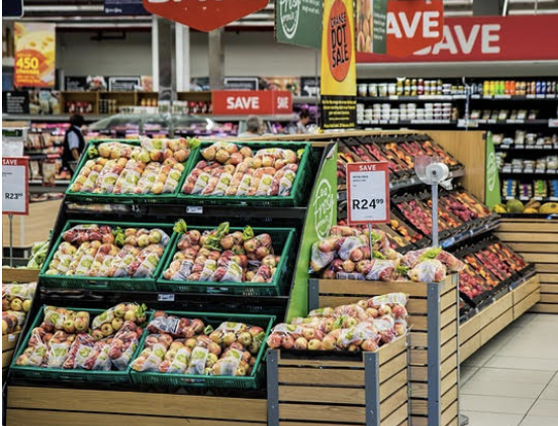
Adding to the upward pressure are sweeping tariffs introduced by the Trump administration, with tariffs on imports from Brazil and India reaching 50%. The tariffs are already working their way into the cost of everything from meat and produce to metals used in cans and packaging (The Washington Post). According to the Yale Budget Lab’s estimates as of August 7, 2025, consumers face an overall average effective tariff rate of 18.6% – the highest since 1933 – and the impact is projected to cost U.S. households an extra $2,400 per year.
Meanwhile, immigration enforcement over the past several months has destabilized farm labor. In California’s Oxnard region, intensified ICE activity has slashed agricultural labor by 20-40%, leading to $3-7 billion in crop losses and driving produce prices up 5% to 12%, according to research published in August 2025 from Cornell University. Simultaneously, cuts in SNAP and other supports have strained both consumer access and farm revenue—especially for smaller producers—plus, grocers in rural communities and elsewhere that depend on SNAP programs feel that impact much harder (Climate and Capital Media).
Beyond cost drivers, the retail margin picture is fraught. Analysis from the White House Council of Economic Advisers showed grocers’ profit margins rising 2 percentage points since before the pandemic—reaching two-decade highs—while “shrinkflation” and package downsizing quietly preserve profitability (Grocery Dive).
FMI—The Food Industry Association’s study released in July 2025, “The Food Retailing Industry Speaks 2025,” reveals an industry struggling to navigate challenging economic conditions, largely due to policies implemented during the Trump administration. According to FMI, about 80% of both retailers and suppliers anticipate that trade policies and tariffs will continue to affect pricing and disrupt supply chains. Most grocers expect operating costs to remain high (Supermarket News).
Consumers Are Stressed About Rising Prices
Recent polling reveals that nearly 90% of U.S. adults are stressed about grocery prices—with half calling it a major stressor. As a result, Americans are responding to these pressures with pragmatic and inventive shifts. Consumers across income levels are tightening the belt, leveraging buy-now-pay-later options, getting creative with savings, and turning to food banks when they must (AInvest).
Shopping behavior reflects this anxiety—and innovation. RDSolutions reports that 86% of consumers now buy private-label products, with price cited as the primary decision factor; 42% opt for cheaper alternatives; while 20% skip items altogether. Data from The Feedback Group shows 61% of supermarket shoppers use sale-driven habits—buying on promotion, eating more at home, and choosing store brands over national names (Progressive Grocer). Meanwhile, many households lean on grocery hacks such as careful list-making, midweek shopping, loyalty programs, and bulk purchases to maximize savings (Times of India).
Even amid tightening budgets, shoppers haven’t completely abandoned pleasure, however. KCI’s “stress index” reveals that consumers crave “affordable luxuries” and product discovery—seeking balance between taste and value. In fact, 68% of consumers surveyed prioritize taste over price, while one-third still prioritize lowest-priced options (Food Dive).
In a fresh produce market reeling from the effects of inflation and immigration enforcement, one consumer trend remains strong: Health continues to drive purchases of fresh fruits and vegetables. According to The Packer Fresh Trends 2025 report, published in August 2025, 72% of shoppers say their primary reason for buying produce is to support a healthy lifestyle. However, price pressures loom larger than ever, with 44% of consumers now saying that cost is the top factor in deciding what to buy, up from 39% last year. As households juggle tighter budgets, they’re opting for familiar staples over experimenting with newer or higher-priced options (Farm Journal).
For lower income individuals and families, higher food prices are resulting in less consumption of healthier food options, with the result that Americans are not eating enough fruits, vegetables, and other nutrient-dense foods. Instead, they are choosing sugary and ultra-processed foods, which tend to be cheaper and last longer.
"There's evidence that inflation continues to shape food choices, particularly for low-income Americans who prioritize price over healthfulness," Constance Brown-Riggs, a registered nurse and nutritionist specializing in diabetes care, told Northwell Health. "These results highlight the disparity in how income influences food priorities," she continued, adding that higher food prices often increase food insecurity. "These shifts increase the risk of chronic diseases such as diabetes, heart disease and obesity."
Even so, there is some opportunity on the horizon. The Packer Fresh Trends 2025 report shared some bright spots, including the fact that Millennials and Gen Z are leading the way on trying new products, exploring organic options, and prioritizing convenience, including prepped veggies and grab-and-go fruit packs. In addition, interest in organic remains strong, with 22% of consumers purchasing organic always or most of the time, particularly among younger and higher-income households.
Grocers, Brands, and Manufacturers Corral Cost Pressures
The reaction from retailers and manufacturers has been tactical and dynamic. Major chains are reevaluating supplier cost increase requests, pushing back aggressively against inflation on branded items. Meanwhile, grocers are ramping up private-label assortments (Investopedia).
Businesses like Aldi are demonstrating how cost leadership can go viral: A summer discount campaign across 2,550 stores marked down 400 items by up to 33%, estimated to save shoppers $100 million. Fast-food chains are responding with value menu bundles—their way of catering to cash-strapped consumers without sacrificing frequency (The Wall Street Journal).
In the natural channel, retailers such as Natural Grocers are emphasizing value, loyalty programs and sales to draw shoppers. For its 70th anniversary in August, Natural Grocers leveraged deep discounts across its nearly 170 stores in 21 states—up to 60% off on more than 500 products—to tap into consumer demand for affordability and quality. According to AInvest, the campaign “sets a benchmark for value-driven retail” by blending “nostalgia, discounts and loyalty incentives to boost sales and customer retention.”
As demand for better-for-you foods remains strong among health-conscious consumers, Jay Jacobowitz, president and founder of Retail Insights, told Supermarket News that many retailers in the natural and independent space experienced a strengthened second half of 2024 and first quarter of 2025, as less price-sensitive consumers make personal health and wellness a priority. Smaller retailers “are going to have increased (economic) pressure, but it’s not pressure that they’re unfamiliar with dealing with,” he said.
Manufacturers are similarly pressured. They face rising raw material, labor, and energy costs, yet retailers limit how much of that inflation they pass through. Many are resorting to smaller or reformulated packaging, trimming promotions, and optimizing sourcing strategies to protect shelf placement (Columbus CEO).
Yet even in the last few weeks, food makers are succumbing to the need to raise prices as the longer-term effects of tariffs, economic policies, and supply chain disruption kick in. On Aug. 7, 2025, Forager Project co-founders Stephen Williamson and John-Charles Hanley announced the following on Instagram:
“Like many food makers, we’ve been feeling the effects of rising ingredient costs—especially for our beloved cashews (up 52%) and coconuts (up 113%). We’ve held off as long as we could, but to keep making food the right way, a price increase was necessary. What hasn’t changed? Organic ingredients, ethical sourcing, planet-healthy practices.”
At the agricultural level, the disconnect is acute. Farmers receive only about 16 cents back from every retail food dollar spent—and that fraction must cover skyrocketing seed, fertilizer, and machinery costs (Washington Post). Some farmers still support tariffs, believing they will yield long-term trade gains; others see them as a short‑term hit to margins (Investigate Midwest).
Strategy: Adaptation, Advocacy, and Resilience
Current forecasts from the USDA suggest moderate gains: food-at-home prices rising around 2.2% for 2025 and restaurant prices about 4%. But the structural challenges—climate, policy, labor, and pricing power—carry implications far richer and more urgent than those figures alone (Food & Wine).
For food-sector professionals, the directive is clear: Strategies must be multidimensional.
1. Reinvent Pricing & Perceived Value
Offer tiered, smaller, or private-label packaging; highlight affordable luxuries and discovery moments in-store and online. Aldi’s shelf reset, Sprouts Farmers Market’s value-based positioning, and Natural Grocers’ emphasis on savings and its frequent buyer program demonstrate ways to drive loyalty and savings.
2. Strengthen Supply Chain Flexibility
Diversify sourcing, invest in climate-resilient inputs, and forecast for volatility. Manufacturers need contingency plans for both weather and trade disruptions.
3. Align Expectations & Margins
Increase analytics around cost impacts and pass-through capabilities. Supplier–retailer partnerships should define fair margin boundaries and shared value strategies for inflation periods.
4. Advocate for Systemic Support
Engage policymakers to safeguard labor stability—through H-2A visa expansions or by regularizing undocumented workers—and to secure tariff relief for food essentials and farm inputs.
5. Build Resilient Retail Formats
Simplify offerings to reduce shopper anxiety and stock-outs. Grocery models like Aldi or Sprouts’ curated “innovation centers” help drive discovery while managing complexity.
A New Epoch for Food-Business Leadership
Food inflation in 2025 is less an anecdote than a wake-up call. When climate shocks strike, tariffs bite, and labor becomes unstable overnight, businesses that only react are left behind. But those that blend adaptive execution, strategic policymaking, and bold market positioning are building enduring advantage.
Consumers may feel squeezed, but they’re still looking for experiences that feel smart, authentic, and human. Retailers, suppliers, processors, and farmers must each meet them there—delivering value, stability, and insight. Because in this new era, food-sector leadership is not just about pricing; it’s about crafting trust in uncertain times—and reshaping food systems to weather today’s storms and make the most of tomorrow’s opportunities.
Steven Hoffman is Managing Director of Compass Natural Marketing, a strategic communications and brand development agency serving the natural and organic products industry. Learn more at www.compassnatural.com.