
Trump Signs EO on Regenerative Agriculture While EPA Approves More Toxic Forever Chemicals
This article first appeared in the August 2026 issue of Presence Marketing’s newsletter.
By Steven Hoffman
The summer of 2026 has delivered a dizzying regulatory whiplash for the natural, organic, and regenerative agriculture industry. On one hand, the phrase "regenerative agriculture" has officially reached the highest echelons of federal policy, recently enshrined in a presidential executive order and championed loudly under the populist "Make America Healthy Again" (MAHA) banner.
On the other hand, a quiet but aggressive rollout of toxic synthetic "forever chemicals," deep cuts to public health and agricultural inspection funding, and sweeping executive and legal victories for the agrochemical lobby tell a starkly different story.
For business owners, executives, and retailers in the natural and organic products sector, this legislative and regulatory environment presents a highly volatile mixed bag. We are witnessing a fundamental tension between the administration's public health rhetoric and its actual regulatory execution. As consumers increasingly look to the natural channel for transparency and safety, understanding these seismic shifts is critical.
Here is a comprehensive look at how recent federal actions, courtroom reversals, and public health fallouts are redefining the business of food and agriculture from the soil to the shelf.
The Biofuel Pivot: Is It True Regenerative Agriculture?
On June 25, 2026, President Donald Trump signed Executive Order 14414, formally titled Advancing Regenerative Agriculture and Strengthening American Farm Resilience. The directive instructs the U.S. Department of Agriculture (USDA), the Environmental Protection Agency (EPA), and Health and Human Services (HHS) to expand precision farming, streamline agricultural innovation, and evaluate cumulative chemical exposures in the food supply.
Simultaneously, USDA Secretary Brooke Rollins introduced a final Regenerative Feedstock Rule. Rather than injecting expansive new government subsidies into direct federal conservation or organic transition programs, the administration’s approach is entirely market-driven. As detailed by the Western Ag Network, the new USDA framework ties directly into the 45Z Clean Fuel Production Tax Credit, utilizing an updated "Feedstock Carbon Intensity Calculator" to connect on-farm practices with biofuel supply chains.
In practice, this allows massive conventional corn, soybean, and sorghum producers to document specific farming practices—such as no-till or cover cropping—and market their harvests at a premium to ethanol and biofuel producers. The goal is to incentivize carbon reduction without imposing federal mandates.
While market-based incentives for carbon reduction sound promising, advocates and organic farmers are raising the alarm. Many view this framework as a blatant co-opting of the regenerative movement by Big Ag. True regenerative agriculture—as pioneered by the organic movement—focuses on eliminating toxic inputs, restoring biodiversity, and building soil health to grow nutrient-dense food. Critics argue that the administration is simply repackaging the term "regenerative" into a carbon-scoring mechanism to subsidize industrial biofuel production, all while continuing to allow the use of synthetic pesticides and fertilizers on those very same crops. For natural products retailers, this underscores the urgent need to differentiate true regenerative organic food from conventional crops participating in carbon tax credit programs.
Funding Volatility and a Courtroom Rebuke
This pivot toward corporate biofuel subsidies has been accompanied by aggressive cuts to programs meant to support small-scale and marginalized farmers.
The administration’s new executive order did not add net-new financial outlays; rather, it shifted approximately $700 million within existing agency budgets to fund its new pilot programs. To balance the books and fulfill a mandate to eliminate what it deemed wasteful spending and "diversity, equity, and inclusion (DEI)" initiatives, the USDA abruptly canceled the Increasing Land, Capital, and Market Access Program (ILCMA) earlier this year. Originally a $300 million initiative to help Black, Native American and historically underserved farmers secure land and financing, the program was canceled earlier this year over alleged administrative and DEI-related concerns.
However, the administration’s aggressive funding cuts recently hit a major legal wall. On June 30, U.S. District Judge Beryl Howell granted a preliminary injunction ordering the USDA to restore $127 million in canceled grants to 24 organizations while litigation continues. The plaintiffs successfully argued that the USDA unlawfully terminated the awards based on arbitrary keyword searches rather than on performance or merit. This courtroom rebuke is a massive victory for grassroots agricultural groups and reinforces the USDA's legal obligation to honor its contracts with the young and first-generation farmers who represent the future of the nation’s specialized food supply.
In another piece of rare, positive news for the natural products sector, the USDA recently announced that the organic certification cost-share funds have finally been released. These funds are a vital lifeline for small- to mid-sized organic operations, reimbursing them for a portion of the financial burden required to maintain their rigorously audited USDA Organic certifications. The release of these funds will help stabilize the organic supply chain as farmers finalize their operational budgets for the coming year.
#ChemGate and PFAS Proliferation
While the administration touts its commitment to farm resilience, its environmental regulatory arm is moving in a dangerously contradictory direction.
In early July 2026, the EPA quietly fast-tracked the approval of three new toxic pesticides containing PFAS (per- and polyfluoroalkyl substances)—commonly known as "forever chemicals." The hazardous new herbicides—trifludimoxazin, diflufenican, and epyrifenacil—can now be sprayed directly on major food crops, including wheat and citrus. According to the Environmental Working Group (EWG), EPA scientists themselves flagged one of these chemicals as having "suggestive evidence of carcinogenic potential."
This decision brings the total number of PFAS pesticides greenlit by the current EPA to five in under two years. These chemicals do not break down in the environment; they accumulate in the soil, the water table, and ultimately, the human bloodstream, where they are linked to immune system suppression and severe reproductive health issues.
The regulatory failure extends to the FDA, which recently refused a formal petition to set strict limits on forever chemicals in food, leaving consumers entirely unprotected from the downstream effects of the EPA's pesticide approvals.
Food industry visionary and financial analyst Robyn O’Brien has aptly dubbed this crisis "#ChemGate." O'Brien warns that when regulatory bodies become hopelessly captured by the chemical lobbying arms they are meant to oversee, the entire integrity of the American food supply collapses. For natural products retailers, the EPA's quiet unleashing of forever chemicals onto conventional produce serves as the ultimate marketing imperative for the organic seal. As conventional agriculture becomes increasingly saturated with indestructible synthetic toxins, the rigorously audited, “no toxic synthetic pesticides” promise of the organic aisle transforms from a premium lifestyle choice into a fundamental public health necessity.
The Glyphosate Betrayal: A Fracture in the MAHA Alliance
The tension between the populist MAHA movement and the administration’s actual policy execution reached a breaking point this year over the world’s most notorious herbicide: glyphosate.
The fracture began in February 2026 when President Trump issued an executive order invoking the Defense Production Act to mandate and protect the domestic production of glyphosate (the active ingredient in Roundup), citing national security and food supply chain resilience. The order granted broad liability immunities, infuriating MAHA advocates who had championed the administration on the promise of health reform. As Environmental Working Group President Ken Cook noted at the time, the move was viewed by many wellness advocates as a "direct assault" on the MAHA platform and a great gift to the chemical lobby.
This administrative protection was recently compounded by a landmark decision from the nation's highest court. This summer, the U.S. Supreme Court ruled in favor of agrochemical giant Bayer regarding its glyphosate-based weedkiller. The ruling effectively blocks thousands of state-level "failure-to-warn" lawsuits, determining that federal EPA label approvals preempt state laws that might otherwise require cancer-warning labels on toxic pesticides.
This decision essentially grants a liability shield to pesticide manufacturers, protecting them from plaintiffs alleging they were not properly informed about the severe health risks associated with chronic glyphosate or other chemical pesticide exposure.
For the MAHA movement, the executive protections and the Supreme Court ruling exposed a deep rift between the political rhetoric of "making America healthy" and a regulatory reality that actively insulates the chemical agriculture industry from legal consequence. As reported by Grist, attempts to appease MAHA's fury over the Roundup rulings have largely backfired, leaving health-freedom advocates feeling profoundly betrayed. Protests have taken place outside the Supreme Court, signaling that the coalition of health advocates that helped propel the administration into office is fracturing over its failure to regulate Big Chem.
The Public Health Fallout: The Cost of Cutbacks
The consequences of prioritizing corporate deregulation and cutting federal research and inspection budgets are not abstract; they are already playing out in real time across the nation's supply chains and emergency rooms.
The current administration has initiated historic cutbacks in public health funding, FDA food inspections, and USDA agricultural research. The result is a regulatory apparatus that is operating with severe blind spots, and the public is paying the price.
In recent weeks, an explosive food-borne Cyclospora outbreak has swept across the United States, causing severe, prolonged gastrointestinal illness. Cyclospora is a microscopic parasite transmitted through feces and typically linked to contaminated fresh produce. As of July 2026, the parasite has sickened thousands of Americans across at least 34 states, with the Midwest bearing the brunt of the crisis. In Ohio, the Cleveland Clinic reported a staggering jump in lab testing, skyrocketing from just one test per day to nearly 200 as symptomatic patients flooded local hospitals.
The federal response has been heavily hindered by recent agency rollbacks. Due to severe staffing shortages and budgetary cuts at the Centers for Disease Control and Prevention (CDC)—which recently made the tracking of certain foodborne illnesses optional—federal case data has drastically lagged behind real-time state-level reporting. Without a robust, centralized federal tracing apparatus, state health investigators have been left to piece together the puzzle on their own. While early interviews strongly point to lettuce and salad greens as the leading suspected source, a specific grower, brand, or supplier has yet to be definitively named by federal authorities.
As local health departments scramble to track the outbreak's expanding footprint across the country, this unresolved crisis raises grave questions about the ability of gutted federal agencies to adequately monitor the safety of the conventional food supply. When the government can no longer proactively track and trace a pathogen, the burden of food safety falls entirely on the retailer and the private supply chain.
Simultaneously, the agricultural sector is battling a devastating screwworm outbreak affecting livestock. For decades, the USDA successfully managed the threat of the New World screwworm—a parasite that feeds on the living tissue of warm-blooded animals—through robust research and sterile insect release programs. However, recent reductions in federal research funding and the mass exodus of USDA researchers who are refusing mandatory relocations have compromised the agency's ability to maintain these critical biological defense lines, resulting in a crisis for ranchers and a direct threat to the meat supply chain.
The Strategic Path Forward for the Natural Channel
As we survey the current landscape, the mandate for the natural, organic and regenerative products industry is unmistakably clear. We can no longer rely on federal tailwinds, government definitions, or public safety nets to protect our consumers or our food supply.
When the federal government co-opts the term "regenerative" to subsidize industrial biofuels, unleashes PFAS forever chemicals onto conventional crops, shields glyphosate manufacturers from liability, and defunds the agencies responsible for keeping parasites out of our produce, the conventional food system ceases to be a safe default for the American family.
In this environment of deep institutional failure, the natural products channel stands as the last line of defense.
Retailers, brands and investors must step into the regulatory void and double down on uncompromising transparency. We have an opportunity to educate customers on the profound difference between a federally subsidized "regenerative" biofuel crop and rigorously audited USDA Certified Organic and Regenerative Organic Certified (ROC) food systems.
Furthermore, private capital must continue to step forward. To truly scale clean agriculture, the private sector needs to prioritize funding the organic transitions, the local supply chain infrastructure, and the independent agricultural research that the federal government is actively abandoning.
The agricultural policies of 2026 are indeed a mixed bag—heavy on chemical appeasement and light on actual public health reform. But out of this chaos emerges a profound opportunity. As the conventional system compromises itself, the value proposition of the natural, organic, regenerative, and specialty food industry has never been more vital, more distinct or more essential to the future of human health and environmental resilience.
Steven Hoffman is Managing Director of Compass Natural Marketing, a strategic communications and brand development agency serving the natural and organic products industry. Learn more at www.compassnatural.com.
Community Launches $1.5M Campaign to Save Historic Jamestown Mercantile Cafe
JAMESTOWN, Colo. (July 14, 2026) — A newly formed Colorado nonprofit, SAVE THE MERC, has launched a community fundraising campaign to purchase and preserve the historic Jamestown Mercantile Cafe, one of Colorado’s oldest continuously operating businesses and Jamestown’s only public storefront. The campaign seeks to raise $1.5 million to secure the building at 108 Main Street and keep it in community hands for generations to come.
SAVE THE MERC is the public name of The Jamestown Home for Wayward Artists, Pirates and the Somewhat Feral, a 501(c)(3) nonprofit established in 2026 to steward the beloved Mercantile building as a permanent community asset. The organization’s goal is simple: buy the building, keep the cafe operating, preserve affordable community space, and expand arts and cultural programming.
A Historic Tradition Built Over 134 Years
Built in 1892, The Merc has served generations of residents, miners, travelers, artists, musicians and visitors. The 2.5-story, wood-frame building constructed in a classic western style was added to the National Register of Historic Places in 1989. Over the decades, it has evolved from a mercantile and post office into what locals affectionately call “the community living room.” It has hosted live music, poetry nights, community dinners, classes, celebrations, fundraisers, and countless everyday conversations that bind rural mountain communities together.
“The Merc isn’t just a restaurant,” said campaign organizers. “It’s where people gather in storms and natural disasters, celebrate milestones, meet neighbors, hear music, and feel welcome. Places like this are rare, and once they’re gone, they’re gone.”
The crowd-funding campaign comes at a pivotal moment, as the current owner has made the property available for sale and is very supportive of the nonprofit effort to preserve the building’s future as a public gathering place.
After purchasing the property, SAVE THE MERC plans to operate as landlord and steward of the property while existing tenants, including the cafe, continue operating. Rental income from the building’s eight units is expected to help cover maintenance and operating costs, while future grants and donations would support expanded programming.
Future plans include a recording studio for musicians, writer-in-residence opportunities, youth arts programming, community workshops, and preservation efforts documenting Jamestown’s history.
A Critical Community Resource
The Merc has already proven its resilience. It survived the devastating 2013 flood that affected a large part of Boulder County, serving as a FEMA meeting point and source of support during recovery efforts, and later adapted during COVID with outdoor dining and virtual concerts.
Campaign organizers emphasize that support is needed not only from Jamestown residents but from the broader community of people across Colorado and beyond who have found connection there over the years.
“It’s going to take every pirate on the ship to save the home of the somewhat feral," said Rainbow Shultz, owner of the Jamestown Mercantile and board member of SAVE THE MERC. Shultz notes that the all-volunteer board is comprised of a passionate, multidisciplinary group of community stewards dedicated to preserving The Merc as a vibrant, inclusive hub for food, music, community, and connection in Jamestown.
Honky Tonk Fundraiser, July 25
To support the SAVE THE MERC initiative, fellow mountain venue The Gold Hill Store in Gold Hill, the renowned mountain town west of Boulder, will host a Honky Tonk Fundraiser on Saturday, July 25, 3-7 pm. The event will feature a silent auction and three musical acts, and tickets include a BBQ dinner and wine tasting. Proceeds will benefit the SAVE THE MERC campaign. Visit here for more information and to purchase tickets.
How to Help
Donations can be made online at savethemerc.org/donate. Supporters can also volunteer, host fundraising events, or inquire about major gifts and naming opportunities through the website, savethemerc.org.
About SAVE THE MERC
SAVE THE MERC is a Colorado nonprofit dedicated to preserving the historic Jamestown Mercantile Cafe building as a permanently accessible community space rooted in art, hospitality, culture, and connection. Learn more at savethemerc.org and follow us on Instagram.
Media Contact
Steven Hoffman, Compass Natural, steve@compassnatural.com, tel: 303.807.1042
2026 Federal Hemp Ban: Understanding the Legislative Paradox Reshaping the Consumable Hemp Market
This article first appeared in the July 2026 issue of Presence Marketing’s newsletter.
By Steven Hoffman
For years, the natural products industry has served as the tip of the spear for plant-based wellness and agricultural innovation. Independent health food stores, natural grocery chains and co-ops were among the first to educate American consumers on the endocannabinoid system. They were the pioneers who brought hemp-derived CBD to the mainstream, championing a botanical remedy that offered millions relief from pain, anxiety and inflammation without the intoxicating effects of traditional marijuana.
Thanks to the 2018 Farm Bill, which legalized commercial hemp cultivation, a vibrant supply chain emerged. From the regenerative organic farmer cultivating the crop to the innovative manufacturer formulating tinctures and topicals, to the retailer curating wellness aisles, the hemp economy blossomed into a formidable market. According to Inc. Magazine, the hemp sector is now valued at a staggering $28.4 billion, supporting more than 300,000 jobs nationwide.
Yet, as we move through the summer of 2026, this thriving ecosystem faces an existential threat. A looming federal ban, passed quietly as a rider in a 2025 appropriations bill, threatens to decimate the consumable hemp market by the end of the year.
At the exact moment the federal government is taking historic steps to deregulate and reschedule marijuana, it is simultaneously moving to criminalize the non-intoxicating, therapeutic hemp products that natural products retailers have safely sold for years. For business owners, executives, and professionals in the natural and organic food market, understanding the mechanics of this ban, the paradox of federal cannabis policy, and the ongoing fight for agricultural seed sovereignty is critical to navigating the turbulent months ahead.
Section 781 and the November 12 Deadline
The crisis stems from the Appropriations Act for 2026, signed into law on Nov. 12, 2025, to end a government shutdown. Buried within the legislation was Section 781, a provision orchestrated largely by Representative Andy Harris (R-MD), who presides over the House Appropriations Subcommittee on Agriculture, and bolstered by the legislative weight of Senator Mitch McConnell (R-KY), that fundamentally redefines legal hemp in the United States.
Under the 2018 Farm Bill, hemp was defined as cannabis containing less than 0.3% delta-9 THC on a dry-weight basis. Beyond the promise of food and fiber products derived from hemp, this definition allowed for the proliferation of full-spectrum CBD products, which naturally contain trace amounts of THC. However, it also created a loophole that allowed chemists to synthesize intoxicating cannabinoids—like delta-8 THC and THCA—from legal hemp CBD, leading to a flood of unregulated, intoxicating products in convenience stores and gas stations across the country.
Rather than creating a robust regulatory framework to address synthetic intoxicants, Congress opted for a blunt instrument. As detailed by Vicente LLP, Section 781 shifts the definition of hemp to a "total THC standard" (0.3% total THC, inclusive of THCA and delta-8). More devastatingly, the law caps final-form hemp-derived cannabinoid products at a microscopic 0.4 milligrams of total THC per container.
Absent intervening legislation, this restrictive standard takes effect on Nov. 12, 2026. Because even non-intoxicating, full-spectrum CBD products naturally contain more than 0.4 milligrams of trace THC per container, the new law essentially throws the baby out with the bathwater. According to the U.S. Hemp Roundtable, the ban will render approximately 95% of existing hemp-derived cannabinoid products federally unlawful.
As Forbes recently noted, the new rules will knock out popular, non-intoxicating CBD products that consumers rely on daily. For natural products retailers, this means that the tinctures, gummies, and functional beverages currently driving significant foot traffic and revenue will likely become contraband overnight. According to Recovered.org, the law will stringently restrict the possession and sale of these products, particularly in states where marijuana remains illegal.
Retailers and Producers Raise the Alarm
The impending ban has sent shockwaves through the natural products supply chain. Retailers who meticulously vetted brands for organic certification, clean extraction methods and third-party testing are now facing the prospect of emptying their shelves of CBD products.
Local businesses and wellness practitioners are raising the alarm, arguing that federal policymakers have fundamentally misunderstood the products they are banning. "We have the backing of medical professionals in Lancaster, in Pennsylvania, and across the country that refer their patients to us for pain relief," Heather Kreider, owner of Hempfield Botanicals in Lancaster, PA, told Fox43. "I'm a registered nurse myself. I'm also a cannabis educator, so I take what we do here very seriously. We're doing the right things here; however, those bad players are not, and they're the ones that are causing the issues."
The collateral damage extends beyond the retail sector and into federal healthcare initiatives. As reported by The Guardian, the hemp ban will effectively derail a highly anticipated Medicare pilot program designed to reimburse seniors for hemp-derived products. The model program, which launched just months ago, covered up to $500 per year for eligible Medicare patients utilizing CBD products. The federal ban undermines this progress entirely, cutting off affordable access to natural wellness for vulnerable populations.
As the Alliance for Natural Health argues, the ban is "built on broken science." By targeting the trace, naturally occurring cannabinoids in full-spectrum hemp, the government is effectively outlawing a botanical medicine that millions of Americans rely upon daily.
The Marijuana Rescheduling Paradox
Perhaps the most bewildering aspect of the 2026 federal hemp ban is the stark policy contradiction it creates within the broader cannabis landscape.
While the federal government is lowering the hammer on non-intoxicating hemp products, it is simultaneously taking historic steps to deregulate traditional, high-THC marijuana. In recent months, federal agencies have moved to reschedule marijuana from Schedule I to Schedule III under the Controlled Substances Act, recognizing its medical utility and reducing tax burdens for state-licensed dispensaries.
This creates a jarring paradox for grocery retailers and natural food vendors: The federal government is facilitating the growth of the intoxicating, highly regulated dispensary market while actively criminalizing the non-intoxicating hemp market historically sold in mainstream grocery aisles.
Reason magazine recently highlighted this hypocrisy, noting that Mitch McConnell's push for the hemp ban betrays the very industry he helped create through the 2018 Farm Bill. The prohibition destroys a thriving industry to solve a regulatory issue that individual states were already handling effectively.
The backlash against this paradox has prompted unexpected political alliances. In April 2026, President Donald Trump took to Truth Social to push Congress to save the industry. Following his administration's historic moves to protect medical marijuana, Trump stated he was calling on Congress to update the law "to ensure that Americans can continue to access the full-spectrum CBD products they have come to rely on ... while preserving Congress’s intent to restrict the sale of products that pose health risks."
Seed Sovereignty: The Hidden Threat of Section 781
While the consumer impact of the hemp ban has dominated the headlines, Section 781 contains a more insidious threat to agriculturalists: the erosion of seed sovereignty.
In the regenerative agriculture and organic farming communities, seed sovereignty—the right of farmers to save, breed, and exchange seeds free from corporate or government overreach—is a sacred tenet. Yet, the new federal definitions deeply compromise this right. As detailed by Grow Weed Easy, the new federal hemp and cannabis seed law dictates that viable seeds from high-THC plants are explicitly excluded from the definition of legal hemp, even if the seeds themselves contain zero THC.
This linguistic shift in the federal code has profound implications. Green State reports that this little-known federal rule could effectively make vast swaths of cannabis seeds illegal, paralyzing the nation's seed banks, agricultural research institutions, and independent farmers. Local businesses are already feeling the chilling effect. In Maine, the Fairfield Hemp Seed Company warned that the federal bill could lead to their closure, stripping farmers of access to reliable, region-specific genetics
Leading the charge against this agricultural overreach is the American Seed Innovation & Genetics Association (ASIGA). In a comprehensive white paper regarding Section 781, ASIGA meticulously outlines how the government's conflation of mature plant cannabinoids with the genetic potential of a seed stifles agricultural innovation.
By criminalizing seeds based on their potential future THC expression rather than on their current chemical makeup, the federal government is erecting massive barriers to entry for independent breeders. ASIGA argues that seeds are the essential foundation of agricultural diversity. Without the legal protection to trade and cultivate diverse cannabis genetics, the industry risks consolidating into the hands of a few well-capitalized, multi-state operators, directly contradicting the anti-monopoly ethos of the natural products industry. For organizations championing seed sovereignty and legal clarity, repealing or amending Section 781 is not just about saving CBD gummies; it is about defending a farmer's fundamental right to the seed.
The Legislative Scramble: Will Congress Intervene?
With the November 12 deadline approaching, the hemp industry has launched a desperate legislative scramble to save itself.
Several lawmakers have attempted to introduce rescue measures. In the House, Rep. James Comer (R-KY) and Rep. Andy Barr (R-KY) introduced bills and amendments aimed at establishing a comprehensive regulatory framework or delaying the ban entirely. Three U.S. House Republicans recently attempted to thwart the intoxicating hemp product ban during Farm Bill negotiations, and another GOP lawmaker is currently circulating a bill to keep hemp THC drinks federally legal. Furthermore, the intoxicating hemp industry is actively seeking a rescue in Congress.
However, the political reality is grim. Despite bipartisan lobbying efforts, the U.S. Congress has repeatedly blocked the latest rescue attempts. According to Marijuana Moment, top marijuana reform groups concede that Congress is unlikely to prevent the new federal ban this year.
The broader cannabis industry finds itself fractured. Some stakeholders in the licensed marijuana dispensary space view the hemp ban as a victory, eliminating competition from unregulated hemp-derived products. As Hemp Today reports, bipartisan lobbyists have joined the cynical cause as intoxicating hemp faces its endgame, resulting in a situation where the federal axe is finally falling on intoxicating hemp.
Unfortunately, the collateral damage of this infighting is the natural and organic food retailer, the hemp farmer, and the consumer relying on full-spectrum CBD.
How Retailers and Brands Can Prepare
As we stare down the barrel of November 2026, business leaders in the natural products sector must be pragmatic. Hoping for a last-minute congressional miracle is not a viable business strategy.
While the question of which products will disappear under the national hemp ban remains unanswered pending potential enforcement guidance, retailers and manufacturers must audit their supply chains immediately. Brands should consult with legal counsel to understand their exposure to the 0.4-milligram total THC limit per container. Retailers must review their vendor agreements and prepare for significant SKU rationalization in their wellness aisles.
However, as MJBiz Daily astutely points out, hemp THC regulation is inevitable, but it’s not a ban—and operators must prepare. The natural products industry must pivot from reacting to prohibition to actively advocating for intelligent, science-based regulation. This means supporting organizations like ASIGA in the fight for seed sovereignty, and aligning with groups like the U.S. Hemp Roundtable and others to demand strict age restrictions on sales (age-gating), cGMP manufacturing standards, and truthful labeling over outright bans.
The natural products sector is no stranger to navigating complex regulatory shifts, and while retailers will ultimately adapt to the loss or transformation of a popular wellness category, the 2026 Federal Hemp Ban poses a genuine threat to the farmers, formulators, and producers who built the $28 billion consumable hemp products market. Moving forward, the survival of the consumable hemp sector depends not on a return to the unregulated gray market, but on a unified industry push for sensible, safety-focused legislation. By advocating for mandatory age verification, stringent manufacturing standards and seed sovereignty rather than blunt prohibition, the trade can chart a sustainable path forward—one that protects consumers, preserves retail revenue streams, and defends the agricultural innovators who supply them.
Steven Hoffman is Managing Director of Compass Natural Marketing, a strategic communications and brand development agency serving the natural and organic products industry. Learn more at www.compassnatural.com.
JAMBAR Named Founding Partner of Siesta Valley Bowl
Rooted in shared Bay Area history, the partnership connects Jennifer Maxwell’s legacy in sports nutrition, music, and active living with Siesta Valley Foundation’s vision for a renewed East Bay cultural landmark.
ORINDA, Calif. (June 25, 2026) — Siesta Valley Bowl today announced JAMBAR, the certified organic energy bar company founded by PowerBar® co-creator Jennifer Maxwell, as its first founding partner. JAMBAR will be the official energy bar of the intimate outdoor amphitheater (former home of Cal Shakes), located in the Berkeley Hills in Orinda.
This new partnership brings together two Bay Area businesses that share an appreciation for live music, active living, and community. JAMBARs will be sold at concessions and featured throughout the venue through signage including the newly named JAMBAR Athlete’s Gate, which marks the opening to the outdoor areas of the property and connects the amphitheater to surrounding open space, nearby trails, and the Skyline Trail. JAMBAR will be a big part of their first July music event with The Breaks on July 2.
As part of the relationship, JAMBAR is also partnering with Siesta Valley Foundation, aligning with JAMBAR’s giveback commitment to support organizations advancing music and active living. JAMBAR donates 50% of after-tax profits to these causes.
“Siesta Valley Bowl sits at the intersection of music, nature, and active living. Visitors can spend the afternoon on the trails, refuel with a JAMBAR, and then settle in for an unforgettable performance under the stars,” said Campbell Foster, Chairman and Founder of Siesta Valley Foundation. “That's exactly why JAMBAR is such a natural founding partner for us. There’s a meaningful alignment of shared values.”
Set in a redwood grove with views of the surrounding Berkeley-Orinda Hills, Siesta Valley Bowl offers artists and audiences an intimate live music experience in one of the region’s most scenic outdoor settings. The 1,000-person-capacity venue is located on a protected East Bay Municipal Water District (EBMUD) watershed, and is operated by Siesta Valley Bowl, Inc. through a public-private partnership with Siesta Valley Foundation and EBMUD, combining culture with environmental stewardship and community engagement.
For Maxwell, the partnership is a natural extension of JAMBAR’s roots and mission. A University of California, Berkeley graduate, Maxwell helped launch the sports nutrition category when she co-founded PowerBar in Berkeley in 1986. She later founded JAMBAR in 2021 around her lifelong passions for real-food nutrition, athletic performance, and music.
“The East Bay has shaped so much of my life, from going to Cal and starting PowerBar in Berkeley to running the East Bay trails and playing music in the community today,” said Jennifer Maxwell. “Siesta Valley Bowl brings together many of the things that matter to me and to JAMBAR. For organizations like Siesta Valley Bowl to thrive, they need businesses and individuals to financially support their mission. We value the creativity and joy that they bring, and are proud to be a sponsor.”
The site’s cultural roots date back to Cal Shakes, which helped define the amphitheater as a beloved East Bay arts destination for decades. Today, Siesta Valley Bowl is building on that history with a renewed focus on live music, arts programming, community gathering, and partnerships with local theater groups and cultural organizations.
With premium sound quality, exceptional food and beverage options, and a secluded watershed location, Siesta Valley Bowl is poised to become a defining outdoor music destination for the East Bay, while also supporting a broader vision for theater, family programming, outdoor recreation events, and conservation efforts.
The venue opened its doors on June 5 with a performance by proto-punk legend Jonathan Richman, launching its inaugural concert series featuring more than 20 national touring artists across a wide range of styles and genres. One of this season's signature performances arrives July 2, when Siesta Valley Bowl welcomes The Breaks, a powerhouse supergroup featuring Stanton Moore (Galactic), Eddie Roberts (The New Mastersounds), and Robert Walter (Greyboy Allstars). Together, they bring decades of funk, soul, jazz, and improvisational firepower to one stage. Opening the evening are jazz-funk pioneers The Headhunters, whose groundbreaking recordings helped shape modern funk and continue to influence generations of musicians. The double bill reflects Siesta Valley Bowl's commitment to presenting exceptional artists in an intimate outdoor setting designed for both music lovers and performers.
As Siesta Valley Bowl continues to build its inaugural season, the partnership with JAMBAR marks an important early milestone for the venue’s new chapter — one rooted in East Bay creativity, active living, live music, and community connection.
About Siesta Valley Bowl
Siesta Valley Bowl is a 1,000-person-capacity outdoor amphitheater located in the Berkeley Hills in Orinda, California, and the former home of the acclaimed California Shakespeare Theater. Operating under a 15-year lease signed in November 2025, the venue brings world-class live music, premium sound quality, and an exceptional culinary experience to the East Bay in an intimate, scenic watershed setting. Siesta Valley Bowl is committed to showcasing a diverse roster of national touring artists and supporting the local arts community through its affiliated nonprofit, the Siesta Valley Foundation.
About Siesta Valley Foundation
The Siesta Valley Foundation is a 501(c)(3) nonprofit organization dedicated to supporting arts education, cultural programming, environmental stewardship, and community engagement in the East Bay. Through its partnership with Siesta Valley Bowl, Inc. and EBMUD, the Foundation supports the long-term vision for the historic amphitheater as a place where arts, nature, and community come together.
About JAMBAR
In 2021, Jennifer Maxwell founded JAMBAR with the goal of helping people feel good about the ingredients they put in their bodies, and the positive impact they can have on their local communities. JAMBAR organic energy bars are made in the U.S. and crafted in small batches in the company's state-of-the-art manufacturing facility in California. A woman-owned, mission-driven business, JAMBAR donates 50% of after-tax profits to organizations that support active living and music. JAMBARs are available in natural foods and grocery stores, sports specialty stores, and online at Amazon.com. Learn more at www.jambar.com and follow JAMBAR on Facebook and Instagram.
Media Contact
Steven Hoffman, Compass Natural, steve@compassnatural.com, tel: 303.807.1042
Seedsman Champions Evolution Beyond Seeds With Premium U.S. Clone Program
The global genetics pioneer evolves into a full-circle cultivation partner, empowering home growers with guaranteed female plants, exact genetic consistency, and shorter grow cycles
BARCELONA, Spain (June 9, 2026) — As the American cannabis landscape matures and home cultivation surges in popularity, global genetics pioneer Seedsman announces the expansion of its premium rooted cannabis clone program. Now offering fully rooted clones directly to consumers across the United States, Seedsman is evolving from a premier seed retailer into a comprehensive cultivation partner, empowering both novice and experienced growers with a streamlined, highly consistent approach to home cultivation.
With adult-use cultivation now legally permitted in 24 states and Washington, D.C.—and medical cultivation allowed in several other states—the demand foraccessible, reliable starting materials has skyrocketed. While seeds remain the cornerstone of botanical discovery and genetic diversity, the influx of new home growers has driven a pressing need for cultivation methods that lower the barrier to entry and mitigate early-stage risks.
Enter cannabis clones. As exact genetic replicas taken from mature, top-performing mother plants or produced via laboratory-based tissue culture, clones allow home growers to easily bypass the unpredictable germination and delicate seedling phases.
“For many cultivators, the journey begins with a seed, but it certainly doesn’t have to end there,” said Tom Raikes, founder and CEO of Seedsman. “Our new clone program is built on the philosophy that ‘where every grow begins’ matters. Clones offer a more consistent foundation, supporting steady growth through every stage. By skipping the germination process, cultivators can start growing faster and reach the harvest finish line weeks sooner. We are thrilled to offer this accelerated, reliable pathway to our community, reinforcing our commitment to being a complete cultivation partner.”
“For many cultivators, the journey begins with a seed, but it certainly doesn’t have to end there,” said Tom Raikes, founder and CEO of Seedsman. “Our new clone program is built on the philosophy that ‘where every grow begins’ matters. Clones offer a more consistent foundation, supporting steady growth through every stage. By skipping the germination process, cultivators can start growing faster and reach the harvest finish line weeks sooner. We are thrilled to offer this accelerated, reliable pathway to our community, reinforcing our commitment to being a complete cultivation partner.”
For first-time cultivators, clones eliminate the guesswork of identifying plant sex. Because Seedsman’s clones are exclusively taken from proven female mother plants, cultivators are guaranteed robust, bud-producing crops, ensuring a grower's time, space, and nutrients are directed entirely toward a productive harvest.
Furthermore, clones offer an unparalleled way to preserve and replicate elite strains. Because each cutting shares the exact genetic makeup of its mother, a strain’s specific flavor, aroma, and cannabinoid profile are locked in. This genetic consistency provides a vital level of predictability for medical patients relying on specific therapeutic effects and hobbyists seeking a uniform canopy.
Quality and plant health are the cornerstones of the program. Seedsman partners exclusively with top-tier suppliers using stringent hygiene, testing, and advanced tissue-culture propagation standards. Tissue culture develops plants in a carefully controlled, sterile environment, creating a cleaner, more uniform starting material. To further ensure crop health, Seedsman actively educates its community on essential biosecurity best practices, strongly advising cultivators to quarantine new clones before introducing them to main grow spaces.
Shipped legally and discreetly across the U.S. under the provisions of the 2018 Farm Bill, the program is designed for maximum reliability. Customers can select from an expansive library of premium strains via Seedsman’s trusted independent suppliers. Delivered within three to seven business days, the rooted plants arrive ready to acclimate, transplant, and thrive.
Aligned with Seedsman's two-decade mission to "Enrich Life" through cannabis gardening, the clone program breaks down historic barriers to cultivation. From world-class seeds to premium clones, Seedsman stands at the forefront of the home-grow revolution, providing the ultimate foundation for where every great grow begins.
Click here for more information about Seedsman’s clone program, to browse available strains, and to learn more about the benefits of growing from clones. Join the Seedsman Community here.
About Seedsman
Seedsman is a global leader in cannabis genetics and seed distribution, founded in 2002 with a mission to preserve, protect, and advance the cannabis gene pool. For more than 20 years, Seedsman has served growers worldwide with one of the industry’s most diverse libraries of authentic genetics, including heirloom, landrace, and breeder developed strains. Through its Enrich Life philosophy, Seedsman is expanding its heritage into a comprehensive home for horticulture, cultivation culture, and grower education. To learn more visit www.seedsman.com and join the Seedsman Community. Follow Seedsman on Instagram, Facebook, X, YouTube, and Reddit.
Media Contact: Steven Hoffman, Compass Natural, steve@compassnatural.com, tel: 303.807.1042
JAMBAR Takes Mini JAMs on the Road for Summer Trade Show Tour
Founded by Jennifer Maxwell, co-creator of the original PowerBar®, the certified organic energy bar brand will showcase its new 28g Mini JAMs at KeHE, Summer Fancy Food Show, and UNFI events this June and July.
SAN RAFAEL, Calif. (June 4, 2026) — JAMBAR, the certified organic energy bar brand founded by Jennifer Maxwell, co-creator of the original PowerBar®, is hitting the road this summer to introduce its new 28g Mini JAMs to retail buyers at three of the natural, organic and specialty food industry’s leading B2B events. The brand will showcase Mini JAMs alongside its full-sized energy bars at the KeHE Holiday Show in Chicago, the Summer Fancy Food Show in New York City, and the UNFI Central/West Holiday and Winter Selling Show in Las Vegas.
Built on Maxwell’s decades-long commitment to real-food performance nutrition, JAMBAR continues to bring a clean-label alternative to the energy bar set with certified organic ingredients, exceptional flavor, and fuel made from recognizable foods.
“We’re excited to bring JAMBAR to some of the industry’s most important summer trade shows and introduce retailers to our new Mini JAMs,” said Jennifer Maxwell, founder and CEO of JAMBAR and a nutrition and food scientist trained at the University of California, Berkeley. “Mini JAMs were created to give consumers a smaller, convenient way to enjoy the same certified organic, real-food nutrition JAMBAR is known for. In a category crowded with highly processed products, we believe our commitment to organic ingredients, quality protein, and real-food sweeteners truly sets JAMBAR apart.”
JAMBARs are made with certified organic ingredients including ancient gluten-free grains, premium chocolate, real fruit, nuts, and seeds. The bars are sweetened with real-food ingredients such as honey and maple syrup, with no sugar alcohols, artificial sweeteners, or manufactured sugars. Each full-sized JAMBAR delivers 10 grams of protein from whole-food sources, including sunflower seeds, quinoa, oat bran, and nuts.
JAMBAR will exhibit at the following industry events:
KeHE Holiday Show
Dates: June 10–11, 2026
Location: McCormick Place, Lakeside Halls D1 & D2, Chicago, IL
Booth: #2077
The KeHE Holiday Show connects brands with grocery, natural, independent, and specialty retail buyers across KeHE’s national distribution network.
Summer Fancy Food Show
Dates: June 28–30, 2026
Location: Jacob Javits Convention Center, New York, NY
Booth: #975
Marking JAMBAR’s first time exhibiting at the event, the Summer Fancy Food Show is North America’s largest B2B specialty food and beverage event, bringing together specialty food makers, buyers, brokers, distributors, and industry leaders from around the world.
UNFI Central/West Holiday and Winter Selling Show
Dates: July 14–15, 2026
Location: Mandalay Bay Resort & Casino, Las Vegas, NV
The UNFI Central/West Holiday and Winter Selling Show connects natural and conventional grocery retailers with suppliers showcasing products for the upcoming holiday and winter season.
Ordering Information
Retailers and grocers can order JAMBAR through the UNFI or KeHE Supplier Portals or through leading regional distributors. For wholesale inquiries, contact sales@jambar.com. Individual consumers can order JAMBARs directly on JAMBAR.com, Amazon.com, or locate a physical retailer via the JAMBAR Store Locator.
About JAMBAR
In 2021, Jennifer Maxwell founded JAMBAR with the goal of helping people feel good about the ingredients they put in their bodies, and the positive impact they can have on their local communities. JAMBAR organic energy bars are made in the U.S. and crafted in small batches in the company's state-of-the-art manufacturing facility in California. A woman-owned, mission-based business, JAMBAR donates 50% of after-tax profits to organizations that support active living and music. JAMBARs are available in natural foods and grocery stores, sports specialty stores, and online at Amazon.com. Learn more at www.jambar.com and follow JAMBAR on Facebook and Instagram.
Media Contact
Steven Hoffman, Compass Natural, steve@compassnatural.com, tel: 303.807.1042
How a Surprise Vote on Pesticides Reshaped the 2026 Farm Bill
This article first appeared in the June 2026 issue of Presence Marketing’s newsletter.
By Steven Hoffman
The U.S. food and agriculture sector is navigating a pivotal transition as new legislative actions and regulatory shifts take shape. Recent developments in Washington are establishing a new policy landscape that business owners, brand executives, retailers, and farmers in the natural, organic, and regenerative space will need to monitor closely.
On April 30, the U.S. House of Representatives passed the Farm, Food, and National Security Act of 2026 by a vote of 224–200, marking the first major movement on a Farm Bill since 2018. However, for a natural and organic industry that has now grown into a $325.2 billion market, according to the Natural Foods Merchandiser 2025 Market Overview, the current legislation has drawn mixed reactions regarding its alignment with modern agricultural practices and evolving consumer demand.

As the bill moves to the Senate, where its passage remains uncertain, it introduces a mix of regulatory adjustments, funding reallocations, and structural reorganizations. These legislative changes, combined with a concurrent restructuring at the U.S. Department of Agriculture (USDA), present both operational challenges and new market dynamics for the natural products industry.
The following is an overview of these policies, the political context, and the business implications for the regenerative and organic food supply chain.
The MAHA Movement and a Shift in Pesticide Regulation
One of the most notable developments to emerge from the House Farm Bill debates was a bipartisan vote regarding pesticide oversight—a legislative shift influenced in part by the Make America Healthy Again (MAHA) movement.
For months, the drafted Farm Bill contained language designed to federally preempt states from requiring health and cancer warning labels on pesticides, a provision intended to protect agrochemical manufacturers from state-level lawsuits. However, the House voted, 280-142, to strip this pro-pesticide language from the bill.
According to Politico, this vote represents a major win for MAHA-aligned Republicans and Democrats. The amendment to remove the shield was championed by Rep. Anna Paulina Luna (R-Fla.), who had signaled she would oppose the entire Farm Bill if the protections remained. Despite pressure from House Agriculture Chair G.T. Thompson (R-Pa.), who argued the shield was necessary to prevent “frivolous lawsuits” and to protect crop yields, 73 Republicans joined the majority of Democrats to remove the provision.
This legislative fight highlights the increasing complexity of food politics. As reported by the Montana Free Press, Bob Quinn, a renowned organic kamut farmer from Big Sandy, Montana, noted his surprise at the outcome, acknowledging the historical influence of the pesticide lobby. Interestingly, six Democrats representing regions with heavy pesticide use voted with the chemical industry to bar state labels, showcasing the fact that regional agricultural interests often intersect with party lines.
The removal of the liability shield is being hailed as a significant public health and environmental victory. According to Friends of the Earth, stripping the shield affirms that corporations selling chemicals linked to human health concerns should not be insulated from state-level oversight. Similarly, Kathleen Merrigan, executive director of the Swette Center for Sustainable Food Systems, told FoodTank that the MAHA movement has pushed the pesticide issue to a "tipping point" in food policy.
Even conservative outlets are analyzing this shift. An op-ed in Fox News questioned the broader coherence of a Farm Bill that maintains high levels of agrochemical support while elements of the party simultaneously back MAHA principles.
The Business Takeaway: For natural and organic CPG brands, this development provides a distinct market signal. Consumers are increasingly attentive to the use of synthetic inputs. With states retaining the right to mandate health warnings on conventional, chemically treated products, the value proposition of the USDA Organic label and third-party certifications like Regenerative Organic Certified (ROC) will likely strengthen. Brands should continue to emphasize transparency and clean-label marketing, as the regulatory contrast between conventional and organic agriculture becomes more visible.
Organic Legislation: Modest Progress Amid Broader Funding Cuts
While the pesticide provision's removal was a focal point, the broader Farm Bill presents a challenging framework for the organic and sustainable agriculture sectors.
The Organic Trade Association (OTA) noted that the House-passed bill includes some important wins for organic agriculture, but it stressed that federal policy must evolve to support the sector proactively rather than treat it as an "afterthought." Despite the industry's significant retail footprint, the National Organic Coalition warned that the legislation "largely assumes a stagnant organic marketplace rather than making the targeted investments needed to support continued growth."
Critiques of the bill suggest it continues to heavily favor industrial agribusiness. According to Friends of the Earth, the legislation reduces critical conservation funding—including a $1 billion cut to the Environmental Quality Incentives Program (EQIP)—while shifting resources toward subsidies for larger agribusiness operations. Furthermore, the bill attempts to override voter-approved laws such as California’s Proposition 12, which mandates humane animal welfare standards, potentially invalidating numerous state and local measures on food safety and environmental protection.
Conservation programs remain a cornerstone of the regenerative movement. As The Nature Conservancy highlights, the Farm Bill typically provides roughly $6 billion annually for conservation work on private working lands. Reducing these incentive-based programs may stifle farmers' ability to transition to climate-smart, soil-building practices.
The National Sustainable Agriculture Coalition (NSAC) states that the bill "falls unmistakably short" in addressing the current needs of farmers. NSAC points out that producers are currently facing abrupt trade policy shifts and federal workforce reductions. Earlier this year, the USDA began freezing and terminating held contracts, disrupting planning for the 2025 and 2026 planting seasons for many small and mid-sized producers.
SNAP Policy Changes and Food Access
Another critical component of the House Farm Bill is its approach to nutrition assistance. The legislation outlines $187 billion in cuts to the Supplemental Nutrition Assistance Program (SNAP), alongside expanded work requirements for certain demographics and stricter eligibility rules, according to Food & Wine.
The Center on Budget and Policy Priorities estimates that one in eight participants could lose access to some form of food relief as a result of these measures. Kathleen Merrigan noted via FoodTank that food pantries are already seeing increased demand, a trend that could accelerate later in the year as the cuts take full effect.
The Business Takeaway: SNAP funding is integral to the broader grocery economy, injecting tens of billions of dollars into retail annually. Reductions in food purchasing power can cause a ripple effect across the entire grocery ecosystem. Natural and organic retailers, who have increasingly integrated SNAP benefits to democratize access to healthier foods, may see shifts in consumer purchasing behavior. Brands and retailers will need to evaluate pricing strategies and explore ways to maintain accessibility without compromising on product integrity.
Organizational Restructuring at the USDA
Alongside the legislative process in Congress, recent administrative and structural changes within the USDA under Secretary Brooke Rollins are impacting the organic community's oversight and funding mechanisms.
Recent reports indicate a rollback of infrastructure designed to support alternative agriculture. In a recent op-ed published by Civil Eats, it was noted that the USDA abruptly canceled $300 million in contracts for the Increasing Land, Capital, and Market Access Program (ILCM). This program was established to help underserved and first-generation farmers overcome barriers to entry; its termination halts 50 community-based agricultural projects nationwide.
Staffing challenges within the USDA are also drawing attention. According to the Federal News Network, a significant majority of USDA researchers tapped for an agency relocation have declined to move, raising concerns about a potential reduction in agricultural research capacity.
This staffing shift directly affects the organic sector. According to industry watchdog OrganicEye, the National Organic Program (NOP)—which oversees certification within the $76 billion organic products market—has reportedly seen staff reductions of up to 30%. In addition, Secretary Rollins delayed appointing five members to the 15-member National Organic Standards Board (NOSB) prior to their spring meeting.
Consequently, the NOSB convened in Omaha last month with only 10 members. OrganicEye reported that this lack of representation for key constituencies—such as farmers, consumers, and scientists—strays from the original intent of the Organic Foods Production Act of 1990, leading to concerns that business conducted during the meeting could face legal challenges.
Personnel reductions extend to the Natural Resources Conservation Service (NRCS), a key agency assisting farmers with soil health improvements. As reported by Organic Insider, the NRCS has reportedly lost approximately 22% of its staff, leaving offices in several vital agricultural states operating with limited personnel. This comes shortly after the launch of a $700 million pilot program aimed at boosting soil health, raising questions about the agency's capacity to administer the new funds effectively.
The cumulative impact of these changes is placing significant pressure on producers. Food industry analyst Robyn O'Brien highlighted this convergence of factors on her Substack, noting that farmers are currently facing "a convergence of policy decisions, tariffs, immigration crackdowns, energy freezes, [and] budget cuts" that threaten operational stability.
The Senate's Role and the Path Forward
With the House-passed Farm Bill viewed by many as highly partisan and unlikely to pass the Senate in its current form, industry stakeholders are focusing their attention on the upper chamber. Senate markups are expected in June, and differing legislative priorities are already emerging.
Sen. Adam Schiff (D-Calif.), a new voice on the Senate Agriculture Committee, has outlined a contrasting legislative vision. According to AgInfo, Schiff’s priorities include enhanced support for specialty crops, regional food systems, organic agriculture, and expanded fruit and vegetable purchasing within federal food programs. Additionally, Schiff has stated his intention to oppose any Farm Bill language that overrides state-level animal welfare standards like California’s Proposition 12, while advocating for the protection of SNAP benefits.
Industry Implications and Next Steps
For business leaders in the natural, organic, and regenerative agriculture sectors, navigating this transition requires strategic adaptation. The legislative and regulatory events of the past month underscore a shift in federal support structures for sustainable food systems.
With government grants for new farmers being canceled, adjustments to the organic oversight board, and proposed reductions in conservation funding, the private sector may need to assume a larger role. As noted by Organic Insider, brands, investors, and retailers have an opportunity to privately fund transition programs, invest in supply chain resilience, and cultivate direct, supportive partnerships with farmers managing these macroeconomic pressures.
At the same time, the industry can look to align with the shifting priorities of consumers. The bipartisan rejection of the pesticide liability shield demonstrates that shoppers across the political spectrum are prioritizing clean food, transparency, and corporate accountability. Industry advocacy will remain crucial as the Senate drafts its version of the Farm Bill—urging investments in organic research, the protection of nutrition assistance, and policies that recognize regenerative agriculture as a key component of the nation's food economy.
As agricultural policy continues to be debated in Washington, it is essential for the natural products industry to remain engaged, ensuring that future legislation supports the health of the soil, the economic viability of the farmer, and the well-being of the consumer.
Steven Hoffman is Managing Director of Compass Natural Marketing, a strategic communications and brand development agency serving the natural and organic products industry. Learn more at www.compassnatural.com.
Seedsman Spotlights a New Era of Cultivation Rooted in Knowledge, Craft, and Community
As interest in horticulture, plant genetics, sustainability and self-sufficiency grows, Seedsman highlights modern homegrown cultivation as a meaningful, knowledge-building practice.
BARCELONA, Spain (May 5, 2026) —Seedsman, a global pioneer in cannabis genetics and one of the industry’s most trusted seed retailers, is spotlighting a powerful cultural shift: the rise of modern home cultivation. As more people turn toward gardening and plant care, a new generation of growers is rediscovering cultivation not simply as a means to an end, but as a deeply rewarding, skill-building, and confidence-driving practice.
This growing movement reflects a broader return to horticulture—one rooted in curiosity, craftsmanship, and a desire for more hands-on, meaningful experiences. Across demographics, individuals are embracing DIY growing culture as a way to reconnect with nature, develop new skills, and gain a sense of autonomy in an increasingly fast-paced, digital world.
A New Era of Horticulture and Home Growing
Modern cultivation is being shaped by a convergence of factors: increased access to high-quality genetics, the democratization of grower knowledge, and a cultural shift toward self-sufficiency, sustainability, home-grown produce, and intentional living. Today’s growers are more informed, more experimental, and more engaged than ever before.
Rather than viewing cultivation solely through the lens of output, growers are embracing the full lifecycle of the plant as a process of learning and refinement. From understanding plant genetics and environmental variables to honing organic and other gardening techniques over time, cultivation is becoming a practice that builds technical knowledge, personal confidence, and a deep sense of satisfaction.
“Growing today is about much more than the final result,” said Tom Raikes, founder and CEO of Seedsman and the recently launched Seedsman Community, where growers can interact, network, and learn from each other. “It’s about learning, adapting, and developing a relationship with the plant and other like-minded growers. That process builds knowledge, patience, community, and confidence in a way few other activities can.”
Cultivation as Craft, Knowledge, and Confidence
At the center of this movement is a renewed appreciation for grower craft. Cultivators are increasingly drawn to the nuances of plant genetics, experimenting with different strains and refining their techniques to better understand how plants respond to their care.
This hands-on engagement fosters a deeper connection to both the plant and the process. Growers are not only producing something tangible, but also developing skills that translate into greater self-reliance and a stronger sense of capability.
The rise of modern home cultivation also reflects a desire for more grounded, analog experiences—where time, attention, and care produce visible progress. In this way, cultivation offers a powerful counterbalance to the fragmented nature of modern life.
Enrich Life: Supporting the Modern Grower
Seedsman’s evolving Enrich Life platform reflects and supports this cultural shift. Originally introduced alongside the launch of the Seedsman Community, the platform positions the company as more than a seed retailer—expanding its role into a broader, horticulture-led cultivation brand and resource center focused on knowledge, craft, confidence, and community.
Through Enrich Life, Seedsman is committed to helping growers at every stage deepen their understanding of plant genetics, improve their skills, and connect with a global network of cultivators. The Seedsman Community serves as a living extension of this philosophy, offering grow journals, shared insights, and peer-to-peer exchange that reinforces the idea that cultivation is both an individual and a collective journey.
“We’re seeing a meaningful shift toward growing as a practice that enriches people’s lives in multiple ways,” Raikes added. “Our role is to support that journey—through better genetics, better information, and building a stronger sense of community among growers.”
In this new era, growing is no longer just a hobby or a transaction—it is a practice, one that builds knowledge, sharpens skill, and strengthens confidence over time. As home cultivation continues to expand, Seedsman sees this as part of a larger return to horticulture, where growing becomes not just something people do, but something that meaningfully shapes how they live.
For more information, visit Seedsman.com. Join the Seedsman Community here.
About Seedsman
Seedsman is a global leader in cannabis genetics and seed distribution, founded in 2002 with a mission to preserve, protect, and advance the cannabis gene pool. For more than 20 years, Seedsman has served growers worldwide with one of the industry’s most diverse libraries of authentic genetics, including heirloom, landrace, and breeder-developed strains. Through its Enrich Life philosophy, Seedsman is expanding its heritage into a comprehensive home for horticulture, cultivation culture, and grower education. To learn more visit www.seedsman.com and join the Seedsman Community. Follow Seedsman on Instagram, Facebook, X, YouTube, and Reddit.
Media Contact: Steven Hoffman, Compass Natural, steve@compassnatural.com, tel: 303.807.1042
Colo. Gov. Jared Polis Joins Industry Pioneers to Break Ground on New Feinblum Herb Garden
FORT COLLINS, Colo. (April 27, 2026) — Colorado State University (CSU) marked a major milestone in bringing the Julie and Barney Feinblum Herb Garden to life with a successful groundbreaking ceremony on April 24 at its Fort Collins campus. The event celebrated the launch of a new living classroom rooted in plants, purpose, and Colorado’s legacy of natural products innovation.
Colorado Governor Jared Polis delivered the keynote welcoming remarks before grabbing a shovel to participate in the official groundbreaking. He was joined at the event by James Thompson, Regional Director for U.S. Senator Michael Bennet, alongside CSU faculty, staff, and students. Following an address to the audience by garden benefactor Barney Feinblum, attendees enjoyed a celebratory tour of CSU's famous Annual Flower Trial Gardens, which sit directly adjacent to the future herb garden site.
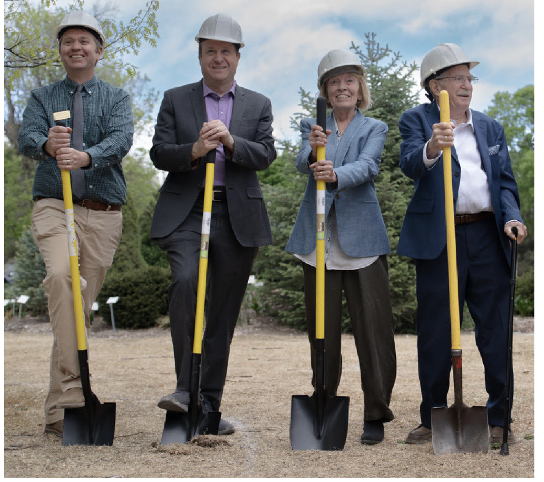
From left: Chad Miller (CSU Trial Gardens director), Colorado Governor Jared Polis, Julie Feinblum, Barney Feinblum.
During his remarks, Governor Polis highlighted the intersection of the state's agricultural heritage and its booming natural products sector.
“This new herb garden is a living laboratory. It will give students really valuable hands-on experience learning about so many applications plants can have to support our health, our well-being, support science and raise awareness,” said Governor Polis. “We are so proud in Colorado of our organic and natural foods industry of which [the Feinblums] were founding icons. I want to thank both of you for this really remarkable gift to the entire state of Colorado. People will come here from all over to see this herb garden.”
Funded by natural foods pioneer Barney Feinblum, former CEO of Celestial Seasonings and Horizon Organic, and his wife, Julie (Jules), this new living classroom will feature a diverse collection of medicinal, culinary, and tea herbs. It is designed to bridge classroom theory with real-world application, giving students hands-on experience with the plants that launched entire industries.
The garden serves as a permanent tribute to Colorado’s status as the “Silicon Valley of natural foods,” tracing its roots back to 1969 when Celestial Seasonings founders Mo Siegel and John Hay began hand-foraging wild herbs in the Rockies.
“Barney’s contributions to advancing natural foods in America are legendary," noted Celestial Seasonings co-founder Mo Siegel in a statement surrounding the dedication. “Imagining and funding an herb garden at CSU is another gift Barney and Jules have given to our state.”
For the Feinblums, the garden represents a way to pass forward what plants have given them: curiosity, purpose, and the confidence to build something meaningful.
“I really believe you can change the world with a few simple plants,” said Feinblum. “That’s why this herb garden at CSU will be a living classroom. Colorado changed our lives, and this is our way of giving back.”
With the site officially dedicated, planting will soon begin, with plans to expand the botanical collections and student impact over time. To learn more or to support the garden’s growth, visit agsci.colostate.edu/hortla/feinblum-herb-garden/.
About Julie & Barney Feinblum
For Barney and Julie Feinblum, the Herb Garden at CSU is both deeply personal and forward-looking. Throughout their lives, plants—and the values they represent—have shaped their family, work and connection to Colorado. Herbs, in particular, played a defining role in Barney’s career in the natural products industry, where, as former CEO of Celestial Seasonings (and also as former CEO of Horizon Organic), he helped lead organizations that changed how Americans think about food, wellness, and the relationship between business and values. By creating a living herb garden for students, the Feinblums hope to pass forward what plants have given them: curiosity, purpose and the confidence to build something meaningful. Their gift reflects a belief that education should be tangible, values-driven, and rooted in the natural world.
About Colorado State University
Colorado State University is Colorado’s land-grant public research university, recognized nationally for excellence in teaching, research, and community engagement. Based in Fort Collins with statewide and urban reach through initiatives such as CSU Spur in Denver and CSU Extension offices across Colorado, the university advances solutions in agriculture, food systems, environmental stewardship, and sustainability. CSU is also known for its award- winning educational landscapes, including the internationally recognized Annual Flower Trial Gardens and the CSU Campus Arboretum and Botanical Garden, which together serve as living laboratories supporting horticultural research, hands-on learning, and public engagement. Through nearly 300 academic programs and a deep commitment to access, innovation, and impact, CSU prepares students to lead with science, values, and purpose in Colorado and beyond. Visit the CSU Flower Trial Gardens' website for more information and follow on Instagram and Facebook.
Media Contact
Steven Hoffman, Compass Natural, steve@compassnatural.com, tel: 303.807.1042
Seedsman Evolves Beyond Seed Retail With Launch of New Global Grower Community
Trusted cannabis genetics leader champions the craft and wellbeing of cultivation through grower-to-grower exchange, shared knowledge, and a new interactive community
BARCELONA, Spain (April 9, 2026) —Seedsman, a global pioneer in cannabis genetics and one of the industry’s most trusted seed retailers, today announced the launch of the Seedsman Community. This new interactive platform marks a natural evolution for the company, moving beyond a cannabis seed superstore to become a more rounded home for genetics, grower knowledge and cultivation culture.
The Seedsman Community, which officially went live this past month, is the clearest expression of the company’s new guiding philosophy: Enrich Life. Rather than a brand slogan, Enrich Life reflects a grower-centered way of thinking that recognizes growing offers far more than an end result. The process of cultivation and improving one's knowledge of gardening and horticulture can bring mindfulness, patience, presence, a deeply satisfying routine, and a stronger sense of connection—both to the natural world and to a wider network of gardeners and growers.
A Natural Evolution of Heritage
For more than two decades, Seedsman has helped shape the cannabis industry through its leadership in genetics, including the early introduction of auto-flowering and CBD varieties to market and its longstanding commitment to preserving heirloom, landrace, and breeder-developed strains from around the world.
Today, Seedsman is building on what it has long stood for. The company is dedicated to making the benefits of cultivation tangible by helping people build knowledge, confidence, skill and connection through better genetics, trusted information and shared experiences.
“Seedsman has always been rooted in a profound respect for cannabis genetics and the growers who bring those genetics to life,” said Tom Raikes, Seedsman founder and CEO. “We believe that gardening does so much more than yield a harvest. It supports mental wellbeing, rewards patience, and provides a deeply satisfying connection to the natural world. Our evolution is about fully supporting that journey and bringing home gardeners, small-scale growers and others together to share the art, the science and the everyday joy of cultivation.”
Growing as Craft and Connection
At the heart of the Enrich Life ethos is the understanding that growing is inherently meaningful. It is not only about practical yields; it is about the ritual, the craft, continuous learning, and the undeniable sense of progress that comes with tending to a plant over time.
Seedsman’s evolution champions this culture. By moving beyond a purely retail focus, the company aims to support cultivators at every stage, helping them to deepen their expertise and find mutual encouragement through grower-to-grower exchange.
The Seedsman Community
Serving as living proof of these values in action, the Seedsman Community is a dedicated space where cultivators from around the world can connect, learn, and grow together.
More than just an add-on forum, the community platform is where the Enrich Life philosophy becomes visible. It features detailed grow journals, shared advice, real grower stories, peer-to-peer knowledge exchange, and a celebration of the craft. Designed for serious cultivators as well as those taking their very first steps in gardening, the platform demonstrates that individual learning is always strengthened by shared experience and mutual encouragement.
“The act of nurturing a plant from seed to harvest gives so much back to the grower,” Raikes added. “It teaches mindfulness, establishes a grounding routine, and offers a tremendous sense of accomplishment. We wanted to create a genuine home for that experience. The Seedsman Community matters because when growers exchange their stories, questions, and successes, everyone's craft improves. We are here to fully support that shared growth.”
The launch reinforces Seedsman’s longstanding mission to preserve and advance cannabis genetics while supporting a more inclusive, knowledgeable, and connected community of growers.
For more information, visit Seedsman.com. Join the Seedsman Community here.
About Seedsman
Seedsman is a global leader in cannabis genetics and seed distribution, founded in 2002 with a mission to preserve, protect and advance the cannabis gene pool. For more than 20 years, Seedsman has served growers worldwide with one of the industry’s most diverse libraries of authentic genetics, including heirloom, landrace, and breeder developed strains. Through its Enrich Life philosophy, Seedsman is expanding its heritage into a comprehensive home for horticulture, cultivation culture and grower education. To learn more, visit www.seedsman.com, join the Seedsman Community at https://community.seedsman.com/. Follow Seedsman on Instagram, Facebook, X, YouTube and Reddit.
Media Contact: Steven Hoffman, Compass Natural, steve@compassnatural.com, tel: 303.807.1042