
ArniPatch’s Drug-Free Hydrogel Patch Redefines Natural Recovery
Homeopathic, drug-free, controlled-release patch provides up to 12 hours of targeted recovery support
IRVINE, Calif. (April 2, 2026) — As recovery continues to be an important and essential part of athletic performance and everyday wellness, ArniPatch™, a natural, homeopathic hydrogel patch developed by LaboFlex, Inc., is emerging as a modern alternative to traditional arnica creams and gels.
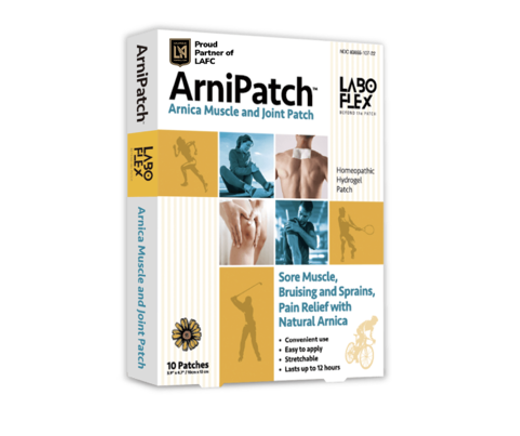
Designed to support recovery from muscle soreness, stiffness, bruising, and everyday strain, ArniPatch delivers Arnica Montana 1X HPUS (1%) through an advanced hydrogel patch system, providing targeted, mess-free comfort for up to 12 hours.
ArniPatch is entering the market at a time when global demand for drug-free, convenience-driven recovery products continues to rise, particularly among athletes and active consumers seeking alternatives to creams, gels, and pills.
The Evolution of Recovery
While arnica has long been used in creams and gels, these formats can present challenges for active individuals, including inconsistent application, short duration, and potential irritation.
ArniPatch addresses these limitations through a controlled-release delivery system that keeps the active ingredient in place over time.
“Traditional topical formats often require repeated application and can be difficult to use during training or travel,” said Dr. Yoon Bum Ham, PhD and R&D Lead at LaboFlex. “ArniPatch was designed to deliver a more consistent, comfortable recovery experience.”
Hydrogel Technology Meets Natural Recovery
ArniPatch utilizes hydrogel patch technology to provide a cooling, soothing experience during recovery. The flexible, skin-friendly patch is designed for extended wear without the mess, odor, or residue associated with creams.
Key features include:
Drug-free and non-drowsy, offering an option for those experiencing “pill fatigue”
Scent-free and menthol-free, suitable for shared environments
Dermatologist tested and designed for comfort during extended wear
HSA/FSA eligible, supporting convenient wellness purchasing
Reference white papers here.
Designed for Active Lifestyles
Developed by LaboFlex, the U.S. subsidiary of Wooshin Labottach, ArniPatch reflects decades of research into plant-based recovery solutions. The patch is intended for use in everyday recovery scenarios, including post-exercise soreness, bruising, and travel-related stiffness.
Unlike creams that wear off quickly, the patch format allows for continuous contact with the skin, supporting a more consistent recovery experience throughout the day or night.
From Professional Sports to Everyday Movement
Natural, drug-free recovery is becoming central not only to elite athletes, but also to individuals maintaining active lifestyles. ArniPatch’s partnership with Los Angeles Football Club (LAFC) reflects this growing focus.
ArniPatch will engage with athletes and fans through upcoming LAFC Fan Fest activations, including:
April 4 vs. Orlando
April 19 vs. San Jose
Aug. 15 vs. San Diego
Oct. 25 vs. Galaxy
About ArniPatch™
ArniPatch™ is a natural, homeopathic hydrogel patch designed to support recovery from muscle pain and stiffness, bruising, sprains, and inflammation. Formulated with Arnica Montana 1X HPUS (1%), ArniPatch delivers targeted, long-lasting comfort for up to 12 hours through advanced hydrogel patch technology that provides cooling and soothing effects. Developed by LaboFlex, Inc., the U.S. subsidiary of Wooshin Labottach—the first company to develop an arnica hydrogel-type patch—ArniPatch represents a modern evolution of traditional topical arnica formulations. With a focus on proven safety, efficacy, and innovation, LaboFlex’s R&D team develops recovery solutions that combine natural ingredients with advanced delivery systems.
ArniPatch is HSA/FSA eligible, offering a convenient option for consumers managing recovery and wellness expenses. More information can be found on the ArniPatch website and purchased at Walmart and on Amazon.com. Follow ArniPatch on Instagram, Facebook, and LinkedIn.
Media Contact
Steven Hoffman, Compass Natural, steve@compassnatural.com, tel: 303.807.1042
Ceremony on April 24 to Honor Natural Foods Pioneers with New Herb Garden at CSU
FORT COLLINS, Colo. (March 31, 2026) — Honoring the state's deep roots in the global natural foods movement, Colorado State University (CSU) will officially break ground on the highly anticipated Julie and Barney Feinblum Herb Garden on Friday, April 24, from 2:00 p.m. to 3:00 p.m. Mountain Time. Located on the CSU main campus in Fort Collins, adjacent to the renowned Annual Flower Trial Garden, this new living classroom will plant the seeds for the next generation of agricultural innovators while celebrating the pioneering Colorado companies that revolutionized how America eats and drinks. The groundbreaking ceremony is open to the media and the public.
Event Details at a Glance:
What: Groundbreaking Ceremony for the Julie and Barney Feinblum Herb Garden
When: Friday, April 24, 2026 | 2:00 p.m. – 3:00 p.m. MT
Where: CSU Main Campus (Adjacent to the Trial Garden), Fort Collins, CO
Attendance: Open to the Media and the Public
Endowed in perpetuity through a generous gift from longtime natural products industry leader Barney Feinblum and his wife, Julie (aka Jules), the herb garden will feature a diverse collection of medicinal, culinary, and tea herbs. Designed to bridge classroom theory with real-world application in agriculture, wellness, and business, the garden will give students the opportunity to see, touch, and study the plants that launched entire industries.

The garden also serves as a permanent recognition of Colorado's unique role as the "Silicon Valley of natural foods." This rich ecosystem of organic and better-for-you brands traces its roots directly back to the 1970s and the creation of Celestial Seasonings. When founders Mo Siegel and John Hay first began hand-foraging wild herbs in the Rocky Mountains in 1969, they sparked a revolution. Their pioneering vision transformed herbal tea from a niche, local hobby into a mainstream wellness staple.
Joined by Barney Feinblum—who started on the factory floor and eventually rose to President and CEO—the Celestial Seasonings team proved that a company could achieve massive national success without compromising its core values of transparency, environmental stewardship, and health. This foundational success paved the way for countless other natural product innovators to launch and thrive in Colorado.
“Barney's contributions to advancing natural foods in America are legendary. While CEO of Celestial Seasonings, he built our first herb garden. Imagining and funding an herb garden at CSU is another gift Barney and Jules have given to our state. They picked the most appropriate university as well. Congratulations Barney, Jules and CSU,” said Celestial Seasonings Co-founder Mo Siegel.
Added John Hay, “Celestial Seasonings was successful mainly due to certain principles that set it apart from most companies: Truth, Beauty and Goodness, and creating a friendly environment for all employees to work in and feel respected. Truth, with the sayings on every box and tea tag, Beauty with the original artwork on every package, and Goodness in the flavors and healthy herbs that created each unique blend of herb tea. Plus, fortunate timing: the New Age generation was a growing culture in the late 1960’s and 70’s when we introduced herb teas, and it was ripe for accepting new, healthy, creative and totally natural products."
“I really believe you can change the world with a few simple plants,” said Barney Feinblum. “Celestial Seasonings did just that. It taught that you don’t have to compromise your values to be successful. You have to make sales and make a profit, but you can do it with values.”
For the Feinblums, the garden represents a way to pass forward what plants have given them: curiosity, purpose, and the confidence to build something meaningful.
“You don’t change the world when you’re my age," Feinblum added. "You do it when you’re a young person just out of college, when you have energy and enthusiasm and want to make the world a better place. That’s why this herb garden will be a living classroom for students. Colorado changed our lives. We built a good life here, and this is our way of giving back.”
Following the groundbreaking ceremony, the Julie and Barney Feinblum Herb Garden will begin planting, with plans to expand its botanical collections, educational programming, and student impact over time.
For more information about the Julie and Barney Feinblum Herb Garden, or to learn how to support the garden’s growth, visit the CSU College of Agricultural Sciences website.
About Julie & Barney Feinblum
For Barney and Julie Feinblum, the Herb Garden at CSU is both deeply personal and forward-looking. Throughout their lives, plants—and the values they represent—have shaped their family, work and connection to Colorado. Herbs, in particular, played a defining role in Barney’s career in the natural products industry, where, as former CEO of Celestial Seasonings (and also as former CEO of Horizon Organic), he helped lead organizations that changed how Americans think about food, wellness, and the relationship between business and values. By creating a living herb garden for students, the Feinblums hope to pass forward what plants have given them: curiosity, purpose and the confidence to build something meaningful. Their gift reflects a belief that education should be tangible, values-driven, and rooted in the natural world.
About Colorado State University
Colorado State University is Colorado’s land-grant public research university, recognized nationally for excellence in teaching, research, and community engagement. Based in Fort Collins with statewide and urban reach through initiatives such as CSU Spur in Denver and CSU Extension offices across Colorado, the university advances solutions in agriculture, food systems, environmental stewardship, and sustainability. CSU is also known for its award- winning educational landscapes, including the internationally recognized Annual Flower Trial Gardens and the CSU Campus Arboretum and Botanical Garden, which together serve as living laboratories supporting horticultural research, hands-on learning, and public engagement. Through nearly 300 academic programs and a deep commitment to access, innovation, and impact, CSU prepares students to lead with science, values, and purpose in Colorado and beyond. Visit the CSU Flower Trial Gardens' website for more information and follow on Instagram and Facebook.
Media Contact
Steven Hoffman, Compass Natural, steve@compassnatural.com, tel: 303.807.1042
Organic Outpaces the Market: Global Sales Hit Record Highs as U.S. Crosses $76B
As the global food and beverage industry navigates economic headwinds, inflation, and climate volatility, one sector is not just surviving—it is redefining the modern food system. According to a wave of newly released 2026 market reports from around the globe, organic is not slowing down; it is structurally pulling ahead of the conventional marketplace. For business executives, the message is clear: Consumer demand for health, transparency, and sustainability has fundamentally transformed from a niche preference into a primary economic driver.
This article first appeared in Presence Marketing’s April 2026 newsletter.
By Steven Hoffman
In an era defined by fluctuating supply chains and evolving consumer behaviors, the organic food and beverage industry continues to demonstrate remarkable resilience. A trio of recently published annual market research reports from the United States, the European Union, and the United Kingdom reveals a sector that is consistently outperforming the broader conventional food market.
Driven by the mainstreaming of "food as medicine," an increased demand for clean ingredients, and a growing commitment to sustainability, global consumers are speaking with their wallets. Yet, as retail sales rise to unprecedented heights, the industry faces structural and supply-side challenges that require strategic foresight from organic food producers.
The Global Perspective: Record Sales Meet Supply Chain Realities
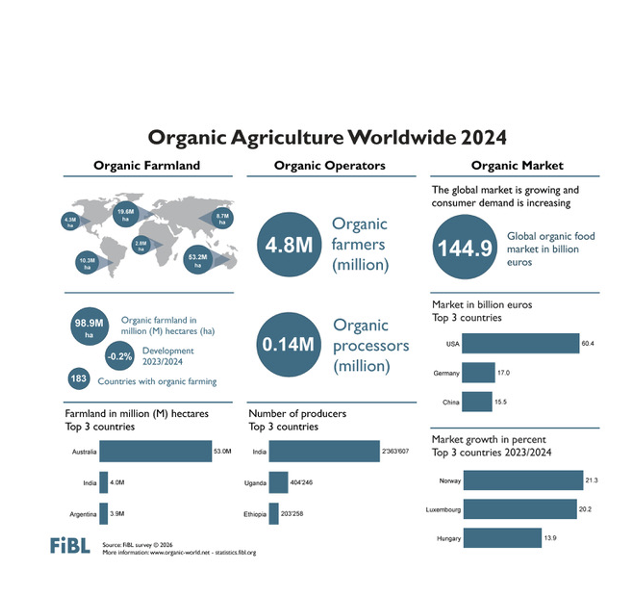
The global organic market has reached yet another milestone. According to The World of Organic Agriculture: Statistics & Emerging Trends 2026, published jointly by the Research Institute of Organic Agriculture (FiBL) and IFOAM Organics International, global retail sales increased 5 percent year over year to nearly 145.0 billion euros ($156.9 billion) in 2024. This represents an all-time high for the sector, pointing to a robust, volume-driven recovery following periods of price-driven inflation.
According to the FiBL and IFOAM data, the global landscape is dominated by a few key powerhouses, though consumption is growing worldwide:
● The United States remains the largest single market for organic food, accounting for 60.4 billion euros ($65.4 billion) in retail sales
● Germany followed as the second-largest global market, generating 17.0 billion euros ($18.4 billion)
● China secured its position as the third-largest market, recording 15.5 billion euros ($16.8 billion) in organic sales
● France represented the fourth-largest market, with sales reaching 12.2 billion euros ($13.2 billion)
When looking at individual consumer habits, Europe remains the epicenter of organic loyalty. Per capita consumption was highest in Switzerland, where consumers spent an average of 481 euros ($521) on organic products in 2024, up from 468 euros the previous year. Denmark followed closely at 373 euros ($404) per person , an increase from 362 euros in 2023. Austria also ranked among the highest, maintaining a steady per capita consumption of 292 euros ($316) year-over-year. Meanwhile, the United States ranked eighth globally, with a per capita organic consumption of 176 euros ($190) in 2024.
However, the FiBL and IFOAM report reveals a dichotomy between soaring consumer demand and agricultural realities. In 2024, almost 98.9 million hectares (244.4 million acres) of agricultural land were organic, including in-conversion areas. This represented 2.1 percent of the world's total agricultural land. Yet, for the first time in years, organic farmland saw a slight contraction, decreasing by 176,000 hectares (434,904 acres), or 0.2 percent compared to the previous year.
This stabilization in acreage is largely attributed to shifting regulatory landscapes—such as the implementation of the new EU Organic Regulation (EU) 2018/848—as well as market disruptions stemming from the energy crisis, rising input costs, and climate variability that delayed farmer conversions. Extreme weather events have heavily impacted key export sectors, specifically commodities like coffee and cocoa. For executives, this signals a critical mandate: securing resilient, long-term supply chains and investing in farmer transition programs will be essential to meeting future demand.
The distribution of organic farmland highlights the global nature of the supply chain:
● Oceania accounted for the majority of organic land, with 53.2 million hectares (131.4 million acres) (Australia accounts for >99 percent of the total organic agricultural land in the entire Oceania region)
● Europe followed with 19.6 million hectares (48.4 million acres)
● Latin America held 10.3 million hectares (25.4 million acres)
● Asia managed 8.7 million hectares (21.5 million acres)
● North America accounted for 4.3 million hectares (10.6 million acres)
● Africa represented 2.8 million hectares (6.9 million acres)
Despite the slight dip in acreage, the human footprint of the organic movement expanded. The global number of organic producers increased to 4,844,872 in 2024. India reported the highest number of organic producers globally, with 2,363,607 farmers. Uganda followed with 404,246 producers. Ethiopia ranked third, registering 203,258 organic producers.
The U.S. Market Surge: Crossing the $76 Billion Mark
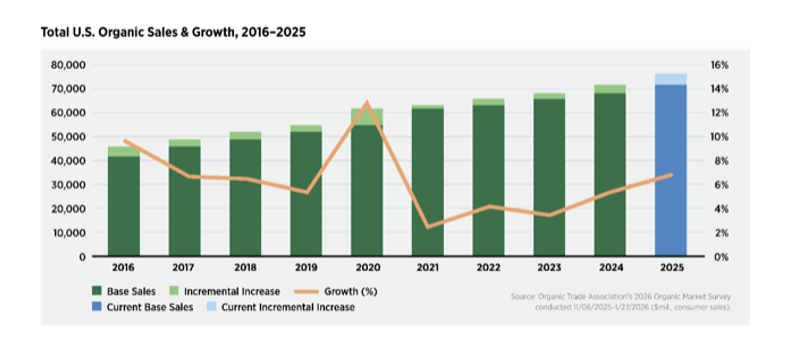
In the United States, organic is not just growing; it is redefining the marketplace. According to the 2026 Organic Market Report published by the Organic Trade Association (OTA) on March 4, 2026, U.S. sales of certified organic products reached a record $76.6 billion in 2025.
The data illustrates a sector that is structurally outpacing conventional food. Total U.S. organic sales grew by 6.8% year-over-year, effectively doubling the 3.4 percent growth rate of the overall marketplace. Organic food sales alone hit $70.1 billion, up 6.9 percent and growing three times faster than the overall food market's sluggish 2.3 percent growth.
As has historically been the case, the produce aisle remains the primary gateway for U.S. consumers entering the organic lifestyle. Organic produce accounted for $22.7 billion in sales, representing roughly 30 percent of total organic food sales. Growth within this category was robust, with berries up 10.5 percent, citrus climbing 18.1 percent, and bananas seeing a 12.6 percent boost.
However, the most striking shift in the American diet is occurring in the protein sector. Organic beef has emerged as the fastest-growing segment in the industry, skyrocketing by an astonishing 44.3 percent. This indicates a profound evolution in consumer priorities, where shoppers are increasingly willing to pay a premium for meat products that align with their ethical, environmental and health values. Organic dairy and eggs also saw impressive gains, growing 12.8 percent to reach $9.6 billion.
The concept of "food as medicine" seems to have firmly transitioned from a fringe trend to mainstream consumer behavior. This is most evident in the organic beverage category, which reached $10.2 billion in sales (up 7.2 percent), driven heavily by demand for functional benefits and clean-ingredient profiles. Furthermore, shelf-stable, value-driven organic goods—such as dried beans, fruits, and vegetables—experienced a 13.6 percent surge, proving that shoppers are finding ways to integrate organic staples into their pantries, even amid economic pressures.
As the OTA notes, consumers are consistently choosing trust over price, relying heavily on the USDA Organic seal. If this current trajectory holds, the U.S. organic sector crossing the $100 billion threshold by 2030 is very much within reach.
Import Dependencies: Closing the Supply-Demand Gap
While the U.S. dominates global consumption, its reliance on international trade highlights a critical vulnerability and an opportunity for industry stakeholders. Because domestic organic acreage remains under 1 percent of total U.S. farmland, domestic supply falls significantly short of demand.
The U.S. tracked $5.7 billion in organic imports in 2024. The volume of organic imports into the United States reached 3.25 million metric tons, an increase of 17.7 percent compared to the previous year. Combined, the imports of organic products into the European Union and the United States reached nearly 5.89 million metric tons in 2024.
According to The World of Organic Agriculture 2026 report published by FiBL and IFOAM Organics International, the top exporters supplying these large western markets were Mexico, with 865,076 metric tons; Ecuador, with 765,605 metric tons; and Canada, with 378,820 metric tons. The commodities driving this international trade network highlight consumer reliance on tropical and feed products:
● Bananas were the most imported organic product, totaling 1,365,512 metric tons
● Oilcakes accounted for 593,753 metric tons of total imports
● Sugar represented 535,699 metric tons of the organic imports
The reliance on imported organic feed crops is particularly stark. For instance, U.S. organic soy supply currently meets only about one-third of domestic demand, requiring substantial imports to support the booming organic livestock and poultry sectors.
Complicating this reliance on imports is a rapidly shifting geopolitical landscape. As noted in the FiBL and IFOAM report, earlier U.S. trade policies introduced significant volatility into the supply chain, as President Trump’s tariffs “are having a negative effect on agricultural food imports, more so on the organic sector, as it is heavily dependent on imported raw materials."
The legal and economic reality for organic importers shifted dramatically in early 2026 when the Supreme Court ruled in a 6-3 decision that the International Emergency Economic Powers Act (IEEPA) did not authorize the President to impose sweeping tariffs, effectively striking down the measures, as reported by SCOTUSblog. However, the relief for the organic supply chain was short-lived. Within hours of the ruling, the administration invoked Section 122 of the Trade Act of 1974 to impose a new temporary 10 percent across-the-board global tariff, according to an analysis by the Peterson Institute for International Economics (PIIE).
This rapid pivot means the organic sector continues to face elevated taxes on imported raw materials and feed grains. Furthermore, because these new Section 122 tariffs are temporary—set to expire after 150 days—the environment remains unstable. This forces organic businesses to make critical pricing and supply chain decisions against a backdrop of extreme trade policy volatility.
Complicating matters further is the prospect of potential refunds. Because the Court ruled the IEEPA tariffs were collected illegally, importers may be entitled to recoup billions of dollars in costs. But as Justice Brett Kavanaugh noted in his dissent, the process of refunding these tariffs is likely to be a "mess," leaving organic businesses to navigate complex litigation to recover funds, as highlighted by SCOTUSblog.
Ultimately, because the administration quickly replaced the struck-down tariffs with new ones, overall tariff rates remain similar to their previous levels. Organic businesses continue to face high input costs, which will likely still be passed on to consumers at the grocery store. For C-suite executives, investing in domestic transition programs and expanding local infrastructure is no longer just a marketing win; it is a vital survival strategy for supply chain security in an era of unpredictable trade policy.
The U.K. Perspective: Growth Outpaces Non-Organic
The story of organic resilience extends across the Atlantic. According to the Organic Market Report 2026 published by the Soil Association, and reported by Wicked Leeks on March 19, 2026, 83 percent of U.K. households now purchase organic products.
Despite enduring a severe cost-of-living crisis and rampant food inflation, the U.K. organic market's growth has successfully outpaced the non-organic sector. This trend underscores a broader European and global realization: organic is no longer viewed as an expendable luxury by the majority of consumers. Instead, it is increasingly seen as a non-negotiable investment in personal health, animal welfare and environmental stewardship.
Strategic Takeaways
The convergence of data from FiBL, IFOAM, the OTA, and the Soil Association paints a picture of an industry at an inflection point. Organic is no longer simply growing; it is actively restructuring the modern food system. For business leaders in the natural and organic space, several key directives emerge from these 2026 reports:
1. Capitalize on the Protein and Beverage Boom: While produce remains the foundation of organic retail, the aggressive 44.3 percent growth in U.S. organic beef and the $10.2 billion beverage market point to the next major battlegrounds. Innovating in the functional beverage space and expanding organic protein offerings will be critical for capturing premium consumer dollars.
2. Invest in Supply Chain Resilience: The slight 0.2 percent global decrease in organic farmland paired with record-breaking consumer demand is a recipe for future supply shortages. Brands must proactively partner with growers, offer transition incentives, and secure long-term contracts, particularly for high-risk commodities including coffee, cocoa and feed grains.
3. Lean into Transparency: With consumers navigating a crowded landscape of sustainability claims, the rigorous, third-party verification of the USDA Organic and equivalent international seals remains the gold standard. Brands that clearly communicate the holistic benefits of organic—from soil health to clean ingredients—will continue to win on consumer trust.
As the data makes clear, the global organic market has transitioned from an alternative niche to a dominant force. Executives who align their sourcing, product development, and marketing strategies with this reality will be best positioned to lead the industry as it marches toward the $100 billion milestone and beyond.
Steven Hoffman is Managing Director of Compass Natural Marketing, a strategic communications and brand development agency serving the natural and organic products industry. Learn more at www.compassnatural.com.
Nude Foods Market Demonstrates Strong Growth After Shark Tank Appearance
Colorado-based zero-waste grocer proves packaging-free model can compete at scale — while expanding footprint, growing customer base & avoiding 1.5M pieces of plastic
BOULDER, Colo. (March 24, 2026) — Nude Foods Market, the Colorado-based, female-founded grocery company eliminating single-use plastic from everyday shopping, is gaining national traction following its appearance on ABC’s Shark Tank, which aired March 11.
Co-founders Verity Noble and Rachel Irons secured investment commitments from Kevin O’Leary and Robert Herjavec after pitching a bold vision: a grocery store where packaging waste is eliminated and food is delivered in returnable, reusable containers.
“This wasn’t just a pitch for our business — it was a pitch for a better food system,” said Noble. “We’re proving that a grocery store can operate competitively while dramatically reducing waste.”
A Growing Model Addressing a Massive Waste Problem
The company’s rise comes amid increasing awareness of the scale of the U.S. waste crisis. The average American produces approximately 1,704 pounds of trash each year, which is equivalent to tens of millions of garbage trucks annually, much of it driven by single-use packaging.
Nude Foods Market is working to reverse that trend. Since launching, the company has prevented more than 1.5 million pieces of plastic from being created by replacing conventional packaging with returnable glass jars and reusable containers.
Customers shop much as they would in a traditional grocery store, but instead of discarding packaging into landfill, they return it to be cleaned and reused hundreds of times.
Scaling a Zero-Waste Grocery Model
Founded in Boulder in 2020, Nude Foods Market has expanded to a second brick-and-mortar location in Denver, alongside a growing e-commerce and delivery operation serving the Boulder–Denver metro area. Select sustainable home bundle products are also available for nationwide shipping.
The company now carries more than 1,500 hand-selected products, with more than 40% sourced locally from Colorado producers. Nude Foods works directly with these partners to eliminate packaging entirely by providing reusable containers that are returned, cleaned and refilled in a closed-loop system.
“This is where we’re seeing real innovation,” said Irons. “We’re not just removing plastic at the store level — we’re working with producers to eliminate it across the supply chain.”
Local offerings include a wide range of everyday staples, from tortilla chips, granola and fresh bread to broths, prepared foods, personal care items and more, all delivered without single-use packaging.
Designed for Convenience, Built for Regeneration
Nude Foods Market’s model is built on the belief that sustainability must be convenient to scale. The company purchases products in bulk to reduce upstream packaging, prioritizes compostable and recyclable materials when needed, and offsets minimal plastic through recycling partners such as Ridwell.
Operations have also evolved to support growth while minimizing environmental impact. What began as a bike-delivery model has expanded to include electric vehicles for store transport, alongside partnerships with local delivery services to optimize routes and reduce emissions.
Every product is vetted to meet the company’s standards for ingredient quality and sustainable sourcing, with a focus on supporting regenerative agriculture and local food systems.
“Our goal is to create a food system that improves the health of our land, our communities and ourselves,” Irons said.
Strong Performance in a Challenging Retail Landscape
At a time when independent grocers face mounting economic pressures, Nude Foods Market is demonstrating that a low-waste model can also be a high-performing business. The company has built a loyal and growing customer base, supported by a highly differentiated retail experience and strong community engagement.
To date, Nude Foods has raised nearly $600,000 through community crowdfunding, turning customers into investors and advocates for a more sustainable food system.
The company has also been recognized nationally for its innovation, including being named among the Top Independent Grocers in the United States by Progressive Grocer.
A Cultural Shift Toward Plastic-Free Living
Nude Foods Market’s momentum aligns with a broader cultural shift as consumers increasingly question the health and environmental impacts of plastic. A newly released Netflix documentary, The Plastic Detox, exploring the global plastic crisis, has intensified public awareness and positioned the company and its founders as emerging voices in the shift toward packaging-free retail.
“In the beginning, food didn’t come wrapped in plastic — it was grown, shared and consumed within communities,” said Noble. “We’re not inventing something entirely new. We’re bringing food back to a more natural, responsible state, updated for how people live today.”
Looking Ahead
With new investment, national visibility from Shark Tank and growing consumer demand, Nude Foods Market is focused on expanding across Colorado’s Front Range and into new markets.
The company’s mission remains clear: to make zero-waste grocery shopping the new standard, without sacrificing convenience, quality or scale.
About Nude Foods Market
Nude Foods Market is a Colorado-based, female-founded grocery company on a mission to eliminate single-use plastic from everyday shopping. By offering local, organic and regeneratively sourced foods in returnable, reusable packaging, Nude Foods makes zero-waste grocery shopping convenient and accessible. With more than 1,500 products, a growing retail and e-commerce presence, and over 1.5 million pieces of plastic avoided, the company is redefining the future of grocery: transparent, regenerative and designed to nourish both people and the planet. Consumers can shop Nude Foods Market in Boulder and Denver, or order online for local delivery and select nationwide shipping at www.nudefoodsmarket.com. Follow on Instagram and Facebook.
Media Contact
Steven Hoffman, Compass Natural, steve@compassnatural.com, tel: 303.807.1042
Edward & Sons Unveils a Fresh Look, Honoring Nearly 50 Years of Organic Leadership
Visit Edward & Sons at the 45th Annual Natural Products Expo West at Booth #829, North Hall, Level 100, March 4-6, 2026, at the Anaheim Convention Center in Anaheim, CA
CARPINTERIA, Calif. (Feb. 17, 2026) – Edward & Sons Trading Company Inc. today announced the unveiling of a refreshed brand identity, set to debut at Natural Products Expo West. The update reflects the company’s evolution as a women-owned leader in organic, natural and plant-based convenience foods, modernizing its look while staying true to the values that have guided the company for nearly five decades.
Founded in 1978, Edward & Sons has played a defining role in shaping natural and organic pantry staples in American kitchens, with a focus on organic, vegan, vegetarian, gluten-free, and globally inspired foods. The refreshed brand represents a thoughtful evolution designed to resonate with today’s health-conscious consumers while preserving the trust, integrity, and values that have guided Edward & Sons for nearly five decades.
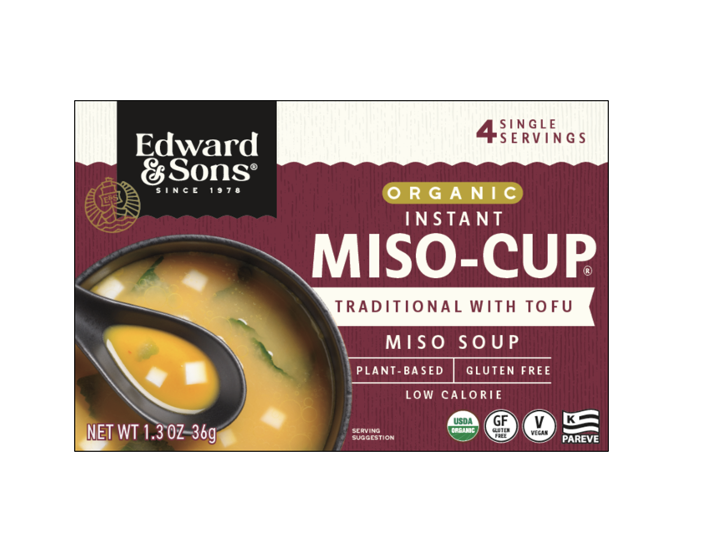
At the heart of the update is a refreshed presentation and a clearly defined family of brands, highlighting the connection between Edward & Sons®, Native Forest®, and Let’s Do Organic®. The thoughtful evolution honors the company’s longstanding commitment to Convenience Without Compromise® while introducing design enhancements that make its trusted products more accessible and discoverable for today’s shoppers.
“For nearly five decades, Edward & Sons has earned the trust of consumers and retail partners alike,” said Liz Dee, CEO of Edward & Sons. “This refreshed identity is not about changing who we are – it reflects our commitment to showing up with greater clarity and renewed visual vibrancy while strengthening the foundation that supports our next chapter of growth. As a family business, we think in generations, not quarters, and this work ensures Edward & Sons remains an enduring partner for decades to come.”
Category-Defining Innovation, Recognized by the Industry
Edward & Sons’ commitment to innovation continues to earn industry recognition. The brand’s Pad See Ew organic whole grain, gluten free brown rice noodles was named as a NEXTY Award finalist, one of the natural products industry’s most respected honors. The NEXTY Awards recognize the most progressive, innovative, inspiring, and trustworthy products— spotlighting brands that are shaping the future of natural and organic food. The finalist distinction underscores Edward & Sons’ ability to deliver globally inspired flavors while meeting today’s standards for clean ingredients, transparency, and convenience.
Throughout its history, Edward & Sons has been a category leader, introducing products that helped define modern American pantry staples—including Miso Cup, the first instant miso soup, and the first organic coconut milk. The refreshed brand builds on that legacy of innovation, reinforcing Edward & Sons’ leadership in plant-based and organic convenience foods that prioritize quality, taste, ethical sourcing, and accessibility.
Expo West Big Reveal
Edward & Sons will officially debut its refreshed brand identity at the 45th Annual Natural Products Expo West, Booth N829, North Hall Level 100, March 4-6, 2026, at the Anaheim Convention Center in Anaheim, Calif., continuing its long-standing presence there since the inaugural show.
Media are invited to schedule booth visits or meetings in advance by emailing steve@compassnatural.com
About Edward & Sons®
Edward & Sons Trading Company, Inc. is an independently owned, second generation family food business based in Carpinteria, California. Since 1978, Edward & Sons has offered a distinctive portfolio of plant-based, natural, organic, and sustainably sourced grocery brands—including Native Forest®, Let’s Do Organic®, and more. Committed to ethical sourcing and environmental stewardship, Edward & Sons provides nourishing foods that support both local communities and the planet. The company proudly partners with retailers across North America to deliver Convenience Without Compromise®. Edward & Sons products can be found wherever natural foods are sold. To learn more, visit EdwardandSons.com and search the Store Locator or Online Retailers list to find products near you. Follow on Instagram, TikTok and Facebook.
Media Contact: Steven Hoffman, Compass Natural, steve@compassnatural.com, tel 303.807.1042
ArniPatch™ Announces Partnership With Major League Soccer's Los Angeles Football Club
Natural, drug-free, homeopathic hydrogel patch brings science-forward recovery support to professional athletes and active Angelenos
LOS ANGELES (Feb. 12, 2026) — ArniPatch™, a natural, homeopathic hydrogel patch designed to support muscle recovery, today announced a new partnership with Los Angeles Football Club (LAFC). As a Proud Partner of LAFC, the collaboration brings ArniPatch’s science-forward recovery technology to one of Major League Soccer’s most dynamic teams, reinforcing a shared commitment to performance, innovation, and community.
“Today’s athletes are increasingly focused on recovery as a critical part of performance,” said Tack Soo Nam, Founder of LaboFlex, Inc., the U.S. subsidiary of Wooshin Labottach, and the company behind ArniPatch. “Our partnership with LAFC reflects a shared belief that recovery should be effective, safe, and accessible not only for professional athletes, but for anyone leading an active lifestyle.”
Bringing Recovery to the Heart of the LAFC Community
The partnership will officially kick off at LAFC x Inter Miami Fan Fest, a season-opening celebration bringing together players, supporters, and partners for an afternoon centered on sport, culture, and community.
The Fan Fest will take place on Saturday, February 21, 2026, from 2:00–6:00 p.m. at Christmas Tree Lane Park in Los Angeles. Designed as a high-energy pre-match experience, the event offers fans an opportunity to engage with the LAFC community ahead of the upcoming season.
As part of the event, ArniPatch will host an on-site booth featuring interactive fan experiences, including:
Traditional Korean games
Prizes and giveaways
Free ArniPatch samples for attendees
Additional event details and updates will be shared via ArniPatch’s social channels. Fans are encouraged to follow @arnipatch_us for the latest information as the event approaches.
Building on the momentum of the season-opening Fan Fest, ArniPatch will continue to engage fans through select LAFC Fan Fest activations and match-day touchpoints throughout the 2026 season—bringing professional-grade recovery tools closer to the broader LAFC community, including:
LAFC vs. San Jose — April 19 at BMO Stadium-Christmas Tree Lane Park
LAFC vs. San Diego — August 15 at BMO Stadium-Christmas Tree Lane Park
LAFC vs. Galaxy — October 25 at BMO Stadium-Christmas Tree Lane Park
Performance Recovery, Reinvented
ArniPatch represents a modern evolution of traditional Arnica Montana, delivering homeopathic arnica through a hydrogel patch designed for prolonged comfort and consistent support. Unlike creams or gels that can wear off quickly or irritate the skin, ArniPatch uses a controlled-release hydrogel system that provides relief for up to 8-12 hours.
Developed by LaboFlex’s specialized R&D team, ArniPatch combines:
Arnica Montana 1X HPUS (1%), a natural ingredient traditionally used to support recovery from bruising, swelling, and muscle soreness
Hydrogel patch technology for cooling and soothing effects
Elastic fabric construction for comfort and ease of application
A drug-free, scent-free, low-risk option suitable for athletes and individuals experiencing “pill fatigue”
Designed to support recovery and not just mask pain, ArniPatch helps address the body’s inflammatory response while offering a cleaner, safer topical alternative.
Trusted by Athletes, Designed for Real-World Recovery
ArniPatch is commonly used in scenarios such as post-match recovery, travel stiffness, post-manual therapy care, and ongoing management of high-load areas during training cycles. Its gentle adhesion is intentionally engineered to prioritize skin comfort, making it well-suited for extended wear, though adhesion may vary in high-movement areas.
“ArniPatch’s innovative approach to performance makes them a perfect partner for LAFC. We’re always looking to collaborate with brands that share our ambition to elevate the fan and player experience, and ArniPatch embodies that mindset,” said Terry Tsouratakis, Vice President of Corporate Partnerships for the Los Angeles Football Club.
Recovery for the Community
Beyond the pitch, the partnership underscores LAFC’s role as a cultural force in Los Angeles and ArniPatch’s mission to make pro-level recovery tools accessible to everyday athletes, from weekend soccer players and runners to cyclists and gym-goers.
“LAFC brings together sport, culture, and community, and we’re excited to be part of that energy,” said Nam. “ArniPatch is here to support recovery not just for players, but for the fans and active Angelenos who live life in motion.”
About ArniPatch™
ArniPatch™ is a natural, homeopathic hydrogel patch designed to support recovery from muscle pain and stiffness, bruising, sprains, and inflammation. Formulated with Arnica Montana 1X HPUS (1%), ArniPatch delivers targeted, long-lasting comfort for up to 12 hours through advanced hydrogel patch technology that provides cooling and soothing effects. Developed by LaboFlex, Inc., the U.S. subsidiary of Wooshin Labottach—the first company to develop an arnica hydrogel-type patch—ArniPatch represents a modern evolution of traditional topical arnica formulations. With a focus on proven safety, efficacy, and innovation, LaboFlex’s R&D team develops recovery solutions that combine natural ingredients with advanced delivery systems.
ArniPatch is FSA/HSA eligible, offering a convenient option for consumers managing recovery and wellness expenses. More information can be found on the ArniPatch website and purchased at Walmart and on Amazon.com. Follow ArniPatch on Instagram, Facebook, and LinkedIn.
About Los Angeles Football Club
The 2022 MLS Cup Champion Los Angeles Football Club (LAFC) has represented the greater Los Angeles area in Major League Soccer since 2018. The two-time Supporters' Shield Champions (2019, 2022) and 2024 U.S. Open Cup Champions, LAFC is dedicated to building a world-class soccer club that represents the diversity of Los Angeles and is committed to delivering an unrivaled experience for fans. LAFC’s ownership group is comprised of local leaders and innovators of industry with intellectual capital, financial prowess, operations expertise, and success in the fields of entertainment, sports, technology, and media. LAFC is invested in the world’s game and Los Angeles, constructing and developing the 22,000-seat BMO Stadium and a top-flight training center on the campus of Cal State Los Angeles.
Media Contact: Steven Hoffman, Compass Natural, steve@compassnatural.com, tel: 303.807.1042
Colo. Natural Products Legacy Julie & Barney Feinblum Herb Garden to Take Root at CSU
Inspired by decades of values-driven leadership in the natural foods movement, the garden will celebrate the power of plants and serve as a living classroom for students and the community.
FORT COLLINS, Colo. (Feb. 11, 2026) — Colorado State University is proud to announce the creation of the Julie and Barney Feinblum Herb Garden, a new, endowed, living classroom that will celebrate Colorado’s influential role in the natural, organic and herbal products movement while educating future generations of students through hands-on plant science.
Endowed in perpetuity through a gift from longtime natural products industry leader Barney Feinblum and his wife, Julie, the herb garden will honor Colorado’s natural products industry by featuring medicinal, culinary, and tea herbs and serve as a tangible bridge between education, research, history and industry.
“I really believe you can change the world with a few simple plants,” Feinblum said. “Celestial Seasonings did just that.”
Feinblum would know. In fact, he helped shape the natural and organic food movement long before it entered the mainstream. After training as an industrial engineer at Cornell University, he moved to Colorado in the early 1970s, where he earned an MBA in finance and met his future wife, Julie. A dedicated natural products enthusiast, Julie encouraged Barney to take a job at Celestial Seasonings, which at the time was still a small herbal tea startup business. His role grew over the next several years from managing the factory floor to serving as CEO, where he helped build Celestial Seasonings into a national brand.
“What Celestial Seasonings taught me was that you don’t have to compromise your values to be successful,” Feinblum said. “You can make sales and make a profit and still lead with truth, beauty and goodness.”
Those values continued to guide Feinblum’s career when he later became CEO of Horizon Organic, where he helped introduce the first national brand of organic milk in the United States—transforming the dairy industry by proving that consumers would invest in their values.
Building on the Land Grant University Ethos
That same belief—where science, education, business, and values reinforce one another—eventually brought the Feinblums to Colorado State University. There, at the main campus in Fort Collins and the new Denver Spur Campus, they were struck by the university’s world-class facilities, research, and innovation in agriculture and food systems—and by one notable absence.
“I remember thinking, this is the perfect place for an herb garden,” Barney said. “As a land-grant university so deeply connected to agriculture and the environment, it felt like a natural next step.”
This became the seed for the Julie and Barney Feinblum Herb Garden, which will be built adjacent to CSU’s existing “Trial Garden.” Spanning nearly three acres on the university’s main campus in Fort Collins, the Trial Garden evaluates more than 1,000 plant varieties on an annual basis, and is one of Northern Colorado’s top visited destinations.
Recognizing Colorado’s Natural and Herbal Products Legacy
As Colorado’s land-grant university, and a national leader in agriculture, veterinary medicine, and food science, CSU is uniquely positioned to house an herb garden that honors the state’s outsized role in shaping how America eats. The garden will recognize Colorado’s natural products community while giving students the opportunity to see, touch, and study the plants that launched entire industries—from tea and herbal medicine to functional foods.
“You don’t change the world when you’re my age,” Barney Feinblum said. “You do it when you’re young and when you have energy, enthusiasm and a desire to make the world better. That’s why this garden matters. It’s a living classroom.”
For Feinblum, the garden also represents gratitude and giving back. “Colorado changed my life,” he said. “We built a good life here, and we want to give back to the state that gave us so much.”
Looking ahead, Feinblum hopes the garden will grow into one of the nation’s leading herb collections, supported not only by his family but by the broader natural products community. “In the end, values, science, and entrepreneurship can coexist. You can have values and character in business and still change the world. All you need are a few plants.”
Groundbreaking ceremonies for the new herb garden at the CSU main campus in Fort Collins are planned for April 2026.
Help This Garden Grow
The Julie and Barney Feinblum Herb Garden will be designed to evolve by expanding its plant collections, educational programming, and student impact over time. While endowed in perpetuity, its long-term vision depends on a broader community of supporters who believe in the power of plants, science, and values-driven leadership.
There are many ways to be part of this living legacy:
Support student learning through experiential education and research
Honor Colorado’s natural products community and its pioneering role in shaping how we eat and live
Help expand one of the nation’s leading university-based herb collections
Whether you are an alumnus, industry leader, grower, researcher, or simply someone who believes that small plants can spark big change, your support helps ensure this garden continues to inspire future generations. Click here to learn more about how to contribute.
About Julie & Barney Feinblum
For Barney and Julie Feinblum, the Herb Garden at CSU is both deeply personal and forward-looking. Throughout their lives, plants—and the values they represent—have shaped their family, work and connection to Colorado. Herbs, in particular, played a defining role in Barney’s career in the natural products industry, where, as former CEO of Celestial Seasonings (and also as former CEO of Horizon Organic), he helped lead organizations that changed how Americans think about food, wellness, and the relationship between business and values. By creating a living herb garden for students, the Feinblums hope to pass forward what plants have given them: curiosity, purpose and the confidence to build something meaningful. Their gift reflects a belief that education should be tangible, values-driven, and rooted in the natural world.
About Colorado State University
Colorado State University is Colorado’s land-grant public research university, recognized nationally for excellence in teaching, research, and community engagement. Based in Fort Collins with statewide and urban reach through initiatives such as CSU Spur in Denver and CSU Extension offices across Colorado, the university advances solutions in agriculture, food systems, environmental stewardship, and sustainability. CSU is also known for its award- winning educational landscapes, including the internationally recognized Annual Flower Trial Gardens and the CSU Campus Arboretum and Botanical Garden, which together serve as living laboratories supporting horticultural research, hands-on learning, and public engagement. Through nearly 300 academic programs and a deep commitment to access, innovation, and impact, CSU prepares students to lead with science, values, and purpose in Colorado and beyond. Visit the CSU Flower Trial Gardens' website for more information and follow on Instagram and Facebook.
Media Contact: Steven Hoffman, Compass Natural, steve@compassnatural.com, tel 303.807.1042
Non-UPF Verified Sets a New Standard for Ultra-Processed Foods
This article first appeared in the December 2025 issue of Presence Marketing’s newsletter.
By Steven Hoffman
In mid-November, an international team of 43 scientists released a landmark series of papers in The Lancet concluding that ultra-processed foods (UPFs) now pose a “clear global threat” to public health. Drawing on more than 100 long-term studies, Reuters reported that the series links higher UPF intake to increased risk of obesity, Type 2 diabetes, cardiovascular disease, cancer, depression, and all-cause mortality.
Coverage in outlets from The Guardian and ABC News to NPR underscores the gravity of the findings. One analysis noted that UPFs are associated with harm to every major organ system in the body, and that these products are rapidly displacing fresh and minimally processed foods worldwide. University of North Carolina nutrition researcher and Lancet series coauthor Barry Popkin told NPR, “We can say now that truly ultra-processed food represents a clear global threat to our health—not only our physical health but also mental health in terms of its impacts on depression.”
At the same time, a growing body of consumer and market research points to a widening trust gap. Many shoppers want to avoid UPFs but say they can’t easily tell what qualifies. A recent New York Times Well column explored why ultra-processed products are so hard to resist and so ubiquitous in modern diets, and highlighted the way industrial formulations can override normal satiety signals and blur the line between “food” and “edible product.”
Against this backdrop, the Non-GMO Project’s new Non-UPF Verified Standard lands at a pivotal moment for CPG brands, retailers, and the entire natural and organic products ecosystem.
From GMOs to UPFs: The Non-GMO Project widens its lens
On Nov. 12, the Non-GMO Project formally announced Version 1.0 of its Non-UPF Verified Standard, described as “the nation’s first comprehensive framework” for defining and verifying foods that are not ultra-processed, and called it the “first Non-UPF Verified standard to address the ultra-processed foods crisis.”
The new certification builds on the Non-GMO Project’s 18-year record of third-party verification and its iconic butterfly seal, now found on more than 63,000 products that represent an estimated $50 billion in annual sales.
“Around the world, more people are waking up to the realization that much of what fills our grocery carts is no longer truly food,” said Megan Westgate, founder and CEO of the Non-GMO Project and Non-UPF Verified, at a recent webinar unveiling the new standard. “Doctors and researchers increasingly describe these products as ‘processed edible substances’—industrial formulations engineered for palatability and shelf life rather than nutrition.”
Westgate is careful to say this is not an attack on processing per se. As she told Food Business News: “Processing itself isn’t the enemy. It’s how and why it’s done that matters. The Non-UPF Standard defines a middle ground where convenience and nourishment can genuinely coexist.”
In practice, that “middle ground” is defined by a rigorous ingredient and processing criteria, which are detailed in the Non-UPF Verified Standard v1.0.
Why ultra-processed foods are under fire
The Lancet series and surrounding news coverage sharpen a distinction many in the natural channel have understood for decades: It’s not just what’s in food, but also how it’s made.
The Guardian’s coverage of the Lancet research noted that more than half of the average diet in the U.S. and U.K. now consists of UPFs, with some low-income and younger populations getting up to 80% of their calories from these products. Citing CDC data, ABC News reported that Americans on average consume over half of their daily calories from UPFs.
The Lancet authors point to several mechanisms by which UPFs drive harm:
Disrupted food structure and “hyper-palatability” that encourage overeating and rapid absorption of refined starches and sugars.
High levels of added sugar, sodium, and unhealthy fats.
Widespread use of cosmetic additives and ultra-refined ingredients, some of which may alter gut microbiota or expose consumers to contaminants such as phthalates.
Aggressive marketing and product design that exploit biological reward pathways, particularly in children (MAHA Commission).
In the NPR report, Lancet series coauthor Marion Nestle, professor emerita of nutrition and food studies at NYU and author of “Food Politics,” drew a direct line between the science and the need for policy and marketplace action. She noted that some countries, including Chile, have already shown that warning labels, marketing restrictions, and school food reforms can curb UPF intake. “It’s time to take on the industry,” Nestle said. “They’ve got to stop.”
The Lancet series and recent media reporting all make the point: Ultra-processed foods are not just one more dietary risk factor. They are a structural driver of global chronic disease—and the food system will not change without clear definitions, strong incentives, and credible labels.
‘Disconnected’: What consumers are telling us
In October, the Non-GMO Project released a consumer research report titled “Disconnected,” which summarized the attitudes of U.S. shoppers toward UPFs and the modern food system. Some of the topline numbers from “Disconnected” and related research are striking:
A 2024 Non-GMO Project survey found that 85% of Americans want to avoid ultra-processed foods, but most say they feel overwhelmed and unsupported in trying to do so.
Internal research from the Non-GMO Project’s Food Integrity Collective showed that 68% of shoppers actively try to avoid UPFs, and 70% say they need clearer labeling or third-party verification.
New Hope Network reported that 72% of Americans say they are trying to avoid ultra-processed foods, signaling a powerful demand across mainstream and natural retail.
“Disconnected” emphasized that consumers feel the food system is “out of their hands” — dominated by large corporations using engineered ingredients that are disconnected from natural food sources.
In other words, shoppers are ahead of policy. They are already looking for ways to opt out of UPFs, but they lack tools they can trust. That, more than anything, is the market gap the Non-UPF Verified Standard aims to fill.
The architecture of the Non-UPF Verified Standard
The Non-UPF Verified Standard approaches ultra-processing through two essential frameworks: ingredient integrity and formulation, and processing limits.
1. Ingredient integrity and formulation
The standard targets ingredients that are either emblematic of ultra-processed formulations or under scientific scrutiny for metabolic, neurological, or gut impacts. Collectively, these criteria are designed to protect what the standard calls structural integrity, nourishment, and transparency, steering innovation away from “cosmetic” ingredients and toward minimally processed building blocks:
Non-nutritive and bio-transformed sweeteners (such as aspartame, sucralose, stevia extracts, erythritol, and other sugar alcohols) are prohibited as sugar substitutes. Minimally processed stevia leaf preparations may be allowed only at flavor-level use, not as a core sweetener.
Added sugars are capped by category, typically ranging from low single-digit percentages (by dry weight) for soups, sauces, snack foods, and proteins, to stricter limits for beverages and breakfast foods, and up to roughly 20% for desserts and 40% for some confectionery categories.
Gums, thickeners, hydrocolloids, and texturizers produced via industrial degradation or fermentation—such as carrageenan, microcrystalline cellulose, polysorbates, polydextrose, xanthan gum, and maltodextrin— are largely prohibited.
Artificial colors and certain processed oils are excluded.
Natural flavors are confined to use cases where the corresponding “real” ingredient is present and may not be used to mask the absence of whole foods.
2. Processing limits and food structure
Not all processing is equal. The Non-UPF Verified Standard distinguishes among permissible, conditional, and prohibited methods and requires that:
At least 70% of a product’s weight (or dry weight, for certain categories) must be minimally or moderately processed using permissible methods that preserve the food matrix.
Up to 30% may be “conditionally processed”—for example, certain protein isolates or powders—if they meet specific criteria.
High-impact chemical, structural, thermal, or biological modifications are not allowed, including synthetic biology and 3D-printed ingredients.
The intent is to address the very features UPF critics highlight: extensive fractionation and recombination of ingredients, aggressive “engineering” of texture and flavor, and techniques that break down food structure to the point where the body no longer recognizes the substance as food.
As the standard notes, UPF is as much about the degree and purpose of processing as about individual ingredients. The Non-UPF framework is one of the first to operationalize that insight in a way that is auditable at the product level.
The full standard is publicly posted at NonUltraProcessed.org. The Project has signaled that it will update its prohibited ingredient list annually based on emerging science and pilot feedback.
Pilot brands, early adopters and the reformulation challenge
If Non-UPF Verified is to matter, it has to show up on shelves. The early signs are promising.
A pilot cohort of 16 brands—including both mission-driven emerging companies and established names—has been working with the Non-GMO Project and independent technical administrators to test the Non-UPF verification model across nearly every aisle. In addition, New Hope Network reported that 200 brands are already on the wait list, and that the Non-UPF Verified seal is expected to begin appearing on packages in 2026.
In Douglas Brown’s New Hope Network feature, “Non-UPF Verified: Must-Knows for Natural Brands,” Westgate characterized the program as “a movement, not just a mark,” and noted that reformulation will be essential in categories dependent on gums, stabilizers, and added sugars. “We have some cleaning up to do in this industry,” she said. “Reformulations are needed. We need less sugars and gums. It’s going to be a process. But it does seem like brands are really paying attention.”
For many natural and organic manufacturers, the reformulation challenge may feel familiar. Non-GMO and organic standards forced reevaluation of supply chains and ingredient decks; Non-UPF now pushes deeper into how those ingredients are combined and processed.
For mission-driven brands backed by retailers that cater to ingredient-savvy shoppers, the upside could be substantial:
Differentiation in crowded categories such as ready-to-eat meals, plant-based meats, beverages, and snacks, where formulations can drift toward UPF territory even in “natural” sets.
Alignment with policy trends, as HHS, USDA, and FDA explore definitions and potential regulatory approaches to UPFs.
Deeper consumer trust, particularly among shoppers who already use Non-GMO Project and organic seals as navigational tools in the aisle.
For contract manufacturers and ingredient suppliers, however, this is more than a marketing play—it’s a roadmap for where formulation business is likely headed.
Industry response: Caution, criticism, and opportunity
The Non-UPF standard does not exist in a vacuum. Trade groups and conventional food manufacturers are watching closely and some are pushing back.
Food Business News noted that while states such as California have begun to legislate around certain additives and ultra-processed foods, groups like the Grain Foods Foundation argue that some UPFs can fit into healthy dietary patterns, especially when fortified or reformulated.
More broadly, many industry stakeholders have urged federal agencies to avoid definitions that hinge on processing intensity, arguing that frameworks like the NOVA classification system paint with too broad a brush and risk demonizing shelf-stable, affordable foods.
Westgate and her team acknowledge these debates. In FoodNavigator-USA’s report on the standard, she described the NOVA system as foundational but “not built to solve at the product level,” and emphasized that Non-UPF Verified is designed to be auditable, enforceable, and feasible within current food system realities.
At the same time, the Lancet series and global media coverage are shifting the terms of the debate. ABC News quoted experts who warn that global UPF proliferation is a major public health threat and that voluntary, incremental steps are unlikely to be enough.
In that context, voluntary third-party standards such as Non-UPF Verified may serve a dual role as a pre-regulatory signal to policymakers that industry is capable of responding to the science, and as a competitive differentiator for brands and retailers.
What it means for natural & organic CPG leadership
For marketers in the natural and organic products community, the Non-UPF Verified Standard is not just another badge on the front of the pack. It is a concrete response to three converging forces:
Escalating science: The Lancet series, joined by years of epidemiology, clinical research, and meta-analyses, makes a compelling case that UPFs are a unique risk category and that their impact is global.
Consumer anxiety and demand for coherence: Shoppers are hungry for standards that make sense of conflicting information and give them real agency.
Regulatory and reputational risk: As HHS and USDA gather input on UPF definitions, and as advocacy groups press for action, companies that stay tethered to hyper-processed formulations may find themselves on the wrong side of both policy and public opinion.
For natural and organic brands—many of which built their identity on getting ahead of GMO, pesticide, and synthetic additive concerns—Non-UPF Verified is an invitation to lead again. That leadership could take several forms:
Portfolio mapping: Assess where current SKUs fall on the processing spectrum, and identify quick wins for reformulation versus long-term R&D projects.
Supplier engagement: Challenge ingredient partners to develop minimally processed alternatives to emulsifiers, texturizers, and refined oils that violate the Non-UPF criteria.
Retailer collaboration: Work with retailers to pilot Non-UPF assortments, shelf tags, and consumer education in key categories.
Storytelling and transparency: Use packaging, digital channels, PR, and in-store activations to explain how Non-UPF Verified complements existing organic, non-GMO, regenerative and other claims.
A call to action
The publication of the Non-UPF Verified Standard is not the final word on ultra-processed foods; however, it is the opening of a new chapter. Science will continue to evolve. Policymakers will debate definitions and regulatory levers. Industry groups will push back, negotiate, and in some cases innovate.
But the direction is clear. When The Lancet, The New York Times, The Guardian, NPR, ABC News, and the natural products trade press all make the same point—that ultra-processed foods are undermining global health and consumer trust—the question for our industry is not whether to respond, but how quickly.
For brands that built their business on “better for you,” Non-UPF Verified offers a unique opportunity to help redefine what “better” means at the level of processing itself, and to align product portfolios with a future in which real food—and the integrity of how it’s made—once again takes center stage.
For more information on the standard, please refer to the full Non-UPF Verified Standard v1.0, the Non-GMO Project’s launch announcement, and the Disconnected research report, available via the Non-UPF team’s Google Drive link.
Steven Hoffman is Managing Director of Compass Natural Marketing, a strategic communications and brand development agency serving the natural and organic products industry. Learn more at www.compassnatural.com.
Paul Stamets Speaks at UN on the Power of Mushroom Mycelium
OLYMPIA, Wash. (Nov. 12, 2025) — Internationally renowned mycologist Paul Stamets recently addressed a distinguished audience at the United Nations Headquarters in New York City as part of a global gathering highlighting transformative leaders advancing human and planetary health.*
Stamets' talk explored the powerful immune-supporting properties of Turkey Tail and Agarikon—two mushroom species with extensive research demonstrating their ability to bolster immune function. Drawing on decades of study and discovery, Stamets emphasized how the mycelium of these mushrooms holds profound potential for supporting both personal wellness and the health of our planet.*
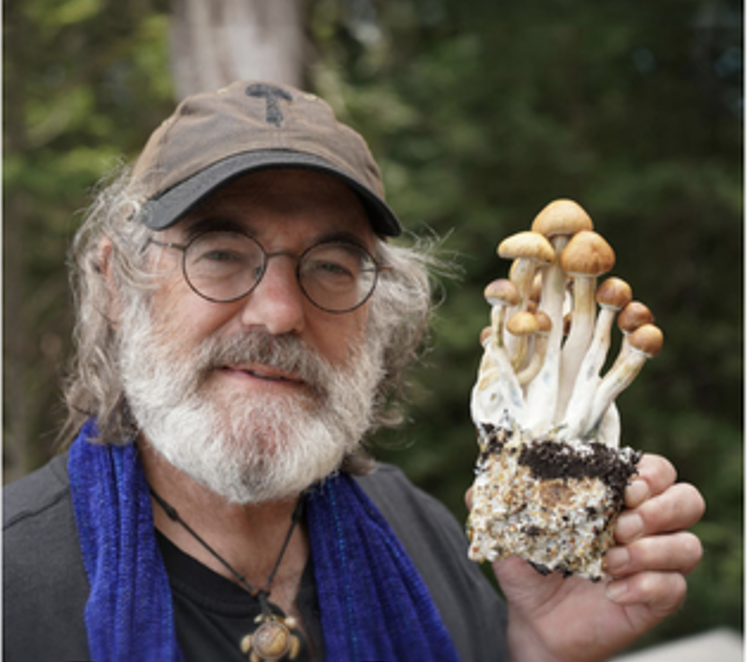
"Speaking at the United Nations was truly an honor," Stamets said. "The immense potential of Agarikon and Turkey Tail mushroom mycelium to support immune function cannot be understated. The opportunity to share such remarkable findings in front of a global audience is a true testament to fungi's inextricable role as stalwart allies in the health of both people and planet."*
For 50 years, Stamets has devoted much of his work as a mycologist to researching and advocating for the essential function that fungi have as cultivators of life on this planet. As Founder, Member, and Owner of Fungi Perfecti, LLC, Makers of Host Defense® Mushrooms™, Stamets directs his company to reinvest $1 million annually into mycological research and discovery.*
Stamets' efforts include organizing clinical trials on the efficacy of mushroom mycelium to support human health and contributing to numerous peer-reviewed scientific journal articles in the field of mycology. As owner of Fungi Perfecti and Host Defense, he and his team have cultivated the world's largest Agarikon culture library in a pursuit to preserve the at-risk species.*
"No other company in the mushroom supplement space has contributed more to the field of mycology or fungi for ecological preservation than Fungi Perfecti," Stamets said. "I've ensured that our work has always been in service to science, sustainability, and discovery—this moment at the United Nations stands as a milestone of this lifelong mission."
About Fungi Perfecti, LLC—Makers of Host Defense® Mushrooms™
Fungi Perfecti, LLC is a family-owned company founded by internationally renowned mycologist Paul Stamets, who launched Host Defense Mushrooms under Fungi Perfecti with the goal of building a bridge between people and fungi. Host Defense is now a leading mushroom supplement brand in the U.S., specializing in mushroom mycelium-based supplements designed to support human health. Its product line reflects the company's commitment to sustainability, scientific integrity, research, and education.*
Fungi Perfecti has become synonymous with cutting-edge mycological research and solutions—from water filtration (mycofiltration) and ecological rehabilitation (mycoremediation) to combating Colony Collapse Disorder in bees. A Certified B Corporation, Fungi Perfecti is third-party designated as Climate Positive, offsetting 110% of its carbon emissions, and is a certified Leading Living Wage Employer. Follow Host Defense and Fungi Perfecti on TikTok, Instagram, Facebook, and LinkedIn.
*These statements have not been evaluated by the Food and Drug Administration. These products are not intended to diagnose, treat, cure or prevent any disease.
Media Contact
Steven Hoffman, Compass Natural, steve@compassnatural.com, tel 303.807.1042
Can Trump’s Support Move the Needle on CBD?
Could President Donald Trump's recent endorsement of hemp-derived CBD products provide new momentum for an industry that has struggled in recent years under a patchwork of inconsistent state and federal regulations?
This article first appeared in the November 2025 issue of Presence Marketing’s newsletter.
By Steven Hoffman
In what industry observers have called a surprise move, on Sept. 28, President Donald Trump posted a video on his Truth Social platform promoting the health benefits of cannabinoids, suggesting that covering hemp-derived CBD under Medicare would be a “game changer” and “the most important senior health initiative of the century.” At a time when some members of Congress are pushing for policy changes that could upend the CBD market, Trump’s implied endorsement of CBD is remarkable.
Trump’s post supporting Medicare coverage for CBD products sparked a 36% rise in publicly traded cannabis stocks in the weeks that followed, Yahoo Finance reported. The post also raised hopes that the White House might take a more permissive approach to marijuana regulation following Trump’s statement in August that his administration was exploring a potential reclassification of marijuana — an effort originally proposed under the Biden administration. Removing cannabis from its Schedule I status would mean the federal government acknowledges the plant’s medicinal value.
“I’ve heard great things having to do with medical, and I’ve [heard] bad things having to do with just about everything else,” Trump said during an Aug. 11 White House press conference. “But medical and for pain and various things, I’ve heard some pretty good things.”
The video Trump shared was produced by The Commonwealth Project, an organization dedicated to improving health and longevity for older Americans. It was founded by Howard Kessler, a billionaire and philanthropist with ties to the CBD industry and a longtime friend of Trump’s. According to Independent Voter News, Kessler believes “that medical cannabis could be harnessed to not only provide older Americans with an alternative to traditional prescription painkillers but to reduce soaring health care costs saddling millions of seniors.”
In the video promoted on Truth Social, CBD was described as a way to "revolutionize senior healthcare" by helping reduce disease progression. The narration claimed CBD could help “restore” the body’s endocannabinoid system and ease pain, improve sleep and reduce stress in older adults. It also cited a Fox News segment referencing a Price Waterhouse Coopers report that estimated potential cost savings of “$64 billion a year if cannabis is fully integrated into the healthcare system.”
A Boston- and Palm Beach, Florida-based entrepreneur and philanthropist, Kessler founded Kessler Financial Services, which helped pioneer affinity credit cards. He later obtained one of Massachusetts’ first medical marijuana licenses in 2014, and became the state’s first recreational seller before his company was acquired by a Georgia cannabis firm in 2019. In June 2024, Kessler appeared on Fox News to discuss his efforts to integrate medical cannabis into traditional health care for seniors.
Regulatory Confusion Hinders CBD Market
Regulations around the commercial use of hemp and CBD were significantly eased across the U.S. when industrial hemp was legalized under the 2018 Farm Bill during Trump's first term. However, since its passage, a growing number of state-level battles and lawsuits have emerged regarding the definition of hemp, the “intoxicating hemp” loophole around hemp-derived Delta-8 THC, and the lack of consistent federal and state regulatory frameworks for the cultivation, manufacture, marketing and sale of hemp-derived cannabinoids such as CBD, according to national law firm Buchanan Ingersoll & Rooney.
Trump’s implied endorsement of CBD comes as a bipartisan group of lawmakers pushes back against attempts to ban hemp-derived THC products, arguing that such action would “deal a fatal blow” to the hemp industry and violate congressional rules. In a letter sent to House Speaker Mike Johnson (R-LA) on Sept. 26, House Oversight and Government Reform Committee Chairman James Comer (R-KY) and 26 other members warned that appropriations legislation containing hemp ban provisions would devastate the industry that emerged after hemp’s 2018 legalization.
A group of eight Democratic senators also sent a letter in September urging leadership to pursue regulation rather than prohibition, warning that banning products containing any amount of THC would trigger major upheaval in the hemp market. (Under the 2018 Farm Bill, hemp is legally defined as containing no more than 0.3% THC on a dry weight basis.) Meanwhile, dozens of hemp farmers from Kentucky have urged Senate Minority Leader Mitch McConnell (R-KY) to back away from efforts to re-criminalize certain hemp-derived products, Louisville Public Media reported.
Kentucky Sen. Rand Paul also warned that the cannabis policy movement has “swung hard on the prohibitionist side.” In June, he introduced the Hemp Economic Mobilization Plan (HEMP) Act to counter potential restrictions, proposing to triple the amount of THC allowed in hemp while addressing several other regulatory challenges facing the industry.
For its part, the U.S. Food and Drug Administration (FDA) reaffirmed in January 2020 that it is unlawful to introduce food containing added CBD into interstate commerce, or to market CBD as, or in, dietary supplements. Now, according to Marijuana Moment, while Trump was endorsing CBD on Truth Social, the FDA quietly updated its adverse drug event reporting forms to track incidents related to hemp-derived cannabinoids, including CBD — part of an effort to gather more data on potential health effects associated with such products.
Hemp Industry Responds to President’s Support
In an Oct. 7 letter to President Trump, Jonathan Miller, legal counsel for the U.S. Hemp Roundtable, praised the president’s acknowledgment of hemp’s potential and urged him to oppose the proposed hemp ban:
"The recent video you shared about the extraordinary value of hemp products was important, raising awareness on the positive impact our American-grown and manufactured products have. Here at the U.S. Hemp Roundtable, our members are focused on giving Americans choices in improving their overall health and wellness ... but now we need your help! Congress is close to passing a hemp ban, reversing the work you led in 2018 to make hemp blossom. A proposed definition change to hemp, being touted as protecting Americans, would wipe out 95% of this uniquely American industry that you are so proud of,” Miller stated.
He continued: “A more effective way to protect American consumers and jobs would be to support and demand robust hemp regulation — age restrictions along with uniform testing, labeling, and packaging requirements. Outright prohibition is not the answer, nor would it make anyone safer. Banning legal hemp products that are already regulated at the state level will not protect consumers; it would only shift hemp to the black market and destroy a rising American industry in the process. ... A ban would put American farmers, American businesses, American consumers, our veterans, seniors, and more than 328,000 American workers at risk."
Miller added that "American voters are on your side on this issue. In Texas, a state with a rapidly growing hemp market, 76% of your voters and 78% of seniors favor legal, regulated hemp sales. In fact, more than 62% of Texans say they are more likely to support candidates who back the regulated sale of hemp-derived products."
Bottom line: Trump’s apparent support for CBD could mark a turning point for a sector long constrained by legal uncertainty. Whether the endorsement leads to meaningful policy change remains to be seen — but it has already reignited momentum, investment, and public discourse around hemp-derived wellness products in America’s fast-evolving natural health market.
Steven Hoffman is Managing Director of Compass Natural Marketing, a strategic communications and brand development agency serving the natural and organic products industry. Learn more at www.compassnatural.com.