
JAMBAR Adds 1,200+ Retail Doors Following Launch of Organic Minis
New placements at Giant/Martin’s and Earth Fare expand the organic energy bar brand’s national retail footprint, alongside availability on Walmart.com
SAN RAFAEL, Calif. (Oct. 20, 2026) — JAMBAR, the Certified Organic energy bar company founded by PowerBar® co-creator Jennifer Maxwell, has added more than 1,200 retail doors since launching its 28g JAMBAR Minis in spring 2026, marking a significant expansion across grocery, natural and specialty retail channels.
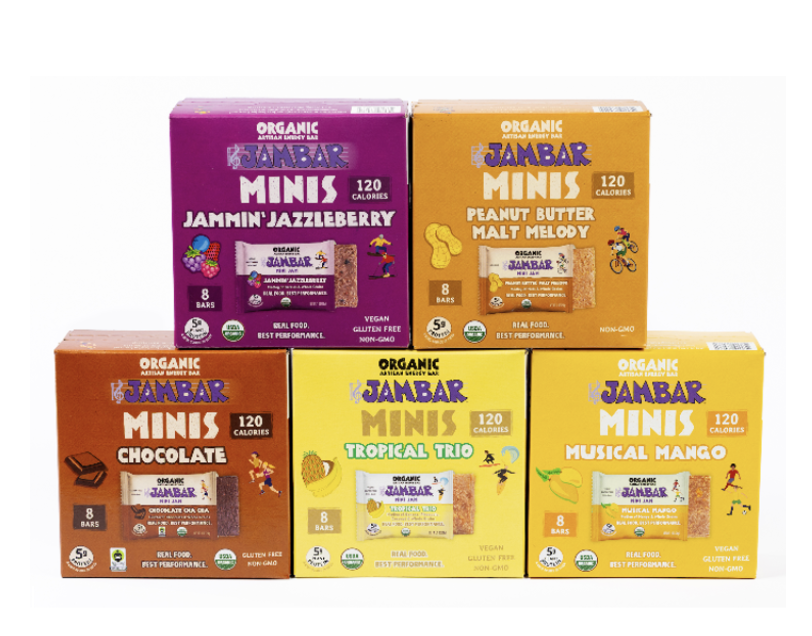
The growth reflects increased retailer interest in JAMBAR’s smaller-format Minis, which offer the brand’s Certified Organic, real-food nutrition in a 120-calorie, grab-and-go size.
Recent retail and digital expansions include:
Giant/Martin’s: JAMBAR is expanding its East Coast presence with JAMBAR Minis placements in more than 100 locations across Pennsylvania. Stores will carry Chocolate Cha Cha, Peanut Butter Malt Melody and Jammin’ Jazzleberry. The expansion builds on JAMBAR’s growing visibility in the region, including its sponsorship of the Penn Relays.
Earth Fare: All five JAMBAR Mini flavors will launch across the natural food retailer’s entire store network this fall.
Walmart.com: JAMBAR’s full product lineup is now available through Walmart.com, expanding national access to the brand online.
“The response to JAMBAR Minis since launching this spring has been incredibly encouraging,” said Peter Pelanek, Vice President of Sales at JAMBAR. “Retailers are recognizing the appeal of a smaller, more accessible format that delivers the same great taste and Certified Organic ingredients as our full-sized bars. These new partnerships are helping us introduce JAMBAR to more consumers across the country, and we're excited about the opportunities ahead as we continue building our retail presence.”
JAMBARs are crafted in small batches in Marin County, California, using Certified Organic whole-food ingredients including gluten-free grains, berries, nuts and fair-trade chocolate. JAMBAR does not use artificial sweeteners or starch-derived sugar syrups such as brown rice or tapioca syrup. Full-sized 60-gram bars provide 10 grams of protein, while 28-gram Mini JAMs deliver 5 grams of protein in a 120-calorie format.
Ordering & Wholesale Information
Retailers and food service providers looking to stock JAMBAR can place orders directly or through national distribution partners, including KeHE, UNFI, and Chex Finer Foods. For wholesale inquiries, contact sales@jambar.com.
About JAMBAR
In 2021, Jennifer Maxwell founded JAMBAR with the goal of helping people feel good about the ingredients they put in their bodies, and the positive impact they can have on their local communities. JAMBAR organic energy bars are made in the U.S. and crafted in small batches in the company's state-of-the-art manufacturing facility in California. A woman-owned, mission-based business, JAMBAR donates 50% of after-tax profits to organizations that support active living and music. JAMBARs are available in natural foods and grocery stores, sports specialty stores and online at Amazon.com and Walmart.com. Learn more at www.jambar.com and follow JAMBAR on Facebook and Instagram.
Media Contact
Steven Hoffman, Compass Natural, steve@compassnatural.com, tel: 303.807.1042
Organic Packaged Foods Contain Fewer Ingredients Linked to Negative Health Effects
Photo: Pexels
This article originally appeared in Presence Marketing’s October 2021 Industry Newsletter
By Steve Hoffman
Processed, packaged foods labeled as organic have a more healthful profile than their conventional counterparts, says a new analysis of 80,000 food products conducted by the Environmental Working Group (EWG) and published in the journal Nutrients.
The study focused on packaged foods, which EWG said accounts for more than 60% of the calories consumed in the U.S. The study analyzed nutrition and ingredient information for 8,240 organic and 72,205 conventional foods sold in the U.S. in 2019 and 2020. It is the most comprehensive study to date of the differences between non-organic, or conventional, packaged foods and those labeled as Certified Organic, said EWG.
According to the EWG study, organic packaged foods have fewer ultra-processed ingredients and additives that may promote overeating. EWG reported that the overall nutritional profile of organic foods is better, too, with less added sugar, saturated fat and sodium. Organic packaged foods contain more potassium, a heart-healthy nutrient found in fruits, vegetables and other unprocessed or minimally processed foods, EWG reported.
Nearly three-quarters of the U.S. packaged food and beverage supply in 2018 was ultra-processed, claimed EWG. This category of food makes up a significant source of calories for people over the age of two, and even higher for kids ages two to 19, EWG noted.