
Trump Signs EO on Regenerative Agriculture While EPA Approves More Toxic Forever Chemicals
This article first appeared in the August 2026 issue of Presence Marketing’s newsletter.
By Steven Hoffman
The summer of 2026 has delivered a dizzying regulatory whiplash for the natural, organic, and regenerative agriculture industry. On one hand, the phrase "regenerative agriculture" has officially reached the highest echelons of federal policy, recently enshrined in a presidential executive order and championed loudly under the populist "Make America Healthy Again" (MAHA) banner.
On the other hand, a quiet but aggressive rollout of toxic synthetic "forever chemicals," deep cuts to public health and agricultural inspection funding, and sweeping executive and legal victories for the agrochemical lobby tell a starkly different story.
For business owners, executives, and retailers in the natural and organic products sector, this legislative and regulatory environment presents a highly volatile mixed bag. We are witnessing a fundamental tension between the administration's public health rhetoric and its actual regulatory execution. As consumers increasingly look to the natural channel for transparency and safety, understanding these seismic shifts is critical.

Here is a comprehensive look at how recent federal actions, courtroom reversals, and public health fallouts are redefining the business of food and agriculture from the soil to the shelf.
The Biofuel Pivot: Is It True Regenerative Agriculture?
On June 25, 2026, President Donald Trump signed Executive Order 14414, formally titled Advancing Regenerative Agriculture and Strengthening American Farm Resilience. The directive instructs the U.S. Department of Agriculture (USDA), the Environmental Protection Agency (EPA), and Health and Human Services (HHS) to expand precision farming, streamline agricultural innovation, and evaluate cumulative chemical exposures in the food supply.
Simultaneously, USDA Secretary Brooke Rollins introduced a final Regenerative Feedstock Rule. Rather than injecting expansive new government subsidies into direct federal conservation or organic transition programs, the administration’s approach is entirely market-driven. As detailed by the Western Ag Network, the new USDA framework ties directly into the 45Z Clean Fuel Production Tax Credit, utilizing an updated "Feedstock Carbon Intensity Calculator" to connect on-farm practices with biofuel supply chains.
In practice, this allows massive conventional corn, soybean, and sorghum producers to document specific farming practices—such as no-till or cover cropping—and market their harvests at a premium to ethanol and biofuel producers. The goal is to incentivize carbon reduction without imposing federal mandates.
While market-based incentives for carbon reduction sound promising, advocates and organic farmers are raising the alarm. Many view this framework as a blatant co-opting of the regenerative movement by Big Ag. True regenerative agriculture—as pioneered by the organic movement—focuses on eliminating toxic inputs, restoring biodiversity, and building soil health to grow nutrient-dense food. Critics argue that the administration is simply repackaging the term "regenerative" into a carbon-scoring mechanism to subsidize industrial biofuel production, all while continuing to allow the use of synthetic pesticides and fertilizers on those very same crops. For natural products retailers, this underscores the urgent need to differentiate true regenerative organic food from conventional crops participating in carbon tax credit programs.
Funding Volatility and a Courtroom Rebuke
This pivot toward corporate biofuel subsidies has been accompanied by aggressive cuts to programs meant to support small-scale and marginalized farmers.
The administration’s new executive order did not add net-new financial outlays; rather, it shifted approximately $700 million within existing agency budgets to fund its new pilot programs. To balance the books and fulfill a mandate to eliminate what it deemed wasteful spending and "diversity, equity, and inclusion (DEI)" initiatives, the USDA abruptly canceled the Increasing Land, Capital, and Market Access Program (ILCMA) earlier this year. Originally a $300 million initiative to help Black, Native American and historically underserved farmers secure land and financing, the program was canceled earlier this year over alleged administrative and DEI-related concerns.
However, the administration’s aggressive funding cuts recently hit a major legal wall. On June 30, U.S. District Judge Beryl Howell granted a preliminary injunction ordering the USDA to restore $127 million in canceled grants to 24 organizations while litigation continues. The plaintiffs successfully argued that the USDA unlawfully terminated the awards based on arbitrary keyword searches rather than on performance or merit. This courtroom rebuke is a massive victory for grassroots agricultural groups and reinforces the USDA's legal obligation to honor its contracts with the young and first-generation farmers who represent the future of the nation’s specialized food supply.
In another piece of rare, positive news for the natural products sector, the USDA recently announced that the organic certification cost-share funds have finally been released. These funds are a vital lifeline for small- to mid-sized organic operations, reimbursing them for a portion of the financial burden required to maintain their rigorously audited USDA Organic certifications. The release of these funds will help stabilize the organic supply chain as farmers finalize their operational budgets for the coming year.
#ChemGate and PFAS Proliferation
While the administration touts its commitment to farm resilience, its environmental regulatory arm is moving in a dangerously contradictory direction.
In early July 2026, the EPA quietly fast-tracked the approval of three new toxic pesticides containing PFAS (per- and polyfluoroalkyl substances)—commonly known as "forever chemicals." The hazardous new herbicides—trifludimoxazin, diflufenican, and epyrifenacil—can now be sprayed directly on major food crops, including wheat and citrus. According to the Environmental Working Group (EWG), EPA scientists themselves flagged one of these chemicals as having "suggestive evidence of carcinogenic potential."
This decision brings the total number of PFAS pesticides greenlit by the current EPA to five in under two years. These chemicals do not break down in the environment; they accumulate in the soil, the water table, and ultimately, the human bloodstream, where they are linked to immune system suppression and severe reproductive health issues.
The regulatory failure extends to the FDA, which recently refused a formal petition to set strict limits on forever chemicals in food, leaving consumers entirely unprotected from the downstream effects of the EPA's pesticide approvals.
Food industry visionary and financial analyst Robyn O’Brien has aptly dubbed this crisis "#ChemGate." O'Brien warns that when regulatory bodies become hopelessly captured by the chemical lobbying arms they are meant to oversee, the entire integrity of the American food supply collapses. For natural products retailers, the EPA's quiet unleashing of forever chemicals onto conventional produce serves as the ultimate marketing imperative for the organic seal. As conventional agriculture becomes increasingly saturated with indestructible synthetic toxins, the rigorously audited, “no toxic synthetic pesticides” promise of the organic aisle transforms from a premium lifestyle choice into a fundamental public health necessity.
The Glyphosate Betrayal: A Fracture in the MAHA Alliance
The tension between the populist MAHA movement and the administration’s actual policy execution reached a breaking point this year over the world’s most notorious herbicide: glyphosate.
The fracture began in February 2026 when President Trump issued an executive order invoking the Defense Production Act to mandate and protect the domestic production of glyphosate (the active ingredient in Roundup), citing national security and food supply chain resilience. The order granted broad liability immunities, infuriating MAHA advocates who had championed the administration on the promise of health reform. As Environmental Working Group President Ken Cook noted at the time, the move was viewed by many wellness advocates as a "direct assault" on the MAHA platform and a great gift to the chemical lobby.
This administrative protection was recently compounded by a landmark decision from the nation's highest court. This summer, the U.S. Supreme Court ruled in favor of agrochemical giant Bayer regarding its glyphosate-based weedkiller. The ruling effectively blocks thousands of state-level "failure-to-warn" lawsuits, determining that federal EPA label approvals preempt state laws that might otherwise require cancer-warning labels on toxic pesticides.
This decision essentially grants a liability shield to pesticide manufacturers, protecting them from plaintiffs alleging they were not properly informed about the severe health risks associated with chronic glyphosate or other chemical pesticide exposure.
For the MAHA movement, the executive protections and the Supreme Court ruling exposed a deep rift between the political rhetoric of "making America healthy" and a regulatory reality that actively insulates the chemical agriculture industry from legal consequence. As reported by Grist, attempts to appease MAHA's fury over the Roundup rulings have largely backfired, leaving health-freedom advocates feeling profoundly betrayed. Protests have taken place outside the Supreme Court, signaling that the coalition of health advocates that helped propel the administration into office is fracturing over its failure to regulate Big Chem.
The Public Health Fallout: The Cost of Cutbacks
The consequences of prioritizing corporate deregulation and cutting federal research and inspection budgets are not abstract; they are already playing out in real time across the nation's supply chains and emergency rooms.
The current administration has initiated historic cutbacks in public health funding, FDA food inspections, and USDA agricultural research. The result is a regulatory apparatus that is operating with severe blind spots, and the public is paying the price.
In recent weeks, an explosive food-borne Cyclospora outbreak has swept across the United States, causing severe, prolonged gastrointestinal illness. Cyclospora is a microscopic parasite transmitted through feces and typically linked to contaminated fresh produce. As of July 2026, the parasite has sickened thousands of Americans across at least 34 states, with the Midwest bearing the brunt of the crisis. In Ohio, the Cleveland Clinic reported a staggering jump in lab testing, skyrocketing from just one test per day to nearly 200 as symptomatic patients flooded local hospitals.
The federal response has been heavily hindered by recent agency rollbacks. Due to severe staffing shortages and budgetary cuts at the Centers for Disease Control and Prevention (CDC)—which recently made the tracking of certain foodborne illnesses optional—federal case data has drastically lagged behind real-time state-level reporting. Without a robust, centralized federal tracing apparatus, state health investigators have been left to piece together the puzzle on their own. While early interviews strongly point to lettuce and salad greens as the leading suspected source, a specific grower, brand, or supplier has yet to be definitively named by federal authorities.
As local health departments scramble to track the outbreak's expanding footprint across the country, this unresolved crisis raises grave questions about the ability of gutted federal agencies to adequately monitor the safety of the conventional food supply. When the government can no longer proactively track and trace a pathogen, the burden of food safety falls entirely on the retailer and the private supply chain.
Simultaneously, the agricultural sector is battling a devastating screwworm outbreak affecting livestock. For decades, the USDA successfully managed the threat of the New World screwworm—a parasite that feeds on the living tissue of warm-blooded animals—through robust research and sterile insect release programs. However, recent reductions in federal research funding and the mass exodus of USDA researchers who are refusing mandatory relocations have compromised the agency's ability to maintain these critical biological defense lines, resulting in a crisis for ranchers and a direct threat to the meat supply chain.
The Strategic Path Forward for the Natural Channel
As we survey the current landscape, the mandate for the natural, organic and regenerative products industry is unmistakably clear. We can no longer rely on federal tailwinds, government definitions, or public safety nets to protect our consumers or our food supply.
When the federal government co-opts the term "regenerative" to subsidize industrial biofuels, unleashes PFAS forever chemicals onto conventional crops, shields glyphosate manufacturers from liability, and defunds the agencies responsible for keeping parasites out of our produce, the conventional food system ceases to be a safe default for the American family.
In this environment of deep institutional failure, the natural products channel stands as the last line of defense.
Retailers, brands and investors must step into the regulatory void and double down on uncompromising transparency. We have an opportunity to educate customers on the profound difference between a federally subsidized "regenerative" biofuel crop and rigorously audited USDA Certified Organic and Regenerative Organic Certified (ROC) food systems.
Furthermore, private capital must continue to step forward. To truly scale clean agriculture, the private sector needs to prioritize funding the organic transitions, the local supply chain infrastructure, and the independent agricultural research that the federal government is actively abandoning.
The agricultural policies of 2026 are indeed a mixed bag—heavy on chemical appeasement and light on actual public health reform. But out of this chaos emerges a profound opportunity. As the conventional system compromises itself, the value proposition of the natural, organic, regenerative, and specialty food industry has never been more vital, more distinct or more essential to the future of human health and environmental resilience.
Steven Hoffman is Managing Director of Compass Natural Marketing, a strategic communications and brand development agency serving the natural and organic products industry. Learn more at www.compassnatural.com.
Presence MarketWatch 2025
This article first appeared in the January 2025 issue of Presence Marketing’s newsletter.
By Steven Hoffman
With the Trump administration returning to the White House and the GOP controlling both the Senate and House of Representatives by narrow margins, the year 2025 is sure to bring significant change to regulatory policy, business and the economy, not just for the U.S. but also the world. To help leaders in the natural channel navigate the opportunities and challenges ahead, Presence Marketing will track and report on these issues over the course of the year ahead. Read on for a snapshot of some of the major issues that will impact the natural, organic and nutritional products market over the coming year.
Tariffs and Food Prices
President-elect Donald Trump ran on a campaign to lower grocery prices, which rose 23% since the onset of the Covid pandemic in Spring 2020. Food inflation has slowed over the past year, according to NBC News, and is now less than 2% as energy prices and supply chains have stabilized. Yet, experts caution that a combination of tariffs and mass deportations could have a further destabilizing effect on agriculture, food production and grocery prices. Trump has threatened to impose tariffs up to 60% on goods from China, and a 25% tariff on products from Mexico and Canada – all countries that are significant exporters of food and other products to the U.S. market.

In a Time Magazine interview in December 2024, Trump acknowledged it may be difficult to bring down grocery prices, saying, “Look, they got them up. I’d like to bring them down. It’s hard to bring things down once they’re up.” According to a study from the Peterson Institute for International Economics, Trump’s proposed tariffs on Mexico and Canada would have the biggest impact on prices for autos, vegetables, fuel, prepared food and animal products, reported CNN Business. The U.S. relies on Mexico for 89% of its imported avocados and 91% of foreign-grown tomatoes. “Higher tariffs on Mexico and Canada will … put upward pressure on U.S. food prices,” the Peterson Institute said. While it’s too soon to determine whether Trump will actually impose tariffs or if trade agreements can be reached to prevent them, “The only certainty is that new tariffs will be costly for the United States,” said the Peterson Institute study’s authors.
Food, Farm Workers and Mass Deportation
California’s Monterey County is the fourth-largest crop-producing county in the nation, with the agriculture industry there contributing $4.4 billion to the economy, and with an estimated 55,000 farm workers, including many who are undocumented. As such, the area’s growers have expressed concern that much of their workforce could disappear as a result of potential mass deportations once the Trump administration takes office. In an interview on Dec. 19, 2024, with NBC Bay Area News, Monterey County Farm Bureau CEO Norm Groot said, “It will absolutely impact food prices at the consumer level. If it impacts local and nationwide supplies, that will have a price increase.” NBC reported the farm bureau is teaming up with county officials and other stakeholders to create a task force in addressing local concerns around mass deportations, including concerns around family and child separation. "It's interesting that four years ago during the pandemic, they were essential," Groot said. "And now all of a sudden we’re looking at it from a different perspective and trying to understand how that dynamic has changed."
And it’s not just Monterey County – while it’s estimated that undocumented workers make up only 5% of the total U.S. workforce, the share of undocumented workers across the nation’s food supply chain is at least 16%, reported Successful Farming. In some industries this number is higher – the Idaho Dairymen’s Association estimated that nearly 90% of the state’s dairy workers were born outside of the U.S. According to a September 2024 study by the Peterson Institute, mass deportation could lead to a 10% increase in food prices. Between higher food prices that could come with proposed tariffs – and potential government bailouts funded by U.S. taxpayers to provide assistance to farmers affected by deportations – Americans could potentially get “double-whammied” by the higher costs and supply chain disruptions these proposed policies could bring.
RFK, FDA and the Nation’s Health
MAHA has become a rallying cry for many in the natural health and nutritional supplements industry as Congress weighs the nomination of Robert F. Kennedy, Jr. Kennedy, a lawyer, environmentalist and controversial health advocate, is Trump’s pick to lead the U.S. Department of Health and Human Services (HHS), a Cabinet-level position that oversees the U.S. Food and Drug Administration (FDA), Centers for Disease Control and Prevention (CDC), National Institutes of Health (NIH), and others.
On one hand, RFK’s team is weighing a rewrite to the FDA’s rules overseeing food additives and taking a hard look at the harmful chemicals and pesticides used in food production. On the other hand, RFK’s top lawyer Aaron Siri stirred controversy when it was reported in December 2024 by CNN and others that he had petitioned the FDA to revoke approval of the polio vaccine. The World Health Organization declared that polio was eradicated in 2019 but warned it could re-emerge if vaccination coverage declines. According to a Dec. 4, 2024, article in Forbes, Kennedy criticized the FDA in a post on X (formerly Twitter) for “suppressing” a wide range of items, including “psychedelics, peptides, stem cells, raw milk, hyperbaric therapies, chelating compounds, ivermectin, hydroxychloroquine, vitamins, clean foods, sunshine, exercise, nutraceuticals, and anything else that advances human health and can’t be patented by Pharma.”
Kennedy will have an ally in Martin Makary, M.D., a surgeon, public policy researcher at Johns Hopkins University and a member of the National Academy of Medicine, and President-elect Trump’s choice to serve as FDA Commissioner. In September 2024, Makary joined RFK at a round table in Congress on health and nutrition, where he criticized how food in the U.S. is grown and processed. "We have poisoned our food supply, engineered highly addictive chemicals that we put into our food. We spray it with pesticides that kill pests. What do you think they do to our gut lining in our microbiome?" Makary said. In related news, Trump’s pick for Surgeon General, Dr. Janette Nesheiwat, a family medicine doctor who runs a chain of urgent care clinics in New York, was a regular Fox News contributor and is an advocate for nutritional supplements, marketing her own brand of dietary supplements called BC Boost, containing vitamins C, B-12, D and Zinc.
Brooke Rollins Nominated to Lead USDA
President-elect Trump in November nominated Brooke Rollins, President and CEO of the America First Policy Institute, a conservative think tank based in Texas, to lead the U.S. Department of Agriculture. “As our next Secretary of Agriculture, Brooke will spearhead the effort to protect American farmers, who are truly the backbone of our country,” Trump said in a statement. Rollins is a graduate of Texas A&M University, with an undergraduate degree in agriculture development. “From her upbringing in the small and agriculture-centered town of Glen Rose, Texas, to her years of leadership involvement with Future Farmers of America and 4H, to her generational family farming background, to guiding her four kids in their show cattle careers, Brooke has a practitioner’s experience, along with deep policy credentials in both nonprofit and government leadership at the state and national levels,” the statement said.
“We congratulate Brooke Rollins on her nomination as Secretary of Agriculture. This is an important moment for U.S. agriculture, and we are optimistic about the opportunities her leadership will bring to rural America,” Amy France, chairwoman of the National Sorghum Producers in Scott City, KS, told Successful Farming. "Sorghum farmers are at the forefront of innovation, contributing to domestic biofuels and heart-healthy, nutritious, ancient grain foods. We are eager to work with her to advance policies that strengthen the sorghum industry and benefit growers nationwide.”
“The Department of Agriculture plays a pivotal role in safeguarding our food supply, addressing food insecurity, managing our forests, as well as supporting America’s farmers and rural communities who are on the frontlines of the climate crisis,” said Rebecca Riley, Managing Director, Food and Agriculture, for the Natural Resources Defense Council (NRDC). “Rollins needs to invest in America’s farmers – from small family farms to larger-scale operations – and to work toward a resilient and equitable food system that puts healthy food on the table, restores our soil, protects the climate, and safeguards the health of our communities … now is not the time to undermine climate-smart farming practices, favor industrial agriculture at the expense of small producers and consumers, or gut the nutrition programs that many Americans rely on,” Riley said.
California’s AB 660 Sets Landmark Food Date Labeling Standards
California Governor Gavin Newsom in September 2024 signed into law the nation's first mandatory food date labeling reform bill. California Assembly Bill 660 (AB 660) standardizes the use of “Best If Used By” and “Use By” dates on food labels, and prohibits the use of “Sell By” dates. The new law requires manufacturers to use the same phrase for date labels across their products, reported Food Safety. Beginning July 1, 2026, companies selling food products in California must only use “Best If Used By” to indicate the date by which a product will reach its peak quality, and “Use By” to indicate the date by which a product’s safety can no longer be guaranteed. The use of consumer-facing “Sell By” dates will be prohibited to reduce the chances of consumers confusing “Sell By” dates with quality or safety dates.
“On grocery store shelves today, there are more than 50 differently phrased date labels on packaged food. Some phrases are used to communicate peak freshness of a product or when a product is no longer safe to eat. Others, like ‘Sell By,’ are used only to inform stock rotation in stores but mislead some consumers into thinking the product is no longer safe to eat. AB 660 will close this gap by requiring manufacturers to use the same phrase for date labels across their products,” NRDC said in a statement.
Of course, as goes California, so goes the country. “AB 660 is game changing, not just for California, but for the country. It will be the first law of its kind to end the ridiculous confusion that causes consumers to throw out almost $15 billion of perfectly good food nationwide. It will also help reduce the significant toll that wasting food has on our planet,” Dana Gunders, President of reFED, told BioCycle Magazine. “Having to wonder whether our food is still good is an issue that we all have struggled with. Today’s signing of AB 660 is a monumental step to keep money in the pockets of consumers while helping the environment and the planet,” said Assemblymember Jacqui Irwin, author of the bill.
Steven Hoffman is Managing Director of Compass Natural, providing public relations, brand marketing, social media and strategic business development services to natural, organic, sustainable and hemp/CBD products businesses. Contact steve@compassnaturalmarketing.com.
Grocers Are Lifting Mask Mandates after CDC Issues New Guidelines
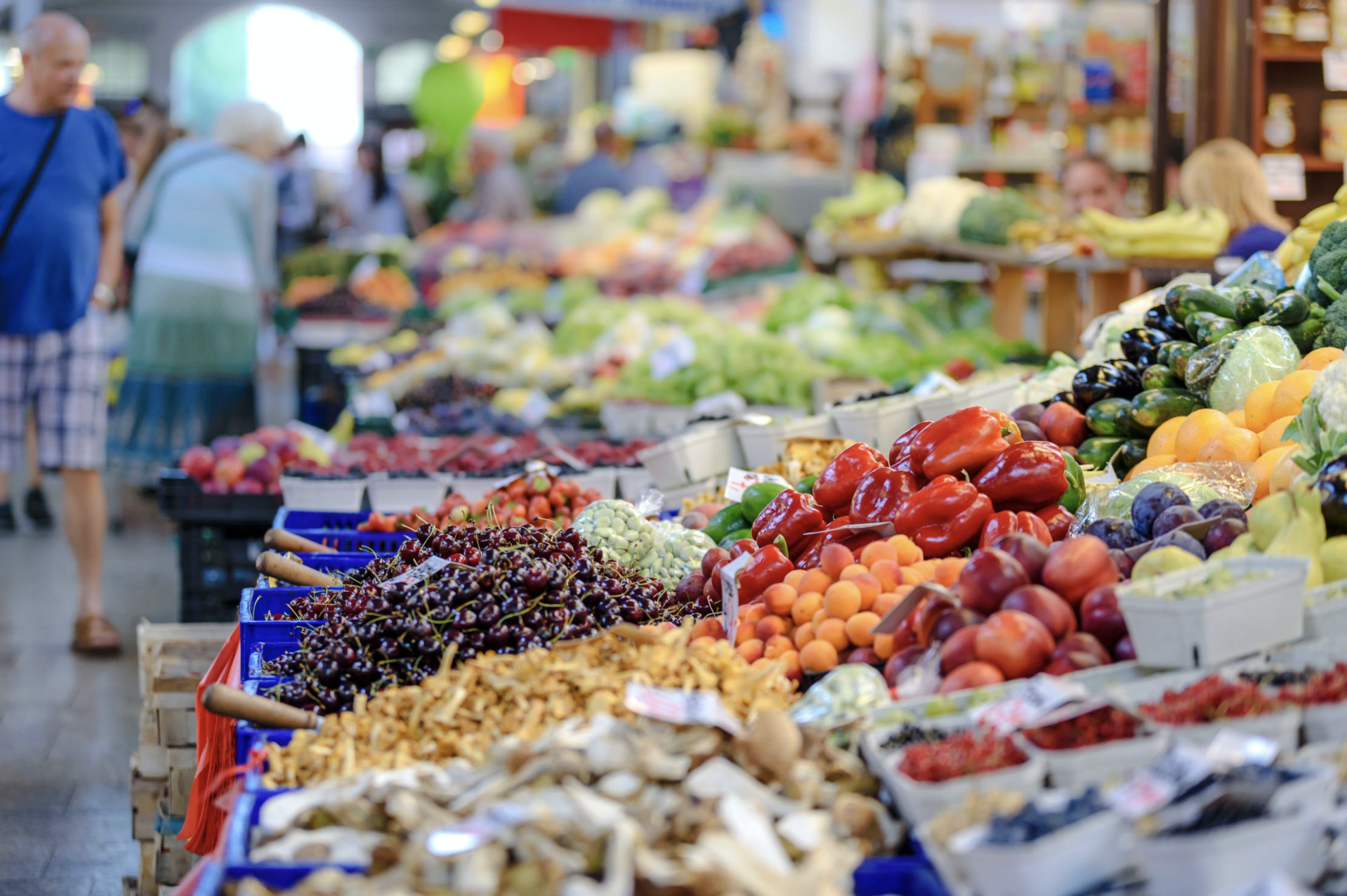
This article originally appeared in Presence Marketing’s June 2021 Newsletter
As the nation loosens public safety restrictions to prevent the spread of COVID-19 infection, grocers are removing mask mandates for customers and in some cases employees who are fully vaccinated. Retailers including Wegmans, Kroger-owned stores, Trader Joe’s, Harris Teeter, Publix, Walmart, Sam’s Club, Walgreen’s, Target, Meijer, Aldi, Costco and others are removing face mask requirements based on new guidelines issued on May 13 by the Centers for Disease Control and Prevention which stated that fully vaccinated individuals no longer need to cover their faces indoors.
"Starting May 20, fully vaccinated customers and most fully vaccinated associates no longer need to wear a mask in our facilities, including stores, distribution centers, plants and offices, unless otherwise indicated by state or local jurisdiction," said the Kroger Co. in a statement on the company’s website. "If there is a state or local mandate, please follow that requirement and timing,” the company added. Kroger will continue to require that non-vaccinated employees wear a face mask, and the grocer requests that non-vaccinated customers continue to wear a face mask. Employees will need to provide proof of vaccination to work without masks, the grocer said. Associates in its pharmacy and clinic locations will be required to continue to wear a mask due to CDC’s guidance for healthcare settings. Kroger added, “We will continue to respect the choice of individuals who prefer to continue to wear a mask.” In addition, Kroger is offering a $100 one-time incentive payment to associates for receiving the COVID-19 vaccine.
Whole Foods Market announced in May that Whole Foods team members and Prime shoppers are required to wear face masks, reported WRAL in Raleigh, NC. However, customers who are fully vaccinated can now shop without a mask.
Trader Joe’s was the first major national retailer to announce a change in its mask-wearing policy in mi-May after the CDC issued new mask guidelines.oHoe
Natural Grocers on May 24 updated the natural retail chain’s mask guidelines, as follows: “We require customers who are not fully vaccinated to wear face coverings in our stores per the most recent CDC recommendations. We will not be asking customers to prove their vaccination status to shop in our stores, unless required to do so by government mandate; we will be relying on the honor system for compliance. We understand that certain of our customers subject to our policy may be unable to wear a face covering while shopping in our stores. Under these circumstances, we are pleased to provide curbside pickup and delivery through Instacart to allow continuing access to our goods and services,” Natural Grocers said. The company requires employees to wear face coverings at all times, and added that currently, the state of Oregon requires that customers provide proof of vaccination to go maskless indoors, the grocer said.
Sprouts Farmers Market also updated its face mask policy, stating on Instagram, “Vaccinated customers are now welcome to shop without a mask! We’ll continue to encourage non-vaccinated customers to wear face coverings while shopping and will continue to follow state and city mask ordinances where masks are required.”
Some grocery workers have expressed concern that CDC’s new guidelines put them back in the center of the face mask debate. Fox News reported that “now, some workers say the end of mask mandates has put them in a new position of having to explain their employers' mask policies, manage anxious shoppers and assess whether unmasked customers are indeed vaccinated, all while potentially risking their own health.”