
Navigating Rising Food Prices: Market Dynamics, Retailer Strategies & the Resilient Demand for Better-for-You Food
This article first appeared in the October issue of Presence Marketing’s newsletter.
By Steven Hoffman
Grocery prices in U.S. cities have surged by approximately 33% since 2019, according to federal government data analyzed and reported by AP News. This dramatic jump represents the largest seven-year escalation in food-at-home costs in nearly 50 years. By comparison, grocery costs rose by just 6.4% in the seven and a half years leading up to 2019.
This historic rise in household food expenditures has placed immense pressure on consumer budgets nationwide. While the initial price shocks were triggered by the COVID-19 pandemic, the upward trajectory has been sustained and exacerbated by compounding macroeconomic pressures across the supply chain. Extreme weather events linked to climate change, lingering labor shortages, escalating fuel costs as a result of the war with Iran—particularly for diesel transport, as detailed by Axios—and shifting tariff policies have all contributed to rising input and distribution costs. Furthermore, heightened food safety concerns and supply chain disruptions, also reported by Axios, have added layers of compliance, testing, and shrinkage expenses that ultimately ripple down to the retail shelf.
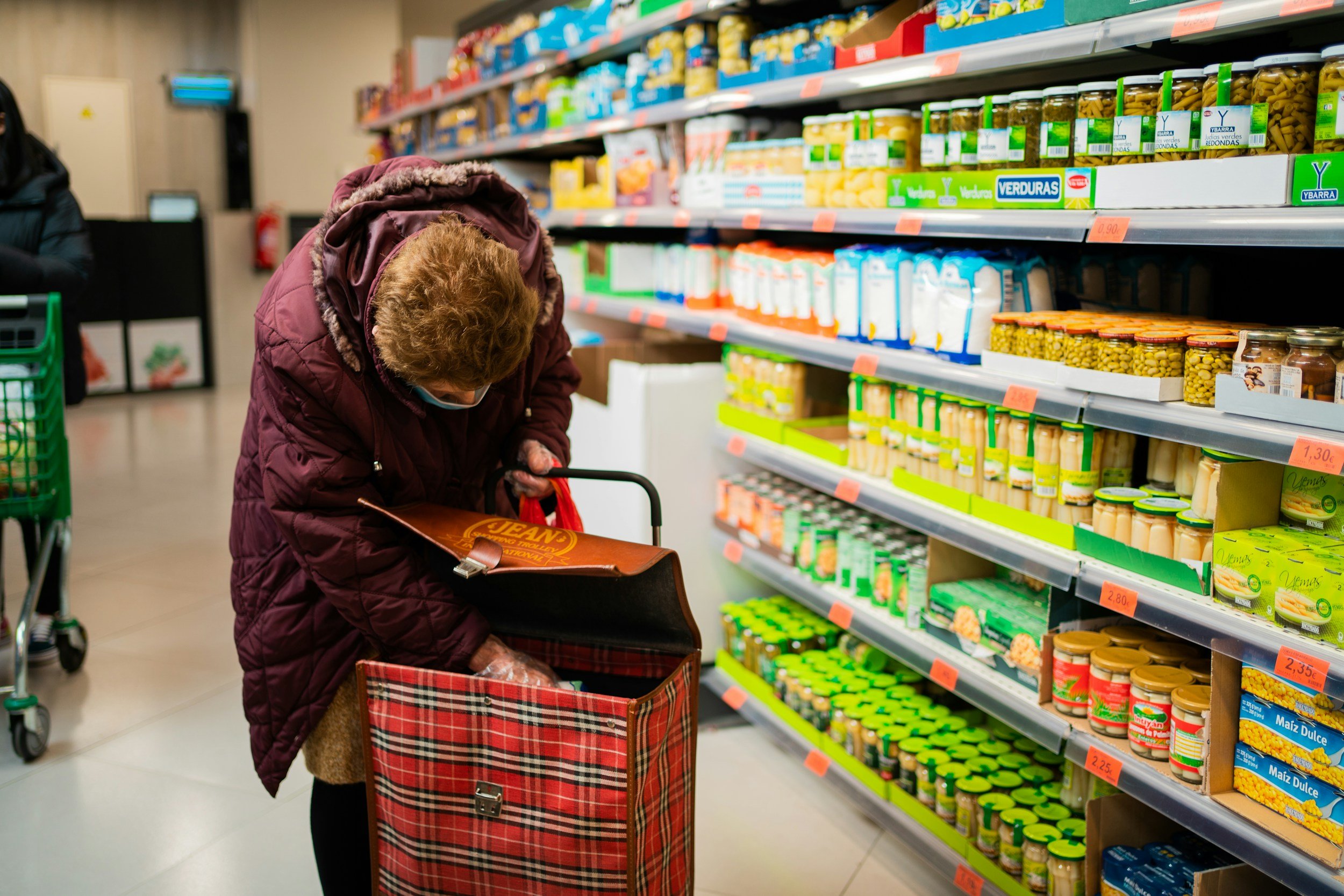
Unsplash. Photo by Victoriano Izquierdo
The natural, organic, and specialty food channels have by no means been immune to these inflationary pressures. Core staples—from organic produce and dairy to packaged specialty goods—have seen notable retail price increases. Yet, as conventional grocers struggle with declining unit volumes and resort to aggressive pricing countermeasures, the natural products sector is demonstrating remarkable structural resilience. While shoppers are adjusting their habits by leaning into store brands, hunting for promotional sales, and eliminating household food waste, they are not abandoning their core health and environmental values.
To understand how both the conventional and natural channels are navigating this high-cost landscape, Presence News examined current market research, evaluated industry data, and spoke with leading executives, analysts, distributors, and independent grocers across the country.
Channel Performance: Total Food vs. Better-for-You Resilience
While broader consumer sentiment remains anxious regarding cost-of-living pressures—with grocery prices remaining a top concern for Americans, according to coverage by ABC News—spending patterns reveal a sharp divergence between conventional packaged goods and health-focused categories.
According to retail measurement data from market research firm NIQ, total food and beverage sales grew 2.8% in dollar volume over the 52 weeks ending Aug. 8, 2026. However, total unit volume contracted by 0.4%, demonstrating that conventional market growth was driven almost entirely by price inflation rather than by increased consumer demand.
In contrast, the "Better-for-You" sector delivered robust outperformance. Dollar sales for Better-for-You products jumped 8.9%, accompanied by a 5% increase in unit volume. This unit growth occurred despite Better-for-You items carrying a significantly higher average unit price ($5.14) compared to the broader market average ($3.92), as well as a slightly faster price appreciation (3.7% vs. 3.2%).
"The combination of higher prices and growing unit demand suggests consumers view the benefits offered by Better-for-You products as worth the investment," Chris Costagli, Vice President of Thought Leadership, Food & Non-Alcoholic Beverage Insights at NIQ, told Presence News. “Rather than simply chasing the lowest price, consumers are becoming more selective in how they spend, reserving budget for products that deliver clear value through health benefits, ingredient quality, functionality, or trust.”
==================================================================
MARKET PERFORMANCE COMPARISON (L52 WEEKS ENDING AUG 2026)
==================================================================
Category Dollar Growth Unit Growth Avg. Unit Price
---------------------------------------------------------------------------------------
Total Food & Beverage +2.8% -0.4% $3.92
Better-for-You +8.9% +5.0% $5.14
==================================================================
Source: NIQ RMS, Powered by Label Insights
Data from industry research firm SPINS reflects a similar pattern across retail channels. Over the 52 weeks ending Aug. 9, 2026, natural products grew 6.9% in dollar sales in the Natural Expanded channel and 7.8% in Regional and Independent Grocery (RIG) stores. Specialty and wellness products posted 6.3% growth in Natural Expanded and 4.2% in RIG stores. Meanwhile, conventional products in Multi-Outlet (MULO) channels declined 2.4% in unit terms, even as average retail prices rose 6.2%.
This ongoing commitment to natural and organic food amid elevated living costs is further supported by an industry report released in July 2026 by strategic firm Socha, titled The End of Cheap Food. The report notes that while U.S. household spending on food declined from roughly 18% of income in the 1960s to 10–11% today, healthcare spending has skyrocketed from $100 billion in 1970 to nearly $5 trillion. With diet-related chronic disease accounting for an estimated 85% of healthcare expenditures, consumers increasingly view high-quality, minimally processed food not as a discretionary luxury, but as a primary health investment.
"The market no longer rewards cheap, convenient calories alone," stated Kristine Root, Chief Strategist and CEO of Socha, in the report. "Health has become a co-shopper with consumers. ... When quality is visible and trusted, price sensitivity declines."
As reported by Marketplace, many consumers view buying organic as an essential safeguard for family wellness, choosing to trim expenditures on dining out or apparel before cutting back on organic produce and clean-label staples.
The Selective Shopper: 'Trading Up and Trading Down'
While health-conscious shoppers continue to prioritize wellness, the 33% cumulative price increase has fundamentally altered daily shopping mechanics. Consumers are planning meals more carefully, utilizing digital coupons, comparing store prices, and actively cutting back on food waste.
A study highlighted by The Packer reveals that rising food prices have driven a measurable reduction in household food waste, with consumers buying more mindfully, making better use of leftovers, and freezing perishables to stretch their grocery dollars. Furthermore, as noted by NPR and CNBC, shoppers are increasingly splitting their baskets across multiple retail banners—purchasing core pantry staples at value or discount outlets while visiting independent natural stores or specialty markets for fresh organic produce, pasture-raised meats, and functional supplements.
According to consumer sentiment analysis published by McKinsey & Company, shoppers across all demographics are heavily engaged in trade-offs, prioritizing value and actively changing their purchasing habits. As Yahoo Finance reported, U.S. shoppers are reacting to elevated prices simply by buying fewer items per trip, putting immense pressure on conventional retail volume.
As Inkl reported and Money Talks News highlighted, discount grocers such as Aldi and WinCo have gained serious traction among former high-end supermarket shoppers by aggressively competing on price. Meanwhile, analyses from The Sacramento Bee and FinanceBuzz emphasize the growing price disparity that is making traditional regional grocery chains "not worth it" for many shoppers, accelerating the flight to value. However, when discount grocers fail to deliver clean ingredients, ethical sourcing, or specific dietary attributes, shoppers readily return to the natural channel.
This behavioral shift is changing how analysts evaluate brand loyalty. Rather than observing a linear "trade-down" to cheaper goods, market researchers see a nuanced approach to basket management. “The story is less about a wholesale trade-down and more about consumers becoming increasingly selective about where they choose to spend. Shoppers are often trading up and trading down within the same basket, moving fluidly between premium and value-seeking behaviors depending on the category, occasion, and perceived benefit,” Chris Costagli of NIQ told Presence News.
As Dawn Thilmany, an economics professor at Colorado State University, noted in an analysis published by Forbes, consumers are evaluating value through a broader lens that balances sticker price against nutritional density, meal versatility, and personal wellness goals.
Yet, polarization is evident across demographics. Lower-income households are facing acute financial strain, as detailed in reports by the St. Louis American regarding access to healthy food in marginalized communities, and by the CapRadio Grocery Report on low-income family budgets. At the same time, middle- and higher-income households are reallocating funds to maintain their dietary preferences while seeking smart value wherever possible.
Mainstream Grocery Pivots: Rollbacks, Rewards, and Regulatory Heat
While independent natural retailers rely on margin flexibility and local sourcing, the nation's largest conventional grocers are deploying aggressive, large-scale counterstrategies to defend their market share. Chains like Publix and Kroger are facing acute pricing scrutiny, with The Street reporting significant consumer pushback against premium regional pricing, a dynamic actively changing shopping habits in states like Florida.
To recapture these value-seeking households, retail giants are rolling out widespread price cuts and enhanced loyalty perks. In its second quarter of fiscal 2027, Walmart announced it had implemented temporary price cuts, or "rollbacks," on more than 11,000 items, as reported by Grocery Dive and Fast Company. This massive rollback strategy is designed specifically to drive high-income market share gains at the expense of regional grocers.
Other conventional players are targeting specific consumer pain points: fuel and prepared meals. Albertsons recently expanded a high-profile partnership with Chevron, as detailed by Grocery Dive, allowing shoppers to combine their grocery loyalty points with Chevron's rewards program to save up to $1.50 per gallon at the pump. Meanwhile, East Coast supermarket chain The Giant Company recently slashed the price of its in-store hot bar by 10% in a direct bid to provide more affordable prepared food alternatives to budget-conscious families.
However, the massive scale of conventional grocers has also attracted intense federal scrutiny. As reported by 29News, the Department of Justice’s antitrust division has officially added major retailers—including Walmart, Publix, Kroger, and Amazon—to an ongoing federal investigation regarding potential collusion and pricing practices in the beef sector. While independent natural food retailers like Simple Foods Market in Del Norte, Colorado, have insulated themselves from national meat volatility by sourcing directly from local ranchers, the conventional meat supply chain remains in the regulatory crosshairs.
The Evolution of Private Label: From Value Option to Premium Driver
One of the most structural impacts of the current inflationary environment is the rapid evolution and acceptance of private label, or store-brand, products. Once viewed as a bland, budget-driven substitute, private label has transformed into a primary driver of innovation, quality, and consumer loyalty across the grocery landscape.
According to SPINS panel research, the private label market reached $201 billion across MULO and Natural channels for the 52 weeks ending June 14, 2026, holding a 22% dollar share of the total store and posting a 3.1% two-year Compound Annual Growth Rate (CAGR) compared to 1.7% for national brands.
Crucially, private label adoption is no longer restricted to traditional value-seeking households. SPINS consumer survey data indicates that 43% of households earning over $150,000 annually increased their private label purchases in 2026, alongside 37% of households earning $75,000–$150,000. Younger demographics are spearheading this shift: Gen Z and Millennial shoppers contributed 81% of total year-over-year private label dollar growth, despite accounting for just 17% of total store shoppers.
==================================================================
PRIVATE LABEL ADOPTION BY DEMOGRAPHIC (SPINS 2026)
==================================================================
Demographic Group % Increasing Private Label Purchases
--------------------------------------------------------------------
Younger Millennials 46%
Gen X 39%
Older Millennials 35%
Gen Z 33%
Boomers 21%
--------------------------------------------------------------------
Income > $150,000 43%
Income $75,000 - $150,000 37%
Income < $75,000 25%
==================================================================
Source: SPINS Trilens Panel & Consumer Survey Data
"We have recent data showing that 95% of consumers are purchasing private label products," said Ben Friedland, Executive Director of Exclusive Brands at KeHE Distributors, in an interview with Presence News. "And 94% of those consumers say that even when prices eventually moderate, they intend to stay with private label. Shoppers have realized they don't have to sacrifice taste or quality when making the trade. It’s a win-win scenario that helps them meet their budgets while enjoying great-tasting, clean-label food."
For independent natural products retailers, private label strategy has become a crucial tool for store survival and basket building, says Friedland. KeHE’s CADIA brand—a private label program offered exclusively to independent retailers—serves as a primary example.
“The mission of CADIA is to provide a private label solution exclusively for independent retailers so they can be competitive in an increasingly price-sensitive market. Independent grocers don't have the volume to produce their own private label lines. By aggregating volume across our independent network, we can partner with co-manufacturers to bring a high-quality, competitively priced product to market. This empowers neighborhood stores so their customers don't have to leave to shop at a big-box chain,” Friedland said.
Friedland noted that CADIA comprises roughly 300 SKUs across 40 center-store categories—including organic beans, canned tomatoes, pasta sauces, olive oils, and frozen fruits—with approximately 95% of the portfolio holding USDA Organic certification. To further address consumer demand for premium, sustainable attributes, KeHE launched a revitalized Wild Oats brand in spring 2026, focusing on Regenerative Organic Certified (ROC) products. The line includes the category's first ROC-certified juices packaged in glass bottles, as well as ROC pasture-raised eggs sourced in partnership with New Barn Organics.
"Wild Oats speaks to consumers who care about the highest level of attribution," Friedland explained. "While CADIA provides everyday core staple value, Wild Oats brings accessible regenerative organic products to the shelf, proving that food can serve as a force for good even in challenging economic times."
Independent Retailer Strategies: Margin Discipline, EDLP, and Local Sourcing
On the front lines of grocery retail, independent store owners are employing creative strategies to cushion their customers against rising costs while maintaining operational viability. Rather than passing every wholesale price increase directly to the consumer, many independent grocers are shaving retail margins on price-sensitive staples, leveraging promotional calendars, and strengthening local farm relationships.
Case Study 1: Simple Foods Market, Del Norte, Colorado
At Simple Foods Market, a 2,000-square-foot independent natural food store in Colorado's San Luis Valley, owner Ian Walker has seen consumer shopping habits shift markedly toward value-driven choices. "Customers are becoming much less brand-oriented and far more sales- and value-oriented," he said.
Walker attributes much of his store's price competitiveness to his membership in the Independent Natural Food Retailers Association (INFRA) and its partnership with KeHE’s Everyday Low Price (EDLP) program. "Having organic beans on the shelf for $1.79 allows us to compete directly with Safeway or Walmart," Walker noted. "It changes the community perception from being an expensive specialty store to an accessible, health-focused market."
Walker also uses strategic margin absorption to protect his customer base from severe wholesale volatility. "A few weeks ago, wholesale tomato prices spiked to a level that would have required a $7 or $8 per pound retail price under our standard margin," Walker explained. "We chose to eat part of our margin to keep prices reasonable because extreme sticker shock frightens shoppers away. Simultaneously, we reached out to local growers in our valley and sourced beautiful regional tomatoes at a much lower cost. It supported local agriculture, kept our prices down, and our customers loved the quality."
Sourcing locally has also provided an inflation hedge. "The eggs on our shelves come exclusively from local San Luis Valley farms," Walker added. "While national egg prices swung wildly over the past two years, our local farm prices stayed completely stable. Local supply chains help insulate us from national freight and diesel spikes."
Case Study 2: Rising Tide Natural Market, Glen Cove, New York
On Long Island in New York, Jerry Farrell, owner of Rising Tide Natural Market, is celebrating 50 years of independent retail operation. Farrell, who was among the founding members of INFRA, calculated his store’s internal food inflation rate at approximately 3% over the past year—matching broader national baseline averages.
"INFRA membership has been vital to our cost of goods," Farrell told Presence News. "Through the CADIA program, we voluntarily cap our retail markup at 27%—well below our standard 38% store margin—on essential staples like organic pasta, beans, broths, and paper goods. Being able to offer organic pasta for $1.99 gives our shoppers everyday value they can count on."
To reward core shoppers and encourage larger basket sizes, Rising Tide implemented an automated, tiered loyalty program using ECRS Catapult point-of-sale software. Dubbed the "Grateful Card," the system tracks customer spending over two-month windows. Shoppers who spend $200 receive a 10% storewide coupon; spending $600 earns a 15% coupon; and spending $1,000 or more generates a 20% discount.
"We have about 12,000 members in the program, and when shoppers receive that 20% coupon, their average basket size triples," Farrell reported. "Customers save up their shopping trips to buy high-ticket items, supplements, pasture-raised meats, and specialty goods. They might spend $800 or $1,000 in a single visit and walk out saving $200. It creates immense goodwill, drives inventory velocity, and keeps our store top of mind."
Farrell also manages pricing competitiveness by auditing top-selling national SKUs against local conventional grocers and online outlets. "Retailers must stay sharp on highly visible benchmark items—eggs, milk, bread, butter, bananas, and avocados," Farrell emphasized. "If your prices on benchmark items are fair, consumers trust that the rest of your store is priced fairly, too. For secondary categories like cereal or snacks, we focus on unique, up-and-coming brands discovered through SPINS data that adhere strictly to non-GMO and organic standards, where direct price comparisons don't exist."
Industry Outlook: Building Resilience in a High-Cost Era
Looking ahead through late 2026 and into 2027, industry analysts predict that grocery prices will remain elevated rather than undergo deflation. According to forecasts summarized by Yahoo Finance and economic reports from the Pacific Research Institute, structural input costs—including labor, agricultural inputs, freight, and energy—will keep baseline food prices firm.
Furthermore, large wholesale distributors are actively recalibrating their operational models. In its Q4 2026 earnings report, covered by Grocery Dive, United Natural Foods Inc. (UNFI) outlined ongoing efforts to streamline distribution networks, optimize inventory efficiency, and adjust wholesale pricing structures to maintain profitability amid shifting retail demand.
At the same time, specific commodity markets continue to face supply-side volatility. A survey published by Food & Beverage Outlook highlights that rising beef prices and cattle herd contractions are reshaping protein purchasing across both conventional and natural channels, pushing consumers toward alternative animal proteins, canned seafood, and high-protein legumes.
To thrive in this higher-priced environment, manufacturers, distributors, and retailers are adopting three core strategies:
Differentiating Through Radical Transparency: As conventional manufacturers attempt to pass along price increases without improving product quality, natural brands can win by clearly communicating ingredient integrity, nutrient density, and ethical sourcing. As Socha's The End of Cheap Food report emphasizes, when a product's health and environmental benefits are tangible and verified, price elasticity decreases.
Elevating Private Label Portfolios: Store brands are no longer just defensive margin plays; they are strategic assets. Retailers and distributors are expanding organic and regenerative private label options to capture cost-conscious Gen Z and Millennial shoppers who demand clean labels at accessible price points.
Strengthening Independent Supply Chains: Independent grocers are leveraging buying groups like INFRA and partnering with regional and local distributors to bypass centralized logistics bottlenecks and reduce exposure to freight volatility.
While the 33% cumulative increase in grocery costs has undeniably strained household budgets and forced new shopping behaviors, it has also highlighted the enduring value of the natural products channel. Consumers are not surrendering their desire for clean, healthy, and sustainably produced food. Instead, they are shopping smarter, demanding real quality for their money, and aligning with brands and retailers that deliver genuine value.
As KeHE’s Ben Friedland summarized: "During challenging economic times, it is more important than ever for brands and retailers to double down on who they are and what they stand for. Our industry exists to make food a force for good. By sticking to our core mission, supporting independent grocers, and delivering authentic quality, we ensure that clean, healthy food remains accessible to our communities for the long haul."
Steven Hoffman is Founder and Managing Director of Compass Natural Marketing, a communications and brand marketing agency serving the natural, organic, and regenerative products industries. He has written extensively on food policy, agricultural sustainability, and market trends for Presence News for over a decade.
Non-UPF Verified Sets a New Standard for Ultra-Processed Foods
This article first appeared in the December 2025 issue of Presence Marketing’s newsletter.
By Steven Hoffman
In mid-November, an international team of 43 scientists released a landmark series of papers in The Lancet concluding that ultra-processed foods (UPFs) now pose a “clear global threat” to public health. Drawing on more than 100 long-term studies, Reuters reported that the series links higher UPF intake to increased risk of obesity, Type 2 diabetes, cardiovascular disease, cancer, depression, and all-cause mortality.
Coverage in outlets from The Guardian and ABC News to NPR underscores the gravity of the findings. One analysis noted that UPFs are associated with harm to every major organ system in the body, and that these products are rapidly displacing fresh and minimally processed foods worldwide. University of North Carolina nutrition researcher and Lancet series coauthor Barry Popkin told NPR, “We can say now that truly ultra-processed food represents a clear global threat to our health—not only our physical health but also mental health in terms of its impacts on depression.”
At the same time, a growing body of consumer and market research points to a widening trust gap. Many shoppers want to avoid UPFs but say they can’t easily tell what qualifies. A recent New York Times Well column explored why ultra-processed products are so hard to resist and so ubiquitous in modern diets, and highlighted the way industrial formulations can override normal satiety signals and blur the line between “food” and “edible product.”
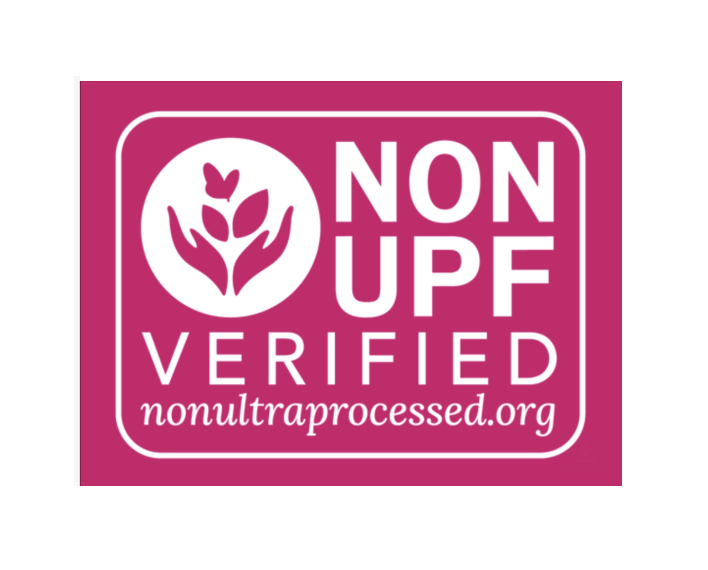
Against this backdrop, the Non-GMO Project’s new Non-UPF Verified Standard lands at a pivotal moment for CPG brands, retailers, and the entire natural and organic products ecosystem.
From GMOs to UPFs: The Non-GMO Project widens its lens
On Nov. 12, the Non-GMO Project formally announced Version 1.0 of its Non-UPF Verified Standard, described as “the nation’s first comprehensive framework” for defining and verifying foods that are not ultra-processed, and called it the “first Non-UPF Verified standard to address the ultra-processed foods crisis.”
The new certification builds on the Non-GMO Project’s 18-year record of third-party verification and its iconic butterfly seal, now found on more than 63,000 products that represent an estimated $50 billion in annual sales.
“Around the world, more people are waking up to the realization that much of what fills our grocery carts is no longer truly food,” said Megan Westgate, founder and CEO of the Non-GMO Project and Non-UPF Verified, at a recent webinar unveiling the new standard. “Doctors and researchers increasingly describe these products as ‘processed edible substances’—industrial formulations engineered for palatability and shelf life rather than nutrition.”
Westgate is careful to say this is not an attack on processing per se. As she told Food Business News: “Processing itself isn’t the enemy. It’s how and why it’s done that matters. The Non-UPF Standard defines a middle ground where convenience and nourishment can genuinely coexist.”
In practice, that “middle ground” is defined by a rigorous ingredient and processing criteria, which are detailed in the Non-UPF Verified Standard v1.0.
Why ultra-processed foods are under fire
The Lancet series and surrounding news coverage sharpen a distinction many in the natural channel have understood for decades: It’s not just what’s in food, but also how it’s made.
The Guardian’s coverage of the Lancet research noted that more than half of the average diet in the U.S. and U.K. now consists of UPFs, with some low-income and younger populations getting up to 80% of their calories from these products. Citing CDC data, ABC News reported that Americans on average consume over half of their daily calories from UPFs.
The Lancet authors point to several mechanisms by which UPFs drive harm:
Disrupted food structure and “hyper-palatability” that encourage overeating and rapid absorption of refined starches and sugars.
High levels of added sugar, sodium, and unhealthy fats.
Widespread use of cosmetic additives and ultra-refined ingredients, some of which may alter gut microbiota or expose consumers to contaminants such as phthalates.
Aggressive marketing and product design that exploit biological reward pathways, particularly in children (MAHA Commission).
In the NPR report, Lancet series coauthor Marion Nestle, professor emerita of nutrition and food studies at NYU and author of “Food Politics,” drew a direct line between the science and the need for policy and marketplace action. She noted that some countries, including Chile, have already shown that warning labels, marketing restrictions, and school food reforms can curb UPF intake. “It’s time to take on the industry,” Nestle said. “They’ve got to stop.”
The Lancet series and recent media reporting all make the point: Ultra-processed foods are not just one more dietary risk factor. They are a structural driver of global chronic disease—and the food system will not change without clear definitions, strong incentives, and credible labels.
‘Disconnected’: What consumers are telling us
In October, the Non-GMO Project released a consumer research report titled “Disconnected,” which summarized the attitudes of U.S. shoppers toward UPFs and the modern food system. Some of the topline numbers from “Disconnected” and related research are striking:
A 2024 Non-GMO Project survey found that 85% of Americans want to avoid ultra-processed foods, but most say they feel overwhelmed and unsupported in trying to do so.
Internal research from the Non-GMO Project’s Food Integrity Collective showed that 68% of shoppers actively try to avoid UPFs, and 70% say they need clearer labeling or third-party verification.
New Hope Network reported that 72% of Americans say they are trying to avoid ultra-processed foods, signaling a powerful demand across mainstream and natural retail.
“Disconnected” emphasized that consumers feel the food system is “out of their hands” — dominated by large corporations using engineered ingredients that are disconnected from natural food sources.
In other words, shoppers are ahead of policy. They are already looking for ways to opt out of UPFs, but they lack tools they can trust. That, more than anything, is the market gap the Non-UPF Verified Standard aims to fill.
The architecture of the Non-UPF Verified Standard
The Non-UPF Verified Standard approaches ultra-processing through two essential frameworks: ingredient integrity and formulation, and processing limits.
1. Ingredient integrity and formulation
The standard targets ingredients that are either emblematic of ultra-processed formulations or under scientific scrutiny for metabolic, neurological, or gut impacts. Collectively, these criteria are designed to protect what the standard calls structural integrity, nourishment, and transparency, steering innovation away from “cosmetic” ingredients and toward minimally processed building blocks:
Non-nutritive and bio-transformed sweeteners (such as aspartame, sucralose, stevia extracts, erythritol, and other sugar alcohols) are prohibited as sugar substitutes. Minimally processed stevia leaf preparations may be allowed only at flavor-level use, not as a core sweetener.
Added sugars are capped by category, typically ranging from low single-digit percentages (by dry weight) for soups, sauces, snack foods, and proteins, to stricter limits for beverages and breakfast foods, and up to roughly 20% for desserts and 40% for some confectionery categories.
Gums, thickeners, hydrocolloids, and texturizers produced via industrial degradation or fermentation—such as carrageenan, microcrystalline cellulose, polysorbates, polydextrose, xanthan gum, and maltodextrin— are largely prohibited.
Artificial colors and certain processed oils are excluded.
Natural flavors are confined to use cases where the corresponding “real” ingredient is present and may not be used to mask the absence of whole foods.
2. Processing limits and food structure
Not all processing is equal. The Non-UPF Verified Standard distinguishes among permissible, conditional, and prohibited methods and requires that:
At least 70% of a product’s weight (or dry weight, for certain categories) must be minimally or moderately processed using permissible methods that preserve the food matrix.
Up to 30% may be “conditionally processed”—for example, certain protein isolates or powders—if they meet specific criteria.
High-impact chemical, structural, thermal, or biological modifications are not allowed, including synthetic biology and 3D-printed ingredients.
The intent is to address the very features UPF critics highlight: extensive fractionation and recombination of ingredients, aggressive “engineering” of texture and flavor, and techniques that break down food structure to the point where the body no longer recognizes the substance as food.
As the standard notes, UPF is as much about the degree and purpose of processing as about individual ingredients. The Non-UPF framework is one of the first to operationalize that insight in a way that is auditable at the product level.
The full standard is publicly posted at NonUltraProcessed.org. The Project has signaled that it will update its prohibited ingredient list annually based on emerging science and pilot feedback.
Pilot brands, early adopters and the reformulation challenge
If Non-UPF Verified is to matter, it has to show up on shelves. The early signs are promising.
A pilot cohort of 16 brands—including both mission-driven emerging companies and established names—has been working with the Non-GMO Project and independent technical administrators to test the Non-UPF verification model across nearly every aisle. In addition, New Hope Network reported that 200 brands are already on the wait list, and that the Non-UPF Verified seal is expected to begin appearing on packages in 2026.
In Douglas Brown’s New Hope Network feature, “Non-UPF Verified: Must-Knows for Natural Brands,” Westgate characterized the program as “a movement, not just a mark,” and noted that reformulation will be essential in categories dependent on gums, stabilizers, and added sugars. “We have some cleaning up to do in this industry,” she said. “Reformulations are needed. We need less sugars and gums. It’s going to be a process. But it does seem like brands are really paying attention.”
For many natural and organic manufacturers, the reformulation challenge may feel familiar. Non-GMO and organic standards forced reevaluation of supply chains and ingredient decks; Non-UPF now pushes deeper into how those ingredients are combined and processed.
For mission-driven brands backed by retailers that cater to ingredient-savvy shoppers, the upside could be substantial:
Differentiation in crowded categories such as ready-to-eat meals, plant-based meats, beverages, and snacks, where formulations can drift toward UPF territory even in “natural” sets.
Alignment with policy trends, as HHS, USDA, and FDA explore definitions and potential regulatory approaches to UPFs.
Deeper consumer trust, particularly among shoppers who already use Non-GMO Project and organic seals as navigational tools in the aisle.
For contract manufacturers and ingredient suppliers, however, this is more than a marketing play—it’s a roadmap for where formulation business is likely headed.
Industry response: Caution, criticism, and opportunity
The Non-UPF standard does not exist in a vacuum. Trade groups and conventional food manufacturers are watching closely and some are pushing back.
Food Business News noted that while states such as California have begun to legislate around certain additives and ultra-processed foods, groups like the Grain Foods Foundation argue that some UPFs can fit into healthy dietary patterns, especially when fortified or reformulated.
More broadly, many industry stakeholders have urged federal agencies to avoid definitions that hinge on processing intensity, arguing that frameworks like the NOVA classification system paint with too broad a brush and risk demonizing shelf-stable, affordable foods.
Westgate and her team acknowledge these debates. In FoodNavigator-USA’s report on the standard, she described the NOVA system as foundational but “not built to solve at the product level,” and emphasized that Non-UPF Verified is designed to be auditable, enforceable, and feasible within current food system realities.
At the same time, the Lancet series and global media coverage are shifting the terms of the debate. ABC News quoted experts who warn that global UPF proliferation is a major public health threat and that voluntary, incremental steps are unlikely to be enough.
In that context, voluntary third-party standards such as Non-UPF Verified may serve a dual role as a pre-regulatory signal to policymakers that industry is capable of responding to the science, and as a competitive differentiator for brands and retailers.
What it means for natural & organic CPG leadership
For marketers in the natural and organic products community, the Non-UPF Verified Standard is not just another badge on the front of the pack. It is a concrete response to three converging forces:
Escalating science: The Lancet series, joined by years of epidemiology, clinical research, and meta-analyses, makes a compelling case that UPFs are a unique risk category and that their impact is global.
Consumer anxiety and demand for coherence: Shoppers are hungry for standards that make sense of conflicting information and give them real agency.
Regulatory and reputational risk: As HHS and USDA gather input on UPF definitions, and as advocacy groups press for action, companies that stay tethered to hyper-processed formulations may find themselves on the wrong side of both policy and public opinion.
For natural and organic brands—many of which built their identity on getting ahead of GMO, pesticide, and synthetic additive concerns—Non-UPF Verified is an invitation to lead again. That leadership could take several forms:
Portfolio mapping: Assess where current SKUs fall on the processing spectrum, and identify quick wins for reformulation versus long-term R&D projects.
Supplier engagement: Challenge ingredient partners to develop minimally processed alternatives to emulsifiers, texturizers, and refined oils that violate the Non-UPF criteria.
Retailer collaboration: Work with retailers to pilot Non-UPF assortments, shelf tags, and consumer education in key categories.
Storytelling and transparency: Use packaging, digital channels, PR, and in-store activations to explain how Non-UPF Verified complements existing organic, non-GMO, regenerative and other claims.
A call to action
The publication of the Non-UPF Verified Standard is not the final word on ultra-processed foods; however, it is the opening of a new chapter. Science will continue to evolve. Policymakers will debate definitions and regulatory levers. Industry groups will push back, negotiate, and in some cases innovate.
But the direction is clear. When The Lancet, The New York Times, The Guardian, NPR, ABC News, and the natural products trade press all make the same point—that ultra-processed foods are undermining global health and consumer trust—the question for our industry is not whether to respond, but how quickly.
For brands that built their business on “better for you,” Non-UPF Verified offers a unique opportunity to help redefine what “better” means at the level of processing itself, and to align product portfolios with a future in which real food—and the integrity of how it’s made—once again takes center stage.
For more information on the standard, please refer to the full Non-UPF Verified Standard v1.0, the Non-GMO Project’s launch announcement, and the Disconnected research report, available via the Non-UPF team’s Google Drive link.
Steven Hoffman is Managing Director of Compass Natural Marketing, a strategic communications and brand development agency serving the natural and organic products industry. Learn more at www.compassnatural.com.