
Food fight: Who will deliver knockout punch in GMO battle?
Weighing in with Big Food, farms and biotechnology companies, trade associations and thousands of scientific experts: the pro-GMO viewpoint.
Source: Wikimedia Commons
Food fight: Who will deliver knockout punch in GMO battle?
by Michelle LeJeune on April 4, 2016
In this corner, weighing in with Big Food, farms and biotechnology companies, trade associations and thousands of scientific experts: the pro-GMO viewpoint.
In the opposite corner, weighing in with thousands of nervous American eaters, organic farmers, organic food-product makers and scientific experts who also number in the thousands: the anti-GMO viewpoint.
It’s this Foodie Century’s boxing match, and the stakes are high for both sides. Those with the first view stand to lose millions of customers to the perception that food containing genetically modified organisms is harmful when eaten, even indirectly through animals who have eaten GMO feed. Those with the second view believe they stand to lose their health by eating genetically modified food.
So who’s right?
Safety first
One of the first things a fourth-generation famer on the pro-GMO side will tell you is that seeds that have been genetically modified, which is any genetic alteration done to make a plant produce a desired characteristic (for example, resistance to weed-killing chemicals that don’t kill the corn plant), are “good.”
Dave Eckhardt of Eckhardt Farms plants barley, wheat, pinto beans, sugar beets and corn for grain and silage in LaSalle. When interviewed, Eckhardt was in a race against time to plant onions ahead of a spring storm that dumped two feet of snow the next day.
Genetically engineered foods “are necessary,” Eckhardt said. “As we take more acres out of production for homes and business, it’s imperative that they are used to keep food affordable. For farmers to be profitable, we need the traits.
“I’m not trying to jam GMOs down anybody’s throat,” he added.
“GMO technology frees him up from some pesticide use and makes him a better neighbor, Eckhardt said. “I don’t have to put down cutworm pesticide because the plants can fend off the cutworms. They (GMO seeds) are safe.”
“As we take more acres out of production for homes and business, it’s imperative that they are used to keep food affordable. For farmers to be profitable, we need the traits.”
Dave Eckhardt, Eckhardt Farms
“The system is what I challenge. We are here to challenge the dominant form of agriculture. It’s chemical warfare, and we aren’t going to feed the world this way.”
Steve Hoffman, Compass Natural LLC
To prove it, Eric Brown, communications director for the Greeley-based Colorado Corn association references 1,783 studies conducted from 2002 to 2012 by a variety of sources around the world, which were further examined by Italian scientists in 2013. Those scientists’ conclusion, published in the journal “Critical Review of Biotechnology” in 2013, was that a scientific consensus does exist that GMOs are not harmful. Brown added that the American Medical Association, National Academy of Sciences, World Health Organization, the European Commission, and many others among the world’s most respected scientific organizations have all found GMOs to be safe. He noted that each GM seed variety takes an average of $136 million and 13 years to bring to market because of safety studies.
Dangers cited
One of the first things someone opposed to GMOs will tell you is that a growing body of research brings up valid concerns with safety and mounting use of pesticide as well as the increased incidences of cancer. Together with increased use of glyphosate, a common weed controller also found in Roundup, it adds up to GMOs making our food supply dangerous.
Steve Hoffman, who heads up a company and a website called Compass Natural LLC, addresses, these topics in the rapid-fire delivery of a man who is used to having to make his points quickly.
“The system is what I challenge,” he said. “We are here to challenge the dominant form of agriculture. It’s chemical warfare, and we aren’t going to feed the world this way.”
Hoffman’s website is a landing place for green-business insiders to share news, insights, trends, commentary and analysis in the $290 billion market for natural, organic, and eco-friendly foods.
Hoffman points to “No Scientific Consensus on GMO Safety,” a report endorsed by 300 scientists worldwide and presented in 2014 by A. Hilbeck in an open-access publication called SpringerOpen. The report disagrees with the findings of the Italian scientists mentioned by Brown. It states that real research of GMO safety hasn’t been done. Therefore, it says, “claims of consensus on the safety of GMOs are not supported by objective analysis,”
The report indicates a probable bias in existing studies. The owners of GMO products require contracts in order to control analysis and its publication, and therefore most published studies on the topic were, “performed by biotechnology companies which are also responsible for commercializing these GM (genetically modified) plants.”
Higher yields touted
The GMO case for being an important component in solving the problem of world hunger mostly revolves around higher yields for crops that you don’t see in a grocery store. Corn used for animal feed is one example. In Colorado, the U.S. Department of Agriculture’s National Agricultural Statistic Service reported that yields were stagnant over the 15-year period beginning in 1980 prior to GMO-trait approval, but that they saw a 36 percent increase from 1995 to 2010 after GMO-trait approval.
“Any crop expert will tell you that GMOs played a significant role in that production increases, especially when considering the reduction in so many inputs (fuel, pesticides, water, land) per bushel,” Brown said.
But do GMOs stand between humanity and a food crisis? Alexis Baden-Mayer, political director of the Organic Consumers Association said nothing could be further from the truth.
“There are no GMO seeds marketed as producing higher yields,” she said. “Roundup is sprayed on plants that are used for animal feed and junk food such as corn, alfalfa, soybeans, canola and sugar beets.”
She maintained that the seeds used in GMOs are the ones with proven high yields and are mixed with GMO traits, and that similar yields might just as easily be produced by spraying crops with pesticides. Further, she said, traditional farming practices are better at feeding people. Baden-Mayer referred to a 2011 United Nations report titled, “Eco-Farming Can Double Farm Production in 10 Years,” which states, “Agroecological projects have shown an average crop yield increase of 80 percent in 57 developing countries.”
Weird science
In a story with so many layers, it isn’t surprising that cancer comes up. In this case, it’s through a 2012 study published in “Food and Chemical Toxicology” by Prof. Gilles-Eric Seralini, referenced by Hoffman, that showed glyphosate (again, found in Roundup), a probable carcinogen in laboratory rats that were exposed to it and died of tumors.
People are exposed to glyphosate through consumptions of plants and animals that eat plants sprayed with this weed killer.
Does that mean increased cancer risk?
Hoffman said yes and pointed to the Seralini study as well as an article published by the International Agency for Research on Cancer last year in “The Lancet Oncology” that classified glyphosate as probably carcinogenic to humans.
Mark Sponsler, executive director of Colorado Corn, said no. He said drinking large amounts of coffee, another probable carcinogen, is just as likely to cause cancer and death.
“Glyphosate is among the most researched and tested compounds on the planet,” he said. “GMO haters and people who believe Monsanto is the evil empire attempt to define what science is.”
GMO labeling issues
No discussion of the GMO issue would be complete without touching on the topic of labeling. Here, too, the knots to untangle are complicated for both sides. Connecticut, Maine and Vermont have passed GMO labeling laws. Thirty other states have introduced some kind of GMO labeling legislation. In Colorado, Proposition 105, which called for labeling, lost in the polls in 2014.
But what if you just want to have a non-GMO label on your granola? As the owner of Boulder Granola, Jody Nagel is a natural-foods vendor who has navigated these waters and has emerged as confused as when she began. It cost her thousands to get the non-GMO project label with the butterfly, the one retailers and their customers recognize most.
“We were already USDA-certified organic, but the retailers trust the non-GMO project,” she said. “It took us a year to get certified that way, and even if there is no change in ingredients, it cost an additional $1,200 a year to keep it.”
Nagel said she wished the whole GMO thing were simpler, but she said she moved to Colorado from Connecticut for organic food. The increased scrutiny of food purity is why she’s here and in business in the first place.
“That’s what my brand has always been about,” Nagel said. “Our motto is, ‘Unleash your inner hippie.’ I’m not talking about a hippie from the ’60s. I’m talking about a modern-day hippie who is saying, ‘Wait a moment. What are we allowing here? I like that we are questioning things.’ ”
A new ag event is planted
The staff of eastern Colorado business publication BizWest believes their first annual Food and Ag Summit was a success.

Photo: Fort Morgan Times
A new ag event is planted
The first BizWest Food and Ag Summit draws around 200 people
By Stephanie Alderton
Times Staff Writer
The staff of eastern Colorado business publication BizWest believes their first annual Food and Ag Summit was a success.
The Boulder- and Fort Collins-based magazine hosted the inaugural Summit on Wednesday at The Ranch in Loveland. It was their first agriculture-focused conference, and it drew about 175 farmers and food experts from all over Colorado to hear and participate in panel discussions on some of the hottest topics in today's agriculture.
BizWest Publisher Jeff Nuttall said the company plans to make it an annual event.
"We've been doing events in conjunction with our digital and print publications for a long time, but we had not done anything in the food and ag space," Nuttall said. "So we decided it was time to venture into that."
[An estimated 175 people attended the first-ever BizWest Food and Ag Summit on Wednesday. The conference featured panel discussions on topics like]
An estimated 175 people attended the first-ever BizWest Food and Ag Summit on Wednesday. The conference featured panel discussions on topics like immigration, global trade and GMO's. (Stephanie Alderton / Fort Morgan Times)
The conference started with a talk from Devin Koontz of the Federal Drug Administration about the Food Modernization Act and how it affects farmers. The rest of the day was taken up by panel discussions on topics like immigration issues, global trade and genetically modified organisms, or GMO's.
Although many of the panels were about issues that affect nearly all farmers, such as immigration and financing, the conference's focus leaned toward organic and all-natural food production, which is often a touchy subject among traditional farmers. During the lunchtime "Regenerative Agriculture" panel, four people from the organic industry discussed the environmental benefits of organic and all-natural farming, as well as the increased demand for it among some consumers.
Advertisement
"There are many different companies that want to be able to tell their customers that they're producing their food in a sustainable way," said Rich Conant, a professor of ecosystem science and sustainability at Colorado State University. "Employers want to hire the best people that they can find, and those people are often interested in working for a company that makes a difference."
Steven Hoffman, managing director of Compass Natural Marketing, and L. Hunter Lovins, president of Natural Capitalism Solutions, made the case that organic farming can reverse climate change and replenish depleted ecosystems. A few people in the audience voiced skepticism about this.
Nuttall said each panel was designed to present a balanced perspective of the issues, though. In the GMO debate that finished out the conference, Hoffman joined a crop sciences professor, the board president of the Colorado Corn Growers Association and the director of marketing for Silk plant-based foods and beverages in a lively discussion.
A few minor technical difficulties plagued the conference, such as low battery on microphones and a malfunctioning video presentation. But for the most part, Nuttall said the feedback he received from attendees was positive.
"The people I had a chance to talk to thought it was very impactful," he said. "I know I learned a lot, and I look forward to more of the same."
Each guest at the Food and Ag Summit received a survey card with questions about their experience, including their thoughts on what the next conference topics should be. The BizWest team hasn't decided what next year will look like yet, but Nuttall said many of this year's topics will probably still be major issues then.
Stephanie Alderton: 970-867-5651 ext 227, salderton@fmtimes.com or twitter.com/slalderton
Source: Fort Morgan Times
Grab “Take Out with Ashley and Robyn”

For Immediate Release:
Contact:
Matt Tilley, Ashley Koff RD LLC, tel. 323.350.5770, ashleykoffapproved3@gmail.com
Grab “Take Out with Ashley and Robyn” the New Podcast Delivering Intimate and Inspiring Conversations with Today’s Food & Health Game Changers
“Take Out with Ashley and Robyn” answers the questions about our health that everyone is asking today – how did we get here, where are we going, and how can we make the necessary changes to ensure better food, better health for all who want it?
Boulder, CO (March 8, 2016) - Take Out invites you to hear from thought leaders and discover their less well-known stories about how they became personally passionate about creating change in food and health, and what they are doing today. A sampling of guests include actresses Teri Hatcher and KaDee Strickland, retired Bears football player Patrick Mannelly, Olympic skier Steve Nyman, celebrity chef Michel Nischan, ABC 7 Lori Corbin, visionary leaders at Clif Bar, Thrive Market, Manitoba Harvest and more. Take Out also speaks with celebrity makeup artist Christy Coleman, as well as government officials, leading healthcare practitioners, chief marketers, global food company executives, digital health revolutionaries, financial analysts, investors and more.
For over a decade, Ashley Koff RD and Robyn O’Brien’s individual work, focusing on asking the tough questions to generate effective tools for change, has garnered them collective status as industry game changers, media go-to experts, and leading health influencers. No sooner did their paths cross, and the two were regularly in discussions for how to collaborate to increase the impact of their work. They found their sweet spot – a shared vision focusing on not letting perfect be the enemy of good, but rather, on delivering better choices for all. “Take Out with Ashley and Robyn” evolved from conversations they've had personally or together with game changers and a desire to share the power of these stories from which they’ve learned.
Robyn and Ashley believe passionately that everyone can and should have the same resources they have – those that have guided them and continue to guide them in their work and personal lives. The best part about the podcast “We get to keep learning along with our listeners – I learn every time a guest answers or Robyn shares her points of view,” shared Ashley. Robyn echoes with enthusiasm “we have the privilege of bringing the personal stories of how and why game changers today entered this movement, and sharing their advice and love with our listeners.”
Grab “Take Out with Ashley and Robyn” each week for new conversations, stories, laughs, and deep insight on how to be and enable the change we need to see in our food and health.
About Ashley Koff RD

Ashley Koff RD is an award-winning dietitian, author, and speaker who created the Better Nutrition Simplified program – a virtual tool kit of resources to help everyone get better nutrition for better health. She lives in Washington DC with her dog, Rerun, plays the trumpet, is an obsessed basketball fan and love to fly fish www.AshleyKoffRD.com
About Robyn O'Brien

Robyn O’Brien is a financial analyst, bestselling author, strategic advisor and mother of four. Her well-recognized TEDx talk changed the conversation when she asked, “Are we allergic to food or what’s been done to it?” In the first part of her career in the food industry, she was part of an equity team that managed $20 billion in assets, and she covered the food industry. She lives in Boulder, Colorado with her husband and four children and loves to run www.robynobrien.com
Communications by Compass Natural Marketing
www.compassnatural.com
Hemp Never Tasted So Good! Seed Taken to New Heights
Tempt introduces coconut-hemp milk blend, hemp milk yogurt and hemp tofu “hempfu,” all soy free and Non-GMO Project Verified.

For Immediate Release:
Contact:
Donna Ratner, Tempt, 888.417.9343, donna@healthybrandsco.com
Steven Hoffman, Compass Natural, 303.807.1042, steve@compassnatural.com
Hemp Never Tasted So Good! Hemp Milk Meets Coconut Cream + 2 Pioneering Products Take the Seed to New Heights
Tempt introduces coconut-hemp milk blend, hemp milk yogurt and hemp tofu “hempfu,” all soy free and Non-GMO Project Verified at Natural Products Expo West.
Norwalk, CT (March 3, 2016) – Tempt offers a few more reasons to believe hemp truly is a miracle food. In addition to non-dairy milk, the innovative company adds two hemp-featuring line extensions and a new hemp-coconut milk blend all rich in omegas, protein and flavor. As with all Tempt products, the new SKUs are 100-percent plant based, 100-percent soy free, carrageenan free, gluten free, certified Kosher and Non-GMO Project Verified.
“Our mission is to promote healthy, holistic living,” said Donna Ratner, COO, CMO and co-owner of Tempt. “For us, that means being free of common allergens including soy which is often hard to avoid when looking for non-dairy alternatives. We’re here to make eating well easy.”

Coconut Cream + Hemp Milk = Yes, Please
Rich coconut cream combines with nutritious hemp milk to make the best non-dairy beverage even better. Tempt Coconut Hemp Milk is loaded with vitamins, minerals and all essential amino acids, omega 3s and medium chain fatty acids (MCFA’s), which support brain health. Look for Tempt Coconut Hemp Milk in gable cartons in the refrigerated section. Available in Original and Unsweetened flavors.
Don’t forget about the hemp milks that started it all! Tempt Hemp Milk is available in shelf-stable tetrapaks in 5 flavors: Original, Unsweetened Original, Vanilla, Unsweetened Vanilla and Chocolate.
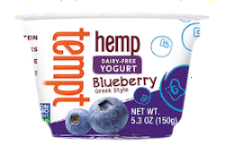
Introducing Tempt Hemp Yogurt
Your taste buds won’t believe Tempt’s Hemp Yogurt is 100-percent dairy free. This lower-in-sugar dairy alternative contains essential amino acids, live probiotic cultures to promote digestive health,and all the creamy, tangy richness of full dairy options.
“We’re excited! After test marketing last year, the flavor and texture has continued to improve. We’re confident that yogurt lovers and the dairy-free crowd alike will swoon for this first-of-its-kind non-dairy alternative. It’s just that good,” Ratner said.
Stock up on all 4 classic flavors: Original, Blueberry, Strawberry and Raspberry.
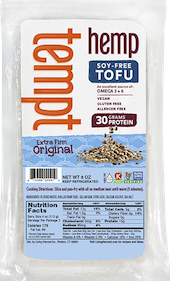
Never Tried Hempfu?
Tempt Hemp Tofu is 100 percent soy free and the first alternative to traditional tofu. “Hempfu” comes extra firm with a meaty consistency similar to a vegan steak. Convenient and delicious, two-serving packages make a nutritionally dense meal in under 10 minutes and deliver a whopping 30 grams of plant protein per serving. Available in 4 flavors: Original, Chorizo, Chile Lime, Chimichurri.
Celebrity Vegan Chef, Jason Wroble, cookbook author and host of the J-Wro Show on the Cooking Channel shares his quick and easy Tempt Hemp Tofu recipe: Soy-Free Tofu Scramble.
Come Try For Yourself
Coconut Hemp Milk, Hemp Yogurt, and Hemp Tofu (paired with Lisa’s Kitchen’s organic frozen vegetable meals) will be sampled at Natural Products Expo West. Visit Tempt in Booth # 4639.
About Tempt
Tempt is part of Healthy Brands Co., a collective of brands established in 2010 by Dan Ratner, former GE Capital executive, and Donna Ratner, one of the founding pioneers of MTV, devoted to promoting holistic living. “This company came out of our dedication and how we raised our 3 children. It’s an extension of who we already were. It was time we talk the talk and not just walk the walk,” Donna says. Donna is also a certified nutrition counselor through Columbia Teachers College and Integrative Nutrition. HBC includes a portfolio of 10 natural and organic brands including: Tempt, European Gourmet Bakery, Cherrybrook Kitchen, High County Kombucha and Lisa's Kitchen.
Natural Products Visionaries Eric Schnell and Marci Zaroff Launch BeyondBrands

For Immediate Release:
Contact:
BeyondBrands, 215.499.4173, namaste@beyondbrands.org
Steve Hoffman, Compass Natural, 303.807.1042, steve@compassnatural.com
Natural Products Visionaries Eric Schnell and Marci Zaroff Launch BeyondBrands: A Conscious Products Collective
New brand-building agency modeled as an international collective will assist start-up and established brands with exceptional vision, experience, brand strategy and finance.
New York, NY (March 2, 2016) — Eric Schnell and Marci Zaroff, the husband-and-wife team and recognized leaders in natural food/beverage and fashion, respectively, together announce the launch of BeyondBrands to bring expertise, brand strategy and product creation and launch support to established and next-generation brands in the healthy living and sustainability marketplace.

Zaroff is Founder of pioneering Ecofashion lifestyle brands including Under the Canopy and MetaWear. She also is Producer of the documentary film series THREAD | Driving Fashion Forward, highlighting designers, models and brands driving sustainability in the fashion industry. Marci is co-Founder of the Institute for Integrative Nutrition and Board Member of the Organic Trade Association, plus Chair of its Organic Fiber Council.
Schnell, Founder of MetaBrand and co-Founder of Steaz and I AM, has been active in the natural products industry for nearly two decades. Early in his career he served as an Executive at dietary supplements leader Country Life Vitamins and over the years he has nurtured and mentored many of the rising brands in natural beverages today, including Martha Stewart, Tia & Tamara and Runa Tea.
Together, Marci and Eric are spearheading a mission to shift old paradigms and drive an "ECOrenaissance” through their unique and disruptive model at BeyondBrands, which is committed to a “Quintuple Bottom Line” – of 5 Ps; passion, purpose, people, planet, prosperity.
“With natural and organic product sales at an all time high, we know the agency we have co-created with what we call a “Collective” practice of industry experts, offers an important resource and platform for brands recognizing the need to reach the important naturally oriented and health-conscious consumer,” says Schnell. “The commitment with our co-founding members is unified and our outlook is positive as we share our deep passion and expertise with our partner brands.”
BeyondBrands - Bridging Disruptors & Innovators with Established Leadership
The BeyondBrands “Collective”, a team of over 50 senior-level professionals from all areas of the Natural Products and Non-Profit Industries, have joined in a collaboration dedicated to a unique model of executive-level client services. Taking a step beyond the traditional structure of Brand Accelerator, offering advisory roles found today in entrepreneur leadership, the BeyondBrands Collective works individually or on project teams, based on skill sets, and consults to co-create and champion natural, organic and more conscious brands.
“I am excited to join forces with Eric, as well as an extraordinary group of industry veterans and game-changers,” says Zaroff. “With proven track records, extensive experience and absolute authority in their respective categories, our SuperTribe at BeyondBrands is here to serve as guides in today’s ever-evolving world,” she adds.
The 13 member co-Founding advisory team is comprised of seasoned Executives and natural channel leaders who share a rich history in taking natural brands to the next level:
Lee Brody – Multi Channel Marketing
Expertise: Brand Strategy, Marketing, Communications, Change Management
Brands: Airborne, ZonePerfect, Steaz, Marley Beverage, Heinz, Whitewave Foods.
Jon Lapham – Business Development
Expertise: Client Services, Business Development, Sales & Project Management
Brands: GNC, T-Mobile, I AM.
Veronica Park – Global Retail
Expertise: Retail Management, Operations, Finance, International Business.
Brands: Starbucks (24 years), Teavana, Bareburger.
Michael Lines – International Business
Expertise: International Business, Corporate Leadership, Operations, Business Planning,
Start up to $100m+ CPG, P&L Strategy.
Brands: Cadbury, Nabisco, FLOW Water.
Tony de Moraes – Branding & Design
Expertise: Branding, Design, Packaging, Advertising, Web, E-Commerce.
Brands: Steaz, FitPro, Plant Fusion, Element 18.
Lisa Leleu – Creative Strategy
Expertise: Creative Director, Brand strategist, Project Management & Ideation.
Brands: M&M Mars, Elmer’s, Kraft, ACME United.
Renee Loux – Sustainable Food Innovation
Expertise: Sustainable Food, food systems change, chef, restaurateur, journalist, TV personality, author of 4 books, educator, consultant, brand building, product development.
Brands: Exhale Spa, Andalou Naturals, Stone Barns Center for Food and Agriculture, Natural Gourmet Institute, Women’s health Magazine, Rodale Books, Gaia Herbs.
Autumn Bree-Fata – Global Change
Expertise: Global ‘change-maker’, forefront of global food movements, trends, product R&D. Integrative Health Coach, a connector, futuristic thinker. Successfully serving 10+ years as the First Lady of Manitoba Harvest, the global leading hemp food manufacturer. On the Exec Board Young President’s Org, Canadian Ambassador to Food for Life Global.
Crispin Argento – Sustainable & Eco Fashion
Expertise: Sustainable Fashion & Apparel strategist, Business Planning, Development, Product Design and Production; Branding, Marketing and Communications activation.
Doc Rob Streisfeld, NMD – Plant Nutrition & Cannabis Therapeutics
Expertise: Dr. of Naturopathy & Certified Natural Food Chef, has helped to identify and expand key health categories - probiotics, enzymes, whey protein, fermented foods, whole food supplements & medicinal cannabis.
Steven Hoffman – Public Relations & Communications
Expertise: Natural Channel PR & Marketing Communications, Sustainability Consulting, LOHAS Market Intelligence.
Brands: New Hope Natural Media, Arrowhead Mills, LOHAS Journal, Compass Natural
Ian Knowles – Investment & Funding
On a mission to invest in, develop and influence the next generation of best in class F&B and Sustainability opportunities. Ian is a partner at LB Equity, a middle market health & beauty private equity platform where he launched three brands, he is a co-founder and partner at Chelsea Ventures, a NYC based venture capital firm and is also a partner at The Lucas Group, a Bain Capital spinoff, private equity consulting and diligence firm.
Jeff Wasserman – Legal Strategy
Expertise: Dietary Supplement, Life Sciences and Cannabis industry expert, corporate law partner, entrepreneur and investor advising emerging growth companies on capital raising, strategic alliances, and exit transactions.
Additional experience includes licensing transactions in the entertainment industry, corporate counseling to private equity and venture capital funds, and public and private companies.
Others in the BeyondBrands Collective SuperTribe include: Ashley Koff RD, Michael Martin, Erin Schrode, Mirran Raphaely, Isaac Nichelson, Zhena Muzyka, Zak Zaidman, Yogi Cameron, Stephanie Bernstein, Greg Fleishman, Bob Sipper, Joyce Longfield, Josh Fouts, Lannie Moore, Brett Simon, Adomas Pranevicius, Mark Neveu, PhD, Jeremiah McElwee, Derek Mulhern, Amy Summers, Gary Tomchuck, Billy Lullo, Kenny Morrison, Jennifer Gilbert, Kenn Israel, Susan Leger-Ferraro, Samantha Thomas, Karen Ballou, Hudson Gaines-Ross, Lars Von Bennigsen, Janice Hall, Lauri Maerov, Terry Peterson, Sarah Jay, Holly Arnowitz, Lloyd Cambridge, Justin Tripodi, Alek Marfisi, and many more.
BeyondBrands co-Founding members will be at Natural Products Expo West, March 9-13, 2016, at the Anaheim Convention Center in Anaheim, CA, to focus on the new venture and will be available on the trade show floor and at events throughout the convention including being a sponsor and judge of the annual entrepreneur Pitch-Slam and Natural Products Business School events. To schedule a meeting, contact Eric Schnell at 215.499.4173 orericschnell@beyondbrands.org.
About BeyondBrands
Assembled by MetaBrand and Steaz Founder Eric Schnell, and Under the Canopy and MetaWear Founder Marci Zaroff, a team of over 50 senior-level natural lifestyle and eco-conscious experts is co-creating the future of full-service executive-level services and brand incubation and acceleration. This newly formed Conscious Products Collective, comprised of specialists from the most respected natural and organic food, beverage, fashion and beauty companies to the most recognized consumer brands in the world, passionately and collaboratively delivers results for partners and clients. For more info visitwww.beyondbrands.org.
Communications by: Compass Natural Marketing
www.compassnatural.com
This is Nuts! KARMA’s NEXTY Nomination Backed by Nutrition Science

For Immediate Release:
Contact:
Ganesh Nair, KARMA, tel 925.961.5491, ext. 509, ganesh@karmanuts.com
Steven Hoffman, Compass Natural, tel 303.807.1042, steve@compassnatural.com
This is Nuts! KARMA’s NEXTY Nomination Backed by Nutrition Science
Wrapped Cashews Are the Next Big Thing
NEXTY Award finalist KARMA® Nuts’ Wrapped® Cashews pack more healthfulness per bite, says new nutrition study. Among three finalists selected from over 500 nominees in the best snack/convenience category, KARMA® Nuts will introduce five new flavors and two new sizes to mark this year’s Natural Products Expo West.
Visit KARMA Nuts at booth #8709 at Natural Products Expo West, March 11-13, Anaheim Convention Center, Anaheim, CA.
Dublin, CA (March 2, 2016) – What goes around truly does come around, and that’s great news for KARMA® Nuts, which from the beginning committed to sourcing only the highest quality nuts for its cashew snack line. Now the company’s signature Wrapped® Cashew is being recognized as a nut above the rest for its amazing taste and nutritional benefits. The cashews were recently named a top-three finalist, selected among over 500 nominated in the snack/convenience category in the coveted NEXTY Awards for natural products.
It’s a Wrap
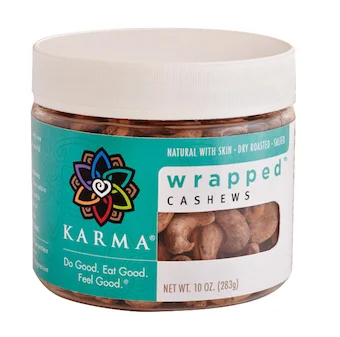
KARMA’s Wrapped® Cashews utilize an innovative, proprietary processing technique that makes the cashew’s skin crunchy and tasty. Fans are nuts for these cashews’ unparalleled rich “cashewy” flavor, plus double the fiber and more naturally occurring health-promoting antioxidants than regular (skinless) cashews.
Also, NIS Labs, a third-party testing facility that evaluates how natural products impact human physiology, recently documented the cellular antioxidant capacity of KARMA® Wrapped® Cashews, compared to other snack nuts.
“The testing to date shows that KARMA® Wrapped® Cashews provide a better cellular antioxidant protection than almonds, hazelnuts, regular cashews and pistachios,” says Gitte Jensen, Ph.D, author of the NIS Labs report. “This suggests that the antioxidants in the KARMA® Wrapped® Cashews are easily available to protect living cells from damaging free radical stress.”
NEXTY’s Nuts About KARMA®

The brand’s cutting edge processing method is now being recognized, having been selected as a finalist among 500 nominees for a NEXTY Award The official award of Natural Products Expo, the NEXTY recognizes innovation within the natural products industry and highlights brands poised for capturing mainstream attention. Of the thousands of companies that attend Natural Products Expo, only three are recognized as finalists in their respective categories.
“Cashews are the favorite snack nut choice of many consumers,” says Ganesh Nair, President of KARMA®. “Our Wrapped® Cashews make this favored nut even more nutritious and tasty by retaining their natural skins. We are very grateful that the New Hope NEXTY award judges provided us this honor to highlight this wholesome product to the health conscious visitors at Natural Products Expo West.”
Visit KARMA® Nuts in Booth 8709, at Natural Products Expo West taking place at the Anaheim Convention Center in Anaheim, CA on March 11-13, 2016.
More Sizes and Flavors
Now consumers will have more options for selecting just how many nuts to nosh. In addition to 10-oz jars, KARMA® introduces new 8-oz jars and easy on-the-go 1.5-oz snack packs. Currently available in Wrapped, Roasted and Raw Jumbo options, KARMA® also adds five new flavors to the line:
● Lightly Salted Wrapped
● Cinnamon Wrapped
● Lime Twist Wrapped
● Peri Peri Roasted (chili spice)
● Crunchy Coconut Roasted
KARMA® products are distributed through KeHE,UNFI and Amazon, and the new products are expected be available for order this summer.

About KARMA®
KARMA’s line of nut products draws from over 80 years of experience in sourcing, processing and exporting cashews. From the beginning, the company determined that it should foster healthy and fulfilling lifestyle choices along with a “pay it forward” mentality both as part of their company culture and through their line of nut products. With this in mind, they created their company motto: Do Good. Eat Good. Feel Good®.
“At KARMA®, we believe that goodness comes full circle and we strive to put our heart into everything we do,” says Ganesh Nair, President of KARMA®. “This is why we’re committed to sourcing only the highest quality, best tasting cashews and we travel the world to do so.”
Visit KARMA® at Expo West
See KARMA® Nuts in Booth 8709, at Natural Products Expo West taking place at the Anaheim Convention Center in Anaheim, CA on March 11-13, 2016. For more information visit www.KARMAnuts.com
Communications by Compass Natural Marketing
www.compassnatural.com
Zemas Madhouse Foods Introduces Ancient Whole Grain Cookies
For Immediate Release:
Contact:
Jill Motew, Zemas Madhouse Foods, tel 847.910.4512, jill@zemasfoods.com
Steven Hoffman, Compass Natural, tel 303.807.1042, steve@compassnatural.com
Zemas Madhouse Foods Introduces Ancient Whole Grain, Better for You Cookies at Natural Product Expo West
Award winning, free-from cookies are simple, delicious and ready-to-eat
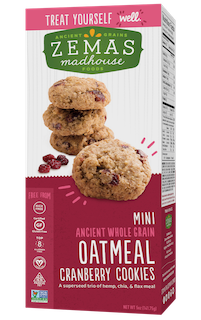
Highland Park, IL (MARCH 1, 2016) – Known for its ancient whole grain baking mixes, Zemas Madhouse Foods’ delicious, better for you and “free from” cookies will be available for sampling at Natural Products Food Expo West. Made with ancient whole grains and available in four flavors (Chocolate Chip, Double Chocolate Chip, Oatmeal Cranberry and Peruvian Sweet Potato Spice), these crispy, crunchy cookies are “free from” gluten, dairy, rice, GMOs and the top eight allergens.
Just like Zemas baking mixes, Zemas bite-size cookies are clean, simple and packed with better for you ingredients like nutrient-rich ancient whole grains and a superseed trio of chia, hemp and flaxmeal. In fact, Zema's Sweet Potato Spice Cookies received Prevention magazine’s 2016 Cleanest Packaged Food Award. Each year, Prevention tests countless products, awarding only those that taste great, and meet the magazine’s strict criteria for healthy, clean ingredients.
“Developing ready-to-eat cookies was a natural progression after our award-winning baking mixes,” Jill Motew, Founder and CEO of Zemas explains. “In terms of ready-to-eat snacks, my healthy cookies belong in every household pantry with their safe and better for you ingredients.”
Stop by our booth #5780 at Natural Products Expo West to try Zemas new bite size, crunchy cookies, grab a sample mix pouch of Zemas award-winning Sweet Potato Pancake mix and get a free Zemas tote! Also Zemas will offer 25 percent off all orders placed at Expo West.
Taste the Zemas Difference
Zemas cookies and baking mixes are Top 8 Allergen-Free, Non-GMO Project Verified, GFCO and Vegan certified, Kosher and made without refined sugar or rice flours. Zemas cookies and mixes are made of ancient whole grains (e.g., teff, millet, amaranth and quinoa) and a superseed trio (chia, hemp and flax) with built in Omega 3’s, fiber and protein.
“We are committed to providing consumers with the highest-quality cookies and baking mixes that are delicious, clean and entirely wholesome,” said Motew.
Zemas cookies will be available for $5.99 a box in March at www.zemasfoods.com.



About Zemas Madhouse Foods
Zemas Madhouse Foods is dedicated to manufacturing gluten-free, ancient whole grain cookies and baking mixes that support a clean eating lifestyle through the use of minimally processed ingredients that can safely be a part of diets that are limited, allergy-free and for those looking for overall health and wellness. Zemas commits to being free of the top 8 allergens (dairy, soy, eggs, shellfish, peanuts, tree nuts, wheat, fish) as well as rice, sesame, yeast, sulfites, additives, trans fats, preservatives and refined sugar. Zemas Madhouse Foods cookies and baking mixes are available at select Whole Foods and specialty stores across the country, online retailers and at www.zemasfoods.com.
Communications by: Compass Natural Marketing
www.compassnatural.com
What we talk about when we talk about GMOs
If you want a front row seat to the national fight over GMOs head to Boulder County, Colorado.
Source: Wikimedia Commons
What we talk about when we talk about GMOs
FEB. 28, 2016
Luke Runyon is Harvest Public Media’s reporter based at KUNC in northern Colorado.
If you want a front row seat to the national fight over GMOs head to Boulder County, Colorado.
GMOs, or more precisely, genetically-engineered crops, are lightning rods in discussions of our food. For the farmers who grow them and the scientists who create them, they’re a wonder of technology. For those opposed, the plants represent all that’s wrong with modern agriculture.
That disagreement is playing out in Boulder County, where an elected board of commissioners is considering whether to pull the plants off large swathes of publicly-owned land and bar farmers from planting their preferred crops on fields they lease from the county.
“The fundamental of this discussion is that this is land that’s owned by the public,” says Ron Stewart, director of Boulder County’s Parks and Open Space Department.
Since the 1970s, the county has been aggressive in its land acquisition, an effort to prevent urban sprawl and preserve agricultural lands. The county buys farms and leases the land back to farmers. All told, the county manages more than 100,000 acres of pasture, forest trails and farms. Of that land, about 1 percent is planted with GMO corn and sugar beets every year.
Boulder County serves as a microcosm for the larger national, and international, debate about genetic engineering in agriculture. Conventional farmland butts up against headquarters for some of the most recognized organic food brands in the country. The city of Boulder is home to some of the most prestigious scientific organizations in the world. It’s also a hub of alternative and homeopathic medicine.
The county’s preserved farmland is a small island in the middle of rapidly expanding urban development. The urban dwellers and non-conventional farmers interspersed in it are more than willing to voice how they think farming on public land should be done. That puts the conventional farmers who lease public land in a unique position.
“The public, I think, rightly thinks it should have a significant input into what practices we should have on open space land,” Stewart says. “[Farmers] know they have to be involved in these types of issues in a way that most farmers across America never do.”
After county commissioners made it clear they’d be revisiting the county’s cropland policy in 2016, factions of proponents and opponents organized. The last time commissioners voted to allow GMO cultivation on county open space in 2011, the decision was unanimous. Five years later two new commissioners, Elise Jones and Deb Gardner — who both declined to comment for this story — created a new dynamic. Both voiced a desire to move away from GMO crops on county-owned land while campaigning in 2012.
Those kinds of campaign promises are emboldening community activists like independent health consultant Mary Smith and natural food marketer Steven Hoffman.
“Two of these county commissioners ran on a platform to ban GMOs,” Hoffman says. “It is why I supported them.”
Mary Smith says the open space lands, “are not being utilized for the benefit of the people of this community.”
“Instead they are being mined by conventional agriculture for commodity crops that are sent outside this community,” she says.
Smith and Hoffman list their concerns that stem from GMO cultivation on Boulder County’s public land. They lament organic farmers struggling to compete, agrichemical companies amassing economic power, pesticides seeping into streams, locally-produced foods lacking at Boulder markets. Important issues all, but not direct results from changing a plant’s genes.
For many conventional farmers, defending GMOs amounts to defending their livelihood or the ability to run their own business without interference. To them, the plants represent the march of agricultural technology, which has improved farm productivity since the end of World War II.
Opponents and proponents of the plant breeding technique lump together a range of genetically-engineered crops under the umbrella of “GMO,” and pack them full of social, political and economic meaning, instead of debating each new plant or technology on its merits.
When we think we’re talking about GMOs, are we really talking about them at all? Or do they serve more as a proxy?
“This is not about GMOs,” Smith says. “This is not about inputs. This is about our right to have access to good, healthful food.”
GMOs in many respects are a physical, tangible manifestation of a much larger set of economic and social concerns. Will Toor, a former Boulder County commissioner, knows that firsthand. He sat on the board the last time this issue came up five years ago.
“I certainly think it’s true that GMOs have become symbolic of something much larger,” Toor says.
“And I don’t think they’re a very good symbol at that.”
Toor was the mayor of Boulder when the city’s leaders voted to ban GMO cultivation on the city’s public land, what he calls a symbolic gesture as the city’s property included few parcels appropriate for crop production. When the issue came up during his commissioner tenure he decided to study up. The intense focus on genetic engineering misses the point, Toor says. He’d rather see people organizing for better water efficiency, soil health and adaptation to climate change.
“Those are the interesting questions, and they have almost nothing to do with GMO or non-GMO, or even organic and non-organic,” he says.
Farmers Jules Van Thuyne and Famuer Rasmussen lease some of Boulder County’s land to grow GMO corn and sugar beets. They also include malt barley and wheat in their annual crop rotations. For them, the crops are more than a symbol. The plants are another tool in a toolbox to raise a profitable crop, Rasmussen says.
“We have a win-win situation where we help [the Parks and Open Space Department] maintain their ground and it gives us an opportunity to do what we really enjoy making a living at, and that’s farming,” he says.
Because of certain contractual obligations, and the realities of the market for sugar beets, Van Thuyne says a ban on GMOs would upend his operations. He’s not even sure he’d be able to secure conventionally-bred seed to comply.
“These aren’t corporate farms,” Van Thuyne says. “These are farm families that have been here for several generations whose livelihood is very much affected by this decision.”
Ultimately, what happens to 1,000 acres of farmland on Colorado’s Front Range won’t tip the scales in the much larger national debate about GMOs. But one decision could speak volumes about how elected officials interpret science, and how deep the divide is between urban and rural communities.
Organic agriculture as a solution to climate change
we could remove up to 78 Gt (78,000,000,000 tons) of carbon from the atmosphere simply by rejuvenating soils that have been depleted of carbon by conventional farming methods.

Source: Wikimedia Commons
Organic agriculture as a solution to climate change
Feb 03, 2016
[Photo credit: Timothy Swinson]
Photo credit: Timothy Swinson
We’ve all heard about the effects that climate change is having on our Earth: hotter temperatures, sea level rises that threaten to gobble up our coast lines, and more severe weather events including droughts and flooding. The consequences are dire, but what can we as individuals do to remedy the situation? Should we give up our cars or vow to never set foot on a plane again? Luckily, combating climate change can be as simple as supporting organic agriculture. Numerous studies have demonstrated how switching from conventional to organic farming methods can decrease the amount of carbon in the atmosphere, and reduce greenhouse gas emissions and energy usage all while increasing our food security.
[Photo credit: Mikael Miettinen]
Photo credit: Mikael Miettinen
One of the primary ways in which humans contribute to global warming is by releasing the greenhouse gas carbon dioxide (CO2) into the atmosphere by burning fossil fuels such as gas or oil. For example, every time we drive our cars, we release CO2 into the atmosphere. As the amount of CO2 in the atmosphere increases, so will the severity of climate change. One way to reduce atmospheric CO2 and combat global warming is by transferring the carbon from the atmosphere onto the Earth’s surface. Soil contains more carbon than all of the air and forests in the world, and it also happens to be one of the easiest places to deposit carbon from greenhouse gasses.
[Photo Credit: Dwight Sipler]
Photo Credit: Dwight Sipler
According to a study published in the journalScience, we could remove up to 78 Gt (78,000,000,000 tons) of carbon from the atmosphere simply by rejuvenating soils that have been depleted of carbon by conventional farming methods. That’s enough to offset up to 15% of the entire world’s fossil fuel emissions. A study published in the Proceedings of the National Academy of the Sciences, determined that organic farming is an effective way to simultaneously restore carbon to our soils and reduce carbon in the atmosphere. Furthermore, a 30-year study comparing organic and conventional farming methods conducted by the Rodale Institute found that soils farmed using organic methods were healthier and continued to experience an increase in carbon-based organic matter over time. On the other hand, soils farmed using conventional methods saw reductions in soil carbon and nutrients.
[Photo credit: Chafer 33]
Photo credit: Chafer 33
Organic agriculture also leaves a much smaller environmental footprint than conventional agriculture. Research published in Current Agriculture Research Journal and by the Rodale Institute found that organic farming methods release significantly fewer greenhouse gasses and use less energy than conventional farming methods. Conventional farming relies heavily on the use of chemical fertilizers, herbicides, and pesticides. The synthesis, transport and application of these chemicals are very energy intensive. The Farm System Trials by the Rodale Institute found a 45% increase in energy use with conventional farming methods when compared to organic methods. Greenhouse gas emissions were 40% lower in organic farm systems than in conventional farming systems due to a combination of reduced need for fossil fuels and lower N2O emissions.
Have you ever noticed that during some years, produce is more expensive than it is in other years? Oftentimes this is because bad weather has destroyed crops, leading to a lower yield and forcing farmers to charge you more to make up for their losses. Climate change is ushering in a new era of climate extremes including severe droughts and heavy rains. According to the United States Global Change Research Project,farmers are already experiencing a decline in agricultural yields due to extreme weather events.
[Photo credit: Max Wolfe]
Photo credit: Max Wolfe
In a study comparing organic and conventional systems researchers found that organic farmlands performed better during droughts by capturing and storing water more efficiently than conventional farms. These same fields also outperformed the conventionally farmed fields during heavy rainstorms because they experienced less runoff and erosion. In a world where a more volatile climate is becoming the norm, organic agriculture is more resilient, ensuring greater food security than conventional agriculture. As Steve Hoffman from Compass Natural and Regeneration International says in his blogOrganic, Regenerative Agriculture a Low-Cost Solution to Climate Change,“It seems like a powerful solution to climate change lies literally right under our feet.”
To find out more about how organic agriculture can provide a solution to climate change, check out the panel discussion “Organic & Carbon: The Climate Change Connection”—which includes The Organic Center’s Science Advisory Board Member Dr. Kathleen Delate—at Natural Products Expo West this March.
Session Details
Date: Thursday, March 10, 2016
Time: 10:30 – 11:30 a.m.
Location: Anaheim Marriott, Grand Ballroom F
Track: Cultivating Organic
Title: Organic & Carbon: The Climate Change Connection
Confirmed Speakers: John Roulac (Nutiva), Tom Newmark, Kathleen Delate, Logan Peterman
Colorado’s Evolving at the 5th Annual Evolve Expo
For Immediate Release:
Contact:
Larry Cooper, Evolve Expo, tel 303.469.0306, lcooper@meetingsandevents.com
Steven Hoffman, Compass Natural, tel 303.807.1042, steve@compassnatural.com
Colorado’s Evolving at the 5th Annual Evolve Expo
Consumer Exhibition Showcases the Best of Healthy and Sustainable Living in the Rocky Mountains
Evolve Expo, April 30 - May 1, 2016
Keys to Positive Living Seminar – April 29, 2016
Denver, Colorado, National Western Complex, Hall of Education
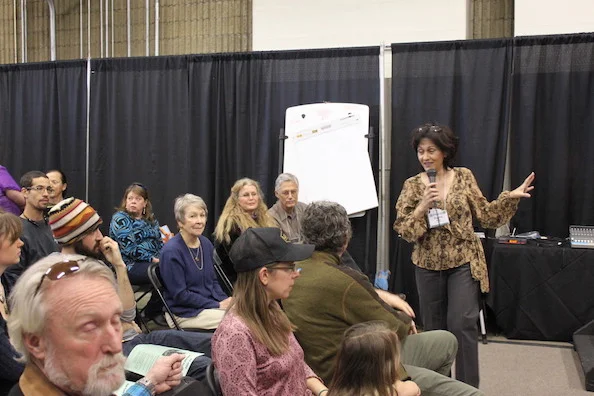
Colorado’s premier healthy lifestyles event, Evolve Expo – a consumer show filled with new ideas and simple solutions for balanced, healthy, happy, and sustainable lifestyles – will be held April 30 - May 1, 2016, at the National Western Complex, Hall of Education in Denver, in conjunction with the one day Keys to Positive Living Seminar. Some featured speakers include Dr. James Rouse, Dr. Steven Farmer and Dr. Nita Desai.
Denver, CO (February 3, 2016) - Local, regional and national healthy lifestyle brands will have a unique opportunity to reach Coloradans at Evolve Expo, set for April 30 - May 1 at the National Western Complex, Hall of Education in Denver.

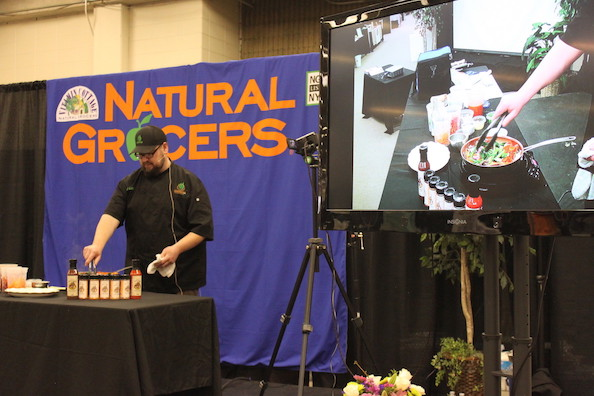
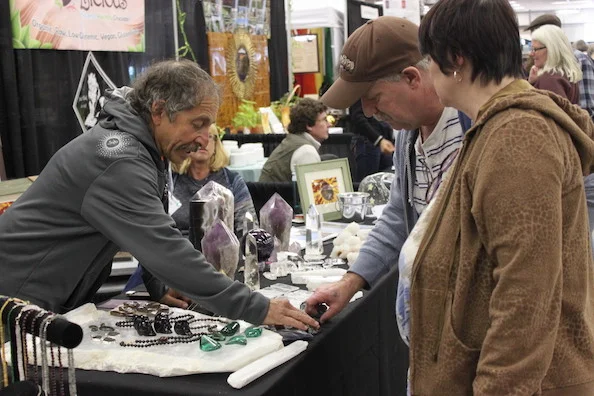
Now in its 5th year, Evolve Expo will feature leading exhibitors and sponsors from the natural, organic and sustainable product industry. Plus keynote speaker Dr. James Rouse, award winning author and host of Optimal Wellness on Denver’s Channel 9 News. The event also will feature product sampling, hands-on cooking and gardening demonstrations, alternative healthcare, yoga, energy technologies, educational workshops, and fun activities to engage the kids.

.jpg)


“The mission of Evolve Expo is to support the vibrant healthy lifestyles of the communities in the Rocky Mountain region and link consumers with emerging and established companies, services and brands,” says Larry Cooper, Evolve Expo co-founder and producer. “We are excited to create an experiential platform for positive living, with a focus on new ideas and simple solutions for balanced, healthy, happy, and sustainable lifestyles.”
The event, which is open to the public, will offer a plethora of resources and information through exhibits, demonstrations and activities covering six areas: Food and Nutrition, Gardening, Health and Wellness, Energy Technology and Sustainability, Positive Living, Business and Wealth.
Some Exhibitors at the 2016 Evolve Expo include Sprouts, Costco, Mary’s Chickens, Caveman Chefs, Vitamix, Well and Company, Purima, Satiama, Organo Gold Coffee, Clear Sky Medical, Global Wellness, Frangiosa Farms, LCA Project, For Heaven Sake and The Biomat Store. For more information on exhibiting at the show, visit here.
Sponsors for the 2016 Evolve Expo include Natural Awakening Magazine, Sprouts, The Growhaus, Denver Yoga Festival, Mason Works, Sill – Terhar Motors and Westgate Community School.
Explore, Learn and Discover at Evolve Expo
Kicking off Evolve Expo is Dr. James Rouse, award-winning author of 11 books including Colorado Fit Kitchen and Think, Eat, Move, Thrive: The Practice for an Awesome Life. A seasoned entrepreneur, Dr. Rouse has shared the stage in the past with such notables as Dr. Oz, Sir Richard Branson, and Shaquille O’Neil.
Additional speakers highlighting this year’s event include Dr. Steven Farmer, spiritual teacher and world renowned author of Healing Ancestral Karma, Earth Magic®, Animal Spirit Guides, Children’s Spirit Animal Stories and Sacred Ceremony; and Dr. Nita Desai, East/West Integrated Medicine and Salt Spa, Board-Certified Medical Doctor in Holistic Medicine and Certified Ayurvedic Practitioner.
The show also will feature a gardening area that includes demonstrations on soil preparation, worms and composting, planting, building raised beds, hydroponics, aquaponics, permaculture, harvesting, bee keeping, and more.
Other activities include two live cooking demonstrations areas using all organic and non-GMO ingredients, plus health care experts and medical doctors will present talks on nutrition and health, relaxation and mindfulness, plus a live yoga demonstration area. A separate area is set up for the children to learn, explore and create. Additional topics include energy independence, new car technology, wealth and business, sustainability, and the environment.
Show Details
Evolve Expo is open to the public. Ticket prices include free parking, entry to all educational sessions, keynote addresses, and entry into the exhibition hall.
Exhibitor registration forms are available here.
For information about exhibiting or sponsoring please contact Lyn Bacon,lyn@journeysforconsciousliving.com or Jillian Olson, jolson@meetingsandevents.com or Tryna Cooper, tryna@journeysforconsciousliving.com or call 303-469-0306.
Evolve Expo
National Western Complex, Hall of Education
4655 Humboldt St. Denver, CO 80216
Tel: 303-469-0306
Follow us on Facebook.
Expo Hours: Saturday (April 30): 10 am - 6 pm, Sunday (May 1): 10 am - 4 pm
Keys to Positive Living Seminar: Friday (April 29) – all day
About Evolve Expo
Evolve Expo, produced by Meetings and Events LLC and Journeys For Conscious Living, is an experiential platform for positive living, with a focus on new ideas and simple solutions for balanced, healthy, happy, and sustainable lifestyles. Evolve Expo offers opportunities to explore organic and healthy foods, gardening, health and wellness, sustainability and the environment, new energy technologies, wealth and business, mindfulness, and more.
Visit www.evolveexpos.com for more information.
Communications by: Compass Natural Marketing
www.compassnatural.com