
A Tealeaf’s Journey: Teatulia’s “Garden to Cup” Philosophy
Teatulia’s “garden to cup” philosophy brings pure whole leaf organic teas direct to customers from a single tea garden in Bangladesh.
A Tealeaf’s Journey: Teatulia’s “Garden to Cup” Philosophy Avoids Middlemen, Brings Freshest Premium Quality Organic Tea to Consumers
Contact:
Linda Appel Lipsius, Teatulia, tel 303.433.2980 x 102, linda@teatulia.com
Steven Hoffman, Compass Natural Marketing, tel 303.807.1042, steve@compassnatural.com
Teatulia’s “garden to cup” philosophy brings pure whole leaf organic teas direct to customers from a single tea garden in Northern Bangladesh's Tetulia region—the only tea garden in Bangladesh to be USDA certified organic. Never blended, these teas are imported fresh, resulting in a refreshingly clean flavor.

Denver, CO (January 23, 2012) – By sourcing directly from its own 1,500-acre certified organic tea garden in Northern Bangladesh, Denver-based Teatulia is able to bring the very freshest, highest quality line of pure whole leaf organic teas to America and the United Kingdom.
With a primary connection to its production partners in Bangladesh, Teatulia imports its organic tea direct to America and the UK, avoiding middlemen and commodity warehouses, where mainstream-traded teas often sit for years before reaching the consumer market.
Additionally, “Teatulia’s farm-to-table teas are never bulk blended by third-party traders,” says Teatulia Director of Marketing Chris Olsen, whereas almost all commercial teas sold in the West are blends, he says. The aim of blending, where a commercial tea can contain up to 35 different types of tea, according to the U.K. Tea Council, is to maintain constant taste, despite the loss of one or other source due to adverse weather or high prices. Also, teas are often mixed to garner a higher price by blending higher quality tea in with lesser quality varieties.
As such, Teatulia is garnering recognition as a leader in pure, “single-garden direct” tea, bringing the freshest, premium quality whole leaf tea grown without the use of toxic, synthetic pesticides and fertilizers at a better price to organic consumers and discerning tea drinkers everywhere, he says.
“Too often, tea is treated as a commodity, controlled by a small handful of multinational tea packers and brokers, sometimes taking two years or more by the time it is harvested, stored at auctioneers warehouses, blended and packed before making it to store shelves,” says Teatulia co-founder and CEO Linda Appel Lipsius. “As a small producer, Teatulia imports its tea fresh and direct to the US, taking only a fraction of the time commodity teas take to reach the store shelf.”
Teatulia also is pioneering the establishment of Bangladesh as a leading producer of sustainably harvested, premium tea. Its tea garden is the first certified organic tea garden in Bangladesh. Working with the community in the Tetulia Upazila region—Teatulia’s namesake—sales of Teatulia products help support education and community development in Bangladesh. Through its commitment to people and sustainability in the region, Teatulia has helped to significantly restore the eco-system, create jobs, and serve the local community by establishing women’s cattle lending programs, building new school libraries and adult literacy programs, and improving access to health care.
About Teatulia
Teatulia, founded in 2009, is a woman and minority owned business with a mission to provide “100% organic teas with a purpose.” With its line of single-origin, premium certified organic teas, Teatulia’s work helps support local economies, education and sustainability initiatives in northern Bangladesh. The company also is committed to fully compostable and recyclable packaging, down to the biodegradable teabags. Teatulia teas are available online atwww.teatulia.com, and at leading natural, organic and specialty food stores and select restaurants, cafes and coffee houses in Colorado and throughout the United States and in the United Kingdom. For more information, contact Linda Appel Lipsius at Teatulia, tel 303.433.2980, linda@teatulia.com.
On the Sustainable Food Horizon for 2012: Organic Market Trends
With the overall economy showing signs of recovery, Boston-based investment banking firm Canaccord Genuity is bullish on the natural and organic products industry.
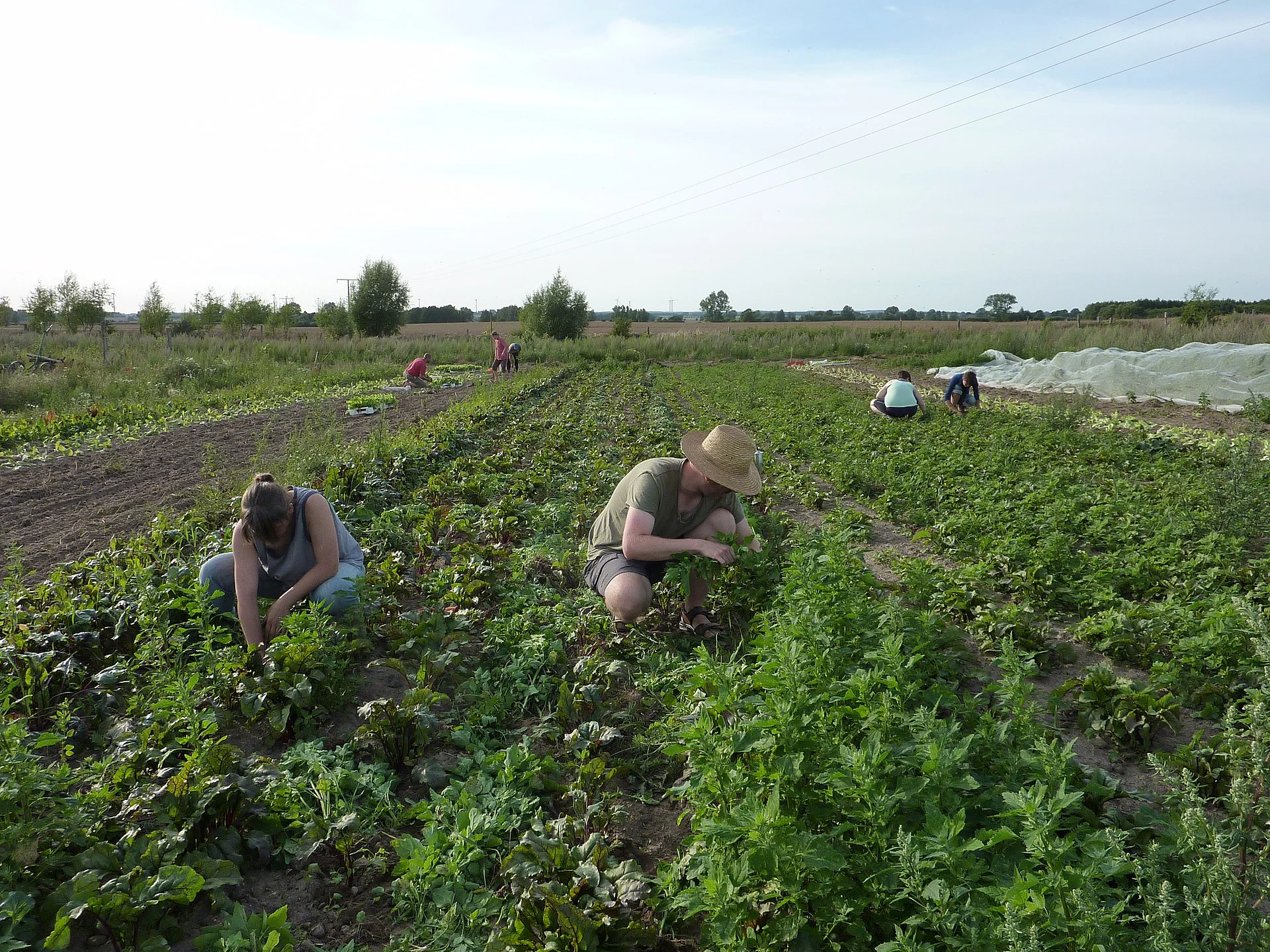
Source: Wikimedia Commons
As we embark on 2012, we wanted to highlight a few issues and trends that we feel impact the natural, organic and sustainable foods industry. We hope this presents some resources and food for thought as we face new challenges in growing the market for healthy, sustainable food.
Consumer Health Concerns Drive 10% Natural and Organic Products Growth
GMOs: Biotech Gains Ground; Consumers and Organic Industry Fight Back
Another Price of GMOs? Organic Dairy Feed Shortages and Higher Organic Milk Prices
Climate Change Is Affecting Agriculture; Rodale Shows Organic Farming More Resilient
Feeding The World’s 7 Billion; Surprise Fact: More People Are Overweight than Hungry
Fukushima Update: Cesium in Organic Milk, Contaminated Seafood on Horizon
Consumer Health Concerns Drive 10% Natural and Organic Products Growth
With the overall economy showing signs of recovery, Boston-based investment banking firm Canaccord Genuity is bullish on the natural and organic products industry, which, says analyst Scott Van Winkle, is currently growing in the 10% range due to strong consumer demand for quality, health and nutrition, compared to 1% growth in overall food sales. More than three-quarters of US families purchase some organic foods, according to a November 2011 Organic Trade Association (OTA) survey. Those surveyed revealed that their strongest motivator is the belief that organic products are “healthier for me and my children,” followed by concerns over the effects of pesticides, hormones, antibiotics and GMOs, and the desire to avoid highly processed or artificial ingredients. “In a time when the severity of the economy means making tough choices, it is extremely encouraging to see consumers vote with their values by including quality organic products in their shopping carts,” said OTA Executive Director Christine Bushway. While baby boomers have been early adopters of organic, younger Gen X and Gen Y consumers are emerging as supporters of organic and sustainable products, with Gen Y showing the highest usage of organic products and natural personal care; they just don’t have the same buying power yet as boomers, says research firm Natural Marketing Institute. However, it’s still tough out there for independent natural products retailers and manufacturers, as competition is intense for the healthy consumer’s dollar.
Canaccord Genuity’s Healthy Living Index of more than 40 publicly traded natural, organic and healthy lifestyles companies continues to outperform the S&P 500, with companies including UNFI, Whole Foods Market and Hain Celestial Group seen as darlings of Wall Street. “Strong growth is apparent across all channels of distribution,” says Van Winkle. According to OTA, sales of organic products totaled $29 billion in 2010, up 8% from 2009. Organic companies are creating jobs at three times the rate of businesses overall and supporting 14,540 organic farms and ranches in all 50 states, totaling 4.1 million acres of land currently in organic management, says OTA. Categories of organic products charting significant growth include fruits and vegetables (12% of all fruits and vegetables now sold in the US are organic), dairy, beverages, packaged foods, supplements, clothing and fiber, personal care products and pet foods. Meanwhile, total sales of natural and organic products by all retailers, including natural and mass merchandisers, grew 7.3% in 2010 to more than $65 billion, says industry communications leader New Hope Natural Media, with similar growth projected for the foreseeable future, as long as the economy continues to recover. Add to that the fact that sales of Non-GMO Verified products grew to $1 billion in 2011, and the health-conscious consumer is driving the market with the motto, “It’s the organic apple a day that keeps the doctor away!”
GMOs: Biotech Gains Ground; Consumers and Organic Industry Fight Back
GMO agriculture continues to present the greatest threat to organic and sustainable food production. Here in Boulder, CO, a center of organic products business, despite three years of contentious public hearings, a survey showing that 71% percent of Boulder County residents are against GMOs, and a growing body of research demonstrating the health and environmental risks associated with the widespread adoption of GMO agriculture, the Boulder County Commissioners voted unanimously in December to allow the cultivation of GMO sugar beets on taxpayer-owned Open Space land. The publicly owned land is leased to a handful of conventional farmers who claim they cannot compete unless they use GMO seed and Roundup herbicide. GMO farming continues to dominate more than 90% of major commodity crops, including corn, soy, cotton, canola and sugar beets. This past year GMO alfalfa was approved for market and Monsanto introduced GMO sweet corn to supermarkets’ produce sections. Both are prolific pollinators that will increase the risk of genetic drift and contamination of organic and native crops. Genetically engineered salmon designed to grow faster than native species narrowly missed FDA approval in 2011—but is still on the docket to be the first genetically engineered animal product to be approved for market. Should such a fish escape into the wild, a likely occurrence, native species could be seriously threatened. Meanwhile, scientists at the China Agricultural University are developing genetically engineered cows to produce milk that contains the characteristics of human breast milk that they hope to bring to market in two years.
The organic industry has been labeled Luddites in its opposition to GMOs by conservative Boulder columnist Bob Greenlee, and was discredited profusely in the Boulder County hearings as being against farmers’ right to coexist. Yet proponents of GMO agriculture ignore science that shows GMO insecticide toxins ingested in the diet were present in the blood of 93% of pregnant women and 80% of fetuses tested; that glyphosate, the active ingredient in Roundup herbicide, is so prevalent in the environment that it is being detected in the air, rain and rivers during the entire growing season in the Midwest; that engineered genes may jump into the DNA of other species in the environment with unknown consequences; that Roundup-resistant superweeds are emerging as a result of GMO farming; that pesticide use has actually increased by nearly 400 million pounds since the introduction of GMOs in 1996; that GMO corn is losing its effectiveness against insect pests in four major crop-producing states; that Purdue University Professor Emeritus Don Huber is being discredited for identifying an unknown new disease infecting plants and animals that has a strong association with GMO agriculture.
Now consumers and organic leaders are fighting back. In September, a number of organizations, including OTA, Rodale Institute, Environmental Working Group and others, together with the Center for Food Safety, filed a legal petition calling on the FDA to label genetically engineered foods; more than 450 partner organizations have signed on to help spread the word, and individuals are encouraged to sign the petition. In October, thousands of people participated in the 300-mile Right2Know March from New York to Washington to demand mandatory labeling of foods containing GMO ingredients. In California, petitioners are actively gathering signatures for an April 2012 deadline to place the California Genetically Engineered Food Act calling for labeling of GMO foods on the 2012 California ballot. The Organic Consumers Association’s Millions Against Monsanto has been supporting the initiative. Non-GMO activists in Boulder County are regrouping to pursue a referendum, beginning with a “GMO Free Boulder” benefit concert featuring Ziggy Marley on January 21. "If you put a label on genetically engineered food you might as well put a skull and crossbones on it," Norman Braksick, president of Asgrow Seed Co., a subsidiary of Monsanto, told the Kansas City Star in 1994, shortly before GMOs were first introduced to the marketplace. With 96% of consumers saying GMOs should be labeled, according to a 2011 MSNBC Health Poll, it’s a statement that stands true today.
Also, attention natural food manufacturers: a class action lawsuit filed in December against Frito Lay by a California law firm alleges that the company misleads consumers by making all-natural claims on its Tostitos and SunChips, which also contain GMO corn and vegetable oils, ingredients the claimant says are not natural. As many natural products contain GMO ingredients, the outcome of this case should be of interest to natural products businesses.
Another Price of GMOs? Organic Dairy Feed Shortages and Higher Organic Milk Prices
The increased production of GMO corn for conventional animal feed and biofuels, including corn ethanol, is costing organic consumers indirectly by creating a shortage of organic grain needed for feed for organic dairy operations. The cost of organic feed and hay has risen sharply in the past year as farmers find it more difficult to source non-GMO and organic grains, while the price farmers receive for their organic milk has not, says the December 29, 2011, New York Times. Yet, consumer sales of organic milk increased 15-17% from January through October 2011, according to USDA, while total conventional milk sales dropped 2%. Organic dairy farmers, many of whom have cut back on production because they can’t afford the feed, are demanding a 20% increase in the price they receive for their milk, creating out-of-stock situations in Publix stores throughout the Southeast, and retailers Wegmans and Target say they, too, have been affected by organic dairy shortages. The Times reported that organic dairy leader Organic Valley raised the price paid to farmers in August 2011, and was considering raising the price further this past December, alarmed that some organic dairy farmers were actually abandoning organic for conventional farming, where the cost of feed is significantly less and the price paid for conventional milk has risen. Meanwhile, the direct cost to organic consumers is going up: a half-gallon of organic milk that typically sells for $3.99 may now sell for $4.39, with some supermarket chains already raising their prices. Farmers are asking retailers to do their part by lowering their markup on organic milk so that higher prices do not drive consumers away. A couple of messages are garnered from this story: 1) Organic dairy farmers need to be paid more for their milk so they can make a sustainable living; 2) More and more acreage is being dedicated to GMO corn production for human and animal consumption and for the growing demand for ethanol, which is reducing organic land conversion, increasing GMO contamination risks, and raising the cost for organic feed and organic milk. Now with the deregulation of GMO alfalfa, which threatens organic alfalfa crops, organic dairy farmers are even more at risk.
Climate Change Is Affecting Agriculture; Rodale Shows Organic Farming More Resilient
First it was chocolate, and now peanut butter. In September, the International Center for Tropical Agriculture reported that rising temperatures and changing rainfall patterns associated with climate change will dramatically reduce land area suitable for cocoa production between 2030 and 2050, particularly in Ghana and the Ivory Coast in West Africa, where half the world’s cocoa is sourced, impacting the $9 billion cocoa industry. In October, the Wall Street Journal reported that record heat and drought in the southeastern US and Texas had decimated the peanut crop, raising prices 30-40% on supermarket shelves and leaving small organic peanut butter producers pinched for supplies. A 2011 crop-yield analysis by Stanford University revealed that warming temperatures have reduced wheat and maize harvests by 5.5% and 3.8%, respectively, from what they could have been during the past three decades.
While GMO agriculture continues to promote that it is the solution to climate change and world hunger, the fact is that conventional and GMO farming, with its intensive use of water, fossil fuels and chemicals, is responsible for 20% of all greenhouse gas emissions – more than any other sector of the economy. Meanwhile, in 2011, the venerable Rodale Institute released the results of its 30-year field trials, America’s longest-running comparison of organic and conventional farming practices. Its primary conclusions: 1) organic yields match conventional yields; 2) organic outperforms conventional in years of drought; 3) organic farming builds rather than depletes soil organic matter, making it a more sustainable system; 4) organic farming uses 45% less energy and is more efficient; 5) conventional systems produce 40% more greenhouse gases compared to organic farming practices. “As we face uncertain and extreme weather patterns, growing scarcity and expense of oil, lack of water, and a growing population, we will require farming systems that can adapt, withstand or even mitigate these problems while producing healthy, nourishing food. After 30 years of side-by-side research…Rodale Institute has demonstrated that organic farming is better equipped to feed us now and well into the ever changing future,” said the authors of the report.
Feeding The World’s 7 Billion; Surprise Fact: More People Are Overweight than Hungry
The world’s population reached 7 billion this year. Of that total, nearly 1 billion people suffer from chronic hunger. As has been true for a long time, much of the problem is rooted in political unrest, armed conflict and civil war vs. the ability to produce food or engage in trade. Rising prices and climate change exacerbate the issue. Proponents of industrial and GMO agriculture persist in dismissing organic as an option to feed the world, spreading misinformation that there isn’t enough land, even as scientific studies conclude that not only can organic feed the world, but that it may the most viable option of doing so. Research from the University of Michigan and the United Nations shows that in developing countries, where risk of famine is greatest, organic methods could double or triple crop yields. “Organic agriculture can be more conducive to food security in Africa than most conventional production systems, and it is more likely to be sustainable in the long term. Furthermore, evidence shows that organic agriculture can build up natural resources, strengthen communities and improve human capacity, thus improving food security by addressing many different causal factors simultaneously,” said the UN.
Meanwhile, here’s an astonishing fact: there are more overweight and obese people on the planet than hungry people. An estimated 1.46 billion adults worldwide are overweight, with 502 million of them considered obese, according to a 2011 World Health Organization report. Ironically, according to the Red Cross, excess nutrition leading to obesity is killing more people today than hunger. “If the free interplay of market forces has produced an outcome where 15% of humanity are hungry while 20% are overweight, something has gone wrong somewhere,” said Red Cross Secretary General Bekele Geleta. The obesity epidemic is not just affecting wealthy nations; it is sweeping into low and middle-income countries, says WHO, creating a dual problem of unhealthy weight gain in some segments of a country's population, and malnutrition in others. While nearly all countries are seeing rates rise, the severity of the problem varies greatly from country to country. In Japan, about one in every 20 adult women is obese, compared to one in four in Jordan, one in three in the United States and Mexico, and up to seven in 10 in Tonga. The across-the-board rise in obesity appears to be driven by changes in the global food system and the increased availability of processed foods, along with more sedentary lifestyles, say the authors. Adding more weight to the subject, researchers from Oxford and Columbia Universities forecast in The Lancet in August 2011 that nearly half of the US and UK populations will be obese by 2030, with a resulting increase in incidence of diabetes, heart disease, stroke and cancer. The combined medical costs associated with treatment of these preventable diseases are estimated to increase by approximately $50 - $60 billion per year in the US and by approximately £2 billion per year in the UK by 2030. Hence, effective policies to promote healthier weight also have economic benefits, the researchers conclude. Healthy food marketers that can help provide solutions to obesity will benefit as society realizes that an ounce of prevention is worth a pound of cure.
Equal Access: Improving the Availability of Healthy Food
Three primary obstacles remain to making healthy, natural and organic food more accessible. One is that the price of highly processed, cheaply produced food is just that—cheap, and organic products seem expensive in comparison. Market research firm the Hartman Group found that when consumers were asked why they didn’t buy more organic products, the reason most often cited (71% of the time) was that organic was too expensive. However, if you account for all the government subsidies enjoyed by industrial agriculture—more than $25 billion annually—and the hundreds of billions of dollars in external costs born by the public in terms of preventable, lifestyle-related diseases, including cancer, obesity and diabetes, plus damage to the environment often caused by chemical-intensive agriculture, then organically produced food, with its higher nutritional density and environmental benefits, is certainly the better value all around.
A second obstacle is that many people don’t have access to organic—especially those in inner city or rural areas. The USDA estimates that currently 30 million people in the United States live in “food deserts,” areas where healthy food is difficult to obtain, or “food swamps,” urban areas with no access to fresh foods but flooded with unhealthy fast food instead, according to the May/June 2011 Organic Processing. Progress is being made, with the advent of farmers markets, CSAs and urban agriculture programs. In an event produced by Compass Natural in September 2011 with Best Organics Inc. and held in partnership with the University of Colorado Deming Center for Entrepreneurship at the Leeds School of Business, Whole Foods Market Chair John Elstrott announced the retailer’s plans to reach new customers in historically low-income areas with new stores slated in neighborhoods of inner-city Detroit and New Orleans. "We believe all people want to eat healthy," Elstrott said. "We want to experiment with the inner-city demographic."
The third obstacle is that most children who eat school lunches are given no access to organic during a time when toxins in food can affect their development the most. First lady Michelle Obama’s Let’s Move! Campaign, which led to the president signing the Healthy Hunger-Free Kids Act of 2010—includes a $10-million Organic Pilot Program to help provide organic food choices in school nutrition programs. Also, many organic companies, including Nature’s Path, Veritable Vegetable, Organic Valley and others have been working to get organic food choices into schools. In higher education, a growing number of colleges are increasing healthy organic offerings and incorporating sustainability in their dining halls, including Cornell University, University of Colorado, and University of California at Berkeley.
Fukushima Update: Cesium in Organic Milk, Contaminated Seafood on Horizon
If you think that Fukushima hasn’t affected our food, think again. From rice and tea to beef and baby formula, radiation released from the March 2011 nuclear power plant disaster in Fukushima has contaminated a significant amount of Japan’s food, presenting an alarming health risk to its population. The nuclear explosions and subsequent meltdowns in three heavily damaged reactors, caused by an earthquake and tsunami, have released 70 tons of highly toxic nuclear material into the environment, according to nuclear power expert Arnie Gundersen of Fairewinds Associates, one of the world’s foremost authorities on the Fukushima event.
By May 2011, the enormous cloud of radioactive fallout created by the accident ended up not only in Japan, but also throughout North America, from Seattle to Boston, all the way to Europe, transported swiftly around the globe in the Jetstream. Most but not all of the fallout was deposited on the ground in the Cascades and the Rocky Mountains. Soon after, milk, drinking water and topsoil from Hawaii to Vermont began testing positive for radiation, including radioactive iodine and cesium, caused by the Fukushima disaster. By summer, a number of fruits, vegetables, mushrooms and other products grown or harvested in California—a major food producing region in the US—tested positive for radiation caused by Fukushima’s fallout.
At the end of September, more than six months after the Fukushima event, store-bought milk samples from an organic dairy producer in the San Francisco Bay Area with a Best Buy date of Oct. 10, 2011, tested positive for radioactive cesium 134 and cesium 137, according to the UC Berkeley Department of Nuclear Engineering, which has detected radiation in organic milk since testing began in mid-April. Also, tests found radioactive cesium 137 in topsoil in downtown Oakland and in the foothills of the Sierra Nevadas, suggesting widespread contamination. In November, UC Berkeley announced it was no longer testing soil or locally produced milk or vegetables, as its facilities were undergoing remodeling; however, the department stated that milk sampling would resume when the work is finished. In a report presented in late October by the Worcester Polytechnic Institute's Department of Civil & Environmental Engineering in Worcester, MA, researchers claim that US topsoil may actually contain levels of radioactive cesium more than 100 times higher than previously reported by UC Berkeley, suggesting a far greater impact on public health, farm production and fishing, particularly in the Pacific Northwest. Currently there is no monitoring being done by government agencies.
The good news is that airborne fallout has mostly abated since the initial explosions last March, yet in the Pacific Ocean, a vast floating debris field from the earthquake and tsunami containing potentially radioactive material is soon expected to wash up on shores of the Pacific Northwest, threatening the environment and coastal residents. Pacific seafood is also at risk, as more than 460 trillion bequerels of radioactive strontium, plutonium and other isotopes have leaked into the ocean from the stricken Japanese reactors. The incident is being called one of the world’s most severe marine pollution disasters in history. “There’s a witches brew of chemicals leaking into the ocean…that eventually works its way up to the salmon and tuna and mackerel at the top of the food chain,” said Arnie Gundersen in a Dec. 26, 2011, radio interview with environmental health expert Helen Caldicott, MD. “It will be next year before we start to see the highly contaminated [seafood]. I’m eating as much salmon as I can this year because I’m a little bit concerned about what will happen next year,” he said. According to Greenpeace, governments and retailers are not adequately protecting the public from radioactive contaminated Pacific seafood, still sold unlabeled in Japan and international markets, including to the US, due to an alleged pact between the US and Japan.
Critical of the lack of testing of seafood by EPA, Gundersen said, “In our ports in the US, we have monitors that look for nuclear weapons; it’s likely that in a year from now, a truckload of tuna may fire off a radiation alarm because it’s loaded with cesium. At that point, hopefully, there will be a whistleblower at the dock to alert the authorities,” because, he says, the objective of the US, Japanese and other governments throughout the world has been to minimize the consequences of the disaster. “There’s way too much money on the line,” Gundersen concludes.
A lot of lives are at stake, too, starting with the young—infant mortality in the US has risen more than 10% since the Fukushima accident, say the authors of a new study published Dec. 19, 2011, in the International Journal of Health Sciences. The study links an estimated 14,000 excess deaths in the US alone, and potentially thousands more, to radioactive fallout from the Fukushima accident. The rise in reported deaths was highest among US infants under age one. “Deaths are seen across all ages, but we continue to find that infants are hardest hit because their tissues are rapidly multiplying, they have undeveloped immune systems, and the doses of radioisotopes are proportionally greater than for adults," the authors said.
In disturbing news reported by Reuters on December 28, scientists in Alaska are now investigating whether local seals are being sickened by radiation from Fukushima, as scores of ring seals have washed up on Alaska’s Arctic coastline since July, suffering or killed by a mysterious disease that is causing extensive lesions and patchy hair loss in the animals’ fur.
So, what can one do to protect oneself and family, as the costs of the Fukushima accident, estimated at $257 billion, continue to escalate? Eat Icelandic butter, North Atlantic salmon and vegetables grown in the Southern Hemisphere? How about advocating for greater safety regulations and monitoring of aging nuclear reactors in the US, particularly those situated in major earthquake and tsunami zones, and also trying to slow the ambitions of the likes of Sen. Lamar Alexander, R-Tenn., who wants to build 100 new nuclear plants in the US in the next 20-30 years? Because it can happen here, and our food system, economy and population centers are not prepared for the consequences. Nuclear energy is clean, until it isn’t, and we need to invest in alternatives. Get informed; stay active; make a difference: www.enenews.com; Greenpeace.
Steven Hoffman writes on issues in sustainable food and agriculture. He is Managing Partner of Compass Natural LLC, a full service marketing, communications and public relations agency serving natural, organic and sustainable businesses. He also is Co-owner of Best Organics Inc., a leading online retail provider of premium artisan organic gift basket collections. He is Cofounder of the annual LOHAS Forum green business conference, former Director of The Organic Center, dedicated to scientific research and education about organic food and farming, and former Editorial Director of the Natural Foods Merchandiser, a leading industry publication. Hoffman also served as Program Director for Natural Products Expo, the world’s largest natural and organic products trade expositions, and as Marketing Director for pioneering organic foods manufacturer Arrowhead Mills. As a Peace Corps Volunteer, Hoffman specialized in food, agriculture and education in Central America. He is a former director of the Philadelphia Urban Gardening Program, and holds a M.S. in Agriculture from Penn State University. Visit www.compassnatural.com.
Copyright 2012, Compass Natural LLC, Boulder, CO. www.compassnatural.com. All rights reserved.
Teatulia's One-Straw Revolution Brings Organic to Bangladesh
Inspired by the principles of Japanese farmer/philosopher Masanobu Fukuoka, author of The One-Straw Revolution.
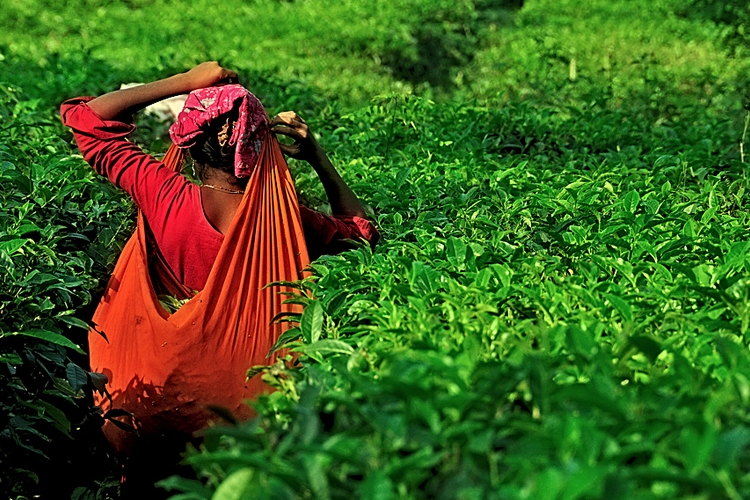
For Immediate Release:
Contact:
Linda Appel Lipsius, Teatulia, tel 303.433.2980 x 102, linda@teatulia.com
Steven Hoffman, Compass Natural Marketing, tel 303.807.1042, steve@compassnatural.com
Inspired by the principles of Japanese farmer/philosopher Masanobu Fukuoka, author of The One-Straw Revolution, Teatulia looks to expand its 1,500-acre, certified organic tea garden in northern Bangladesh, supporting local economies and providing premium organic teas to the U.S. and world markets.
Denver, Colo., (October 17, 2011) - There is a significant connection between America, Bangladesh and Japan when it comes to organic tea. Adopting sustainable farming techniques created by the late Japanese farmer and philosopher Masanobu Fukuoka, author of the acclaimed book The One-Straw Revolution, Denver-based organic tea company Teatulia has been successful in creating the only USDA-certified organic tea garden in Bangladesh—with a goal of being the largest organic tea garden in the world.
From this pristine 1,500-acre tea garden, where no toxic, synthetic pesticides are ever used, Teatulia imports a full line of award-winning, single garden direct teas from its namesake community, Tetulia Upazila, in Northern Bangladesh.
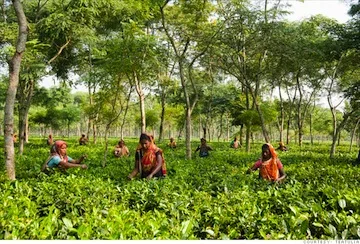
“As demand for Teatulia tea grows, so will the acreage of our organic tea farm. Our goal is to be the world’s largest organic tea garden,” says Linda Appel Lipsius, CEO and company cofounder. “Adopting principles from Masanobu Fukuoka’s ‘natural farming’ philosophy is resulting in a thriving ecosystem teeming with once endangered flora and fauna, and a more sustainable economy for the Tetulia Upazila region, plus it allows us to produce higher quality organic teas year after year,” she says.
First published in English in 1978 by Rodale Press, The One-Straw Revolution has been called “one of the founding documents of the alternative food movement, and indispensable to anyone hoping to understand the future of food and agriculture,” by Michael Pollan, renowned author of The Omnivore's Dilemma and In Defense of Food.
“Masanobu Fukuoka’s work is one of the key influences in our organic philosophy and practices,” says Kazi Anis Ahmed, Teatulia’s cofounder and partner based in Bangladesh. “While we have to adapt to the realities of a very different climate, the main takeaway is to farm with as little intervention as possible, a principle that is close to our hearts and one that is diligently followed.”
Teatulia’s One-Straw Revolution Farming
Masanobu Fukuoka, who first created “natural farming” in 1947, introduced a unique philosophy. Unique among tea producers, Teatulia has adopted techniques from The One-Straw Revolution into its own farming practice, beginning with a core understanding that nature lies beyond the reach of human intelligence and therefore humans need only minimal intervention in the roles for which nature is responsible.
Like Fukuoka did as a rice farmer in Japan, Teatulia does not plow, flood its land with unnatural irrigation sources, or use toxic, synthetic pesticides, fertilizers or other chemicals. Instead, nature is the guide to farming, and all unnecessary elements and inputs are peeled away. This style of non-invasive farming regenerates the ecosystems that make up Teatulia’s tea garden, producing a stimulating environment in which tea plants thrive.
The One-Straw Revolution teaches that making the most out of one’s land is to, in essence, allow nature to take its course. Fukuoka’s four principles of natural farming that have been adopted by Teatulia include:
· No cultivation or plowing; soils remain intact
· No chemical fertilizers or prepared compost
· No weeding by tillage or herbicides
· No dependence on toxic, synthetic pesticides or other chemicals
“Natural farming” is often seen as deceptively simple farming. The results, however, are nothing short of magical, says Kazi Anis Ahmed. Growing tea under sustainable farming practices creates pure teas that are the flavor of nature. Soils are nutrient-rich, eco-systems are balanced, and sustainable farming practices are taught to the community to help grow personal crops as well.
About Teatulia
Teatulia, founded in 2009, is a woman and minority owned business with a mission to provide “100% organic teas with a purpose.” With its line of single-origin, premium certified organic teas, Teatulia’s work helps support local economies, education and sustainability initiatives in northern Bangladesh. The company also is committed to fully compostable and recyclable packaging, down to the biodegradable teabags. Teatulia teas are available online at www.teatulia.com, and at leading natural, organic and specialty food stores and select restaurants, cafes and coffee houses in Colorado and throughout the United States and in the United Kingdom. For more information, contact Linda Appel Lipsius at Teatulia, tel 303.433.2980, linda@teatulia.com.
Ted Turner to be Honored for Protecting Prairie Dogs
Ted Turner named “Prairie Dog Protector of the Year” by The Humane Society of the United States’ Prairie Dog Coalition.
For Immediate Release:
Contact: Andrew Sovonick; 301-721-6463; asovonick@humanesociety.org
Named “Prairie Dog Protector of the Year” by The Humane Society of the United States’ Prairie Dog Coalition
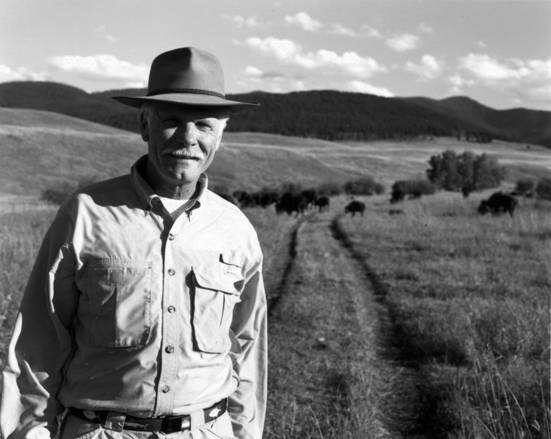
BOULDER, Colo. (October 14, 2011) – The Prairie Dog Coalition, a program of The Humane Society of the United States, is pleased to announce the 7th annual Living on Burrowed Time gala on Oct. 28, to honor those who have helped protect prairie dogs. This year’s event will celebrate the coalition’s 10th anniversary and will honor special guest Ted Turner as Prairie Dog Protector of the Year.
Turner’s work to bring back native wildlife populations is without parallel. His ranches contain more than 11,000 restored acres that are home to more than 150,000 prairie dogs. He chairs numerous foundations and businesses, including the Turner Foundation, which supports efforts for improving air and water quality, developing a sustainable energy future to protect earth’s climate, safeguarding environmental health, developing practices and policies to curb population growth rates and maintaining wildlife habitat protection.
“I am honored to receive this award from the Prairie Dog Coalition,” said Turner. “I feel it is our duty to protect these animals on our land -- not only because, as I’ve always said, it was their home before it was mine, but because these animals are absolutely essential to the health and well-being of surrounding species, as well as to the land itself.”
“The Coalition is pleased to be hosting such a grand event with the attendance of Mr. Turner and generous sponsors who stepped up for the prairie dogs,” said Lindsey Sterling-Krank, director of the Prairie Dog Coalition. “We have grown as an organization during the last ten years, implementing long-term solutions for imperiled prairie dogs, and that’s what this year’s Living on Burrowed Time Gala is all about: honoring Mr. Turner’s on-the-ground model that protects wildlife and extending that model into other key conservation areas.”
The gala will take place Oct. 28 at 5:30 p.m. at the St. Julien Hotel ballroom in Boulder. Tickets will include a four course gourmet dinner, organic wines, videos and live and silent auctions. The cost is $100 per ticket when bought in advance at prairiedogcoalition.org or by mail-in card, or $150 at the door. Ticket sales will go directly toward improving prairie dog management plans and field projects. Guests are asked to RSVP by Friday, Oct. 21.
The Prairie Dog Coalition would also like to thank several important sponsors for their support, including the Momentum Fund, David and Julie Worthington, the Red Empress Foundation, Friends of Wildlife Land Trust, Southern Plains Land Trust, Bob and Holly Larson and Diane Brinkmann.
-30-
Follow The HSUS on Twitter. See our work for animals on your iPhone by searching “HumaneTV” in the App Store.
The Humane Society of the United States is the nation's largest animal protection organization — backed by 11 million Americans, or one of every 28. For more than a half-century, The HSUS has been fighting for the protection of all animals through advocacy, education and hands-on programs. Celebrating animals and confronting cruelty — On the Web at humanesociety.org.
To learn more about Ted Turner, visit www.tedturner.com.
Teatulia Helping Reduce the Rocky Mountain Pine Beetle Blues
Sustainable packaging for retailers and food service partners via display racks made from the wood of pine trees killed by the Rocky Mountain Pine Beetle.
Contact:
Linda Appel Lipsius, Teatulia, tel 303.433.2980 x 102, linda@teatulia.com
Steven Hoffman, Compass Natural Marketing, tel 303.807.1042, steve@compassnatural.com
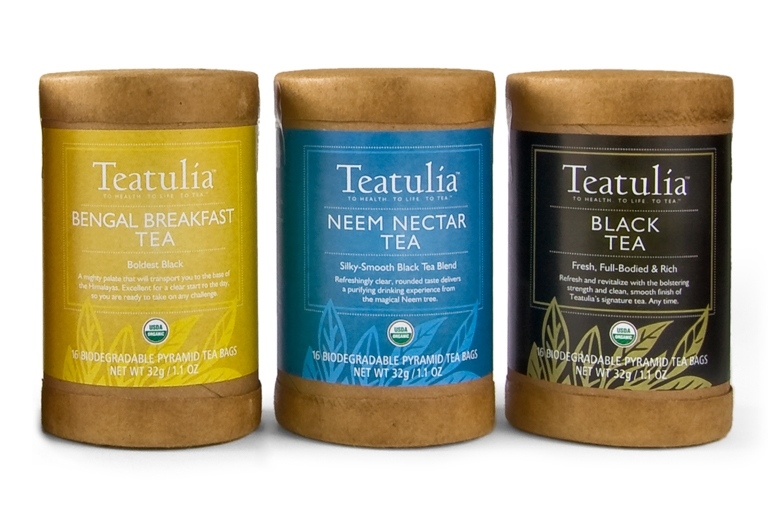
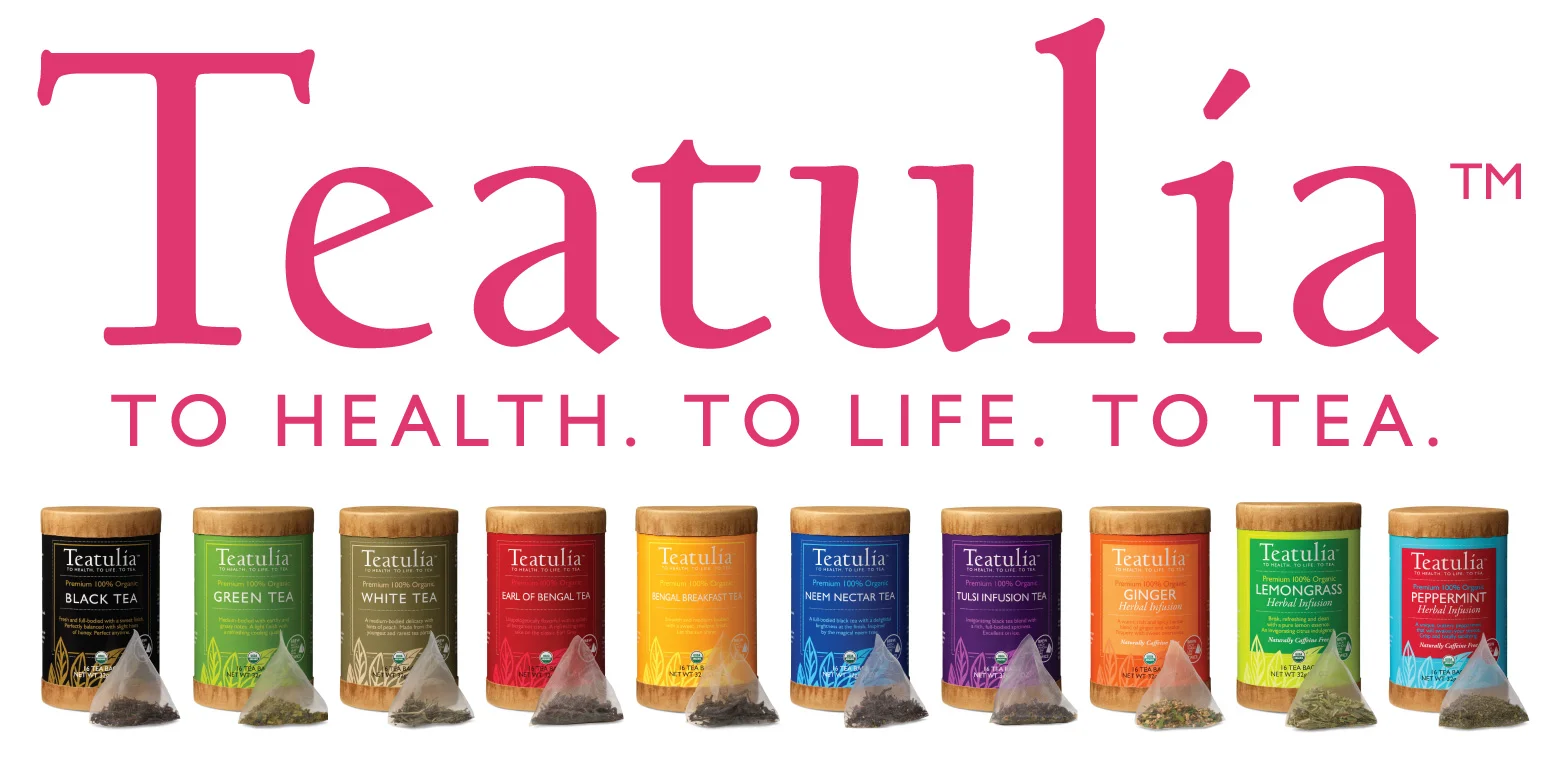
Denver, Colo., (September 26, 2011) - Teatulia, a Denver-based tea company offering USDA certified, premium organic tea from Northern Bangladesh, has a strong commitment to sustainability. Its packaging is made of recyclable and biodegradable paperboard canisters, unbleached labels, compostable corn silk pyramid tea bags, and individual tea wrappers made from compostable eucalyptus.
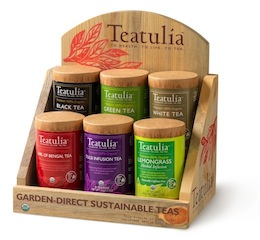
Now, Teatulia has expanded its sustainability commitment beyond its packaging to offer retailers and food service partners display racks made from the wood of pine trees killed by the Rocky Mountain Pine Beetle, an infestation that is ravaging forests in the West, including thousands of acres in Colorado. Teatulia is making use of this beautiful pine wood, streaked with blues, greens and greys, to create attractive displays while helping to clear forests of millions of dead trees to help encourage new growth.
According to the Colorado State Forest Service, there has been an outbreak of Rocky Mountain Pine Beetles since 1996, resulting in the loss of millions of trees in Colorado. The beetles tunnel into live pines such as lodgepole, ponderosa, Scotch and limber pines and lay eggs. The larvae live off the tree from fall until summer when they form into new adults and exit the tree. During this process the beetle also transmits a fungus that contaminates and ultimately kills the tree. This process leaves behind a blue-green coloration in the wood.
“Coloradans are saddened by the destruction the pine beetles have created. The degradation of our forests not only has a monumental effect on nature but also the timber industry. We want to support local businesses by putting this beautiful timber to use,” said Teatulia Co-Founder & CEO Linda Appel Lipsius.
Tea Chests to Treasure
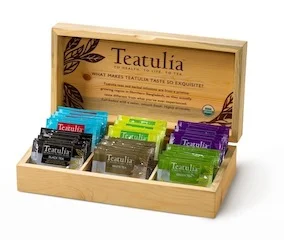
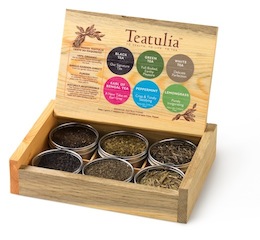
Teatulia’s award-winning tea and beautiful, sustainable packaging deserve to be displayed in natural Colorado pine. “Getting away from wire racks and creating an attractive, eye-catching display helps our retail and food service partners. We wanted to offer them something different,” says Chris Olsen, Teatulia’s Marketing Director. “By using natural wood and integrating modern print technology, we were able to create a display that captures Teatulia’s commitment to sustainability.”
Offering three distinctive displays for tea canisters, loose leaf and single serving teas, Teatulia helps local Colorado woodworkers use timber that some assume to be of lesser quality. However, as the saying goes, “one man’s trash is another man’s treasure.” “We love the unique look of each of these handmade chests," says Chris Olsen. “Every one of them is inspiring and tells its own story. Just like our tea collections.”
About Teatulia
Teatulia, founded in 2009, is a woman and minority owned business with a mission to provide “100% organic teas with a purpose.” With its line of single-origin, premium certified organic teas, Teatulia’s work helps support local economies, education and sustainability initiatives in northern Bangladesh. The company also is committed to fully compostable and recyclable packaging, down to the biodegradable teabags. Teatulia teas are available online at www.teatulia.com, and at leading natural, organic and specialty food stores and select restaurants, cafes and coffee houses in Colorado and throughout the United States and in the United Kingdom. For more information, contact Linda Appel Lipsius at Teatulia, tel 303.433.2980, linda@teatulia.com.
Love at First Flush: Teatulia’s 2011 Limited Edition Ananda Tea
Teatulia’s limited edition Ananda first flush black tea. Ananda comes from the “first flush,” meaning the harvest of new tea leaves.

For Immediate Release:
Contact:
Linda Appel Lipsius, Teatulia, tel 303.433.2980 x 102, linda@teatulia.com
Steven Hoffman, Compass Natural Marketing, tel 303.807.1042, steve@compassnatural.com
Love at First Flush: Teatulia’s 2011 Limited Edition Ananda Tea Harvested from First Tea Leaves of Spring, Available for Limited Time Only
Denver, Colo., (September 8, 2011) – Love at first flush—no, we’re not talking about getting red in the face—we’re talking about the reaction tea aficionados have when they taste Teatulia’s limited edition Ananda first flush black tea.
Teatulia, a Denver-based, woman and minority-owned organic tea company whose teas come from their own 2,000 organic tea garden in northern Bangladesh, announces the release of Ananda Tea, its premium quality, exquisitely flavored, limited edition first flush tea.
Ananda comes from the “first flush,” meaning the harvest of fresh new tea leaves that appear in the early spring after the period of winter dormancy. First flush harvests offer the purest tea leaves available, producing abundantly fresh, bright and flavorful tea. Teatulia’s first flush leaves produce a flavorful black tea that avid tea drinkers deem to be among the freshest and most unique cups of tea available, according to Teatulia co-founder and CEO Linda Appel Lipsius.
Terroir of Tea: Ananda Offers Taste of the Season, Growing Region
Beautiful, hand crafted single-estate organic teas comprise Teatulia’s offerings, and now the company is providing tea lovers a taste of the freshness of spring and a glimpse into the taste of the season’s future harvests.
Like wine, tea is influenced by weather and the local growing conditions that contribute to a tea’s flavor and aroma. Very special characteristics that appear only in the spring make drinking Teatulia’s Ananda first flush tea a rare opportunity to taste its seasonality.
“Ananda, meaning bliss in Sanskrit, was named after the experience one will have while enjoying the tea,” says Linda Appel Lipsius. With its light color, gentle aroma, and mild astringency, Ananda Tea has a pronounced taste of sweet malt with notes of soaked raisin and barley. According to Linda Appel Lipsius, tea lovers will appreciate Ananda’s complexity and refreshing qualities.
Spring Harvest Important to Bangladesh Community
Although the unique taste and purity of the tea draws immediate consumer attention to the product itself, it is the spring season that awakens the wider agricultural community from winter dormancy in northern Bangladesh. “Tea harvesters anxiously await nature’s growth. The high-quality spring tea provides an important, viable economic resource for the tea farm and the community,” says Teatulia co-founder Linda Appel Lipsius.
Since 2000, the Teatulia Cooperative has established revolutionary education, health and cattle-lending programs for the people working in the 2,000-acre certified organic tea garden and surrounding areas. All sales of Teatulia Organic Teas contribute to this mission, helping to better the lives of Bangladeshi men, women and children while rebuilding the local ecosystem. The company’s release of Ananda helps reach the community’s poverty alleviation goals.
The newest tea to the Teatulia catalog is available at www.Teatulia.com. As Ananda Tea comprises the rare first harvest of the spring season, it is available for a limited time only. Visit here for more information on Teatulia’s pure and exquisite, limited edition Ananda Tea.
About Teatulia
Teatulia, founded in 2009, is a woman and minority owned business with a mission to provide “100% organic teas with a purpose.” With its line of single-origin, premium certified organic teas, Teatulia’s work helps support local economies, education and sustainability initiatives in northern Bangladesh. The company also is committed to fully compostable and recyclable packaging, down to the biodegradable teabags. Teatulia teas are available online at www.teatulia.com, at Whole Foods Markets stores in the Northwest, Northeast, Southeast and Rocky Mountain region, and at select restaurants, cafes and coffee houses in Colorado and throughout the country. For more information, contact Linda Appel Lipsius at Teatulia, tel 303.433.2980, linda@teatulia.com.
Boulder County Localization Study
Increased food localization could add 1,700 new jobs in Boulder County, 24,000 in the Front Range and 31,000 in the state of Colorado.
For Immediate Release:
Contact:
Michael Brownlee, Localization Partners LLC, tel 303.494.1521, michael@transitioncolorado.org
Steven Hoffman, Compass Natural Marketing, tel 303.807.1042, steve@compassnatural.com
Boulder County Localization Study Shows 25% Local Food Shift Could Create 31,000 New Jobs in Colorado
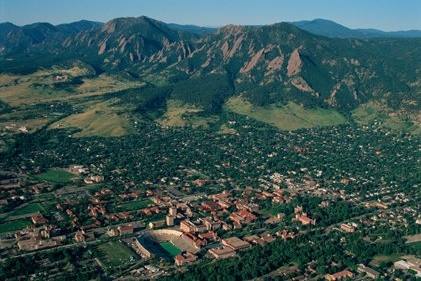
Increased food localization could add 1,700 new jobs in Boulder County, 24,000 in the Front Range and 31,000 in the state of Colorado. The effect of a 25% shift in food localization could produce $137 million in annual gross domestic product (GDP) for Boulder County, $1.6 billion for the Front Range, and $2.2 billion for the State of Colorado, says the author of a new research study funded by Transition Colorado and Boulder County.
Boulder, Colorado (September 7, 2011) – Boulder County could achieve a 25% shift towards food localization that would create a 14% increase in job growth and an additional $12 million in annual tax revenues, says economist and food system expert Michael Shuman.
Shuman presented his initial findings on September 1 in Boulder as part of EAT LOCAL! Week, an event produced by Transition Colorado to raise awareness of local food issues. Shuman’s Food Localization Study, funded by Transition Colorado and Boulder County, focuses on the potential economic impact that increased self-reliance in a local food economy would have on Boulder County, the Northern Colorado Front Range and the state of Colorado.
The study revealed that although the food industry accounted for only 5% of the economy in Boulder County, 13 counties in the Front Range, and for the entire state of Colorado, the impact on GDP would be significant.
Potential to Add $2.2 Billion to the Colorado Economy
In achieving 25% food localization, Boulder County’s GDP would increase annually by $137 million, $1.6 billion for the Front Range region and $2.2 billion for all of Colorado, according to the study. In a downturned economy these numbers could create the growth that government leaders have been searching for and citizens desperately need, said Shuman.
“Our goal at Transition Colorado is to provide Colorado counties with the tools they need to create resilient, self-reliant local food economies. The initial phase of this study has shown us that a 25% shift toward food localization creates jobs and tax revenue, and moves us toward a more sovereign, secure food system,” said Michael Brownlee, co-founder of the nonprofit Transition Colorado. His organization is coordinating the second phase of the study, the development of a comprehensive strategic plan to actually achieve an average of 25% food localization in Boulder County by 2020.
Shuman and Brownlee agree that becoming self-reliant in food means meeting consumer demand for food products locally. The goal is to source raw materials, commodities and finished goods as locally as possible—first from within the county, then regionally and throughout the state. It also means buying these products from locally owned businesses. This keeps the circle of money in the community, which increases fiscal health. “Localization is not about spending more money on food but building community wealth through local sourcing,” said Shuman.
Shuman has become known as an authority on how to build local economies. He is the Director of Research and Economic Development at the Business Alliance for Local Living Economies (BALLE). He holds an A.B. with distinction in economics and international relations from Stanford University and a J.D. from Stanford Law School. Shuman has authored three books on his subject matter, and has completed several local food studies in communities across the United States and the world. Regardless of the assignment, Shuman’s goal to promote community-based development is clear. His mantra: “Live Local, Think Global.”
“According to US Department of Agriculture data, Colorado citizens spend $12 billion per year on food, 97% of which is imported from outside the state,” said Michael Brownlee. Shuman regards these trade imbalances as food “leakages” which could also be viewed as opportunities to expand existing businesses or to establish new businesses that would contribute to a diversified local food system. This in turn creates growth, including jobs, by meeting an already existing demand, Shuman said.
Another factor behind food localization that many Boulderites might find interesting is the potential effect on food prices. As local production increases, prices for locally produced food—which is usually of higher quality—will become subject to greater competition, allowing the market to largely dictate price. At the same time there are other benefits including a reduction in distribution costs and the resulting carbon footprint. Other major benefits include rural development, public health and a potential halo over Boulder’s global image, according to Shuman.
How to Finance the Local Food Shift
As vibrant as the “buy local” sentiment is in Boulder County, Shuman believes there are ample resources to pursue these opportunities and diversify the local economy. Boulder, the Front Range and Colorado can create a secure and sovereign food system that will mitigate the local impacts of the global food crisis, he said.
According to Shuman’s calculations, Boulder County residents currently have $34 billion in short-term and long-term savings. The shift to a 25% localized food system would require an estimated $126 million in capital investments—equal to just .5% of long-term savings or 1.7% of the short-term savings, he projected. This largely means asking community members to minimally reduce their investments in Fortune 500 businesses and directing these funds instead into local food and farming enterprises. A 1% Fund for Local Food could be developed to raise the funds and help people initiate self-directed IRAs, another growing financial trend, Shuman suggested.
About Transition Colorado
Transition Colorado is a nonprofit 501c3 organization committed to fostering self-reliance among local communities in Colorado and beyond. Transition Colorado is the producer of the annual EAT LOCAL! Week, held this year in Boulder on August 27 – September 4, 2011, to educate the community and celebrate and promote the development of local food economies. The organization has recently launched Localization Partners LLC as a for-profit company seeking to catalyze investment in local food and farming enterprises through joint ventures and small-scale investments. For more information visit www.transitioncolorado.org or contact Michael Brownlee, tel 303.494.1521, michael@transitioncolorado.org.
Compass Natural Creates Eco Expo for First-ever Eco Music Festival
The first-ever Eco Music Festival - EMU, held July 4th Weekend in Snowmass/Aspen, Colorado, was very well received by festival-goers.


SNOWMASS, Colorado (July 6, 2011) - The first-ever Eco Music Festival - EMU, held July 4th Weekend in Snowmass/Aspen, Colorado, was very well received by festival-goers from Colorado and throughout the country. The event bridged sustainability with outdoor adventure, eco-exhibitors, and world-class musical acts, including Leftover Salmon, the New Mastersounds and the Disco Biscuits.
Compass Natural was engaged by EMU to help organize, market, sell and manage this year’s Eco Expo, featuring local, regional and national natural, organic and sustainable products companies. Exhibitors included Grant Family Farms, a renowned Colorado organic farm near Fort Collins that boasts the largest CSA (Community Supported Agriculture) program in the country; Slow Color, a Denver-based provider of naturally dyed linen scarves from India; Bottlehood, a Boulder-based company that repurposes glass bottles into vases, cocktail glasses, lamps, jewelry and more; Eco-Products, provider compostable disposable plates, glasses, utensils, napkins, etc.; energy bar maker Clif Bar; Honest Tea; Silver Peak Apothecary of Aspen; the Way of Nature Wilderness Retreats; and others.
Best Organics, a leading organic gift basket company owned in part by Compass Natural’s principals Steven Hoffman and Seleyn DeYarus, also displayed its Colorado's Best Organics gift box collections at EMU, as well as products from local artisan organic producers from throughout the state.
Adding to the festival atmosphere, exhibitors brought product samples, games, button makers, fun photo booths and more. Larger than life puppets, and lighted hoola hoop dancers regaled the crowd as the bands brought excellent music to the occasion. Leftover Salmon, a popular band originating from Colorado, energized the afternoon with its blend of rock and bluegrass; and the Disco Biscuits lighted up the night with their extended, groove-infused musical journeys.
Other musical acts including Tea Leaf Green and RJD2 kept the crowd dancing throughout the day on Saturday, July 2, the day the main acts took the stage. A welcoming concert on Thursday, June 30, featured funk-jazz combo the New Mastersounds from Leeds, England. On Friday, a Suset Social featured bands from throughout the country, and a pool party at the Viceroy Hotel capped the festival on Sunday.
The goal of EMU was to reduce the footprint of an outdoor music festival to as zero waste as possible. Efforts to reduce its carbon footprint included working with the nonprofit Trees Water People to plant trees for every ticket sold; all compostable disposable products provided by Eco-Products; recycling and composting stations; and exhibitor tents made from renewable bamboo, repurposed beetle-kill pine, and army surplus parachutes.

With a mission to combine sustainability, music and outdoor adventure, EMU, the Eco Music Festival's goal is to be an annual event that helps educate festivalgoers about being more conscious in their daily lives--and helps bring sustainability to the outdoor concert business. For more information, visit www.emufestival.com.
For more information about Best Organics and its artisan organic gift collections, or to purchase gifts, visit www.bouldersbestorganics.com, info@bouldersbestorganics.com. For more information about or to contact Compass Natural, visit www.compassnatural.com,info@compassnatural.com.
Fukushima in Our Food
Commentary by Steven Hoffman As the crippled reactors in Japan continue to emit radiation into the environment. Risk it will appear in our food.
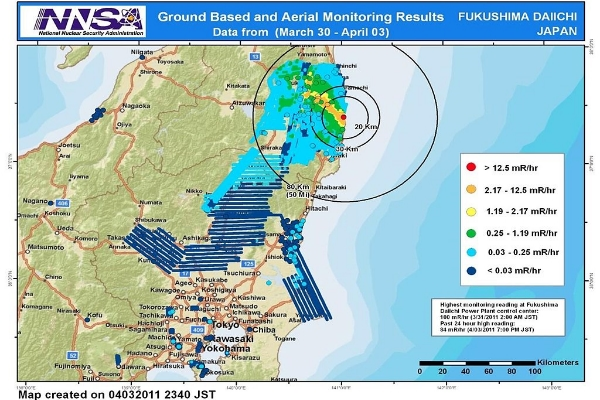
Fukushima in Our Food: Radiation from the Nuclear Meltdown Detected in California Farm Products
Commentary by Steven Hoffman As the crippled reactors in Japan continue to emit radiation into the environment, the risk grows that it will appear in our food. Radiation has already been detected in trace amounts in milk across the U.S., and in strawberries, kale and other vegetables in California.
“The Swiss government Wednesday decided to exit nuclear energy, phasing out the country's existing nuclear plants and seeking alternative energy sources to meet Switzerland's energy needs, following widespread security concerns in the wake of the Fukushima nuclear disaster in Japan.” - Dow Jones, May 25, 2011
"We believe we can show those countries who decide to abandon nuclear power—or not start using it—how it is possible to achieve growth, creating jobs and economic prosperity while shifting the energy supply toward renewable energies." - Chancellor Angela Merkel when announcing on May 30 that Germany would abandon nuclear power by 2022.
Boulder, Colo. (June 1, 2011) – Nuclear energy is clean…until it isn’t.
The emerging reality of the ongoing nuclear reactor crisis in Fukushima, Japan—now in its third month after a devastating earthquake and tsunami caused nuclear explosions at the plant 150 miles north of Tokyo—is that it is not under control at all. Three of the six reactors are in meltdown. The crippled reactors are acting like a huge dirty bomb, emitting significant quantities of radioactive isotopes that are, in fact, contaminating our air, water, soil and food in a steady stream that may continue for a long time.
And it’s not just affecting Japan, though they’re certainly getting the worst of it. Since the accident on March 12, radioactive fallout from Fukushima has been spreading to the U.S. and across the northern hemisphere. Elevated levels of radiation caused by the meltdowns in Japan have been detected in drinking water across the country, in rainwater, in soil, and in food grown on U.S. farms.
The mainstream media is not really reporting on this. Since the initial weeks of the accident, there has been a disturbing silence. Tokyo Electric Power Company (TEPCO), the utility that owns and operates the reactors, and the government of Japan have handled public relations around this monumental disaster about as well as BP handled the Gulf oil spill last summer, and they are losing credibility fast. The radiation has leaked much faster than TEPCO’s disclosure of information related to the crisis; it’s only now that we know that three of the six reactors at the plant are in full meltdown. One of the meltdowns occurred within hours of the accident on March 12, but was not revealed until May 15, more than two months later.
Crisis, What Crisis? In announcing the news, TEPCO admitted that it did not want the public to know the extent of the accident early on to avoid panic. They continue to downplay the time it will take to get the reactors under control and the threat this unprecedented crisis presents to our food, health and environment. While TEPCO has given a time estimate of six to nine months to control the reactors, on May 29 a senior TEPCO official admitted that it may be impossible to stabilize the crippled plant by the beginning of 2012. One U.S. official, John Kelly, deputy assistant secretary for nuclear reactor technologies at the U.S. Energy Department, told the Nuclear Regulatory Commission in late May that the Fukushima reactors are still in grave danger and may continue to vent radioactive steam for a year or more, according to the Washington Post.
With the reactors in meltdown, TEPCO employees are racing to avoid a potential “China Syndrome” as superhot nuclear fuel melts down through holes burned into the steel and concrete containment vessels into the earth, thus liberating it into the environment.
Additionally, highly toxic radioactive iodine, cesium, strontium, plutonium and other toxic man-made radionuclides have leaked unabated since March 12 into the ocean and atmosphere. The radiation is contaminating large areas of Japan. Monitoring the ocean around the Fukushima plant, Greenpeace reported on May 26 that the contamination is spreading over a wide area and accumulating in sea life, rather than simply dispersing like the Japanese authorities claimed would happen.
Also, radiation continues to blow in a steady stream across the Pacific Ocean toward North America, following the course of the jet stream in the atmosphere, and major currents in the ocean that flow from Japan to America. It took less than a month for radioactive iodine and cesium from the Fukushima nuclear accident to first show up in U.S. milk, and it continues to be detected in trace amounts in milk produced in California, one of the only states conducting any kind of testing for radiation in food.
Independent Tests Indicate Radiation Is Entering the U.S. Food Chain Authorities in the U.S. insist that there is no danger to public health or the environment from the Fukushima nuclear crisis, and that levels of radiation that have been detected in water, air, soil and food in North America since the accident are in such minuscule quantities as to present little to no danger. EPA discontinued its Fukushima radiation monitoring efforts, and FDA says there is no danger to our food or seafood and therefore testing is not necessary. There have been no calls since the accident for heightened nuclear safety inspections or to upgrade or decommission aging nuclear power plants in the U.S.
Yet, in limited testing conducted by states and independent labs since the accident, radioactive iodine and cesium—both toxic to human health—have appeared at elevated levels in milk and vegetables produced in California. Radiation has also been detected in milk sold in Arizona, Arkansas, Hawaii, Vermont and Washington since the accident.
Elevated levels of radioactivity have also been detected in drinking water in numerous municipalities from Los Angeles to Philadelphia, and in soil samples tested in California. Fallout is blanketing America and will do so for a prolonged period of time until they can somehow stop the crippled reactors from leaking any more radiation into the environment—a formidable task.
On May 25, the University of California Berkeley Department of Nuclear Engineering (UCB)—one of the few organizations testing food, soil, air and water in the U.S.—reported that it had detected the highest level of radioactive cesium 137 in nearly a month in raw milk samples taken from a dairy in Sonoma County where the cows are grass fed. UCB also reported elevated levels of cesium 134 and cesium 137 in pasteurized, homogenized milk samples with a “best by” date of May 26 from a Bay Area organic dairy “where the farmers are encouraged to feed their cows local grass.”
Iodine 131 in California Milk Suggests New Fallout Continues The State of Californiareported on May 2 that it detected higher levels of radioactive iodine 131 in milk samples tested at CalPoly Dairy Farm in San Luis Obispo compared to milk tested at the end of March. Additionally, the new milk samples contained trace amounts of radioactive cesium 134 and cesium 137, which were not seen in the March samples. The presence of iodine 131, with a short half-life of eight days, in the new milk samples indicates that even now, nuclear reactions are occurring at the crippled Japanese plant, bringing fresh fallout on a daily basis to Asia, North America and around the northern hemisphere.
The UCB nuclear engineering department emphasizes that levels of radiation measured in food samples grown in the U.S. are very low, and that there is little threat to public health from the fallout reaching the U.S. Yet they continue to find radioactivity at heightened levels due to the Fukushima meltdown in food grown in northern California—their chosen area of testing near the university. Little to no testing is being done in the rest of the country.
Dairy farmers on the Big Island of Hawaii, on the other hand, are taking a preventive approach to some of the highest levels of radiation detected in the U.S., and are now feeding boron in the form of sodium borate to their cows and goats at milking times along with kelp supplements as a way to help reduce elevated levels of radiation in milk. The dairy farmers are also considering applying boron to their pastures to mitigate radiation levels in the grass, reported Energy News on May 25. Boron is reported to act as a natural radiation absorber, and kelp may help prevent radioactive iodine from accumulating in the body.
Radiation Concentrates in Milk and Broad-leaf Vegetables Radiation concentrates in milk because cows eat grass, and grass and broad-leafed vegetables such as spinach and kale are among the first crops to accumulate radiation from nuclear fallout when it comes down in rain and dust and settles on the leaves and surrounding soil.
Organically raised cows are more vulnerable, as they are required to eat grass as part of organic certification standards, reports NewHope360.com, an industry news source. However, organic proponents ensure consumers that any levels of radiation are minute and present no risk, and that the benefits of consuming organic milk far outweigh any such risks.
In Japan, spinach grown in the region around Fukushima was banned soon after the accident. Two months later, in mid-May, radiation above maximum allowable limits was detected in tea leaves harvested from farms south of Tokyo—farms that are 200 miles from the crippled reactors, indicating that Japan’s radiation contamination problem is far from over. Radiation has also been detected in potatoes and sweet potatoes in Japan. In fact, according to a report published on May 29 by the Japan Agriculture Ministry, potatoes may be more susceptible to radiation contamination than other vegetables. Sadly, radiation also has been detected in breast milk from several women in the Tokyo area, raising significant health risks for pregnant women, new mothers and children.
In the U.S., certain fruit and vegetables grown in California are testing positive for elevated levels of radiation from the Fukushima nuclear accident. On May 16, UCB reported detectable levels of radioactive cesium 137 in samples of kale, strawberries and grass grown in northern California. UCB has also found higher than normal levels of cesium 134 and cesium 137 in foods grown in the Bay Area, including spinach, arugula and wild-harvested mushrooms.
Eating Radiation Isn’t the Same as Flying in a Plane The danger, of course, is that ingesting or inhaling long-lived, man-made radioactive particles over a long period of time in our water, dust, soil and food is very different than being exposed to electromagnetic radiation from a television or cosmic radiation from a plane ride. Once it gets in the body, lodging in bones, glands and other organs, it can damage DNA and cells for a long time, significantly raising the cumulative risk of cancer. Radioactive cesium 137 alone has a half-life of 30 years, where it can remain in the body emanating radiation the whole time. The risks are particularly high for pregnant women, infants and children.
Many scientists, including those at Physicians for Social Responsibility (PSR), claim that no level of man-made toxic radiation in the air, water or food is safe. “There is no safe level of radionuclide exposure, whether from food, water or other sources. Period,” said Jeff Patterson, DO, immediate past president of PSR, in late March. “Exposure to radionuclides, such as iodine 131 and cesium 137, increases the incidence of cancer. For this reason, every effort must be taken to minimize the radionuclide content in food and water,” he said.
“Consuming food containing radionuclides is particularly dangerous. If an individual ingests or inhales a radioactive particle, it continues to irradiate the body as long as it remains radioactive and stays in the body,” said Alan Lockwood, MD, board member of PSR. “Children are much more susceptible to the effects of radiation and stand a much greater chance of developing cancer than adults,” said Andrew Kanter, MD, president-elect of PSR’s board. “So it is particularly dangerous when they consume radioactive food or water.”
Europe Issues Caution on Certain Foods: Risks “No Longer Negligible” In France, the respected radiological research institute CRIIRAD in mid-April cautioned pregnant and breastfeeding women and children in Europe to avoid eating certain foods due to the spread of radiation from Fukushima, including milk and creamy cheese, and spinach and other broad leaf vegetables, due to the potential health risks associated with ingesting radioactive particles that may accumulate in these foods. In making the announcement, CRIIRAD said the risks related to prolonged contamination among vulnerable groups of the population can no longer be considered "negligible" and it is now necessary to avoid "risky behavior.” CRIIRAD also estimated that the West Coast of the U.S. is being subjected to eight to 10 times higher levels of radiation than Europe from the nuclear meltdown in Japan.
Chris Busby, Ph.D., Scientific Secretary of the European Committee on Radiation Risk, who published a “Don’t Panic” guide in early April saying that the danger was insignificant, later changed his opinion. In an April 24 statement to Washington’s Blog, Busby said, “…since then I have re-thought this advice as the thing is still fissioning and releasing 10 to the fourteen Becquerels a day. This will mean that strontium 90 and uranium and particulates will be building up in the USA and Europe. I will assess this later but for now I think it prudent to stop drinking milk.”
This is not something the dairy industry—conventional or organic—nor the produce industry, much of which is based in California, want to hear. One official at a major California-based organic produce company told me, "It made the hair stand up on the back of my neck when I first heard the news about radioactive spinach in Japan."
What Can We Do About It? While we may not be able to affect what’s going on at Fukushima, we could certainly try to prevent such an accident from happening again. We need to express our concern and speak out to the President, who supports nuclear power, and Congress and insist that aging reactors be inspected regularly, upgraded for safety, and decommissioned when necessary. Letter writing works when you’ve got lots of constituents doing it.
This global-scale crisis happened from just one nuclear power plant. There are 104 nuclear reactors in operation in the U.S., with a number of them located in major earthquake and tsunami zones in heavily populated areas along the West Coast of the United States. God forbid something should happen close to home; we are in no way prepared to handle an accident of this magnitude. Heck, we couldn't even get help to the victims of Hurricane Katrina in a timely manner, let alone evacuate all of southern California, for example.
We also should insist on increased, not scaled-back, testing for radiation in our air, water, soil and food. It is unconscionable that our public institutions established to safeguard food, health and the environment have neglected this responsibility. Food producers, too, need timely access to this information from federal, state and regulatory agencies.
What to do about food? As I make my livelihood in the food industry, it is difficult for me to say that pregnant women, breastfeeding moms, infants and children might want to avoid certain foods such as milk and broad-leaf vegetables that may present a higher risk of radiation exposure, and to check the source of their drinking water.
However, as an advocate of public health and the environment, that's what I think needs to be said. I would refer readers to CRIIRAD's recommendations to certain vulnerable segments of the European population. I believe our food, water, health and environment have been terribly compromised by this global nuclear catastrophe, and I also think that, after poor Japan, which may have to evacuate large portions of its sovereign land, the U.S. is directly downwind and downstream, so to speak, from the Fukushima disaster.
What our family is doing this summer is buying more locally grown food. We live in Colorado and I'm hoping the Rocky Mountains will take some of the stuff out of the air. But I am concerned for my friends on the West Coast and Hawaii. And frankly, the whole country, hemisphere and world will continue to be exposed to the fallout emitted from one nuclear power plant located thousands of miles away. And my prayers go to Japan. The world is truly a small place.
In my lifetime, there has been Three Mile Island, Chernobyl and now Fukushima, which is quickly surpassing Chernobyl as one of the world’s worst nuclear disasters...and those are just the ones they've told us about. Basically, we have experienced a major nuclear accident about once every 20 years. That is not good odds, given that there are hundreds of reactors around the world. This type of incident could happen anywhere, whether it be from natural disaster or human error. With Fukushima in full meltdown, it is a very good time to speak out that nuclear power is not safe, and the cost is way too high.
Get the Facts: News and Resources All the facts I have included in this commentary have come from the following sources. These are excellent resources, backed with scientific credibility, to inform you about what’s really going on at Fukushima and its impact on our environment and health.
• Energy News One of the best, comprehensive sources of news and scientific information related to the Fukushima nuclear accident, with information on food, milk, soil and air. • Fairewinds Associates An excellent and informative series of no-nonsense news videos featuring nuclear energy expert Arnold Gundersen reporting on the accident. • University of California Berkeley Department of Nuclear Engineering Results from monitoring of Bay Area food, milk, air, water and soil. • Russia Today Russia’s English-speaking news source, with coverage of the Fukushima disaster from a Russian perspective. • NHK World International news service of NHK (Japan Broadcasting Corporation), with in-depth coverage in English. • Greenpeace Pestering Japanese authorities like it chases whaling ships, Greenpeace published on May 26 that it detected radiation in marine life around the Fukushima plant at levels above the maximum safety limit. • Forbes.com Columnist Jeff McMahon has been reporting extensively on the Fukushima accident. • Wall Street Journal/Dow Jones - Wall Street Journal is subscription based, however, Ameritrade provides a headline and news brief feed from Dow Jones Newswire. - WSJ’s Japan Real Time nuclear coverage. • New York Times - Staff writer Matthew L. Wald has been covering the Fukushima crisis. - ReporterHiroki Tabuchi has also been covering the story. - Writer Martin Fackler’s coverage of the Fukushima accident. • Bloomberg.com Extensive coverage from the business and financial news source. • Compass Natural Kelp and the Fallout Zone: Foods that help protect against radiation.
Steven Hoffman writes on issues in sustainable food and agriculture. He is Managing Partner of Compass Natural LLC, a full service marketing, communications and public relations agency serving natural, organic and sustainable businesses. He also is Co-owner of Best Organics, a leading provider of premium artisan organic gift box collections. He is Cofounder of the annual LOHAS Forum green business conference, former Director of The Organic Center, a leading scientific research organization, and former Editorial Director of the Natural Foods Merchandiser, a well-respected industry publication. Hoffman also served as Program Director for Natural Products Expo, the world’s largest natural and organic products trade expositions. As a Peace Corps Volunteer, Hoffman specialized in food and farming in Central America. He is a former director of the Philadelphia Urban Gardening Program, and he holds a M.S. in Agriculture from Penn State University. Visit www.compassnatural.com,steve@compassnatural.com, tel 303.807.1042.
The Fallout Zone: Stores Sold Out of Radiation-Fighting Supplements
Returning from the Natural Products Expo West on Monday, I discovered something very disturbing, and yet fascinating, all of the kelp dietary supplements were sold out.
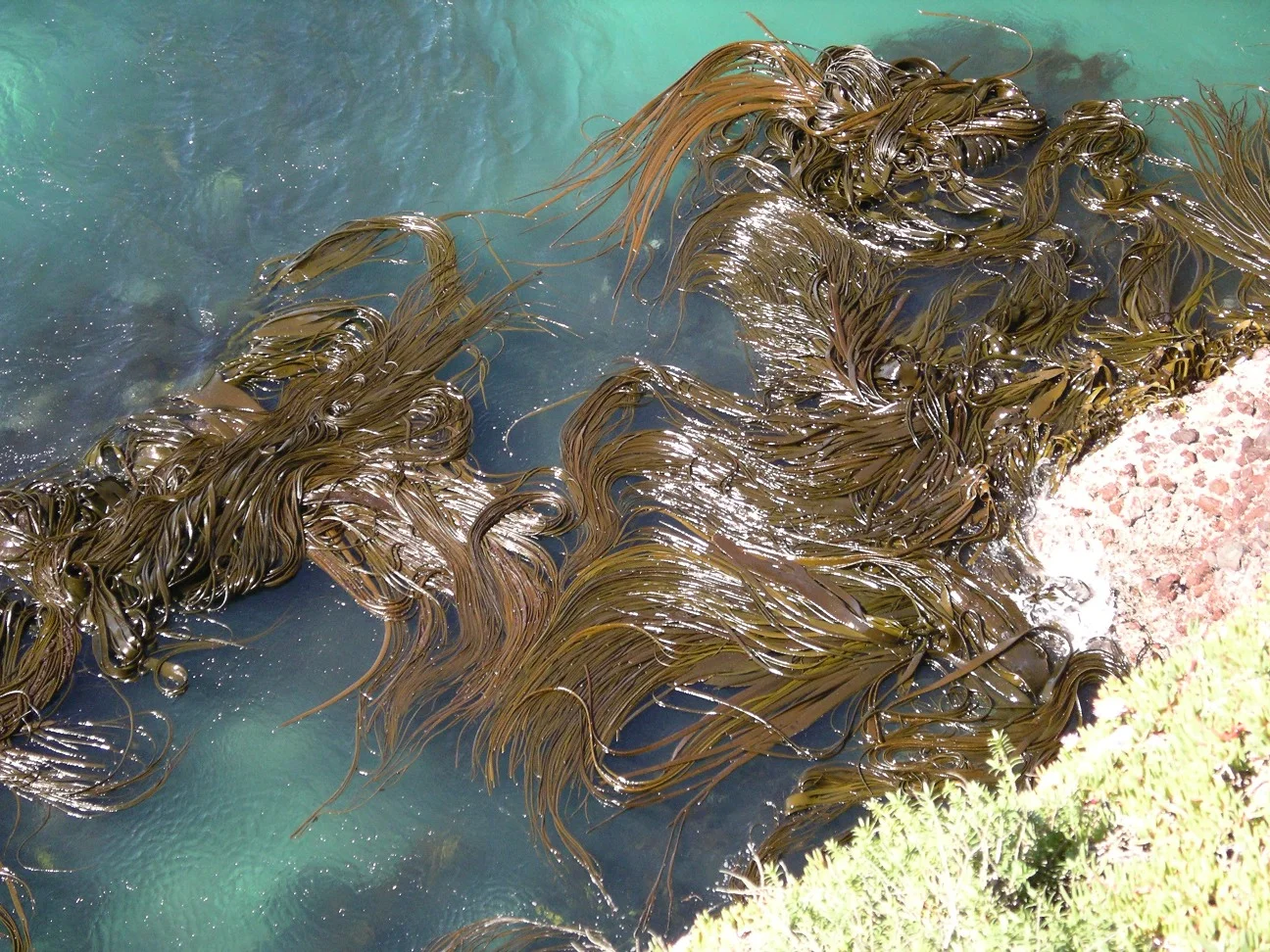

Source: Wikimedia Commons

Boulder, CO (March 16, 2011) – Returning from the Natural Products Expo West on Monday, I discovered something very disturbing, and yet fascinating, as I went shopping at my local natural foods store in my hometown of Boulder.
All of the kelp dietary supplements were sold out. This is a phenomenon that is occurring in natural foods stores throughout the Western USA. While government officials are saying risk of radiation exposure is low from the nuclear reactor catastrophe in Japan, US citizens aren’t buying it. Instead, they are buying foods, nutritional supplements and natural medicines to counter the effects of radiation, to the point where these products are out of stock in stores throughout the West.
At Natural Grocers in nearby Longmont, CO, they were also sold out of all kelp and much of their green foods supplements. I spoke with nutritionists in the store, and also with a fellow informed citizen who was shopping for supplements to help protect his teenage son from the risks of radiation fallout. They recommended kelp, chlorella, spirulina, green foods, selenium and lots of dark green leafy vegetables to help counter the effects of radioactive fallout. Convinced that green foods are good for us anyway, we purchased a high quality superfood powder just in case. Maybe a good idea as the news worsens by the hour.
Just to check, I called Whole Foods Market in the Bay Area, as California will be among the first to experience fallout from the jet stream. A team member there told me that yep, they’re sold out of all kelp supplements, too. Same phenomenon at Pharmaca locations and independent natural foods stores throughout the West, too, according to sources.
Additionally, I was told that Whole Foods will not carry any potassium iodide supplements in large “milligram” potencies. Since there is a great risk of iodine toxicity, these higher levels must be taken only under the supervision of a physician, Whole Foods says, and many experts agree. The natural grocery chain is exploring such supplements in safer “micro-milligram” potencies, as demand for these products has soared through the roof.
I also spoke with my friend, herbal medicine expert and noted author Brigitte Mars (www.brigittemars.com) to ask how people can protect themselves from radiation through food, nutrition and natural medicine. Excerpts from her recommended list, posted on her Facebook page and on her website, is as follows. Read the full article on Brigitte’s website.
• Buckwheat and brown rice • Seaweeds rich in iodine and microminerals, such as Hiziki, found in macrobiotic or Asian food sections • Wheatgrass and barley grass • Sulfur rich vegetables including broccoli, cabbage and mustard greens • High-pectin foods including carrots, sunflower seeds and apples • Liver-cleansing foods such as artichokes, beets and radishes • Fermented foods such as miso and unpasteurized sauerkraut • Nutritional yeast • Garlic, burdock, dandelion, milk thistle seed, nettles, yellow dock • Echinacea • Green and black tea • Eleuthero • Vitamins A, beta-carotene, B complex and C; and zinc, calcium and magnesium
In a letter to subscribers, raw food specialist David Wolfe shared these sobering recommendations:
“How to protect yourself and your thyroid against radiation: kelp, ginseng, ashwaganda (recently found to regrow nerves), chlorella, zeolites, fulvic acid, nascent iodine, reishi mushroom, sea salt (also salty miso), botanical (plant-derived) or lipo-vitamin C, magnesium (chlorophyll), selenium (brazil nuts), coconut butter (coconut products), Megahydrate, Crystal Energy. Spread the word.
“Start small, but increase your dosages rapidly and dramatically if you live in Hawaii, Western Canada, and the Western USA. Start now. Fallout will descend upon North America sometime around March 22.
“If you live in Japan, start taking massive doses of these foods, superfoods, superherbs, and supplements immediately. These are all safe for children.
“Radioactive fallout lingers longest in medicinal mushrooms. If you live in North America, pick your mushrooms NOW. I wouldn’t recommend picking any medicinal mushrooms in the fallout zones (after the fallout begins) for several years, if not a decade depending on how bad the radiation is.
“If you live in North America, stock up on food NOW because fresh food may be contaminated for several months after the fallout comes down from the jet stream into the fallout zones.”
Regarding any of the recommendations above, I urge you to do your homework and consult a physician and complementary alternative medicine practitioner.
Another concern is how fallout from the crippled reactor in Japan might affect agriculture in the Western US, as so much of our fruits and vegetables come from California and the Northwest. Spring rains could well bring radioactive fallout to this year’s crop, and how will radiation in the soil affect future crops? I will be doing some more research in this regard for an upcoming post.
Between a massive oil spill in the Gulf of Mexico last year, and now the nuclear tragedy in Japan, the earth is being increasingly subjected to major environmental trauma. So are its people. As long as the costs of environmental destruction continue to be born by the citizens and not the corporations and governments that cause it, we have no level playing field.
So we are left to buying out all the kelp off the shelf of our local natural foods store to try to protect our families from the fallout of a legacy of greed and destruction.