
NaturColor’s Innovative, Herbal-Based Hair Colors Featured on Worldwide Business with kathy ireland®
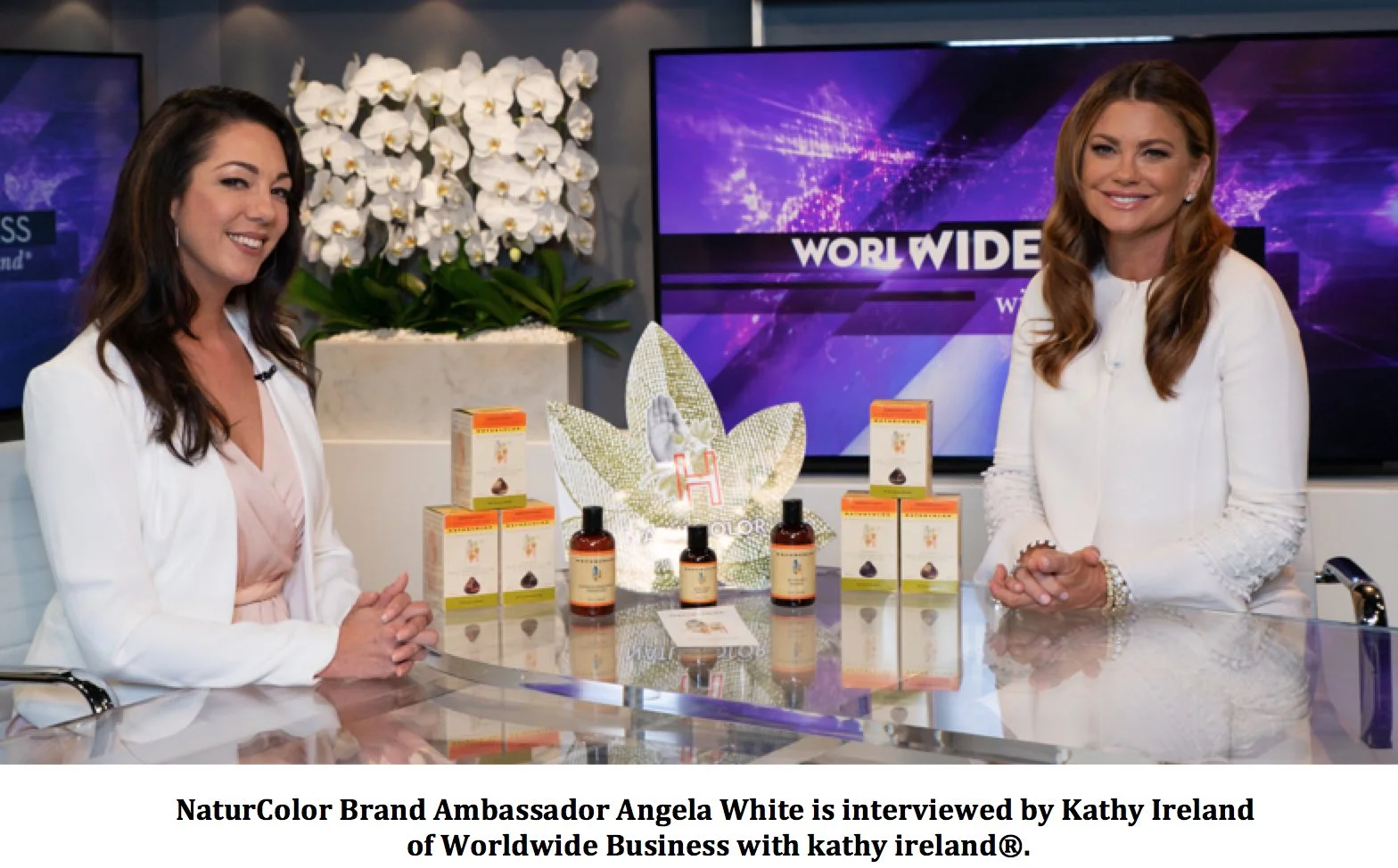
NAPA, CA (October 18, 2018) – From top supermodel to a global entrepreneur today with a $2.6-billion dollar brand, Kathy Ireland’s mission is to celebrate products that “make our world better,” she told Fast Company in September 2018. As part of this commitment to serving brands that are better for people and the planet, Worldwide Business with kathy ireland® is pleased to announce an exclusive interview with NaturColor Brand Ambassador Angela White to discuss safe, eco-friendly hair color gels.
NaturColor is an herbal-based permanent hair color gel that's designed to change or enhance one's existing hair color while blending in gray. It was formulated for those who are ecologically minded and may be coloring their hair for the first time. NaturColor can be used to complement natural hair color while covering gray. It can also be used to add subtle highlights or dramatically change existing hair color. NaturColor is intended for both men and women to discreetly color their hair at home. The product was created for the busy, value-conscious consumer or traveler, male or female, young or young at heart. A complete application takes less than one hour. NaturColor is headquartered in Napa, California.
White shares with Kathy Ireland in the interview segment that NaturColor has ingredients that make it better for our hair and the environment. She explains, "NaturColor uses plants and botanicals as the base, so we use every part of the plant -- the root, the stem, the leaf -- and we break that down and make extracts and oils to help moisturize the hair. It's a gentler coloring process."
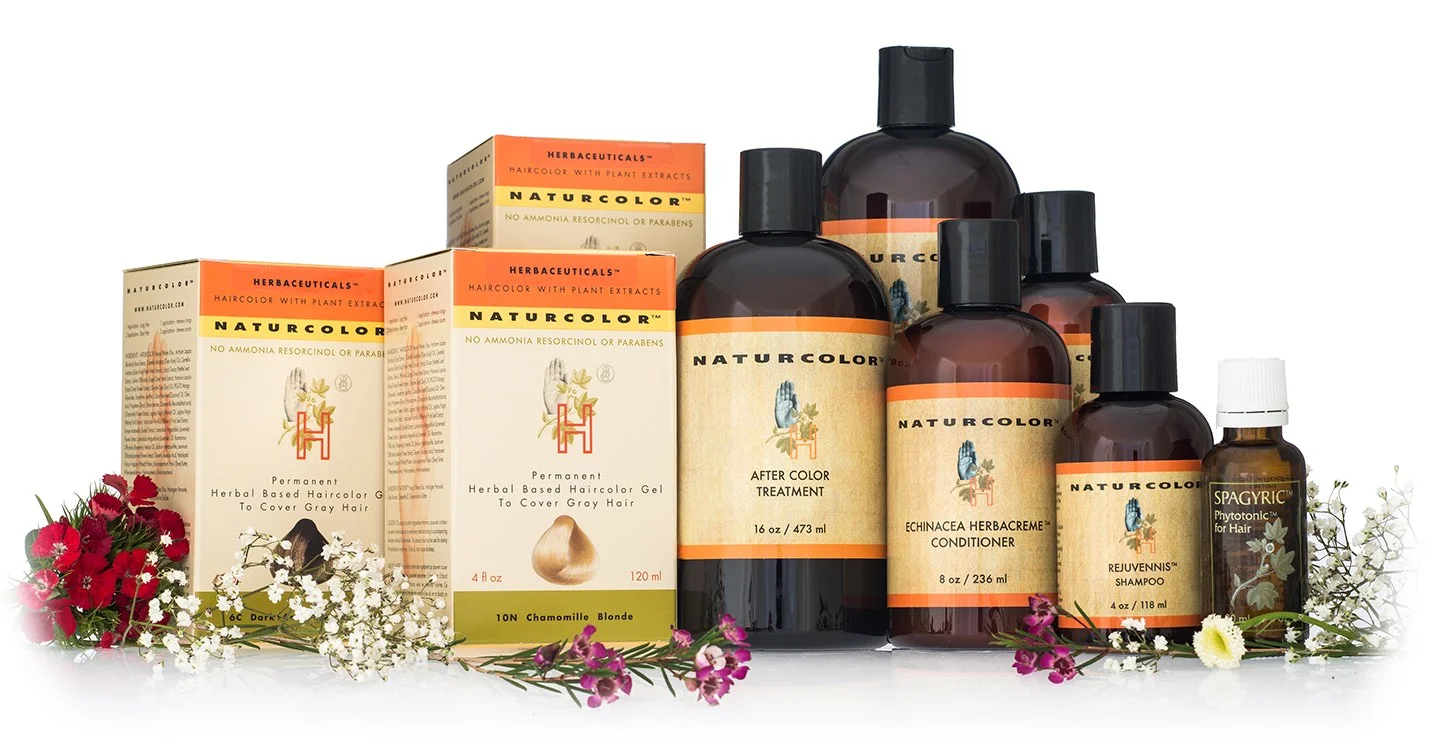
Available in 31 blendable colors, NaturColor permanent hair color gels are handcrafted with the finest Italian pigments derived from botanicals. All NaturColor products are cruelty free and contain no ammonia, resorcinol or parabens. They can be used repeatedly without damaging the hair, unlike many commercial chemical hair colors.
JL Haber, Vice President of Programming for Worldwide Business with kathy ireland®, is happy to feature NaturColor. "It's so important for many people to look and feel their best every day. Sometimes, that includes coloring our hair. But so many hair color gels are bad for our hair or bad for the environment. Not NaturColor! This innovative product is easy to use, safe for our bodies and ecological. We're delighted to have NaturColor on our show,” he says.
Tune In on October 20 and 21
For more information about NaturColor's herbal-based hair colors, visit NaturColor.comand tune in to Fox Business Network as sponsored content on Sunday, October 21, 2018 at 5:00pm EST and Bloomberg International on Saturday, October 20, 2018 at 7:00pm GMT and Sunday, October 21, 2018 at 10:00am D.F. and 2:30pm HKT. Viewers can also watch the video clip here.
About Worldwide Business with kathy ireland®
Worldwide Business with kathy ireland® is a weekly half-hour show featuring global executives sharing their business insights and framing the opportunities shaping their industries. Hosted by a business mogul, Kathy Ireland interviews some of the brightest minds in business today. The show broadcasts on Fox Business Network as part of their sponsored content line up and globally on Bloomberg International. Worldwide Business with kathy ireland® extends beyond the weekly on-air program with digital content delivered on various video platforms and across social media. Visit www.tvwwb.com for detailed airing schedules or check local listings. For more up to date information visit Worldwide Business with Kathy Ireland® on Twitter and Facebook.
About NaturColor
NaturColor™ is a botanical-based permanent hair color gel designed to change or enhance one's existing hair color while blending in gray. This high-quality botanical product line represents a new generation of hair colorings, formulated for those who are ecologically minded. In addition, NaturColor offers shampoos, conditioners and other hair care products. NaturColor is a brand offering of Herbaceuticals International, based in Napa. CA. Visit www.NaturColor.com and follow us on Instagram and Facebook.
Contact
Eric Gustafson, NaturColor, eric@herbaceuticals.biz, 707.259.6266
Steven Hoffman, Compass Natural, steve@compassnaturalmarketing.com, 303.807.1042
Twenty-five Years Later, Consumers Are “Grossed Out” by GMO Foods
Photo: Pexels
For Presence Marketing Newsletter, October 2018
By Steven Hoffman
After nearly 25 years since the introduction of genetically engineered foods into the American diet – and despite the fact that nearly half of all U.S. cropland is dedicated to GMO agriculture – consumers have largely remained skeptical, even to the point of being “grossed out” by the idea, says Sidney Scott, Assistant Professor of Marketing at Olin Business School at Washington University in St. Louis, MO. Scott is lead author of a research paper titled “An Overview of Attitudes Toward Genetically Engineered Foods,” published in the August 2018 Annual Review of Nutrition.
“In some contexts, people view nature and naturalness as sacred and genetically engineered food as a violation of naturalness,” the authors wrote. What the research overview doesn’t address, however, is why some consumers seem to be fine with heavily processed foods — Hamburger Helper, frozen microwave dinners, or maple-flavored “pancake syrup” — but cannot abide genetically engineered foods such as weed-resistant soybeans, vitamin A-enriched rice, or fast-growing salmon, reports the University of Washington’s The Source. “Consumers seem to be saying it’s not OK to poke into the DNA. That’s yucky,” Scott said. “People are grossed out by that.”
According to the study’s authors, the U.S. tends to have a permissive approach to regulating genetically modified crops and “generally recognizes them as safe.” The European Union, on the other hand, is more restrictive, allowing only two genetically engineered crops to be grown commercially: potatoes and maize. A key aim of the research team’s work was to expose the gap between advocates of genetically engineered foods and opponents, writes Food Dive. “What we’re trying to figure out now is what will allow people to reach a better consensus," said Scott. "I don’t think it’s insurmountable.”
OTA Fires Back at Organic Critics with Full-page Ad in Wall Street Journal
For Presence Marketing Newsletter, October 2018
By Steven Hoffman
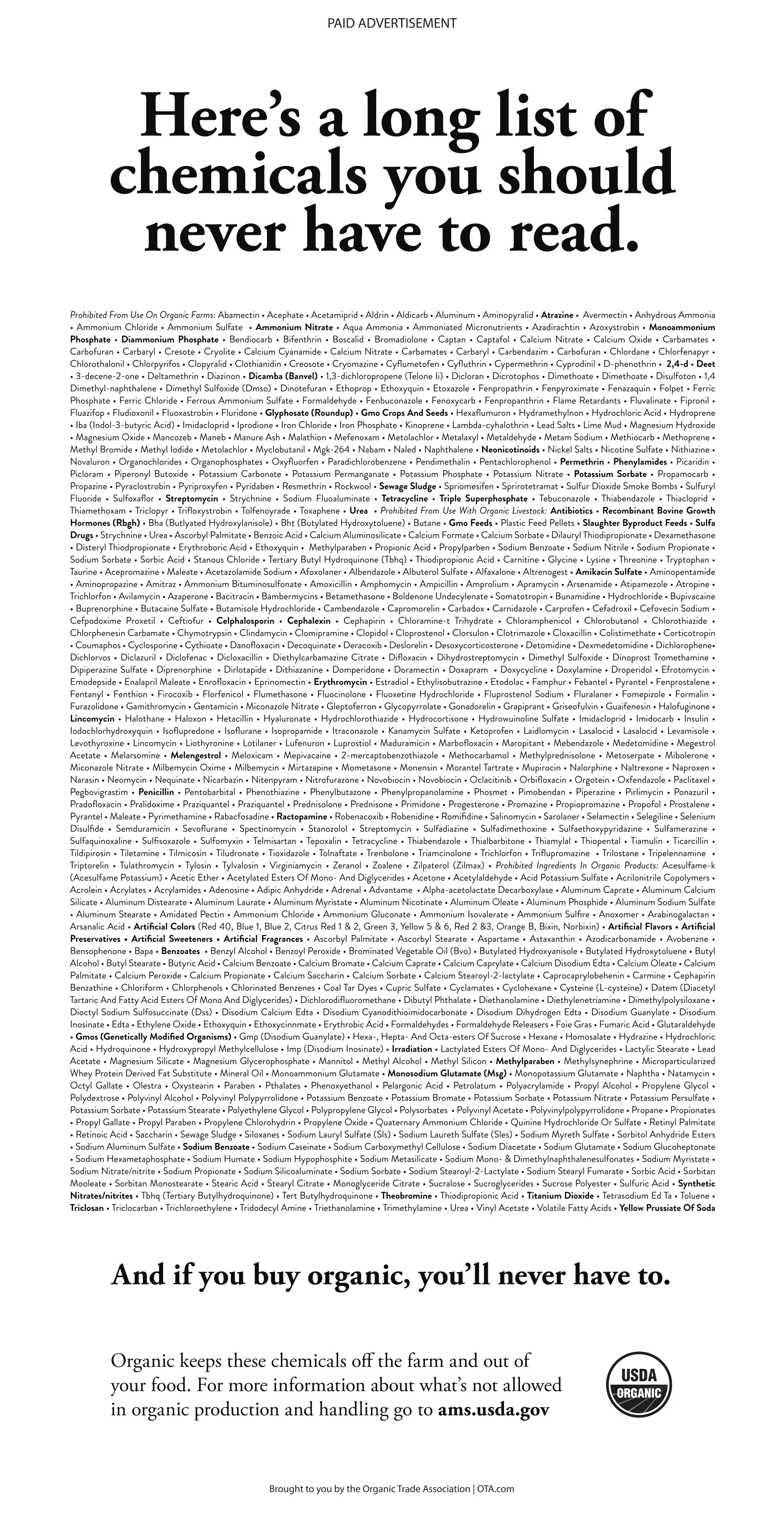
Responding to an Op-Ed titled “The Organic Industry is Lying to You,” written by anti-organic and pro-GMO provocateur Henry Miller and published in the Aug. 5, 2018, edition of the Wall Street Journal, the Organic Trade Association (OTA) said enough is enough. Adding insult to injury, on August 7, FDA Commissioner Scott Gottlieb followed up on Miller’s op-ed with a series of tweets essentially agreeing with the misinformation and pledging to review organic claims.
On September 12, OTA put its money where its mouth is, placing a full-page, black and white ad in the Journal’s Washington, D.C./Baltimore regional edition titled, “Here’s a long list of chemicals you should never have to read.” The advertisement, a push-back by OTA against what it calls misleading and disparaging attacks on organic food, calls out the hundreds of chemicals that are prohibited in organic farming, production and processing.
“We will not let these charges go unanswered,” OTA CEO Laura Batcha told Sustainable Food News, adding that its full-page ad is “an aggressive push-back against misleading and derogatory attacks on organic. It is the mission of the Organic Trade Association to protect and promote organic, and it is our responsibility to get the facts out. It’s critically important to push back against these attacks,” Batcha said in a statement.
“Consumers deserve to know the truth,” Batcha added. “Organic’s strength is its transparency, and organic farmers and businesses work hard every day to uphold the standards of organic and to honor the trust that we’ve earned from consumers everywhere.
Henry Miller, formerly with the Hoover Institution and currently a Senior Fellow with the Pacific Research Group, has a history of arguing for deregulation of hazardous products and taking positions outside the scientific mainstream, reports Gary Ruskin, Director of U.S. Right to Know. “He has claimed nicotine ‘is not particularly bad for you,’ argued that low levels of radiation may be beneficial to health, and has repeatedly called for the re-introduction of the insecticide DDT. He is perhaps the most prolific and best-known promoter of genetically engineered foods,” writes Ruskin, who also reported that in August 2017, Forbes deleted all columns authored or co-authored by Miller in the wake of revelations that Monsanto ghostwrote a column that Miller published under his own name in Forbes.
Photo: Organic Trade Association
Photos From the 2018 Southern Hemp Expo, Nashville, TN
Compass Natural was pleased to serve as agency of record at the first annual Southern Hemp Expo, taking place September 28-29, 2018, in Nashville, TN. Every major affiliate television station, The Tennessean, and many other national and local news outlets attended the Expo and produced extensive media coverage. View some of the photos from the inaugural Southern Hemp Expo, and mark your calendar for the NoCo6 Hemp Expo, March 29-30, 2019, in Denver, CO.
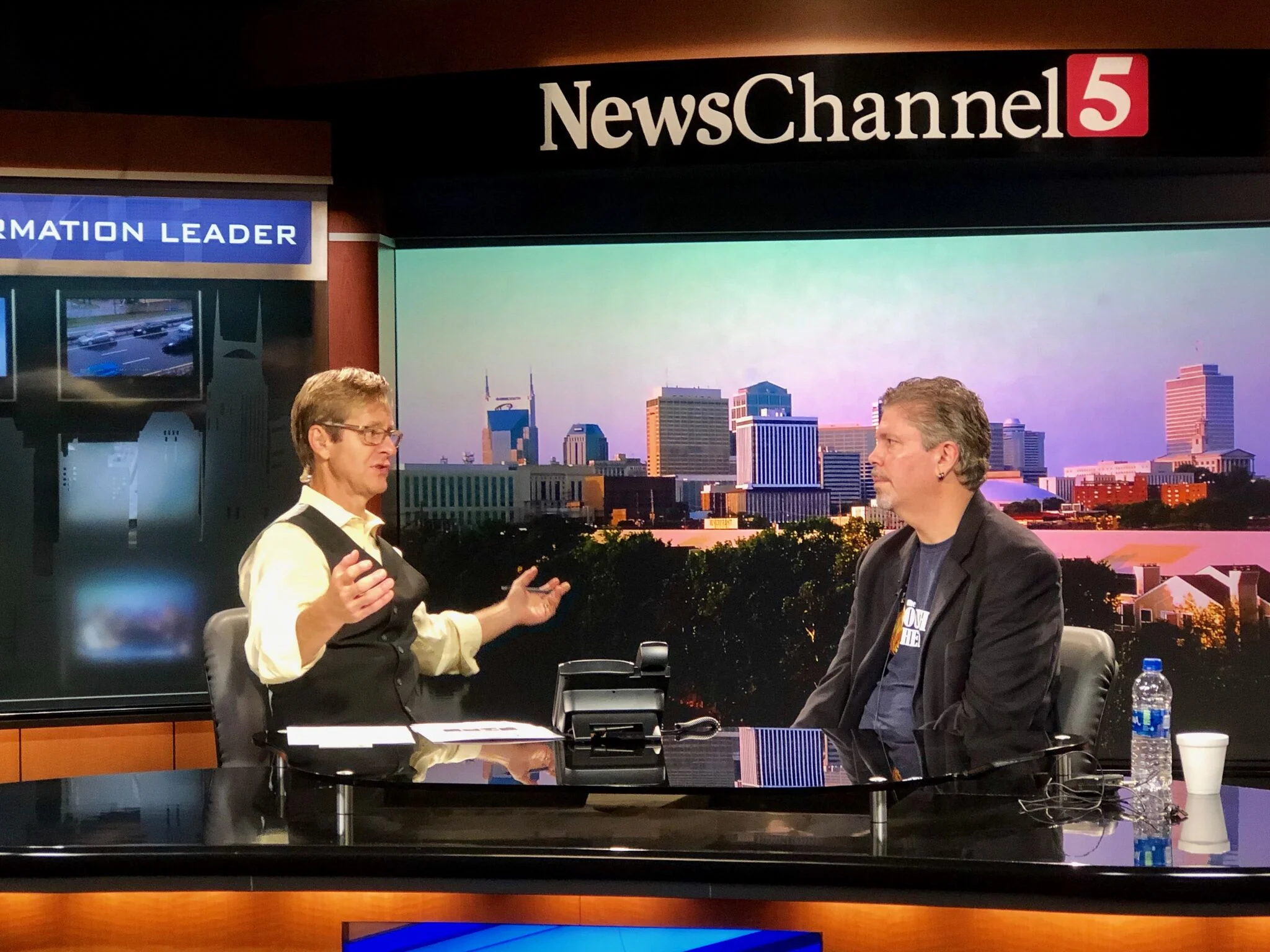
Morris Beegle joins Nick Beres and NewsChannel 5 Nashville on their MorningLine Talk Show ahead of the Southern Hemp Expo.
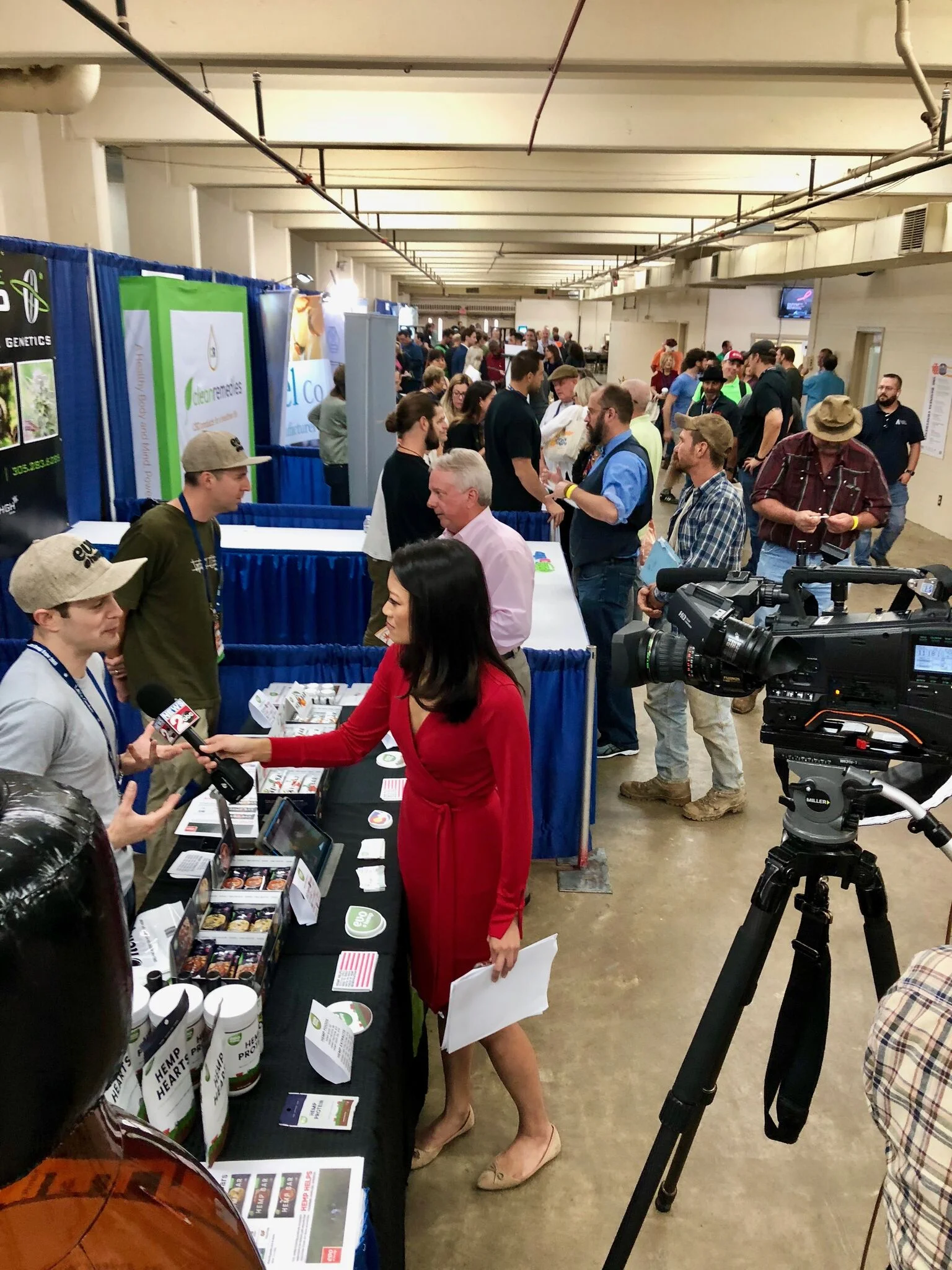
Ari Sherman of Evo Hemp is interviewed by Linda Ong at ABC 2 News in one of the many buzzing exhibition halls.

Pioneering hemp farmer Joe Hickey and John Roulac, founder of Nutiva and Re: Botanicals, share a laugh on stage at the Southern Hemp Expo Business Conference.
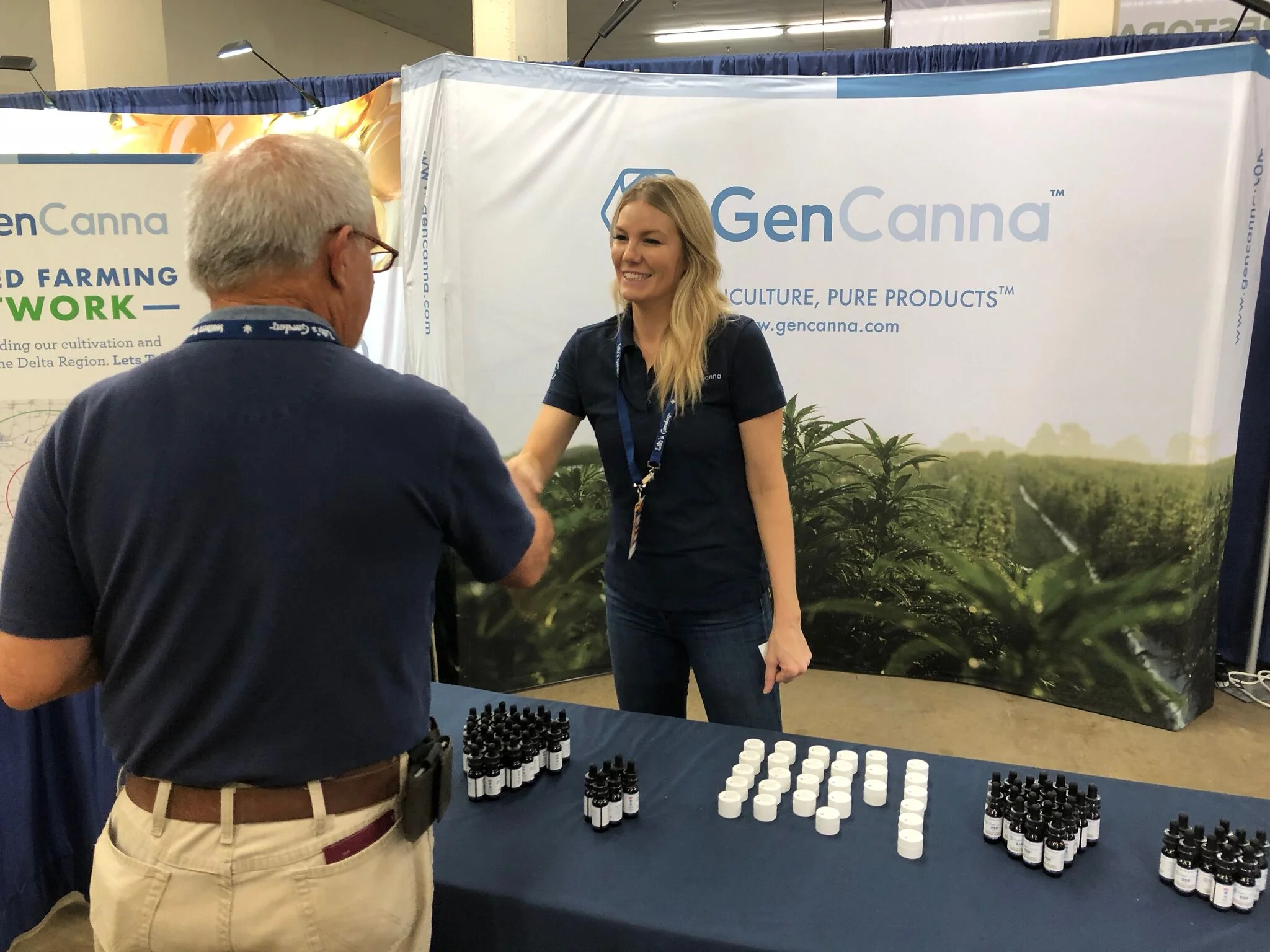
GenCanna, a sponsor of Southern Hemp Expo, specializes in hemp genetics and working with farmers in Kentucky to select and cultivate premium CBD hemp cultivars.
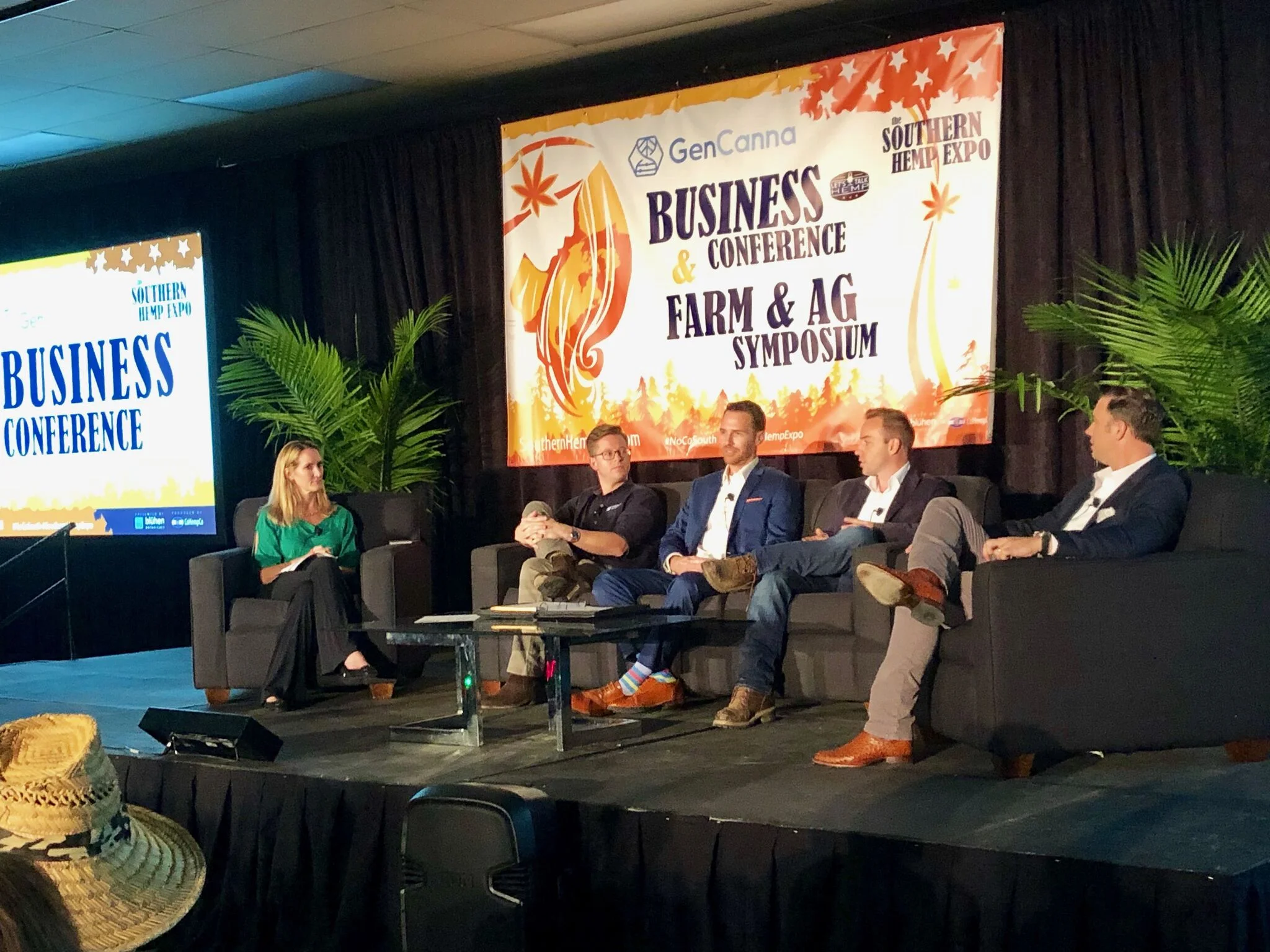
The Southern Hemp Expo featured full-day Business Conference and Agriculture Symposiums and more than 150 exhibitors. The first-year event attracted more than 3,500 visitors and featured the latest innovations in hemp products, including CBDs and dietary supplements, hemp food, fiber and fashion, extraction technology, agricultural exhibitors and others.
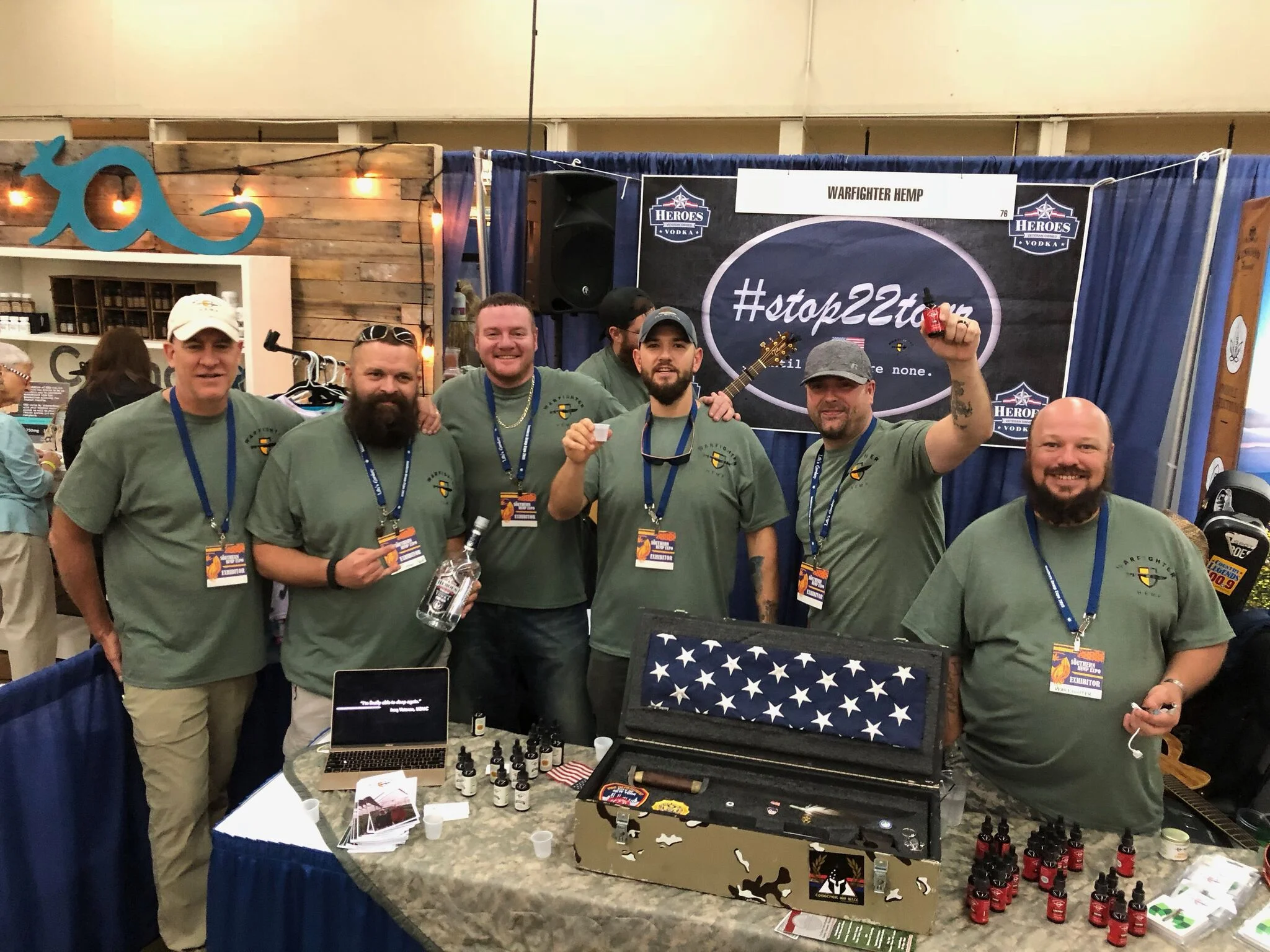
Warfighter Hemp: Hemp products for veterans, by veterans. The company provides a holistic and natural alternative for recovering United States veterans.

Southern Hemp Expo Co-founder Morris Beegle (right) and hemp expert and author Doug Fine (center) present a Lifetime Achievement Award to Kentucky hemp producer Craig Lee (left).

Hemp enthusiasts walk the streets of downtown Nashville following the conclusion of the Southern Hemp Expo. Join us next year as the Expo will make a return to Nashville in 2019!
Year of the Bird: Industrial Farming Causing Bird Populations to Plummet
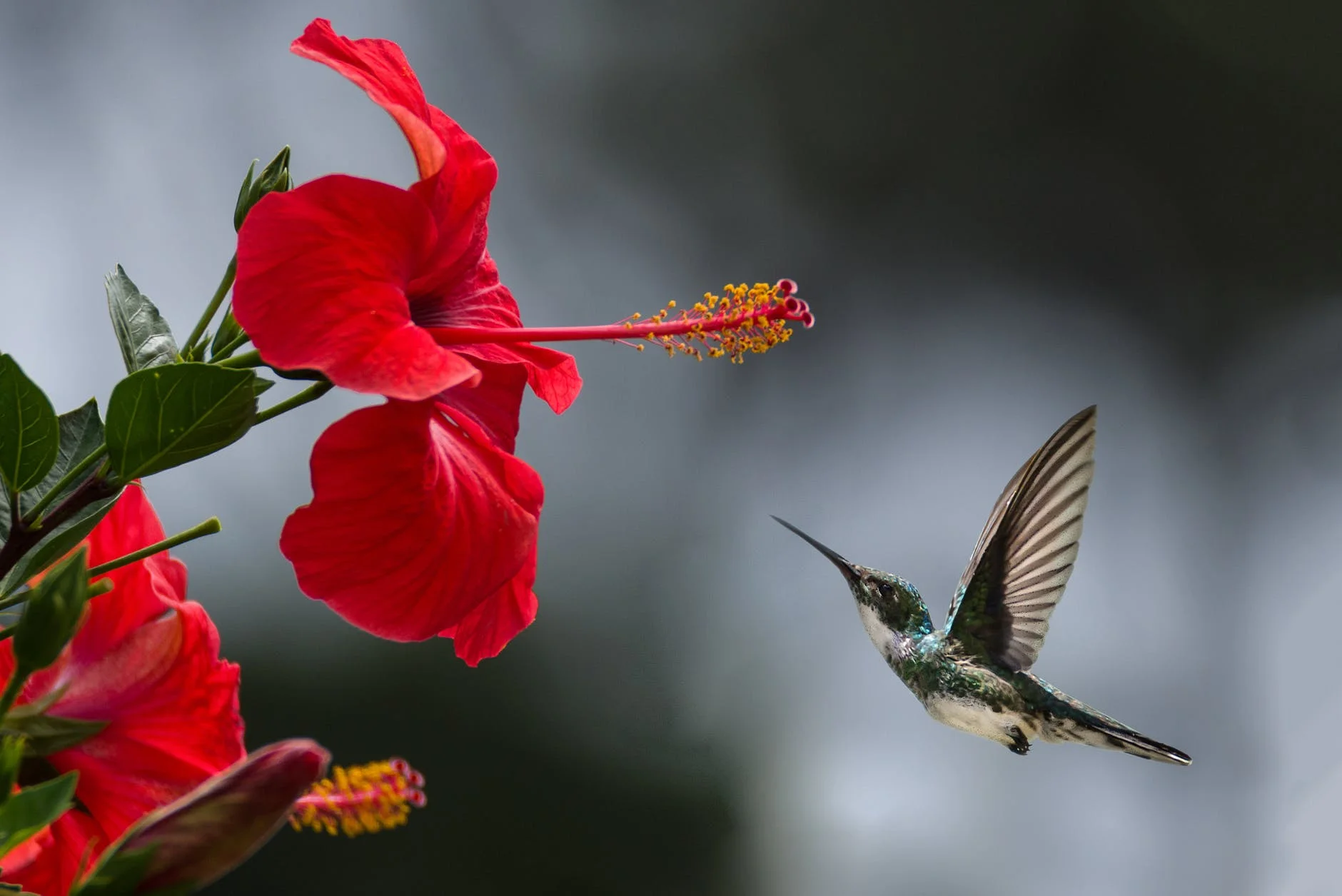
Photo: Pexels
For Presence Marketing Newsletter, October 2018
By Steven Hoffman
Humanity may need to add another meaning to the story of the birds and the bees. As industrial-scale farming has come to dominate agricultural regions in the U.S. and the EU, the birds and the bees are disappearing. Since 1980, the number of birds that typically inhabit European farmlands has decreased by 55 percent, and in the past 17 years alone, bird counts in agricultural regions in France have dropped by 33 percent, a “level approaching an ecological catastrophe,” according to a September 2018 report in National Geographic.
According to National Geographic, intensive industrial agriculture, increasingly dependent on the use of toxic, synthetic pesticides and fertilizers, is driving the losses of European bird and insect populations. Habitats where birds once bred, nested, and wintered now bear crops, and pesticides have killed off birds’ prey. Even avian species adapted to humans have dwindled on farms, reports National Geographic, suggesting that the land is less able to sustain all kinds of birds. To curb the losses of farmland birds, avian researchers contend that agriculture must be remade in nature’s image, i.e., less dependent on the addition of toxic, synthetic chemicals, more diverse in its flora, and more hospitable to local fauna.
In North America, researchers reported in July 2018 in the Journal of Environmental Toxicology & Chemistry that hummingbirds and bumble bees are being exposed to neonicotinoid and other pesticides through “routes that are widespread and complex.”
Scientists studying blueberry fields in British Columbia detected pesticides and related compounds in cloacal fluid and fecal pellets of hummingbirds, revealing for the first time that hummingbirds are exposed to and accumulate pesticides of multiple types. In addition, bumble bees, their pollen, and blueberry flowers contained pesticides, with the highest concentration of the insecticide imidacloprid in pollen from organic farms, according to a release published in Science Daily.
"Hummingbirds and bumble bees are important pollinators of wild and agricultural plants and they survive each day on a razor's edge due to their high energy needs," said lead study author Dr. Christine Bishop, of Environment and Climate Change Canada. "Pesticide exposure in these animals may have impacts on their health and the ecosystem services they provide to humans and wildlife."
Among threatened birds living today, industrial agriculture poses the single biggest extinction threat, according to BirdLife International's 2018 State of the World's Birds Report, available as a free .pdf download. To spur a rebound, researchers say that farming practices must change radically to become more sustainable.
“It is estimated that of the roughly 672 million birds exposed annually to pesticides on U.S. agricultural lands, 10 percent, or 67 million, are killed as a result,” said Dr. Greg Harrison, DVM, a renowned avian health expert and founder of Wild Wings organic bird seed. “Ironically it is often the same sunflower and/or other grains intended to feed backyard birds that may have been sprayed with lethal pesticides to keep pests (often including birds) at bay. Just like in human health, birds and animals are affected by widespread usage of glyphosate and other toxic, synthetic pesticides,” he said.
National Geographic, has been reporting on the impact of agricultural pesticides on bird populations and declared 2018 the Year of the Bird to mark the centennial of the Migratory Bird Treaty Act, “the most powerful and important bird-protection law ever passed,” and encourages nature lovers to get involved.
Consumers are responding and realizing that, like their own health, animals also benefit from natural and organic food. Natural pet food sales reached $8.2 billion in 2016 and now make up 25 percent of the pet food market in the United States, according to Packaged Facts. Another report, The U.S. Market for Natural Pet Products, predicts the industry will grow by 11 percent to reach $14 billion by 2021. Packaged Facts found that 72 percent of pet owners buy natural and organic pet food because they believe the nutritional quality is better.
After Centuries, George Washington’s Mt. Vernon Farm Is Growing Hemp Again

The father of our country, George Washington, grew hemp on his farm in Mt. Vernon, VA. In the 1760s, Washington predicted that hemp could be a more profitable crop than tobacco and he grew it in commercial quantities on his farm. More than 250 years later, horticulturists at Mt. Vernon and the University of Virginia planted an experimental hemp crop. Telling NPR he is a “hemp patriot,” Charlottesville, VA, farmer Brian Walden hopes growing the crop at Washington’s home farm again could give hemp a public image makeover and “get the message that this is an innocuous plant that has real benefits and our Founding Fathers knew that and they planted it,” Walden told NPR. According to NPR, hemp is still considered a controlled substance by the federal government, although 38 states considered industrial hemp legislation in 2018. According to a June report by the Congressional Research Service, "the global market for hemp consists of more than 25,000 products in nine submarkets." Hemp fibers can be made into yarns, paper, construction materials, even parts for automobiles. Hemp oil can be used in lotions and cosmetics, and full spectrum hemp extract is emerging as a popular dietary supplement. To learn more, attend the Southern Hemp Expo, Sept. 28-29, Nashville, TN, www.southernhempexpo.com.
Bye Bye By-Products: Pet Foods Go Upscale

Photo: Pexels
Pet care is an anchor to center store as the number two reason consumers leave the house to go to the store, and 75% of U.S. households shop the pet food section, Joe Toscano, VP at Nestle Purina, told Food Dive. And it is driving demand for higher quality, natural and organic pet food, said David Lummis, pet market analyst for Packaged Facts. While larger companies such as Quaker Oats, Mars and Nabisco sold pet foods as early as the 1950s and 1960s, “What is newer is the introduction of specialized ingredients, senior pet food and functional kinds of pet food,” said Lummis. Valued at $26.4 billion in 2016, Packaged Facts estimates the U.S. market for pet food will grow to $30 billion by 2022. According to Packaged Facts analysts, natural pet food sales reached $8.2 billion in 2016 and now make up 25% of the total U.S. pet food market. Natural pet food sales grew by a compound annual growth rate of 12.1% between 2012 and 2016.
Organic Personal Care Market to Grow to $25 Billion by 2025
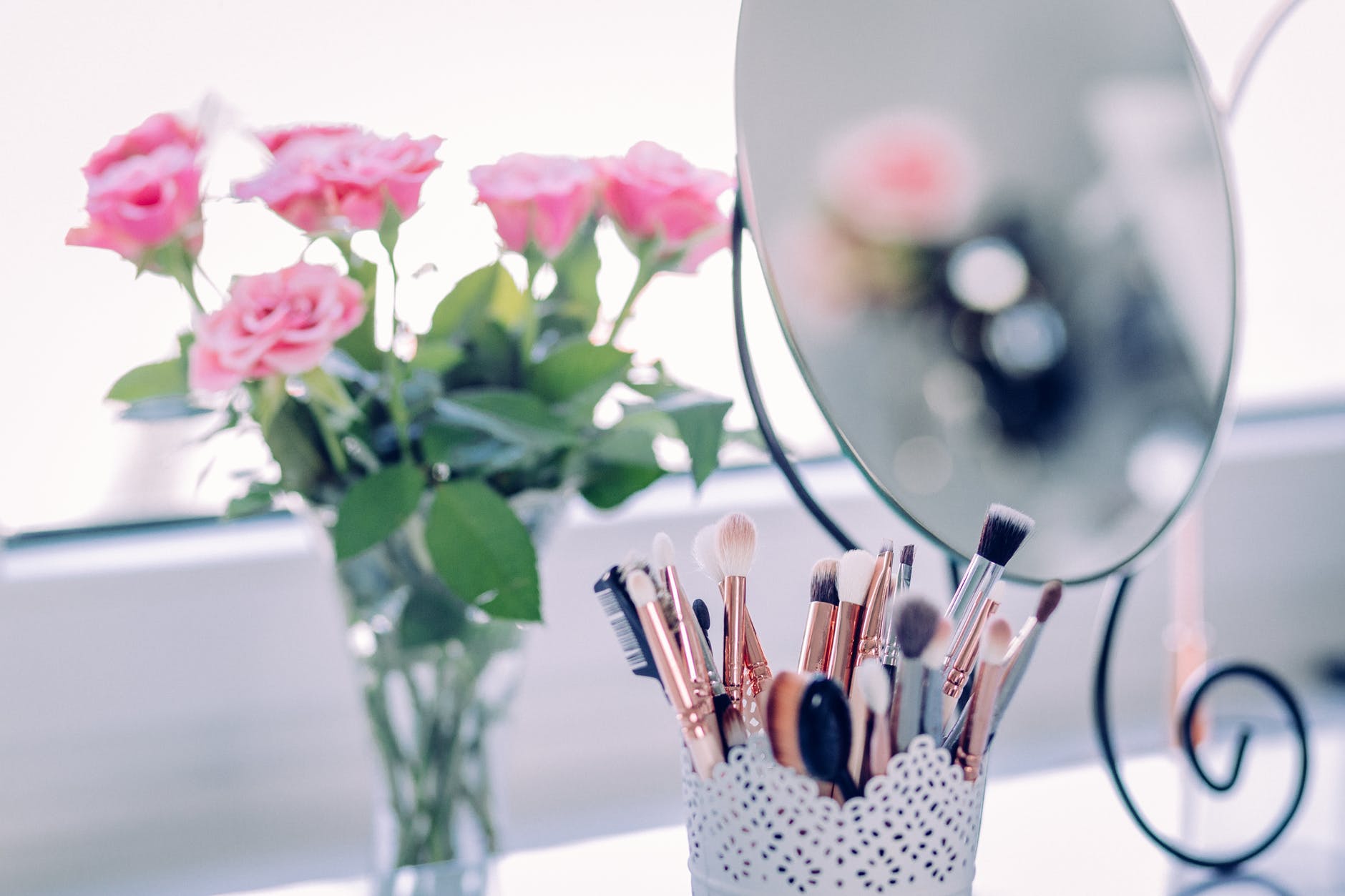
Photo: Pexels
Growing demand for organic products is leading to an increase in their availability in natural foods stores, supermarkets, drugstores, convenience stores, online stores and elsewhere. The growth in e-commerce, in particular has provided consumers opportunity to access products that might not otherwise be available in local stores. This increased accessibility is credited for an expected growth rate in organic personal care products of 9.5% CAGR between now and 2025, when the market for organic personal care products is expected to reach $25.11 billion in sales, says research firm Grand View Research in a new report. North America was the largest market for organic personal care in 2017. Key findings include:
In terms of value, the global revenue for hair care is anticipated to reach $6.62 billion by 2025, rising at a CAGR of 9.8% from 2017 to 2025.
Skin care application dominated the market in terms of revenue in 2017, commanding over one third of the market, owing to ability of organic ingredients to impart antioxidation properties and improve skin health.
The U.S. organic personal care market is poised to exceed $7.7 billion by 2025 owing to presence of various manufacturers of organic personal care products in the country.
The market is highly competitive with presence of a number of multinational companies with wide product portfolios.
Major companies in the market lay high emphasis on expanding their presence in the global market, in an attempt to increase market shares and drive revenues. For instance, Estee Lauder acquired various companies such as BECCA Cosmetics, Too Faced, and Editions de Parfums Frédéric Malle, over the past few years in order to expand its product portfolio.
Source: Grand View Research
CPG Giants Enter Supplements Space

Photo: Pexels
As consumers turn increasingly to natural health options, a number of CPG giants have entered or expanded into the dietary supplements space, beginning in the past year with Nestle’s acquisition of leading non-GMO and organic supplement brand Garden of Life in December 2017. In April 2018, Procter & Gamble announced the purchase of Merck KGaA’s consumer health unit, adding vitamin brands including Seven Seas, Femibion and Neurobion to its supplement subsidiaries portfolio, which includes Metamucil and leading natural brand New Chapter, which Procter & Gamble acquired in 2012 (in July 2018, New Chapter cofounders Barbi and Paul Schulick announced their departure from the company). Natural immune support supplement maker Zarbee’s Naturals was purchased in July 2018, marking Johnson & Johnson’s first foray into dietary supplements. In June 2018, General Mills led a $12 million investment round in Boulder, CO-based functional beverage maker GoodBelly. California-based Clorox Company, known around the world for its laundry bleach, purchased Objective Wellness in March 2018, adding such brands as NeoCell, Rainbow Light, Blessed Herbs and Stop Aging Now to its portfolio. To top off this most recent spate of investments and acquisitions, Japanese beer maker Kirin, together with multi-portfolio firm Mitsui, announced in July 2018 that each had purchased 30% of supplement maker Thorne Research’s stock. Thorne Research is a leading dietary supplement brand specializing in the healthcare practitioner market.
Supplements Market Research Highlights

Photo: Pexels
Overall sales of dietary supplements are slowing, but it’s also a bigger and more complicated marketplace, says Claire Morton, Nutrition Business Journal's senior industry analyst. Top takeaways from the 2018 Supplement Business Report include:
• Mass market retail dominates sales in the natural and organic products industry with more than half of total market share and over $120 billion in annual sales.
• E-commerce, while frequently discussed and rapidly growing in the double-digits, still represents only 4 percent of total market share.
• Consumers report frequenting mass, grocery and natural stores over other retail channels, including e-commerce.
• Manufacturers rate the top three challenges of online retail as driving awareness of product, navigating Amazon and standing out.
• Natural and specialty retail has lost market share consistently since 2006, with growth slowing exponentially since 2015.