
Natural Grocers Wins GMO Labeling Appeal; Supplement Industry Under Pressure
This article first appeared in the February 2026 issue of Presence Marketing’s newsletter.
By Steven Hoffman
In January 2026, the regulatory framework governing the natural products industry encountered significant developments affecting how food and dietary supplements are labeled and regulated. Through a combination of judicial rulings, agency guidance, and legislative proposals, the requirements for transparency and product disclosure are shifting, presenting new compliance considerations for manufacturers and retailers alike.
For CPG brands, ingredient suppliers, and compliance officers, these updates signal a continued move toward explicit, on-package disclosure. Recent events indicate that both the courts and legislators are increasingly prioritizing clear, accessible information for consumers, challenging previous standards that allowed for digital or abbreviated disclosures.
This report outlines two primary developments from the start of the year: the U.S. Court of Appeals ruling in favor of Natural Grocers regarding Bioengineered (BE) disclosures, and a dual-front regulatory discussion involving the FDA and Senator Dick Durbin (D-IL) regarding the dietary supplement sector.
Federal Appeals Court Sides with Natural Grocers in GMO Ruling
In a decision delivered on Jan. 6, 2026, the U.S. Court of Appeals for the Ninth Circuit ruled in favor of a coalition of plaintiffs led by the Lakewood, CO-based retailer Natural Grocers by Vitamin Cottage (NYSE: NGVC) and the Center for Food Safety (CFS). The court’s decision effectively strikes down key portions of the USDA’s Bioengineered Food Disclosure Standard, addressing industry arguments that the previous rules contained exemptions that limited consumer access to information.
The "National Bioengineered Food Disclosure Standard" (NBFDS) has been a subject of debate since its inception. Critics, including the plaintiffs, argued that the USDA’s implementation allowed manufacturers to obscure the presence of genetically modified organisms (GMOs) through the use of digital links and unfamiliar terminology.
According to a Natural Grocers press release, the court’s ruling necessitates a significant revision of USDA rules. The outcome aligns with a long-standing position of Natural Grocers, the nation’s largest family-operated organic and natural grocery retailer, which has prohibited most GMO ingredients in its stores since 2012 and advocated for clearer labeling standards.
The court’s decision focused on three specific areas where the USDA’s previous rules were found to be insufficient or unlawful. Food and beverage manufacturers must now prepare for a regulatory environment that will likely require strategic adjustments in the next rulemaking cycle.
The "Bioengineered" Terminology Battle
First among the court's findings was the rejection of the USDA’s mandate that strictly required the use of the term "bioengineered." Plaintiffs successfully argued that this term is unfamiliar to the average shopper and infringed on free speech rights by prohibiting the use of terms consumers actually understand.
Under the overturned rules, a manufacturer was forced to use "bioengineered" even if their customer base was far more familiar with "GMO" or "Genetically Engineered." According to the Non-GMO Project, recent market research indicates that while 63% of consumers recognize the term "GMO," only 36% are familiar with "bioengineering." By mandating the lesser-known term, the USDA was seen as complicating disclosure. The ruling now paves the way for retailers and brands to use terms that resonate more clearly with their customers, potentially returning the familiar "GMO" acronym to federal disclosures.
Closing the Digital Divide: The End of QR Code Exclusivity
Operationally, a significant aspect of the ruling is the rejection of standalone QR codes as a sufficient means of disclosure. The USDA had previously allowed companies to forgo on-package text disclosures entirely in favor of a scannable code. Natural Grocers and the Center for Food Safety argued that this practice excluded consumers without smartphones, reliable internet access, or technical literacy—demographics that often include the elderly and rural populations.
The court agreed, ruling that companies cannot rely solely on digital disclosures. This decision impacts the "scan to learn more" approach that some large CPG companies had adopted. Brands that utilized digital links to manage label space must now redesign packaging to include clear, on-pack text or symbols accessible to the naked eye.
Highly Processed Ingredients: No More Hiding
Finally, the court found the USDA was incorrect in exempting highly processed foods—such as sugar from sugar beets or oil from canola—simply because the genetic material might not be detectable in the final refined product.
This "highly refined" exemption had been a major point of contention. Natural Grocers argued that even if the DNA is denatured or removed during processing, the ingredient still originates from a bioengineered crop system. The environmental and agricultural impacts remain, regardless of the final chemical structure of the sugar or oil.
"The court’s rejection of the ‘highly refined’ exemption reinforces an important principle: how food is made matters," noted Charlene Guzman, Communications Director of the Non-GMO Project, in a statement to Nosh. Brands that have relied on this exemption should expect closer scrutiny as the USDA revises its rules, particularly for ubiquitous ingredients like oils, sugars, and starches derived from GMO crops.
Heather Isely, Executive Vice President of Natural Grocers, stated that the decision reflects congressional intent. "Congress never intended to require the use of specific terms, the sole use of QR codes, or the exclusion of ingredients made from highly processed GMO crops," she said. "We are pleased the court recognized the shortcomings of the final rule and mandated corrections. Natural Grocers will remain actively engaged in the GMO regulatory process."
George Kimbrell, Legal Director of the Center for Food Safety, added that the ruling ensures consumers will eventually see "clear and accurate GMO label information."
The legal victory is consistent with Natural Grocers' long history of rigorous product standards. Founded in 1955 and with 168 stores across 21 states, the company has utilized a dynamic list—"Things We Won't Carry and Why"—to screen products. As stated in WholeFoods Magazine, if a company cannot verify non-GMO status, Natural Grocers will not stock the item.
The Supplement Industry’s Regulatory Tug-of-War
While the food industry assesses the implications of the GMO ruling, the dietary supplement sector is navigating a complex regulatory landscape. On one hand, the FDA is signaling potential flexibility regarding labeling requirements. On the other, Senator Dick Durbin has reintroduced legislation that could impose new registration requirements.
In a letter to the industry issued on Dec. 11, 2025, the FDA announced it is considering amendments to 21 C.F.R. § 101.93(d). This regulation currently governs the placement of the disclaimer required for structure/function claims under the Dietary Supplement Health and Education Act of 1994 (DSHEA).
Under current rules, supplements making claims such as "Supports heart health" must carry the standard disclaimer: "This statement has not been evaluated by the FDA. This product is not intended to diagnose, treat, cure, or prevent any disease." Regulations have historically required this disclaimer to appear on every single panel where a claim is made. For small bottles, this often leads to "label clutter," where the same disclaimer is repeated multiple times.
According to the National Law Review, the FDA is looking to remove the "each panel" requirement. Kyle Diamantas, FDA Deputy Commissioner for Human Foods, noted in the letter that revising this regulation would "reduce label clutter and unnecessary costs," aligning with the agency's historical enforcement posture.
Effective immediately, the FDA is exercising "enforcement discretion." The agency will not prioritize penalizing companies that do not repeat the disclaimer on every panel, provided the disclaimer appears at least once and is properly linked to the claims. However, companies should proceed with caution; this is a relaxation of placement frequency, not a removal of the disclaimer itself.
Not all experts view this relaxation as positive. Pieter Cohen, M.D., Associate Professor of Medicine at Harvard Medical School expressed concern to Nutraceutical Business Review, warning that reducing disclaimer visibility could mislead consumers. "Then you start saying things such as, ‘We only need it on the actual bottle.’ Then you let the print get smaller," Cohen noted, highlighting the tension between industry simplification and consumer protection.
Durbin Reintroduces the Dietary Supplement Listing Act
While the FDA offers potential labeling flexibility, Congress is considering increased oversight. On Jan. 17, 2026, Senator Dick Durbin reintroduced the Dietary Supplement Listing Act, aimed at modernizing FDA oversight through Mandatory Product Listing (MPL).
The core of the bill would require manufacturers to register products with the FDA, providing product names, ingredient lists, electronic copies of labels, allergen statements, and structure/function claims. This data would populate a public database accessible to consumers.
Senator Durbin’s argument is rooted in the growth of the sector. When DSHEA passed in 1994, there were approximately 4,000 supplements on the market. Today, the FDA estimates there are over 100,000. Durbin argues that the FDA cannot effectively regulate a market it cannot track. "FDA—and consumers—should know what dietary supplements are on the market and what ingredients are included in them. This is FDA’s most basic function," Durbin stated.
As reported by RiverBender, the bill has garnered endorsements from the American Medical Association, US Pharmacopeia, and Consumer Reports. However, the industry itself remains divided, illustrating a strategic difference between its two major trade associations.
A House Divided: CRN vs. NPA
The reintroduction of the Listing Act has reignited a debate between the Council for Responsible Nutrition (CRN) and the Natural Products Association (NPA).
The CRN supports the legislation, viewing transparency as a path to legitimacy and consumer trust. Steve Mister, President and CEO of CRN, stated, "In an era when the Administration has rightly called for more transparency about what we eat and how food is made, it makes sense to apply that same transparency to dietary supplements." The CRN views the registry as a tool to distinguish legitimate, responsible brands from "fly-by-night" actors selling tainted products, arguing that a federal registry is "a transparency tool—not a barrier to innovation."
Conversely, the NPA opposes the bill. Daniel Fabricant, Ph.D., President and CEO of NPA, characterizes it as unnecessary bureaucracy that burdens lawful companies while failing to stop bad actors. Fabricant argues that DSHEA already gives the FDA ample authority; the agency simply fails to use it.
As detailed in Nutrition Insight, NPA fears that the FDA could use the list to arbitrarily challenge ingredients, citing the recent (and reversed) attempt to ban NMN (nicotinamide mononucleotide) as an example of regulatory overreach. "This proposal will hand bureaucrats new leverage over lawful products, cool innovation, and punish companies investing in new science," Fabricant warned.
Conclusion: The Transparency Mandate
As the year progresses, the common thread connecting the Natural Grocers victory and the Durbin bill is transparency. In the food aisle, the courts have ruled that accessibility is key—labels must be readable without a smartphone and use terms the public understands. In the supplement aisle, the debate continues over whether transparency requires a federal database of every product on the market.
For business leaders, the takeaway is operational agility. Packaging workflows must be adaptable, supply chain documentation must be robust, and regulatory monitoring must be constant. The "clean label" trend is extending beyond ingredients to include the regulatory integrity of the package itself.
Natural Grocers has signaled it will remain active, with executive Heather Isely stating, "Natural Grocers will remain actively engaged in the GMO regulatory process." Brands wishing to remain on the shelves of such high-standard retailers must ensure their transparency efforts meet these rising expectations.
Steven Hoffman is Managing Director of Compass Natural Marketing, a strategic communications and brand development agency serving the natural and organic products industry. Learn more at www.compassnatural.com.
Presence Marketing’s Bill Weiland Shares ‘Bankable Trends’ at MAHA Institute Launch in D.C.
These comments by Presence Marketing’s founder and CEO were transcribed by Steven Hoffman, of Compass Natural Marketing, for Presence’s June 2025 newsletter.
Bill Weiland, Founder and CEO of Presence Marketing, was called to Washington, D.C., on May 15 to speak as part of a full-day symposium presented by the MAHA Institute, a new organization dedicated to changing and championing federal policies and initiatives related to nutritious food, safe and sustainable agriculture, and health freedom, inspired by Robert F. Kennedy, Jr.’s MAHA movement. Bill spoke on a panel that also featured Bill Moses, founder of Kevita and Flying Embers; Daniel Fabricant, Ph.D., CEO of the Natural Products Association; and Steve Bullock, CEO of PerfectRx.
To view a recording of the full-day MAHA Institute event, visit here. Bill Weiland’s panel presentation begins at the 7:18:48 mark. Here, below, is a complete transcript of Bill’s remarks at the event.
Hello everybody, I’m Bill Weiland. I have been in the natural products industry for 46 years and a CEO for 35 years. My company is Presence Marketing. We represent natural and organic brands to conventional grocery stores and natural foods stores. But we’ve become ultra-influential in the food business, and I’ll give you some great examples.
First of all, to simplify our business, we’re building brands. We’ve built iconic brands for many years like Amy’s Kitchen, Clif Bar, Go Macro, Traditional Medicinals Teas. We work on services like innovation and product optimization. We’re also financiers — we write checks small and large, and we have all kinds of partners: angel investors, banks, venture capital groups, etc., so we raise serious capital for emerging and existing natural and organic brands.
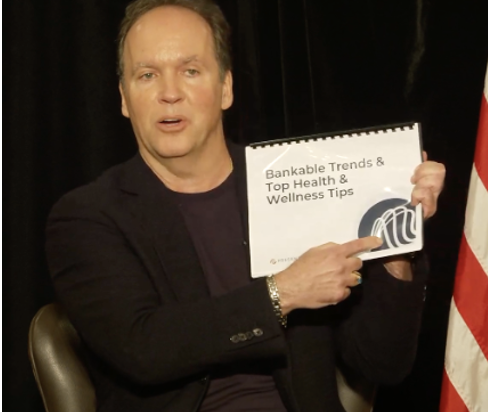
Presence Marketing founder and CEO Bill Weiland at the MAHA Institute launch. (Photo courtesy of MAHA Institute)
I have been doing a report for 11 years I affectionately call “Bankable Trends” (with the Presence Marketing logo I consider the second most popular swoosh in America!). But I promised 11 years ago that I would never call one incorrectly and guess what, I’m batting a thousand. I can tell you what’s going to hit and what’s not. Let’s talk a little bit real quickly about what’s not. Crickets are not the next sushi; crickets are the next bug. Nobody’s eating ‘effin’ bugs, OK?
I’ll tell you what else people don’t want: lab food. Precision fermentation, no chance. Bio-identical dairy, no way. Cell-based meat? The cell ain’t gonna sell, and I promise you all of that is 100% accurate.
So, 11 years ago I called the collagen and bone broth trend. People are like, Bill, what the ‘H-E-double-hockey-sticks’ are you even talking about? What is this stuff? There was nothing in the channel except Grayslake Gelatin, right? And I said, well look, if you want to build muscle you eat steak, you eat chicken, you eat beans, you eat nuts — those amino acids will rebuild muscle tissue.
But if you want different benefits like bright taut skin, really high-level joint health as you age, great digestion, you need those amino acids around the joint of an animal. You can’t replicate those anywhere in nature. Glutamine, proline, glycine, alanine, arginine — very difficult to get. So, we went then and invested in and built brands like Bonafide Restorative Bone Broth, Vital Proteins, and Ancient Nutrition (we worked with Jordan Rubin and his team).
At the same time, 11 years ago we called ‘grain free.’ We always know the ‘why.’ Grain free — think about it. You capture the gluten free customer, you capture the customer who understands ‘anti-nutrients.’ You know, the phytic acid in grains, the lectins in beans, legumes and other vegetation, and how they bind with nutrients on a molecular level and make them inaccessible in the gut. So, grain free, the biggest percentage of sales is just people who say, ‘Hey, I don’t want a carbohydrate bomb. I want my cracker or tortilla to be calories of consequence.’
Let’s talk about seed oils and animal fats, now. So, we got after seed oils 15 years ago. We have a great partner in Boulder Canyon. We kept getting distribution, but their stuff kept getting discontinued when we got further and further away from Boulder. And I said guys, your canola, your safflower, your sunflower — I’ve got an idea. Let’s go with three platforms: coconut, olive, avocado — let’s build under those three higher value oils. Business has exploded and now they’re the number one chip in the country, many hundreds of millions of dollars, untold numbers of jobs and influence, and they’re retrofitting all products, now going completely seed oil free. Bobo’s came and saw me 10 years ago… I said use butter or coconut oil. They chose coconut oil. They were a small little business, cottage industry. Now, headed towards $200 million and killing it.
And let’s talk about how we’re building animal fat. This brand Masa is a proper tortilla chip cooked in beef fat. Incredible. You eat chips, you go to a Mexican restaurant, it’s kind of a gut bomb. I’m eating the plain flavor, scooping ceviche, scooping beef tartar — these are real food calories. You guys gotta try it!
I have another one here — we’re launching the first ancestral protein bar, Prima. This bar has grass fed collagen, grass fed whey, grass fed tallow, organic honey, simple ingredients. You eat one, you feel like Tarzan. We’ve got a brand called Somos, a Mexican food company that came to visit us recently at the affectionately named ‘Billagio,’ where we host meetings in Chicago. I told them if you want to build a big food company, launch refried beans cooked in tallow. Two SKUs are coming; they’ll be here for us to taste in 35 days; we’re going to launch them this calendar year. And then I’ve got a young couple of chefs — one of them is local here, Jesse & Ben’s — doing frozen french fries in either plant oils that are higher value or beef tallow.
Then just a quick primer on regenerative agriculture — my numbers, and I usually make my numbers — always, to be fair — I’m saying 18 years to 10% of all U.S. farmland will be farmed regeneratively.
That is the path that I see us on right now. Blocking and tackling with a little extra juice.
Also, I just want you to know that we’ve been acquired by a group called Platform. These guys are tremendous. It’s still business as usual for Presence Marketing except it feels like a little ‘Elonesque’ rocket fuel has been injected into us. But we’re gonna fight the good fight here long term, keep putting jobs on the board, keep influencing the quality of products — organic, natural — and I promise you we will have hundreds and hundreds of SKUs in the next three years launched that will be high quality beef and bison tallow based — no vegetable oils — duck fat (schmaltz!) or chicken fat and pork lard. So, we’ll continue doing our jobs. We are grateful to be here and continue to support the mission.
And here’s what I want to say to our friends across the aisle: This is such a layup. Don’t fight us on this one, Democrats. I’ll tell you this, this train is coming and you have two choices. Get on board or get out of the way. Let’s go MAHA.
Nutrition Industry Up in Arms Over Proposed Dietary Supplements Listing Bill; Could it Be a Slippery Slope to FDA “Preapproval?”
This article originally appeared in Presence Marketing’s June 2022 Industry Newsletter.
“We fully trust FDA will make mischief. We don’t know how, but we do have 60 years of history of FDA authority trying to limit access to supplements.” – Michael McGuffin, President, American Herbal Products Association, in response to S. 4090, the Dietary Supplement Listing Act of 2022
By Steven Hoffman
On April 26, 2022, U.S. Senate Majority Whip Dick Durbin (D-IL), introduced a bipartisan bill co-sponsored by Sen. Mike Braun (R-IN), S. 4090, the Dietary Supplement Listing Act of 2022.
The proposed legislation, according to a statement from Durbin’s office, would require dietary supplement manufacturers to list their products with the U.S. Food and Drug Administration (FDA), known as a mandatory product listing (MPL). In addition, companies would be required to “provide FDA with vital information about their products, including product names, a list of all ingredients, an electronic copy of the label, allergen statements, health and structure/function claims, and more. This information would then be made available to the public,” Durbin’s office said.
Introducing the bill, Durbin said, “70% of people in America take a dietary supplement, including me. I also believe that Americans who take vitamins, minerals, and herbs for their health and wellbeing have a right to know what’s in those supplements. Many people assume that if a product is sold in the United States of America, somebody has inspected it and it must be safe. Unfortunately, that’s not always true.”
Reaction to the bill among industry leaders and associations has been mixed, yet many in the nutrition industry are up in arms in that the bill proposes that all dietary supplements sold in the U.S. be listed in a federal database or registry. Opponents are concerned that it may infer that the FDA would end up gaining “pre-market approval” authority over dietary supplements, in that the bill states that upon receiving a company’s listing submission, FDA will “confirm” a “complete listing” and issue an identification number.
According to Nutritional Outlook, the questions dietary supplements companies are asking include: “What could cause FDA not to confirm a listing? Can products automatically go to market after submitting a listing, regardless of FDA’s response? Could FDA, in fact, use mandatory product listing as a premarket-approval lever to keep certain ingredients off the market?”
“This is purely premarket approval and anyone who tells you different is lying,” Daniel Fabricant , Ph.D., President and CEO of the Natural Products Association (NPA), told Nutritional Outlook. Based in Washington, D.C., NPA opposes the bill and has been galvanizing the dietary supplements industry to act quickly to send letters to voice their concerns to their legislators via a web page here.
“Senators Durbin and Braun are one step closer to creating pre-market approval for dietary supplements a reality. Their bill was recently tied to the FDA Safety and Landmark Advancement Act (FDASLA), creating new regulatory barriers and giving the FDA new authority to prevent health and wellness products from reaching millions of consumers. Sadly, Senators Braun and Durbin are using their dislike of the dietary supplement industry to misrepresent its excellent safety record. The FDASLA is intended for drugs, not supplements, and we cannot afford to allow critics to stifle the industry,” Fabricant said in an appeal to members.
NPA asserts that responsible natural products retailers and manufacturers already go to great lengths to ensure consumers have access to safe products. Operating under the framework of DSHEA, the Dietary Supplements Health and Education Act of 1994, “FDA has a robust regulatory framework to understand what dietary supplements are being sold and who is selling them,” NPA said.
“The FDA has several tools at its disposal, with associated penalties for failure to comply. Retailers and manufacturers also have strong market incentives to make safe products. The proposed language in the Dietary Supplement Listing Act of 2022 requires pre-market approval for dietary supplements, thus is more stringent than the NDI (New Dietary Ingredients) provision, which is a notification. The FDA already has access to information regarding who is making dietary supplements, where they are making them, what products are made at which facilities, when new ingredients are introduced into commerce, and whether any products are associated with serious adverse events,” the association added.
In a recent meeting of the U.S. Hemp Roundtable (USHR), representing CBD supplement companies, Michael McGuffin, President of the American Herbal Products Association (AHPA), said, “We oppose the bill because it is redundant, and we don’t think it is so perfectly written that it doesn’t drift into preapproval. I don’t see this as certain pre-market approval, but it says that FDA will confirm a submission that is complete, so what does ‘complete’ mean? FDA will interpret this as it sees fit. For example, you’re required to list all your claims, but they could say you didn’t list all your claims.”
One thing is certain, McGuffin said. “We fully trust FDA will make mischief. We don’t know how, but we do have 60 years of history of FDA authority trying to limit access to supplements,” he cautioned.
McGuffin added, “We like the word ‘listing’ vs. ‘registry,’ which sounds stronger, but Sen. Durbin said specifically ‘registration.’ Even though we all say listing because we agree not to whip people up over this, but the guy who wrote the bill, Sen. Durbin, said registration, Also, there is no exemption for retailers, so every white label brand also will have to register,” he noted.
“We understand there may be an inevitability here, and then we would switch our focus to how to make it least impactful,” McGuffin said, referring to the proposed legislation. “The details are going to be important, and there is a lot we don’t know in this bill.”
Megan Olsen, Senior VP and General Counsel for the Council for Responsible Nutrition (CRN), told USHR attendees that CRN supports the proposed Dietary Supplement Listing Act. Referring to a product registry, she said, “This could give consumers and retailers a place to look to see if products are legitimate, continuing to ensure that there is transparency over the industry and enhancing consumer trust. However,” she added,” our position is that it cannot be pre-approval. If it looks like it’s going that way, that’s when we would push back very strongly.”
In speaking of the proposed dietary supplements legislation, Karen Farrell, Senior Director of Brand Management, Nutrition and Body Care for Presence Marketing, said, “I feel like the industry should keep its antennas high on this one. We already have existing policy in DSHEA; if something needs to be changed, it should be done under the existing structure of DSHEA rather than write separate legislation outside of what already exists. We still have some people who say the supplement industry is unregulated, and that’s just not true,” she said, adding that the proposed bill could also slow product innovation and launch times.
“Dietary supplement manufacturers are already playing by the rules; they are jumping through all the regulatory hoops and have made a commitment to quality. I’ve been reviewing new products and brands for 10 years at Presence, and I think I only ever saw one brand that I had questions about, and we addressed it right away. FDA already has authority to regulate and send warning letters, etc. I don’t think we need this bill; DSHEA works, Farrell added.
# # #
Chain, Chain, Chain: Natural Products Companies Take Necessary Steps to Assure Supply Chain Consistency Amid Covid-19 Crisis

Photo: Pexels
By Steven Hoffman, Compass Natural Marketing, Managing Director
This article originally appeared in Presence Marketing’s June 2020 newsletter edition and on New Hope Network’s IdeaXchange.
As the coronavirus crisis entered its third month in May, the U.S. saw concerns about its food system’s supply chain come to the fore. The media’s dramatic coverage of workers falling ill in the nation’s conventional meatpacking plants, crops wasting in the fields, and dairy farmers dumping milk continues to alarm Americans, and justifiably so, even as the country begins to open up in fits and starts.
Despite – or perhaps as a result of – President Trump’s invocation of the Defense Production Act to keep the nation’s meat packing plants open, the nonprofit Food & Environment Reporting Network (FERN) reported on May 22 that in the U.S., “at least 220 meatpacking and food processing plants and 20 farms and production facilities have confirmed cases of Covid-19, and at least four food processing plants are currently closed.” In addition, FERN estimated that “at least 19,160 workers (17,360 meatpacking workers, 1,134 food processing workers, and 666 farm workers) have tested positive for Covid-19 and at least 72 workers (66 meatpacking workers and 6 food processing workers) have died.”
The outbreaks may be even more extensive, but large-scale meat processors and state and local officials are hesitant to provide data due to a “stigma associated with the virus,” the New York Times reported on May 25.
The problem is so severe for farmers that have been producing for the institutional food service market that in mid-May, USDA Secretary Sonny Perdue appeared on National Public Radio (NPR) to promote a $3 billion plan to establish a national “CSA” style Farmers to Family Food Box Program in an attempt to distribute food direct from farmers to low income families.
"When you have the shutdown very suddenly of institutional food settings such as restaurants, schools, colleges and others, then that causes a misalignment in supply," Perdue told NPR’s Morning Edition. "And we've had to scramble in order to try to readjust that, and this food box program is one of those things which we've tried to do."
Helping Both Sides of the Equation
When asked by NPR why not give people more money through the SNAP program to help people pay for food, Perdue responded, “That may help one side of the equation…it does not help those farmers and producers who have grown this food. They cannot make it to market because the supply chain they’ve been used to dealing with – the institutional food market – is no longer there.”
In seeking to reassure Americans that their food supply is safe, Perdue told NPR, “One of the challenges we had in protein – meat, poultry, beef, pork – had been the closure of some of our processing plants there. And we've had infections in those plants that caused some temporary closures. Essentially all those plants are back open. We've turned the corner, and while some retailers are suggesting they may not have the degree of variety that they once had, we expect that to be cured very quickly. I do expect us to be back up to 85-90% production in probably a very few days or weeks,” he said.
While USDA attempts to fast-track a direct distribution program, traditional CSA (Community Supported Agriculture) programs, where consumer members buy a “share” of the farm’s “often organic” harvest, are surging everywhere across the country, including record membership signups and waiting lists, reported NPR on May 10.
Food Prices on the Rise
Of greater concern, as nearly 40 million Americans have lost their jobs since the pandemic took hold in the U.S. in mid-March, the U.S. Bureau of Labor Statistics Consumer Price Index (CPI) announced that food prices in April recorded their highest monthly increase in nearly 50 years, reported USA Today on May 21. “Though overall, the April CPI declined 0.8%, consumers on average paid 2.6% more for groceries. It's the largest one-month increase since February 1974. During the past 12 months, grocery prices rose 4.1%. Price increases in the meat, poultry, fish and egg category were the steepest,” USA Today reported.
In addition, the Department of Justice and the USDA are reported to be investigating the four largest U.S. meat packers – Tyson Foods, JBS, National Beef and Cargill, who collectively control about 85% of the U.S. beef market – for price fixing. According to Politico, supermarket consumers are paying more for beef than they have in decades, but at the same time, the processing companies are paying farmers and ranchers “staggeringly low prices for cattle.”
Is the Supply Chain Broken or Stressed?
After Tyson Foods’ Chairman John Tyson warned in late April that “the food supply chain is breaking,” Abe Eshkenazi, CEO of the Association for Supply Chain Management, in mid-May told Supermarket News, “From our perspective we don’t think the food supply chain is broken as much as it is stressed. We’re entering a different frontier, relative to food right now, and that’s food scarcity. We started to see it in the beginning of the pandemic with consumer packaged goods, specifically toilet paper and paper towels. We saw a significant run on those particular products, but what we've also seen is that the supply chain has responded, so those gaps in the supply for those particular items are being filled,” he said.
“It's taken a while for the supply chains to respond to the spike in demand, but it's also critical that we recognize that this is a spike, Eshkenazi told Supermarket News. “This is not a new demand signal at that level. When we take a look at utilization, we're not looking at an increase in terms of food or consumer packaged goods…It's just that we're seeing a shift in terms of where the demand is being sensed right now, and that is in a home-based environment.”
When asked about shortages where retailers placed limits on consumer purchases, Eshkenazi shared with Supermarket News, “As the system catches up, I think we'll see an easing of that but it also does present a problem because the quotas are not relative to family size. They're relative to the buyer. So, a family of five or six has the same quota as a family of two. We have to be aware of the current circumstances that these individuals are facing. It's not a one size fits all.”
Natural Products Manufacturers: Necessity is the Mother of Invention
Meanwhile, in the natural and organic products industry, producers and manufacturers are being driven by the rule, “necessity is the mother of invention.” By being nimble, companies are working hard to ensure a consistent supply chain for their retail and distribution customers. We talked with a few leading manufacturers and industry experts on how they are handling supply chain challenges during the coronavirus crisis. Here’s what they shared with us:
Carla Bartolucci, CEO, Bionaturae and Jovial
U.S.-born Carla Bartolucci and her husband Rodolfo are the founders of the certified organic brands Jovial and Bionaturae. The company is based in Connecticut but the main ingredients – wheat, the ancient grain Einkorn, tomatoes and other raw materials – are sourced in Italy, where the finished products are manufactured. As a provider of pastas, tomato sauces, juices, fruit spreads, cookies and other products, the brands have been in high demand during the pantry loading and subsequent shelter in place phases the U.S. has experienced during the pandemic.
“We were coming off of big months in January and February, and suddenly, here comes March. We were definitely caught off guard with the increase in sales we saw in flour, pasta and shelf-stable products. I can tell you for the first time in 25 years there was a day when our warehouse in Connecticut was completely empty,” said Carla Bartolucci.
The company could have sold more, but was limited by availability of a special compostable window used in the product packaging, and by having to queue up with contract manufacturers in Europe who were experiencing increased demand from all their customers. “Also, we blew through the contracts with our farmers already in June (contracts normally last until October), so we will be sourcing from outside of our network come July and August,” Bartolucci said.
During the peak, the company was shipping out so many container loads each week that there was no time to fill them completely. “The volume of demand made us ship out containers that weren’t completely full, so there were some losses with that, but we had to get the product out. We are still producing and loading twice as much product as we normally would have, but not three times as much, so we can fill the containers more efficiently again,” she said.
Seeing a longer term impact to consumers’ purchasing patterns, Bartolucci observed, “Suddenly, the new facility we built four years ago in Connecticut now may not be big enough. I can see the future right here in front of me – people will be home more and cooking more. We are responding and preparing for the future much more quickly than we normally would have.”
Scott Jensen, CEO, Rhythm Superfoods
Rhythm Superfoods, an innovator in plant-based fruit and vegetable snacks, did a lot of groundwork to secure its supply chain well before the Covid-19 crisis hit, and it’s paying off, says founder and CEO Scott Jensen. The company, which requires the freshest product delivered consistently for its dried kale, beet, carrot, dried fruit and other certified organic snacks, made a strategic decision to shift its sourcing from the U.S., where weather and crops proved to be uncertain for the company, to working with four farming families in the north central region of Mexico. It is there, a good day’s drive from the Texas border, where the Austin-based company grows and manufactures all its products.
“We own two facilities in Guadalajara. Our farmers are all within a two- to three-hour drive to our production plant, and they are situated at different elevations, so we are able to produce all we need,” Jensen said. “Overall, the U.S. gets so much of its produce from South of the Border; it could be 30-50% of all produce sold in the U.S., depending on the season, and there are no tariffs on food. For Rhythm Superfoods, we need fresh, consistent, organic deliveries, and in that particular region of Mexico, they grow year round and our farmers are really good at growing a mix of crops,” he said.
“Our vertical integration also gives us the ability to sell beyond the U.S. market and to deal directly in pesos, which is a strong currency. We can ship to Asia and the EU and be competitive price-wise,” Jensen said. He also noted that the company has seen no slowdown in shipping at the border. “The crisis has prevented us from traveling to our farms for a few months, but we are getting everything we need from our producers.”
For its workers, the company has expanded cleaning protocols, implemented temperature checks, provided face masks, emphasized multiple hand-washing and continues to pay workers if they have to be sent home, among other heightened safety measures.
Jensen shared that his farmers have been impacted by the pandemic, as they grow for the food service market, too. “If we lost 50% of consumption of vegetables in food service, that hasn’t all shifted to retail; consumers don’t cook as many fresh vegetables at home as the chefs and restaurants who use a lot of fresh produce. As a result, all our farmers are recalibrating their plans for the growing season. I don’t think anyone can oracle out what’s happening in the next weeks and months, however, we are attentive to things going on daily and a slew of data, and we are communicating constantly with our leadership team,” he said.
Pete Speranza, Cofounder, 301INC / General Mills
A former professional hockey player, Pete Speranza brings a competitive, team spirit as Cofounder of 301INC, the “brand elevator” arm of General Mills. As Director of New Business Development, Pete helped create a national scouting network for emerging natural and organic products brands, where he works closely with the entrepreneurs behind them.
“What we’ve been telling our brands is that while external forces have changed, food values aren’t changing,” Speranza said. “Coming out of this, people will still eat more at home, and they may be looking for more nutrient-dense foods to support healthy immune systems. From a supply chain perspective, from the meat to the grain industry, we are moving beyond a commodity approach, where the farmer got paid the same price per bushel no matter the quality. Today, businesses are having to create supply chains that are nimbler to handle smaller producers. This will accelerate. People want transparency, higher quality and nutritious foods,” he added.
Speranza noted that a challenge smaller brands face today is that consumers are spending less time in grocery stores. “People are not browsing right now. They’re creating a list, getting their essentials, and there’s less impulse buying and discovery, which is what these new brands need.” Speranza is advising the brands he works with to be open to all sales channels and social media to reach and educate consumers about their products.
“Before Covid, everyone had their own zone and the supply chain was much more transactional,” he observed. “Yet, every part of that supply chain became nimble overnight. As a result, our brands will come out with stronger relationships with ingredient suppliers, co-packers and customers. This will bring some advantages in the future, as people may see they were more rigid than they needed to be, and that it may be more resilient to be nimble. It has reminded me how important a secure, transparent food supply chain system we will need in the future for people at any income level.”
Speranza also noted that “while forecasting tools were never dead on, in the old model, you weren’t off by more than 10%. In the next 10 months, efficiencies may be less because forecasts won’t be as accurate. We will need to build new data sets,” he said.
Cole Daily, EVP, Operations, Frontier Co-op
For more than 40 years, Frontier Co-op has been a leader in natural and organic herbs and spices, sourcing over 800 raw materials from more than 50 countries. “Needless to say, it made for a fluid, dynamic situation when Covid-19 hit; it was almost like watching dominoes fall when it hit China, then Southeast Asia, then Europe and then the U.S.,” said Cole Daily, Frontier’s EVP of Operations.
“Because the spice industry is uniquely vulnerable to outside forces, we have built a resilient supply chain by having alternative sources,” Daily said. “We’ve built some redundancy into our supply chain because, as they say, when Russia Sneezes, Poland gets a cold, which is very poignant right now. When you are sourcing from over 50 countries, something is bound to go wrong. As such, we are always planning for contingencies, but this is at a scale that is absolutely unprecedented.”
Daily noted that it hasn’t been so much a raw materials issue as it has been skyrocketing demand – company sales were up 100% for the latest four weeks in April, based on SPINS data, “and we are still tracking strongly, up over 36%, based on anecdotal IRI tracking data,” he said.
“The squeeze has been on the packaging side of things. After everyone emptied the shelves during the pantry loading period, refilling them has been a bit of a challenge. There’ve been short delays but we are beginning to normalize now. We’ve added new manufacturing lines and we are pretty much working nonstop to meet the overwhelming demand,” Daily said.
Frontier Co-op deals directly with farmers because, said Daily, who has been with the company 28 years, “We don’t want the inventory sitting overseas. We want it in our warehouse. In general, we go a little heavier on our inventories, which has helped in the current situation. Our suppliers are increasing their capacity right along with us and making sure they do it in a safe manner, but the $64,000 question is how do we forecast right now? We’re doing our best to plan now for all types of products and to make sure we are out ahead of the demand. The resiliency we’ve built into our supply chain helps us, as we can go to these sources to increase buying, if needed.
For Daily, he has learned a few things during the coronavirus crisis. “The resiliency of people throughout the world, not just outside your front door, but the farmers throughout the world, the processors, and here in Iowa, the work ethic is incredible. Everyone is trying to do their best; we’re continuing to work through it, sometimes alone, but everyone together.”
Nikki Nolbertowicz, Midwest Regional VP, Presence Marketing
“Before the Covid crisis, products including soup and cereal were slow. Now, there’s a joke that there’s no ramen available in the distribution centers,” said Nikki Nolbertowicz. As Midwest Regional VP for Presence Marketing, she manages distributor relations nationwide for the leading independent sales brokerage firm, which celebrates its 30th anniversary in business this year.
When distributors have to solve out of stock situations, it can create opportunities for other brands, Nolbertowicz noted. “For example, a distributor might try to bring other rice brands in, or find alternative products to fulfill current demand,” she said. “Consumers, too, are either trying other brands or new products, or looking online.” Over the past few months, distributors Nikki works with in ecommerce sales have seen an uptick three times their standard volume, and could have sold more if it were not for being out of stock on certain items, she said.
For brick and mortar stores, shopping habits have changed – consumers want to make less stops, so the average basket amount has gone up, Nikki observed. “There’ll be limited travel this summer and the kids will be home more with many activities being cancelled or delayed, so there will be more meals at home. For people whose jobs have not been impacted, they are beginning to splurge in grocery stores again, with an emphasis on self-care. For consumers that have been negatively impacted financially from the pandemic, they are looking at value products. Later in the year, many people will look to do more with less for the upcoming holidays with their families. Distributors are starting to think about that now,” she said.
Acknowledging that the concern is real for manufacturers in making sure they can meet the needs of retailers and distributors, Nolbertowicz noted that the industry overall has done an impressive job in responding to the pandemic. “I give everyone we work with – distributors, retailers, manufacturers – a lot of credit. Under the circumstances, they’ve done an amazing job and have been flexible, nimble and have upped their communications game. Getting the message out is more important than ever; with none, there is chaos.”
For Nikki, she believes that this has been an optimistic time for the natural products industry. “It has given new life to manufacturers and independent retailers, and has changed some consumer behaviors where people will be focused on cooking meals in the home and more time with family. Life will go back to some sort of normalcy, but the experience of family meals and quality time – people will want that to continue, which just helps our industry. This experience has given us all a chance to pause, refocus, and reprioritize in our work and personal lives what is most important. That will resonate for more than just the short term,” she said.
Bill Evans, CEO, Kalona SuperNatural
As a small scale, certified organic, grass fed dairy producer, Kalona SuperNatural has built resiliency into its supply chain by working not only with its own community of Amish and Mennonite dairy farmers in Eastern Iowa, but also by becoming expert in sourcing and brokering organic milk from throughout the nation, said Bill Evans, CEO and founder of the company.
Also, the brand, which is growing, found itself at an advantage when the Covid-19 crisis struck because its sales are primarily in natural products grocery stores. “The conventional guys are having issues because they’ve got a large portion of their manufacturing set up for food service; there’s no place for that to go right now,” Evans said.
Since the pandemic began, Kalona has been filling distributors’ large orders. “We’ve been able to accommodate a 25-30% increase in sales volume, whereas larger producers are shorting people. Kalona SuperNatural has been more successful than others in balancing our organic milk supply,” he said.
In addition, to its own production facilities, where workers have ample space for social distancing, Kalona owns its own trucking company, which has been a big advantage in getting deliveries out during the crisis. “We have the capacity to secure additional trucking when we need it. We provide dated, perishable product, and it needs to turn quickly; that means distributors will get us unloaded, even when their docks are crowded,” Evans noted.
“We have workers that have to be here to bottle milk and load and drive trucks. We’ve been taking all precautions and those folks have felt safe coming to work. What I’m most proud about is that our team has stuck together and gotten the job done,” he said.
Brad Barnhorn, Board Member and Business Advisor
After successfully building Fantasia, a leading natural juice brand that merged with Naked Juice and was subsequently acquired by PepsiCo, Brad Barnhorn has been advising CEOs and serving on numerous boards in the natural products industry, giving him a unique perspective on what’s happening with emerging and established brands during the pandemic.
“During this period, though there may be different dimensions, the questions are the same – how do you treat your customers, employees, supply chain and other partners?” Barnhorn asked. And how do you respond to the pressure to focus on performing items, Barnhorn also asked, referring to the compulsion for companies to do “SKU rationalization” as manufacturers, as well as retailers, focus their resources on the products most in demand.
“If you’re a company with sales north of $50 million or $100 million that has great brand equity, that allows for flexibility to temporarily stop some SKUs. The tough space is when you are a mid-sized company, say in the $15 million to $20 million range, odds are if you take some SKUs out, you might not get them back in the stores. That might not be the right decision, strategically. If you’re a small brand, you might not have the market power to bring the SKUs back,” Barnhorn said.
Instead, he offers, “I might make the decision as a small company to change my production schedules. Maybe I produce the item less frequently but with higher inventory levels, try to find ways to reduce complexity, have more efficient runs, and take a risk on higher inventory. Many distributors have been more flexible with brands on their standard requirements for the amount of shelf life that needs to be remaining on the product when they receive it into their warehouses. For example, UNFI typically requires 75% of shelf life remaining, but it has been making exceptions to that. It is essential to be in close contact with your distributors on an ongoing basis to understand this dynamic, as well as other elements of working with them that may have been altered in this unique period to provide companies a measure of operating flexibility ... but also, are more than likely to change back to the previous rules of engagement in the future,” he said.
Barnhorn advises, “If you have not audited your supply chain in the past two to three years because things have been going on as normal, it’s time to analyze, talk to other manufacturers and co-packers, get up to date on the flexibility and options you have in your supply chain. Take this moment of urgency to have these conversations.”
Daniel Fabricant, CEO, Natural Products Association
As CEO of the largest trade association representing the natural products industry, Daniel Fabricant, Ph.D., is concerned about fraudulent products as consumer flock to dietary supplements to strengthen immunity and health. “Elderberry is very popular right now. There is such consumer demand and the margins are so big that we are starting to see adulterated product come out. We may see many more fakes in the market because that’s where the demand is,” Fabricant warned. “If it sounds too good to be true, it probably is. It may be best to stick with the brands you’ve always seen in your natural products retail store – they’re well established and trusted,” he advised.
On the plus side, Fabricant noted that 70% of Americans use supplements, though many of those have been casual users. “But now many of those consumers will take extra supplements, such as zinc and Vitamins C and D. These products will stay part of people’s regimen,” he said. However, Fabricant noted that the sports nutrition category has taken a big hit as gyms have closed down.
“The biggest thing for us as an organization was when the Department of Homeland Security issued their first guidance, there was no mention of supplement manufacturers. However, in the second guidance, we were successful in getting the language in to protect the supplements supply chain. We wanted to keep as many channels of distribution open as possible, said Fabricant.
“The supply chain in the next five to 10 years is going to be a very fast moving target. We can do manufacturing smarter and cleaner now, and there is strong interest in vertically integrating in the U.S. Also, while people say that everything is going to the Internet, there is still strong interest in going to stores; people want to go to independent retailers. Most importantly, “Fabricant advised, “as an industry, we always have to stay engaged. We are an essential business, and that messaging should never stop.”
NPA Criticizes Senate for Excluding Funding for CBD Health Safety Evaluation

Photo: Pixabay
Originally Appeared in Presence Marketing News, October 2019
By Steven Hoffman
The Natural Products Association (NPA), based in Washington, DC, reported that the U.S. Senate Agriculture Appropriations Committee failed to include legislation passed earlier this summer in the House of Representatives that would have appropriated $100,000 for the FDA to perform a health hazard evaluation on CBD. The health hazard evaluation would have determined and set a safe use level for the consumption of CBD. This process has precedent, allowing FDA to exercise enforcement discretion on natural products that contain levels of an approved drug ingredient, most notably red yeast rice, reported Nutritional Outlook. The Senate agriculture committee only included language that instructed FDA to report back to them in 90 days, but otherwise, no meaningful progress was made in regulating CBD products, NPA said. “What we saw today was the U.S. Senate Agriculture Committee fail to include any meaningful legislative language that would force the FDA to do its job when it comes to CBD. Sadly, this approach will lead to nothing but problems. We are seeing that play out with the vaping crisis and we are desperately hoping to avoid that with CBD,” said Daniel Fabricant, PhD, president and CEO of NPA, in a statement. “This should have been an easy choice for the committee, they should have taken their lead from the U.S. House of Representatives where Congressman (Jerry) McNerney had already had an amendment pass that would actually protect American consumers. However, the fight is not over. We are continuing our work to ensure that the one in seven Americans that use a CBD product everyday have the ability to believe that the FDA is doing its job, and not taking the path of least resistance. We encourage everyone to tell their Congressman and Senators to set a safe level of daily consumption for CBD,” Fabricant said.